What Are Soccer Formations & How Do They Work Tactically?
Soccer formations are tactical blueprints that organize a team’s ten outfield players. They work by defining defensive, midfield, and attacking structures to balance a team’s shape. The numbers (like 4-4-2) are a starting template, but the formation fluidly changes during attack and defense based on the coach’s strategy and player roles.
A soccer formation is the organized arrangement of a team’s ten outfield players into defensive, midfield, and attacking lines. The standard numbering system (like 4-4-2) lists players from back to front. Formations work by creating a tactical structure that maximizes a team’s strengths, dictates positional roles, and provides a framework for both attacking and defensive organization.
Most guides treat formations like fixed diagrams on a whiteboard. They are not. The real mistake is believing the numbers on the team sheet tell the whole story. A 4-3-3 in the program can morph into a 2-3-5 during an attack and snap into a 4-5-1 block within seconds of losing the ball. This guide breaks down what the numbers actually mean, how top coaches use them as fluid templates, and why picking the right one has less to do with philosophy and more to do with the players in your locker room.
Key Takeaways
- The formation numbers (e.g., 4-4-2) always describe the ten outfield players from the defensive line forward; the goalkeeper is never included.
- Formations are dynamic frameworks, not fixed positions. A team’s shape changes drastically between attacking, defending, and transitioning moments.
- There is no single “best” formation. The right choice depends entirely on your players’ skills, the opponent’s tactic, and the match context.
- Modern elite football is dominated by three shapes: the 4-3-3 for possession and pressing, the 4-2-3-1 for structured creativity, and the 3-5-2 for midfield control.
- Choosing a formation is the first step. The real work is drilling the specific player roles and movements within that structure until they become instinct.
What Is a Soccer Formation?
A soccer formation is the basic organizational structure a team uses on the pitch. Think of it as the team’s skeleton. It defines how many players are allocated to defense, midfield, and attack, setting the initial positions from which all tactics flow.
The official Wikipedia entry on soccer formations defines it as the arrangement of players, excluding the goalkeeper. This is the crucial starting point. The formation provides the foundational shape, but it is not the playbook. It tells you where players start, not necessarily where they end up.
A formation is an abstract representation of a team’s average spatial organization during a match. It is identified from tracking data by clustering player positions into defensive, midfield, and attacking units, and is highly dynamic based on game state.
This isn’t just theory. When a coach like Pep Guardiola sends out a 4-3-3, he’s giving his players a reference map. The back four know their spacing. The midfield three understand their triangles. The front three recognize their pressing triggers. The formation is the shared language.
TL;DR: A formation is the numbered blueprint for a team’s outfield structure, defining defensive, midfield, and attacking lines to create a common tactical starting point.
How Are Formations Numbered?
You read a formation from the defense forward. The numbers represent lines of players, not individuals. A 4-4-2 means four defenders, four midfielders, and two forwards. A 3-5-2 means three defenders, five midfielders, and two forwards. The goalkeeper is the only player never counted.
This system is the global shorthand for reading soccer formations. It is always sequential. You would never describe a 4-3-3 as a 3-3-4. The first number is the defensive line.
The numbers describe the team’s base shape when they are organized in their own half, ready to defend. That’s why it’s called a formation and not an “attacking shape.” It’s the defensive starting point. From there, everything flows.
| Formation | Defenders | Midfielders | Forwards | Primary Use Case |
|---|---|---|---|---|
| 4-4-2 | 4 | 4 | 2 | Balanced, traditional play; direct attacking |
| 4-3-3 | 4 | 3 | 3 | Possession dominance; high pressing |
| 4-2-3-1 | 4 | 5 (2 holding + 3 attacking) | 1 | Structured buildup; creative attacking |
| 3-5-2 | 3 | 5 | 2 | Midfield overload; counter-attacking |
A common mistake is to assume the numbers dictate strict horizontal lines. In a 4-3-3, one midfielder often drops deep to form a double pivot with the holding player, creating a 2-1 shape. The numbering is a guide, not a cage.
TL;DR: Formation numbers list outfield players from back to front in lines: defenders, then midfielders, then forwards. It’s the defensive organizational template.
Why Do Formations Matter?

Formations matter because they create order from chaos. Eleven players running freely is a pickup game. Eleven players organized into a coherent structure is a team. The formation allocates defensive cover, creates passing lanes, and defines positional responsibilities.
The right formation maximizes your best players. Put a world-class playmaker in a flat 4-4-2 and he might be stuck defending the flank. Put him as the central “10” in a 4-2-3-1 and he becomes the focal point. Formations hide weaknesses, too. A slow defender gets exposed in a high-line 4-3-3 but can be protected in a three-center-back system like a 5-3-2.
Formations also signal intent. Walking out in a 3-4-3 tells the opponent you plan to attack with width and numbers. A 5-4-1 says you’re here to defend and counter. This psychological edge is part of the fundamental tactical principles every coach studies.
Common mistake: Choosing a formation because it’s trendy — like copying a champion’s 4-3-3 without having the technically gifted midfielders to play out under pressure. The result is a strained, error-prone team that gives the ball away in dangerous areas.
They provide a framework for training. You can’t drill a coordinated press or a buildup pattern without first establishing who is supposed to be where. The formation is the canvas for all other advanced soccer strategies.
The 4 Most Common Modern Formations
Today’s game is dominated by a handful of flexible shapes. These are the common 11v11 formations you’ll see in every major league.
1. The 4-3-3: The Pressing and Possession Blueprint
The 4-3-3 is the default for elite possession-based teams. Its strength is the midfield triangle, which creates natural passing angles and facilitates quick circulation of the ball. The three forwards allow for aggressive, coordinated pressing from the front.
This shape demands specific players. The single holding midfielder must be an exceptional reader of the game. The wide forwards must be goal threats and hard workers. When it works, it’s suffocating. Liverpool under Jurgen Klopp perfected this, with their front three triggering a relentless counter-press. Our deep dive on the 4-3-3 formation breakdown covers the specific roles in detail.
2. The 4-2-3-1: The Structured Creative Engine
Perhaps the most popular shape in the modern game, the 4-2-3-1 offers both security and creativity. The “double pivot” — two holding midfielders — shields the defense and controls the game’s tempo. This frees the three attacking midfielders and lone striker to focus on creating and scoring.
It’s a manager’s dream for balance. The popular 4-2-3-1 setup provides a clear structure for both defensive phases and attacking transitions. It’s why you see it from the Bundesliga to the Premier League.
3. The 4-4-2: The Timeless Classic
Don’t let anyone tell you the 4-4-2 is dead. It’s simply evolved. The traditional two banks of four are incredibly difficult to break down. With two strikers, it provides constant pressure on opposing center-backs and is excellent for direct, vertical play.
The modern interpretation, often seen in Diego Simeone’s Atletico Madrid, is a hyper-organized, disciplined block that punishes mistakes. It remains one of the most effective standard full-team formations for teams that want defensive solidarity and quick transitions.
4. The 3-5-2: The Midfield Battle Winner
The 3-5-2 is all about control. With five midfielders, teams can dominate the center of the park. The two strikers pin back opposing defenders, while the wing-backs provide the team’s entire width, surging forward to cross and tracking back to defend.
It requires extraordinary fitness from the wing-backs and intelligent coordination among the three center-backs. When executed well, as in Antonio Conte’s title-winning teams, it is overpowering. For a full look at its modern application, see our guide on modern 3-5-2 tactics.
How Coaches Choose the Right Formation
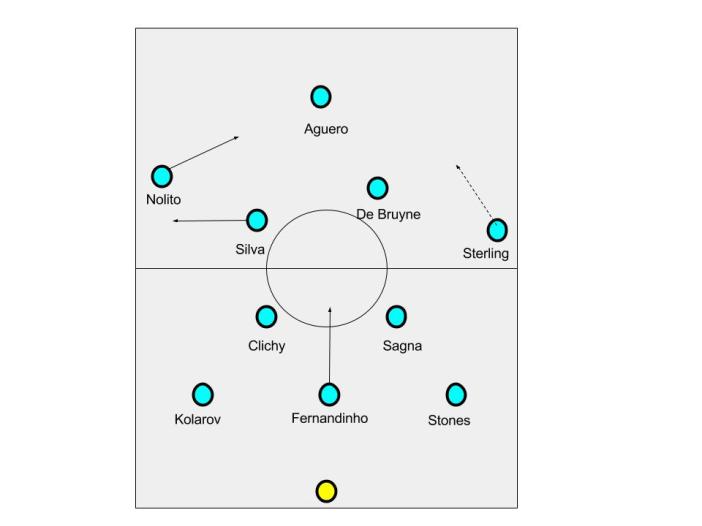
Coaches don’t pick formations from a hat. The decision is a calculation based on four concrete variables. Getting this wrong loses matches before the first whistle.
1. Player Personnel: This is the non-negotiable starting point. You cannot play a 4-3-3 without natural wingers. You cannot run a 3-5-2 without athletes at wing-back. I once tried to implement a high-pressing 4-3-3 with a veteran squad at an amateur club. The idea was sound, but the players couldn’t execute the physical demands. After three heavy defeats where we were cut open on the transition, we switched to a compact 4-4-2. We started picking up points immediately. The formation must fit the tools.
2. Opponent Analysis: You choose a shape to exploit a weakness or neutralize a strength. If the opponent plays a 4-4-2 with a gap between the lines, a 4-2-3-1 with a dedicated number 10 can exploit that space. If they have dangerous wingers, you might add an extra defender, shifting to a defensive 5-3-2 setup.
3. Game Context: Are you at home needing a win? An attacking 3-4-3 system might be the call. Are you protecting a one-goal lead away in the final minutes? The shape likely condenses into a 5-4-1. The scoreline and time remaining directly dictate the formation’s aggressiveness.
4. Desired Style of Play: This is the coach’s philosophical stamp. Want to press high and win the ball back in the opponent’s third? The 4-3-3 is your vehicle. Want to sit deep and strike on the counter? A 5-3-2 or a traditional 4-4-2 setup provides that structure.
| Your Team’s Strength | Opponent’s Weakness | Recommended Formation | Why It Works |
|---|---|---|---|
| Fast Wingers | Slow Fullbacks | 4-3-3 | Isolates wingers in 1v1 situations out wide. |
| Creative #10 | Flat Midfield | 4-2-3-1 | Places playmaker between opponent’s lines. |
| Strong Target Striker | Weak in Air | 4-4-2 | Provides two strikers for crosses and direct play. |
| Athletic Wing-Backs | Narrow Defense | 3-5-2 | Stretches play with width from deep. |
TL;DR: Choose a formation that fits your best players, targets the opponent’s vulnerability, matches the game situation, and delivers your preferred style of play. It’s a strategic equation, not a preference.
Are Formations Static or Dynamic?
They are intensely dynamic. The number on the graphic is a snapshot of the defensive shape. The moment the game flows, the formation morphs. A 4-3-3 in attack often looks like a 2-3-5, with full-backs pushing high and a midfielder joining the forward line. In defense, that same 4-3-3 collapses into a 4-5-1.
This fluidity is the core of modern football. The Frontiers survey on tactical formation identification treats formations as clusters of average positions derived from tracking data, precisely because they are so fluid. A player’s “position” is really a zone of operation.
I tell my youth teams: “The formation is your home address. When we lose the ball, everyone sprints back to their zip code.” But when we have the ball, you have a passport to travel—full-backs can become wingers, a center-forward can drop into midfield. Just know how to get home when the alarm sounds.
This is why the “in-possession” and “out-of-possession” shapes are different concepts. Top teams train these transitions until they are automatic. The static formation is just the starting point for this choreography.
Common Misconceptions About Formations
Let’s clear the fog around a few persistent myths.
Misconception 1: The Goalkeeper is included in the numbers. No. Never. The formation only describes the ten outfield players. This is the first rule of understanding formation numbers.
Misconception 2: Formations are rigid positioning. As we’ve covered, they are fluid frameworks. A player’s role within a formation (e.g., “inverted winger” in a 4-3-3) is more important than his spot on the diagram.
Misconception 3: There is a “best” formation. This is the most dangerous myth. The best formation is the one that wins your next game with your players. The 4-2-3-1 isn’t inherently better than the 4-4-2; it’s better for certain teams in certain contexts. The debate over the modern 4-4-2 viability proves this point.
Misconception 4: Formations win games. Players win games. A well-drilled, committed team in a “simple” 4-4-2 will consistently beat a disorganized team in a “complex” 4-3-3 every time. The formation is the tool, not the craftsman.
The Formations Coaches Actually Choose
Beyond the common four, several specialized shapes appear for specific battles.
The 3-4-3 is a gung-ho attacking system, often used by managers like Thomas Tuchel to overload the final third. It’s high-risk, high-reward, leaning heavily on the 3-4-3 wing-back duties for both width and defensive cover.
The 5-3-2 (or 5-4-1) is the ultimate defensive shell, used to protect a lead or frustrate a superior opponent. It’s a common choice in knockout tournaments.
For smaller-sided games, the logic shifts entirely. The principles of space and balance remain, but the formations look different, like the common 3-2-1 indoor formation used in 7v7 matches.
The choice often comes down to the manager’s courage and the trust in his squad. Does he impose his style with a 4-3-3, or does he react to the opponent with a tailored 3-5-2? There is no right answer, only the one that gets a result.
Frequently Asked Questions
What does the first number in a soccer formation mean?
The first number always represents the defensive line. In a 4-3-3, the “4” means four defenders, typically two center-backs and two full-backs. This line is the foundation of the team’s shape.
How many formations are there in soccer?
There are dozens of named formations, but most are variations of core structures. The practical number used at the professional level is around six to eight. Common ones include 4-4-2, 4-3-3, 4-2-3-1, 3-5-2, 3-4-3, and 5-3-2. The single striker 4-2-3-1 is arguably the most prevalent in modern football.
Can a team change formations during a game?
Absolutely. Teams change formations multiple times per game. Changes can be pre-planned (shifting to a back five to protect a lead), forced by a red card, or a natural result of substitutions. A winger coming off for a central midfielder can morph a 4-3-3 into a 4-4-2 instantly.
What is the easiest soccer formation to learn?
For beginners, the 4-4-2 is often the easiest. It creates clear lines of four across defense and midfield, making it simple for players to understand their defensive responsibilities and basic positional play. Its simplicity is why it’s a cornerstone of formations for fewer players learning the game.
What’s the difference between a 4-3-3 and a 4-2-3-1?
The key difference is in midfield structure. A 4-3-3 uses a three-man midfield, often in a triangle (one holding, two advanced). A 4-2-3-1 uses a “double pivot” of two holding midfielders behind three attacking midfielders. The 4-2-3-1 offers more defensive security behind its creators, while the 4-3-3 aims for more control and fluidity through the middle. The 4-3-3 tactical strengths focus on triangles, while the 4-2-3-1 is about layered creativity.
Before You Go
Forget the search for a magic formation. The numbers are just the starting point. The real magic happens in how you adapt that structure to your people and your plan. A 4-4-2 can be defensive or attacking, just as a 3-5-2 can be controlling or counter-attacking. Watch a game this weekend not for the shape on the screen, but for how it changes when the ball turns over. Notice which player’s movement breaks the mold. That’s where the game is won. Start with a sound formation, but build a smart, adaptable team. The rest is football.

I come from the “soccer heart” of Germany, the Ruhrpott. I have played, trained and followed soccer all my life and am a big fan of FC Schalke 04. I also enjoy following international soccer extensively.