4-3-3 Formation: The Pros, Cons & Tactical Truths
The 4-3-3 formation is a soccer system defined by its 4 defenders, 3 midfielders, and 3 forwards. It provides width, midfield control, and pressing structure. Its key tactical truth is that its attacking success depends entirely on the defensive discipline of its wingers and the positioning of its central defensive midfielder.
The 4-3-3 formation is a balanced, attacking soccer system built on a back four, a midfield three, and a forward line of two wingers flanking a central striker. Its core strength lies in creating natural width and numerical superiority in midfield, which facilitates possession-based play and a coordinated high press. The formation demands specific, high-energy players and can be vulnerable to counter-attacks if those players neglect their defensive duties.
Most people think the 4-3-3 is about attacking flair. They see the three forwards and assume it’s a gung-ho system. The reality is more disciplined. The formation’s success lives and dies by the defensive work rate of its most attacking players and the tactical intelligence of its single holding midfielder. Get those wrong, and the shape collapses into a defensive sieve.
This guide breaks down exactly how the 4-3-3 works, where it excels, and where it fails. We’ll look at the player roles, the different midfield configurations, and the tactical adjustments you need to make it sing, or to beat it.
Key Takeaways
- The 4-3-3 creates width and midfield triangles for possession, but it requires wingers who are willing and able to track back 70 yards every time the attack breaks down.
- Your midfield setup, single pivot or double pivot, decides your defensive stability. A single #6 must be your best reader of the game.
- The formation is brutally exposed on the counter if the full-backs push high and the wingers stay forward. The recovery run is non-negotiable.
- Against a midfield-dense opponent like a 4-4-2 diamond, your three can be overrun. You must drop a forward or push a full-back inside to match numbers.
- It’s the default system for youth development because it teaches clear positional roles, but at the elite level it’s a fluid framework for constant rotation.
How the 4-3-3 Actually Works on the Pitch
Forget the static lines on a tactics board. The 4-3-3 is a dynamic system of relationships. The back four provides a stable base. The midfield three is the connective tissue, and the front three is the pressing and scoring unit. The magic happens in the spaces between the lines.
The 4-3-3 formation creates natural passing triangles across the pitch, between full-back, winger, and central midfielder on the flanks, and between the two central midfielders and the holding player in the middle. This geometric advantage is why possession-based teams like FC Barcelona under Pep Guardiola adopted it as their core shape; it allows for short, crisp, one-touch combinations that progress the ball while minimizing risky long passes.
The first time I tried to coach a youth team in a 4-3-3, we got ripped apart on the break. The kids loved attacking, but our wingers were spectators once we lost the ball. By halftime, the opposing full-backs had more space than a training ground. We switched to a 4-5-1 for the second half just to survive. The lesson was immediate: shape without understanding is just a drawing.
TL;DR: The 4-3-3 is a system of interconnected roles, not fixed positions. Its effectiveness depends entirely on players understanding their responsibilities both with and without the ball.
The 4-3-3’s Core Strengths
The formation’s advantages aren’t accidental. They are direct results of its structure and the type of football it encourages.
Attacking Width and Overloads
Two dedicated wingers force the opposition defense to stretch horizontally. This creates gaps between the center-backs and the full-backs, spaces that the central striker or attacking midfielders can exploit. The wide players also isolate the opponent’s full-back in one-on-one situations, a matchup modern teams actively seek.
When the full-back overlaps the winger, it creates a 2v1 overload on that flank. This is a fundamental attacking pattern in the 4-3-3. The winger can cut inside, the full-back can cross, or they can combine to break the defensive line. This principle of creating overloads in wide areas is a cornerstone of many modern soccer tactics guide.
A Built-In Pressing Structure
The front three is perfectly positioned to initiate a high press. The central striker can cut off passes to the center-backs, while the wingers can press the opposing full-backs. This first line of pressure funnels play into areas where the midfield three can intercept.
A coordinated press from a 4-3-3 is a thing of beauty. When it works, the ball is won back within seven seconds and within 40 meters of the opponent’s goal. That transition moment is where most high-quality chances are born.
Midfield Control and Flexibility
The three-man midfield is the formation’s greatest tactical asset. It can be configured in several ways to suit the team’s needs and the opponent.
| Midfield Setup | Player Roles | Best For | Key Risk |
|---|---|---|---|
| Single Pivot (4-1-2-3) | One deep #6, two advanced #8s | Possession dominance, creative freedom for #8s | The #6 gets isolated if pressed. |
| Double Pivot (4-2-1-3) | Two deeper #6/#8 hybrids, one #10 | Defensive solidity, covering for attacking full-backs | Less penetration from central midfield. |
| Flat Three (4-3-3) | Three #8s with shared duties | High-energy, gegenpressing teams | Can lack a dedicated defensive shield. |
The single pivot, popularized by Sergio Busquets at Barcelona, allows the two number 8s to join the attack freely. The double pivot, used by many modern iterations, provides a safer platform for adventurous full-backs. Choosing between them is the first major tactical decision a coach makes. This level of midfield flexibility is a key reason the 4-3-3 is often ranked among the best formations for 11 players.
Common mistake: Deploying a single pivot against a team with a roaming #10, the lone #6 gets pulled out of position, the center-backs are exposed, and a simple through-ball cuts the defense in half.
A Clear Blueprint for Development
For young players learning the game, the 4-3-3 offers unambiguous roles. A center-back’s job is clear. A winger’s job is clear. This clarity accelerates tactical understanding. Many national academies, including the English FA’s “England DNA” program, use it as a foundational shape.
The Core Weaknesses: Where the 4-3-3 Breaks Down

Every strength has a corresponding vulnerability. The 4-3-3’s attacking intent leaves it open in specific, exploitable ways.
Vulnerability to the Counter-Attack
This is the formation’s Achilles’ heel. When the full-backs push up to support the wingers and the team loses possession, enormous space is left behind them. A quick switch of play or a direct ball into that channel can be devastating.
The wingers are the first line of defense against this. If they don’t track the opposing full-back’s run, it’s a 2v1 or 3v2 situation against your own full-back. That recovery sprint is the most physically demanding part of a winger’s game in this system.
Can Be Overrun in Central Midfield
Against formations that pack the center with four or five bodies, like a 4-4-2 diamond, a 3-5-2, or even a midfield-heavy 3-5-2, the three-man midfield can be outnumbered. This leads to a loss of control in the most important area of the pitch.
The solution often involves one of the forwards dropping deep to create a midfield four, or one of the full-backs tucking inside. But that compromises the formation’s width or attacking threat. It’s a constant tactical chess match.
Striker Isolation
A single central striker can be easily marked out of the game by two physical center-backs, especially if the wingers stay wide and the midfielders don’t break forward to support. The striker becomes a lonely figure, battling for hopeless long balls.
I watched a talented #9 in a 4-3-3 system have his confidence destroyed over half a season. He was strong and good in the air, but with no support, he touched the ball twelve times a game. He transferred to a club that played a classic 4-4-2 and scored 18 goals the next year. The system failed the player.
Modern adaptations use a “false nine”, a striker who drops deep into midfield, to solve this. It pulls a center-back out of position and creates space for the wingers to cut inside. But it requires a very specific, technically gifted player.
Heavy Reliance on Specific Player Profiles
The 4-3-3 doesn’t work with just any eleven players. It needs:
– Full-backs with the engine of a winger and the defensive brain of a center-back.
– Wingers who are not just dribblers but also disciplined defenders.
– A defensive midfielder (#6) with supreme positional awareness and passing range.
– Central midfielders (#8s) who can cover every blade of grass.
If you’re missing even one of these profiles, the entire structure develops a crack. This is why a team’s ideal player position is so critical when adopting this formation.
Midfield Trio: The Engine Room
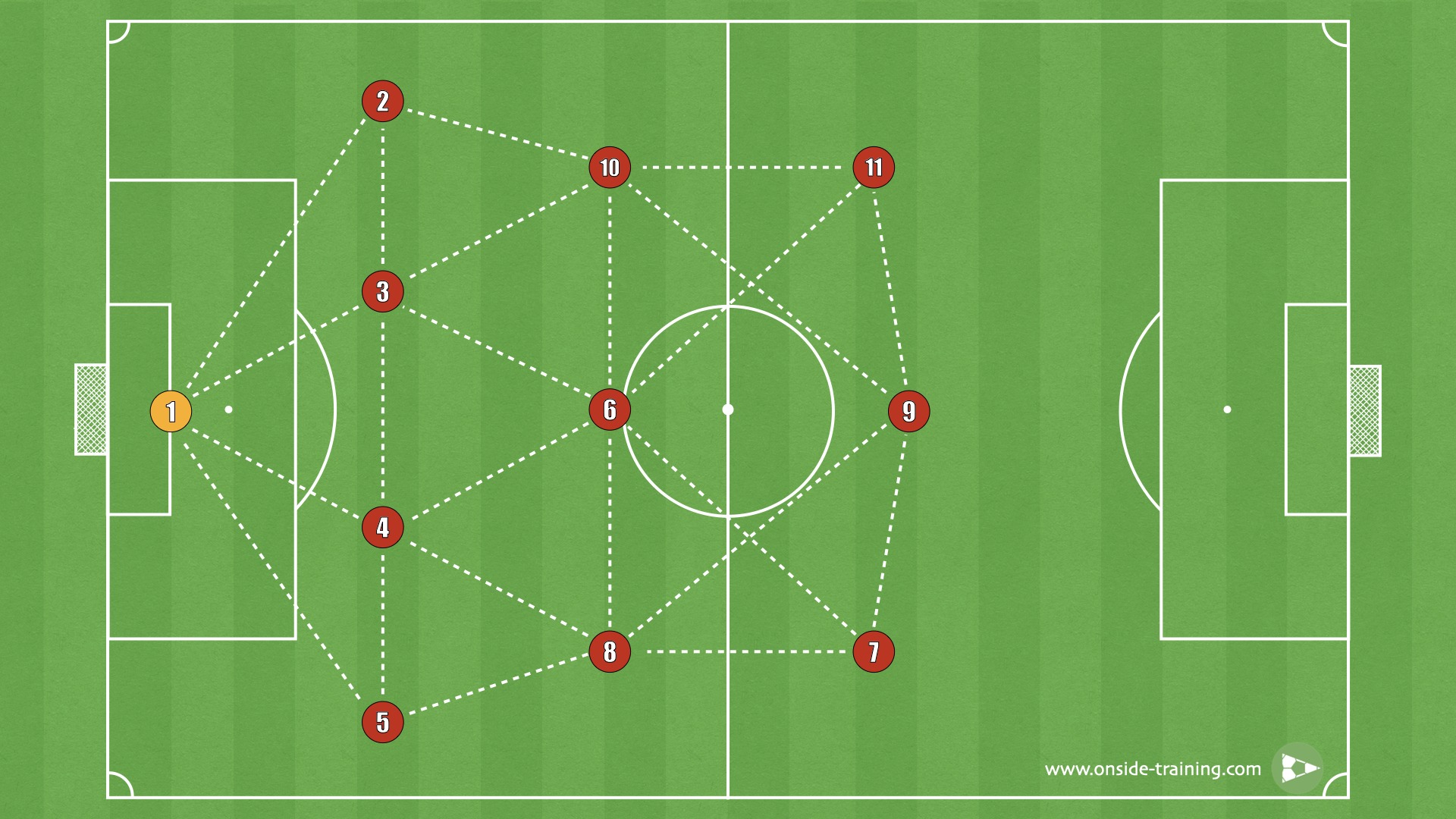
The configuration of your three central players dictates everything. Let’s break down the two main approaches.
The Single Pivot (4-1-2-3)
One player sits deep, almost as a third center-back in possession. This player, the #6, must be your best reader of the game. Their job is to shield the defense, intercept passes, and initiate attacks with forward distribution.
The two number 8s ahead have freedom. They must arrive late in the box to score, link play with the wingers, and also help defend the wide areas. It’s the most demanding midfield role on the pitch. Think of Kevin De Bruyne’s energy at Manchester City, that’s the prototype.
The Double Pivot (4-2-1-3)
Here, two players share the deep-lying duties. This creates a more stable base, especially useful if your full-backs are your main source of width and attack. It’s a safer system, often used against stronger opponents or when protecting a lead.
The trade-off is a reduction in central attacking thrust. The advanced #10 in this system must be exceptionally creative to compensate. This setup can morph into a defensive 5-3-2 system when out of possession, providing a solid defensive block.
How to Beat the 4-3-3
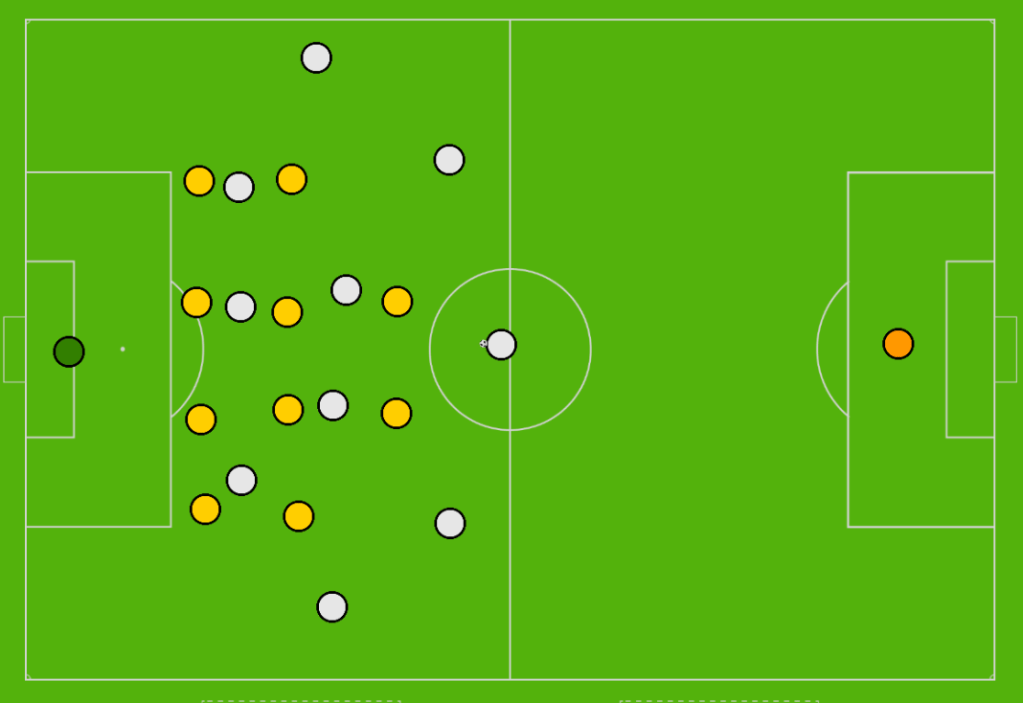
If you’re facing a 4-3-3, you target its weak spots. Here’s what works.
- Exploit the wide channels on the counter. Win the ball and immediately play it into the space behind the advanced full-back. Your winger should be sprinting into that space before the opponent’s winger can recover.
- Overload the midfield. Play with a three-center-back formation like a 3-5-2. Your wing-backs can occupy their full-backs, and your extra central midfielder can outnumber their three.
- Isolate their striker. Man-mark him with one center-back and have the other sweep up behind. Cut off the supply from the #6 and the #8s. Force them to play wide, where your compact defense can deal with crosses.
- Press the single pivot. If they use a lone #6, instruct your striker and #10 to press him aggressively. Force a mistake or a long, hopeful ball.
TL;DR: To beat a 4-3-3, attack the space behind its advanced full-backs with quick transitions and outnumber its midfield in the center of the park.
Adapting the 4-3-3 for Youth and Amateur Teams
The principles remain, but the application changes at lower levels. You can’t demand the same tactical discipline or physical output.
- Simplify the roles. At younger ages, focus on one job per player. The winger’s job is to stay wide and cross. The #6’s job is to stay in front of the center-backs.
- Use it as a teaching tool. The 4-3-3 is excellent for teaching basic formation fundamentals like width, depth, and support. It’s far clearer for a 12-year-old than a fluid 3-4-3.
- Adjust for player availability. Don’t force a 4-3-3 if you have no natural wingers. Maybe a 4-4-2 is better. The best formation is the one that fits your players. This is a core lesson for anyone on a coaching career path.
- Start small. Introduce the concepts in 7v7 formations first, using a 2-3-1 shape that mirrors the 4-3-3’s principles.
The 4-3-3 isn’t a magic wand. It’s a framework that demands intelligent, hard-working players. At the youth level, it teaches good habits. At the elite level, it’s a canvas for genius.
Frequently Asked Questions
Is the 4-3-3 a good formation for possession football?
Yes, it’s arguably the best. The natural triangles between full-back, winger, and central midfielder, and between the three midfielders themselves, provide endless short-passing options. This structure is fundamental to the possession-dominant philosophy of teams like Pep Guardiola’s Barcelona and Manchester City.
What is the main weakness of the 4-3-3?
Its main weakness is exposure to counter-attacks, particularly in the wide areas behind the advanced full-backs. If the wingers do not track back diligently, the opposing team can create 2v1 or 3v2 situations against the recovering defender, leading to high-quality chances.
What’s the difference between a single pivot and a double pivot in a 4-3-3?
single pivot uses one dedicated defensive midfielder (#6) with two more advanced #8s. It offers more creativity going forward but risks isolating the #6. A double pivot uses two deeper-lying midfielders, creating a more stable defensive base but often sacrificing a central attacking threat. The choice depends on your players and the opponent’s threat.
Can a 4-3-3 work without world-class wingers?
It can, but it loses its primary attacking weapon. The wingers in a 4-3-3 must provide width, beat defenders one-on-one, and deliver crosses, all while tracking back 70 yards to defend. Without players who can fulfill both duties, the formation becomes unbalanced and easy to play against.
The Bottom Line
The 4-3-3 is a system of trade-offs. You get width and midfield control, but you sacrifice defensive coverage on the flanks. You get a potent press, but you demand inhuman work rate from your forwards. It’s a formation for brave coaches and supremely fit, intelligent players.
It’s not a plug-and-play setup. It requires a specific squad profile and months of drilling on pressing triggers and defensive transitions. When it clicks, as it did for Klopp’s Liverpool or Guardiola’s Barcelona, it’s a relentless, beautiful machine. When it doesn’t, it looks like a team running in disconnected, exhausted fragments.
Choose it because your players suit it, not because it’s fashionable. And if you’re facing it, wear down the wingers and hit the space behind. The game is often that simple.

I come from the “soccer heart” of Germany, the Ruhrpott. I have played, trained and followed soccer all my life and am a big fan of FC Schalke 04. I also enjoy following international soccer extensively.