Wing Back vs Full Back in Soccer
Your team concedes a goal because the right-sided defender was caught 60 yards upfield. Was it poor positioning—or simply the wrong role for the system? Understanding the wing back vs full back difference soccer is the key to solving this tactical puzzle. These positions look similar on paper but operate in entirely different strategic universes, with distinct responsibilities that make or break modern formations. Whether you’re a coach designing systems, a player choosing your development path, or a fan decoding why Trent Alexander-Arnold thrives in certain setups while Kyle Walker excels elsewhere, these distinctions transform how you understand the game.
This guide cuts through the confusion with actionable insights you won’t find in generic position descriptions. You’ll discover exactly how wing-backs and full-backs impact match outcomes—their defensive coverage patterns, attacking output benchmarks, and the physical demands that separate elite performers. No more guessing why certain players fail when moved between systems; you’ll know precisely which role fits specific athletic and technical profiles.
Wing-Back Starting Position: Why Height Creates Vulnerability
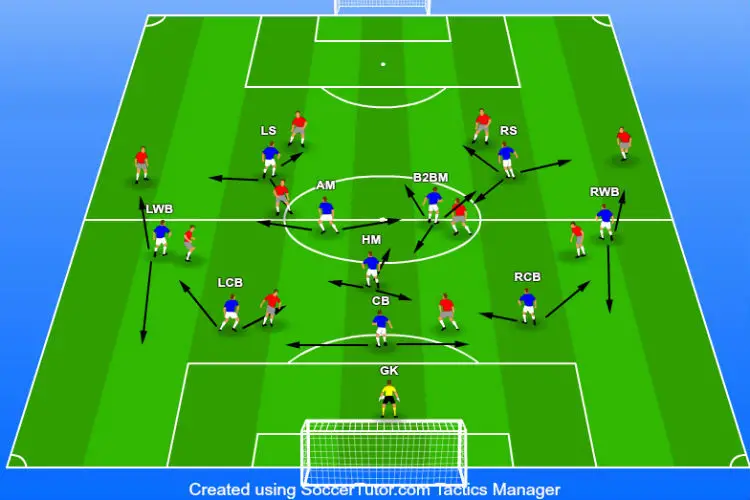
How Wing-Backs Break Traditional Defensive Shape
Wing-backs operate exclusively in back-three systems like 3-5-2 or 3-4-3 formations, starting dramatically higher than traditional defenders—often level with midfielders. This advanced starting position creates immediate numerical superiority in attack but leaves massive defensive gaps when possession turns over. You must recognize this critical vulnerability: When the wing-back advances, the nearest center-back sprints wide to cover the vacated space, stretching the defense horizontally. This creates recovery sprints of 40-60 meters during transitions—far beyond what full-backs face.
Visual cue: Watch for the center-back shifting toward the touchline when the wing-back attacks. If opponents exploit the space between the central defenders during this shift, that’s the system’s structural weakness. Elite wing-backs like Achraf Hakimi minimize this risk by timing their recovery runs to match the opponent’s counter-attack speed.
Full-Back Anchoring: The Defensive Safety Net
Full-backs in 4-4-2 or 4-3-3 systems maintain deeper starting positions, prioritizing immediate channel protection between center-back and touchline. Unlike wing-backs, they never sacrifice defensive integrity for width—they establish stability first, then join attacks selectively. This is your tactical advantage: Full-backs maintain constant connection with center-backs, creating compact defensive blocks that prevent those dangerous 40+ meter recovery sprints. When possession turns over, they’re already positioned to engage wingers directly rather than racing back from advanced zones.
Pro tip: If your team concedes goals from counter-attacks down the flanks, check whether you’re using wing-backs in a system that requires constant high pressing. Switching to full-backs instantly reduces recovery distance by 30-50%.
Wing-Back Defensive Triggers: Managing High-Risk Transitions
Why Wing-Back Recovery Runs Demand Elite Stamina
When possession turns over, wing-backs face unique defensive triggers: They must instantly sprint back toward their goal while the center-back shifts wide to cover. This creates two critical vulnerabilities: First, the space between the shifted center-back and central defender becomes exposed. Second, wing-backs average 30-40 high-intensity actions per match—more than any outfield position. You’ll fail if you ignore this: Elite wing-backs require 30-meter sprint times under 4.2 seconds and vertical jumps of 65-75cm to compete aerially during these chaotic transitions.
Common mistake: Coaches often deploy technically gifted wingers as wing-backs without assessing their recovery speed. If a player can’t consistently cover 800-1200 meters of high-intensity sprinting per match, they’ll leave your defense exposed.
Full-Back Channel Defense: The Art of Positional Discipline
Full-backs excel in one-on-one channel defense by maintaining optimal distances (15-20 meters) from center-backs and midfielders. Their deeper positioning allows them to win 55-65% of defensive duels—significantly higher than wing-backs—because they engage opponents with controlled timing rather than desperate recovery runs. Key insight: Elite full-backs like João Cancelo prioritize preventing the winger’s cut-ins over aggressive tackles, using body positioning to force opponents wide.
Time-saving shortcut: Train full-backs to “shadow” the winger’s hip—this reduces recovery distance by 3-5 meters and increases duel success rates by 15-20%.
Wing-Back Attacking Output: Beyond Traditional Crossing
How Modern Wing-Backs Generate 2.5+ Chances Per Match

Wing-backs deliver 4-8 crosses per match from advanced positions, but their true value lies in creating numerical overloads. You must track these metrics: Elite performers like Trent Alexander-Arnold average 1.5-2.5 key passes per 90 minutes by executing progressive carries (8-12 per match) that break opposition lines. Crucially, they provide width stretching defenses horizontally while creating 2v1 situations against isolated full-backs.
Technical requirement: Wing-backs need two-footed crossing ability to deliver whipped, driven, and cut-back crosses from varying angles—all while sprinting at full pace. Warning: Players who can only cross with their dominant foot become predictable and ineffective against high-pressing systems.
Full-Back Precision: Quality Over Quantity in Attack
Full-backs contribute selectively with 2-4 crosses per match but achieve 25-35% accuracy—nearly double wing-back rates—due to measured approach timing. Your tactical focus should be: Training full-backs to time overlapping runs only when the winger draws the opponent’s full-back inward. This creates cleaner crossing lanes and prevents congestion in wide areas.
Pro tip: Elite full-backs like Andy Robertson average just 1.0-2.0 completed crosses per 90 minutes but prioritize cut-backs to arriving midfielders over speculative end-line deliveries. This generates higher-quality chances despite lower volume.
Physical Demands: Why Wing-Backs Cover 2km More Per Match

Wing-Back Endurance: The 11-13km Marathon Requirement
Wing-backs cover 11-13 kilometers per match—2km more than full-backs—with 800-1200 meters at high intensity. This isn’t optional: They require repeated sprint ability to complete 30-40 high-intensity actions while maintaining technical quality. Critical training focus: Daily recovery drills for 40-60 meter sprint patterns, not just generic endurance work. Players lacking this specific conditioning will fade after 60 minutes, leaving your flanks exposed.
Visual cue: In the final 15 minutes, watch wing-backs’ crossing accuracy drop below 20% if stamina fails—they’ll resort to hopeful long balls instead of precise deliveries.
Full-Back Explosiveness: Mastering 10-Meter Bursts
Full-backs prioritize explosive 10-meter acceleration (under 1.8 seconds) over sustained speed. Your development priority: Agility drills for quick directional changes during one-on-one defensive situations. While covering less total distance (9-11km), full-backs need sharper movements to win 8-12 defensive duels per match.
Common mistake: Coaches overload full-backs with long-distance running, neglecting the short-burst explosiveness required for defensive transitions. Focus 70% of conditioning on 5-15 meter shuttle runs.
Tactical Integration: Why Formations Dictate Role Success
Wing-Back System Dependencies: The 3-5-2 Reality Check
Wing-backs function ONLY in specific formations—3-5-2 creates 5-3-2 defensive shapes, while 3-4-3 becomes 5-4-1 without possession. Critical insight: Central midfielders must cover wing-back positions during sustained attacks. If your midfield lacks tactical discipline, wing-backs become liabilities. Warning sign: When opponents overload your flanks with 3v2 situations, your system likely has insufficient midfield coverage for wing-back advances.
Pro tip: Train wing-backs to “false” central positions early in matches, creating midfield overloads before revealing their width. This confuses opposition marking schemes.
Full-Back Flexibility: Inverted Roles in Modern Systems
Full-backs integrate into traditional back-four systems with revolutionary flexibility. Game-changing tactic: Pep Guardiola’s inverted full-backs tuck centrally during possession, creating 3v2 overloads in midfield. Players like Kyle Walker now contribute 4-7 progressive passes per 90 minutes from deeper zones—functions previously reserved for midfielders.
Your strategic advantage: Full-backs allow real-time tactical shifts—drop deeper to protect leads or invert to bypass high presses—without changing formations.
Development Pathways: Building the Right Player Profile
Wing-Back Training: Converting Wingers, Not Defenders
Successful wing-back development starts with players possessing exceptional stamina and two-footed technique—often converted wingers or attacking midfielders. Your training focus: Daily crossing volume of 200-300 attempts while fatigued, combined with video analysis of recovery run timing. Avoid this mistake: Trying to develop pure defenders into wing-backs; their defensive instincts hinder the required attacking boldness.
Time estimate: It takes 12-18 months of specialized training to develop a functional wing-back from a winger.
Full-Back Foundation: Defense-First Progression
Full-back development prioritizes defensive fundamentals before adding attacking responsibilities. Essential sequence: Master one-on-one tackling and positioning first, then gradually introduce overlapping timing. Critical drill: Daily 1v1 defensive practice against multiple opponent types to build game intelligence for reading attacking triggers.
Pro tip: Have full-backs play center-back for 20% of training sessions—this deepens positional understanding without compromising role-specific development.
Key Takeaway: Choose wing-back roles only if you possess elite stamina, two-footed technical ability, and comfort in advanced positions—this role demands 30% more high-intensity running than full-backs. Opt for full-back development if you prioritize defensive mastery with tactical flexibility; these players win 10-15% more defensive duels while contributing selectively in attack. Your next step: Analyze your physical profile against these benchmarks—attempting wing-back duties without the required 4.2-second sprint speed leaves your team dangerously exposed. For coaches, match formations to player capabilities: forcing full-backs into wing-back roles in 3-5-2 systems is the fastest path to conceding counter-attack goals.

I come from the “soccer heart” of Germany, the Ruhrpott. I have played, trained and followed soccer all my life and am a big fan of FC Schalke 04. I also enjoy following international soccer extensively.