3-5-2 vs 4-3-3 Formation Difference & Key Tactical Battles
The difference between a 3-5-2 and a 4-3-3 formation comes down to defensive structure and attacking width. The 3-5-2 uses three center-backs and wing-backs to control the center and flanks, favoring direct play through two strikers. The 4-3-3 uses a back four and three forwards to dominate possession and stretch play wide, relying on a single defensive midfielder for balance.
Most coaches choose based on philosophy, not personnel. That’s the mistake. You pick the system that fits the players you have, not the one you admire on television. Force a 4-3-3 onto a squad without a natural single pivot, and your defense collapses by the 60th minute. Try a 3-5-2 without marathon-running wing-backs, and your wide channels turn into a highway for opposing wingers.
This guide breaks down the 3-5-2 vs 4-3-3 formation difference by structure, player roles, and match-up scenarios. You will learn which system gives you midfield control, which one unlocks attacking width, and the single most important position that decides if either formation works at all.
Key Takeaways
- The 3-5-2 formation is structurally stronger in central defense and build-up but is entirely dependent on two elite wing-backs to function. Without them, the wide center-backs are exposed.
- The 4-3-3 system excels at possession-based play and pressing but lives or dies by the performance of its single defensive midfielder (the “pivot”). If this player is isolated, the entire defensive structure fractures.
- Your choice hinges on player profiles: three aerially dominant center-backs and two engine-like wing-backs mandate a 3-5-2; a world-class holding midfielder and dynamic wingers mandate a 4-3-3.
- In a direct matchup, a well-drilled 3-5-2 can overload the 4-3-3’s single pivot in midfield, while a 4-3-3 can pin back the 3-5-2’s wing-backs and isolate its wide center-backs.
- Neither formation is inherently better. The 3-5-2 offers defensive solidity and direct attacking routes. The 4-3-3 offers territorial control and offensive fluidity. Your squad decides.
The Core Structural Difference: Three at the Back vs. Four
This is not about an extra defender. It is about a fundamental shift in how you defend space and build attacks. The back-three in a 3-5-2 creates a numerical overload at the base, making it extremely difficult for a pressing opponent to cut off passing lanes. The back-four in a 4-3-3 provides traditional cover in wide areas but demands more from its full-backs in attack.
The 3-5-2 formation uses three central defenders to create a stable base for build-up play and to free wing-backs for advanced roles. The 4-3-3 formation relies on a flat back four for defensive width, with full-backs providing overlapping runs to support a front three. The structural difference dictates all subsequent player movements and attacking patterns.
The first touch tells the story. In a 3-5-2, your center-back receives the ball with two passing options to his left and right, also center-backs. Opposing forwards have to choose which one to press, often leaving a free man. In a 4-3-3, your center-back passes to a full-back who is already looking up the line, or to the single pivot midfielder dropping into space. The build-up is faster, but the initial pass is riskier.
TL;DR: Pick a 3-5-2 for a secure, possession-dominant build-up from the back. Pick a 4-3-3 for quicker, full-back driven transitions that immediately engage the midfield.
Player Roles: Wing-Backs vs. Wingers, Strikers vs. a False 9
The names on the team sheet might look similar. The jobs are not. Confusing a wing-back’s duty with a winger’s is how you lose matches on the flanks. A fundamental part of any soccer tactics guide is understanding these specific positional mandates.
| Position | In a 3-5-2 | In a 4-3-3 | Consequence of Mix-Up |
|---|---|---|---|
| Wide Defender | Wing-back: covers entire flank, primary width provider, must defend 1v1. | Full-back: provides overlap, defends channel, less attacking burden. | A wing-back in a 4-3-3 leaves the winger isolated; a full-back in a 3-5-2 gets exposed defensively. |
| Wide Attacker | Does not exist; width comes from wing-backs. | Winger: stays high, cuts inside or crosses, limited defensive tracking. | A winger in a 3-5-2 unbalances the midfield; no winger in a 4-3-3 makes the attack narrow. |
| Central Striker | Two strikers: partnership for hold-up play, runs in behind, and link-up. | One striker (or False 9): often drops deep to create space for wingers. | Two strikers in a 4-3-3 crowd the center; a False 9 in a 3-5-2 leaves no focal point. |
| Key Midfielder | Any of the three central midfielders; roles are fluid and interchangeable. | The single pivot (No. 6): sole defensive shield, connector between lines. | A missing pivot in a 4-3-3 is catastrophic; a defined pivot in a 3-5-2 reduces midfield flexibility. |
The wing-back role is the most physically demanding in modern soccer. I have watched players like Achraf Hakimi complete a game in a 3-5-2 with a distance covered stat over 13 kilometers. The next day they cannot walk properly. If your candidate cannot both deliver a pinpoint cross in the 85th minute and then sprint 70 yards to make a recovering tackle, you cannot play a true 3-5-2 formation. You are just playing a back five with no attack.
Conversely, the single pivot in a 4-3-3 requires a specific mental processor. This player reads the game two passes ahead. Sergio Busquets made it look easy. Without that player, the space between your defense and midfield becomes a playground for the opponent’s number 10. You need a dedicated single pivot, not a converted box-to-box midfielder.
Midfield Battle: Control vs. Fluidity
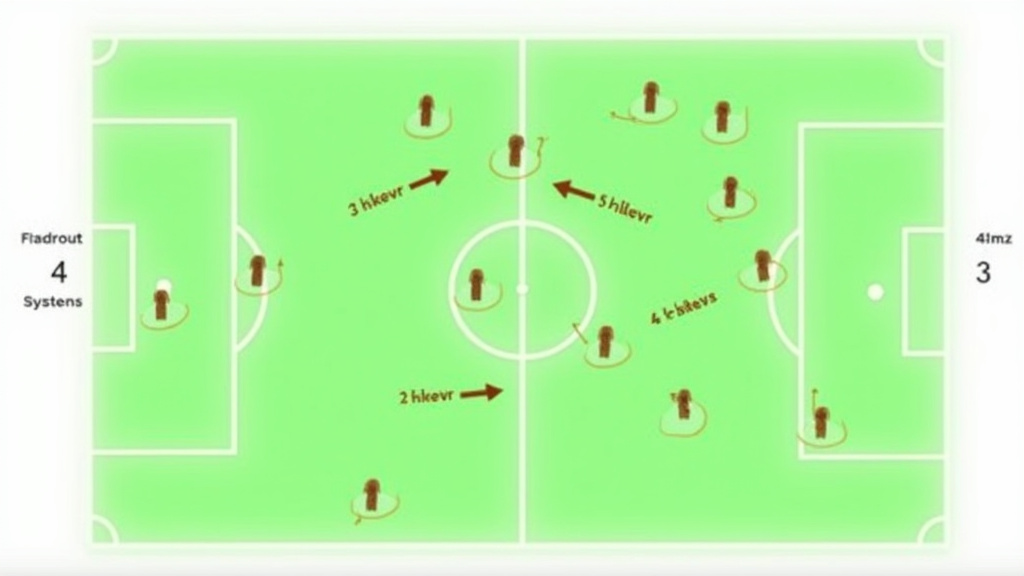
Both formations field three central midfielders. That is where the similarity ends. The 3-5-2’s trio is about control, physicality, and supporting the wing-backs. The 4-3-3’s triangle is about fluidity, possession, and feeding the front three. The difference defines the match’s tempo.
In a 3-5-2, the midfield three often operates with a clear hierarchy. You might have a destroyer, a shuttler, and a creator. Their primary job is to win second balls, cover for the advancing wing-backs, and play direct passes into the striker partnership. The 3-5-2’s midfield control comes from numbers and positioning, not intricate passing.
Common mistake: Using three playmakers in a 3-5-2 midfield — you lose the physical battles, your wing-backs get no defensive cover, and the opposition runs straight through the center. You need at least one midfielder who relishes a tackle.
The 4-3-3 midfield is built for possession. The single pivot sits deep, the two number 8s push forward. This creates natural triangles all over the pitch, especially with the dropping full-backs. A resource like the Thethaoscore tactical analysis of 4-3-3 will show you these rotating triangles are designed to pull opponents out of position. The midfield control here is based on technical skill and movement.
The 4-3-3 demands your central midfielders have the engine to press and the technique to play in tight spaces. If they cannot do both, the system fails. You get caught in possession high up the pitch.
TL;DR: For physical, transitional midfield play, use the 3-5-2. For technical, possession-dominant midfield play, use the 4-3-3.
Defensive Shape and Vulnerabilities
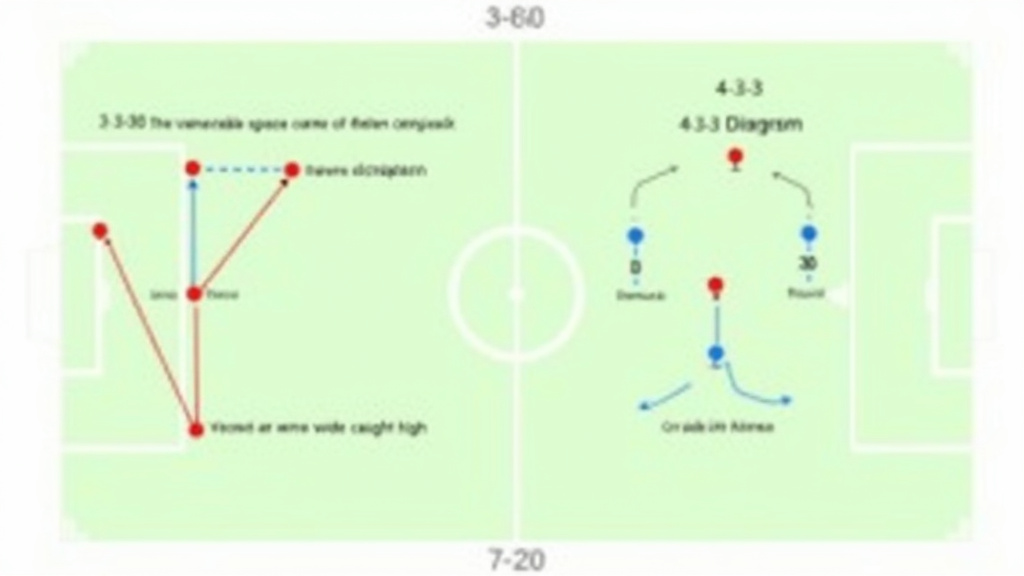
Each formation has a famous weakness. For the 3-5-2, it is the space outside the wide center-backs. For the 4-3-3, it is the isolation of the single pivot. Exploiting these weaknesses is how smart opponents win games.
The 3-5-2 relies on its wing-backs to defend the entire flank. When a wing-back is caught high up the pitch, the wide center-back must step out into the channel. This is a problem. Most center-backs are not comfortable defending in that much space against a quick winger. If the opponent can switch play quickly to the opposite flank, your entire defensive structure has to shift, creating gaps. This is the core of the 3-5-2’s defensive vulnerabilities.
The 4-3-3’s weakness is more central. The single pivot is the only dedicated defensive midfielder. If the opposing team fields two attacking midfielders (like in a 4-2-3-1), they can double up on that one player. When the pivot is bypassed, the two center-backs are exposed directly to forwards. This is why the 4-3-3’s defensive vulnerabilities are a constant topic for coaches. You either need a superhuman pivot or your wingers must track back relentlessly.
| Formation | Primary Defensive Strength | Glaring Vulnerability | How Opponents Exploit It |
|---|---|---|---|
| 3-5-2 | Central compactness. Five defenders in a low block. | Space outside wide center-backs. | Quick switches of play, isolating the wide center-back 1v1 against a winger. |
| 4-3-3 | High press, coordinated defensive lines. | Isolation of the single pivot. | Playing two attacking midfielders to overload the pivot, forcing center-backs to step up. |
| Hybrid | In-possession flexibility (e.g., 3-2-5). | Defensive transition confusion. | Counter-attacking immediately after losing the ball, before the shape is reset. |
Your job is to hide the weakness. In a 3-5-2, you instruct your wing-back to never bomb forward at the same time. In a 4-3-3, you ask one of your number 8s to sit closer to the pivot against strong opposition. These small adjustments are the difference between a clean sheet and a collapse.
Attacking Patterns: Direct Play vs. Possession Dominance
Watch where the ball goes in the final third. In a 3-5-2, it goes wide to the wing-back for a cross, or direct into the feet of a striker. In a 4-3-3, it cycles through midfield, out to the winger, who either drives at the full-back or cuts inside to shoot. The attacking philosophy is baked into the shape.
The 3-5-2 is a direct attacking formation. Its strength is in getting the ball forward quickly to the two strikers. They can combine with each other or lay it off to the onrushing wing-back or central midfielder. It is vertical, pragmatic, and effective against teams that sit deep. You are not trying to pass them to death; you are trying to overwhelm the box with numbers from crosses and second balls. This approach is a key part of the modern 3-5-2 revival.
The 4-3-3 is a possession-dominant attacking system. The goal is to create superiorities—numerical, positional, qualitative—all over the pitch. The attacking width of the 4-3-3 stretches the opponent horizontally, which in turn opens passing lanes through the center. The false 9 variation, where the striker drops deep, is a classic example of this positional play, pulling center-backs out of position.
I once coached a youth team to try a 4-3-3 because we had fast wingers. We kept possession for fun but could not score. The problem was the single striker. He was a classic target man, not a false 9. He stayed up, the wingers stayed wide, and nobody attacked the space between the center-backs. We switched to a 3-5-2, played him with a quicker partner, and started scoring from wing-back crosses the very next week.
Your personnel dictates the pattern. Do you have a striker who can link play and a partner who runs in behind? That is a 3-5-2. Do you have a technical midfielder who can dictate tempo and wingers who can beat their man? That is a 4-3-3. Forcing the wrong pattern on your players is a recipe for sterile possession or hopeless long balls.
The Direct Matchup: What Happens When a 3-5-2 Plays a 4-3-3?
This is the chess match. The 3-5-2’s three central midfielders can naturally overload the 4-3-3’s single pivot. If the 4-3-3 does not adjust, its pivot gets swarmed, and the 3-5-2’s strikers receive the ball between the lines all game. This is a fundamental tactical difference between formations that decides games.
However, a smart 4-3-3 coach has a counter. They will instruct their wingers to stay high and wide, pinning the 3-5-2’s wing-backs in their own half. This neutralizes the 3-5-2’s main attacking outlet. Then, they will look to isolate the 3-5-2’s wide center-back against the winger in a 1v1 duel. This is where the 3-5-2’s structural weakness is tested.
The battle is won in the preparation. As a 3-5-2 coach, you must tell your wing-back to be selective with forward runs. Your central midfielders must protect the pivot overload zone. As a 4-3-3 coach, you might drop one of your number 8s deeper to form a double pivot temporarily, matching the 3-5-2’s midfield numbers.
TL;DR: In a 3-5-2 vs. 4-3-3 game, the winner is usually the coach who successfully adapts their midfield structure first to negate the opponent’s primary advantage.
How to Choose: A Practical Decision Guide
Forget what the top team in the league uses. Look at your own squad list. The choice between a 3-5-2 and a 4-3-3 is an elimination process based on concrete player attributes. Understanding this choice is a core skill in formation interpretation.
Answer these questions in order:
-
How many fit, reliable center-backs do you have?
- Three or more: Strong case for 3-5-2.
- Two, plus decent full-backs: Lean towards 4-3-3.
-
What is the profile of your best wide players?
- Elite stamina, good crosser, competent 1v1 defender: They are wing-backs. Use 3-5-2.
- Explosive speed, dribbler, goal threat, weaker defender: They are wingers. Use 4-3-3.
-
Who is your best central midfielder?
- A tactically disciplined destroyer or deep-lying playmaker: Potential single pivot for 4-3-3.
- An all-action box-to-box player: Better suited to the fluid trio of a 3-5-2.
-
What is your preferred method of scoring?
- Crosses, set-pieces, striker partnerships: 3-5-2.
- Cut-backs, through balls, winger dribbles: 4-3-3.
If your answers point clearly in one direction, the decision is made. If they are mixed, you likely have a squad suited to a different popular soccer formation altogether, like a 4-2-3-1 or a 4-4-2. Do not force a square peg into a round hole. The formation is a tool to maximize your players, not an identity to which they must conform.
Frequently Asked Questions
Which formation is better for a possession-based style, 3-5-2 or 4-3-3?
The 4-3-3 is the quintessential possession formation. Its structure naturally creates passing triangles (between full-back, winger, and central midfielder, for example) all over the pitch. The 3-5-2 can dominate possession in the build-up phase with its three center-backs, but its attacking patterns are typically more direct and vertical than the intricate play associated with a 4-3-3.
Can you play a 3-5-2 without specialist wing-backs?
No. You can try, but you will fail. A full-back playing as a wing-back will not provide enough attacking threat. A winger playing as a wing-back will be a defensive liability. The role requires a unique hybrid skill set. If you lack these players, choose a formation with a back four and defined full-back responsibilities.
How does a 4-3-3 defend against a 3-5-2’s midfield overload?
The 4-3-3 coach must adjust. The most common solution is to ask one of the attacking central midfielders (a number 8) to drop deeper, effectively forming a temporary double pivot alongside the single pivot. This matches the 3-5-2’s three-man midfield numerically. The alternative is to press so high that the 3-5-2’s midfielders cannot receive the ball comfortably.
What is the main advantage of the 3-5-2’s two-striker system?
It creates constant problems for a back four. The two strikers can split the center-backs, with one dropping short and the other running in behind. They can also combine directly with each other, something a lone striker cannot do. This partnership makes the team less predictable and more potent from direct passes and crosses.
Is the 4-3-3 formation more attacking than the 3-5-2?
Not necessarily. It is more about the type of attack. The 4-3-3 commits more players to high, wide positions (wingers), which stretches the play. The 3-5-2 commits its width from deeper positions (wing-backs) and floods the box with two strikers and midfield runners. Both can be incredibly attacking; they just channel that attack through different areas of the pitch.
The Bottom Line
The debate between the 3-5-2 and 4-3-3 is a debate about control. The 3-5-2 seeks to control space, especially in central and defensive areas, through sheer numbers and structure. The 4-3-3 seeks to control the ball, dictating the game’s tempo and rhythm through positional play and technical superiority.
Your choice is not philosophical. It is practical. Audit your squad. If you have three dominant center-backs and two engine players for the flanks, the 3-5-2 unlocks your team’s potential. If you have a world-class defensive midfielder, dynamic wingers, and full-backs who can play, the 4-3-3 is your path. The best formation is the one that makes your best players shine and hides your weakest links. Everything else is just a diagram on a board.

I come from the “soccer heart” of Germany, the Ruhrpott. I have played, trained and followed soccer all my life and am a big fan of FC Schalke 04. I also enjoy following international soccer extensively.