BC Place World Cup Matches and Schedule: Teams & Full Guide
BC Place will host seven FIFA World Cup 2026 matches: five group-stage games, one Round of 32 knockout, and one Round of 16 knockout. The confirmed dates run from June 13 to July 7, 2026, with Canada playing two group-stage matches here against Qatar and Switzerland.
Most guides list the dates and leave you guessing about everything else. They forget that a match schedule is useless without knowing how the city will handle a million extra visitors, which transit stops will be closed, or when you can actually buy a ticket. You get the fixture list but miss the logistics that turn a plan into a trip.
This guide maps every BC Place fixture with local time conversions, explains the stadium’s quirks for soccer, and lays out the on-the-ground reality of attending a World Cup match in Vancouver.
Key Takeaways
- Canada plays two Group B matches at BC Place: June 18 vs Qatar and June 24 vs Switzerland, both at 3 PM ET (12 PM PT).
- The five other matches feature teams like Australia, New Zealand, Egypt, and Belgium, with knockout rounds on July 2 and July 7.
- Stadium-Chinatown Station closes on match days; use Main Street–Science World Station on the Expo Line.
- Ticket sales will happen through FIFA’s official portal in phases; register for alerts now.
- Expect over a million visitors to British Columbia between 2026 and 2031 because of this event.
The Complete BC Place Match Schedule
The official FIFA match schedule assigns seven games to Vancouver. Five are in the group stage, one is a Round of 32 fixture, and one is a Round of 16 fixture. All times are local Pacific Time (PT); Eastern Time (ET) is three hours ahead.
Group-stage matches are locked. Knockout-stage participants depend entirely on group results, you won’t know which teams are playing in Vancouver’s July games until late June.
The table below lists every match at BC Place with its date, local kickoff time, and the teams involved (or the qualifying path).
| Date | Kickoff (PT) | Kickoff (ET) | Match | Stage |
|---|---|---|---|---|
| Sat, Jun 13, 2026 | 9:00 PM | 12:00 AM (Jun 14) | Australia vs UEFA Playoff C Winner | Group D |
| Thu, Jun 18, 2026 | 12:00 PM | 3:00 PM | Canada vs Qatar | Group B |
| Sun, Jun 21, 2026 | 6:00 PM | 9:00 PM | New Zealand vs Egypt | Group G |
| Wed, Jun 24, 2026 | 12:00 PM | 3:00 PM | Canada vs Switzerland | Group B |
| Fri, Jun 26, 2026 | 8:00 PM | 11:00 PM | New Zealand vs Belgium | Group G |
| Thu, Jul 2, 2026 | 8:00 PM | 11:00 PM | 1B vs 3 EFGIJ | Round of 32 |
| Tue, Jul 7, 2026 | 1:00 PM | 4:00 PM | Winner Match 85 vs Winner Match 87 | Round of 16 |
TL;DR: BC Place has seven matches between June 13 and July 7. Canada’s two games are midday local time; the others are evening. The July knockout fixtures depend on group results.
Which Teams Are Playing in Vancouver?
Four nations are confirmed for BC Place group games: Canada, Qatar, Switzerland, and New Zealand. Australia and Egypt are also slated to play here, pending their group draws. Belgium rounds out the list.
Canada’s two matches are the centerpiece for local fans. They face Qatar first, then Switzerland. Both are at noon Pacific Time, a scheduling choice that maximizes rest days for teams traveling between host cities. The evening matches, like New Zealand vs Belgium at 8 PM, cater to global broadcast windows.
Australia faces the UEFA Playoff C Winner in Group D. That winner will be decided later through a qualification path involving teams like Ukraine, Iceland, or Georgia. You won’t know the opponent until after the playoffs conclude.
The Round of 32 match on July 2 pits the Group B winner against the third-place team from a combined group pool (EFGIJ). The Round of 16 on July 7 matches the winners of two specific knockout games (Match 85 and Match 87). This means Vancouver could host a quarterfinal contender.
TL;DR: Canada, Qatar, Switzerland, New Zealand, Egypt, Belgium, and Australia (or a UEFA playoff winner) are the teams playing at BC Place. The July games depend on group standings.
BC Place Stadium Profile
BC Place opened in 1983 and normally seats about 54,000. For the World Cup, FIFA mandates specific configurations for media, hospitality, and security, which might adjust the available public capacity slightly. It’s a dome with a retractable roof, the roof will likely be closed for matches to control lighting and acoustics for broadcast.
The stadium is home to the Vancouver Whitecaps FC of MLS and the BC Lions of the CFL. Soccer on a hybrid football field brings a few quirks. The pitch markings are temporary overlays, and the seating bowl is designed for a rectangular gridiron view. FIFA will install temporary seating closer to the touchlines to improve the soccer-specific sightlines.
The hybrid use means the natural grass surface is replaced with a FIFA-approved temporary soccer turf for the tournament. It gets installed a month before the first match and removed after the last.
TL;DR: BC Place is a 54,000-seat dome with a retractable roof. It’s a multi-purpose stadium getting a temporary soccer-specific overlay for the World Cup.
How BC Place Compares to Other 2026 Venues
Vancouver is the only Canadian host city on the West Coast. The other two are Toronto and Edmonton. BC Place’s capacity is mid-range among the 16 venues; it’s smaller than MetLife Stadium in New Jersey (82,500) but larger than BMO Field in Toronto (45,000 for soccer).
The stadium’s location in downtown Vancouver is a major advantage. It’s within walking distance of many hotels and connected to the SkyTrain transit network. That proximity reduces the need for extensive shuttle systems compared to more isolated venues. However, the downtown core also means street closures and congestion will be intense on match days.
TL;DR: BC Place is a mid-sized, downtown venue with excellent transit links. Its location creates easy access but also significant local congestion.
Fan Experience & Logistics
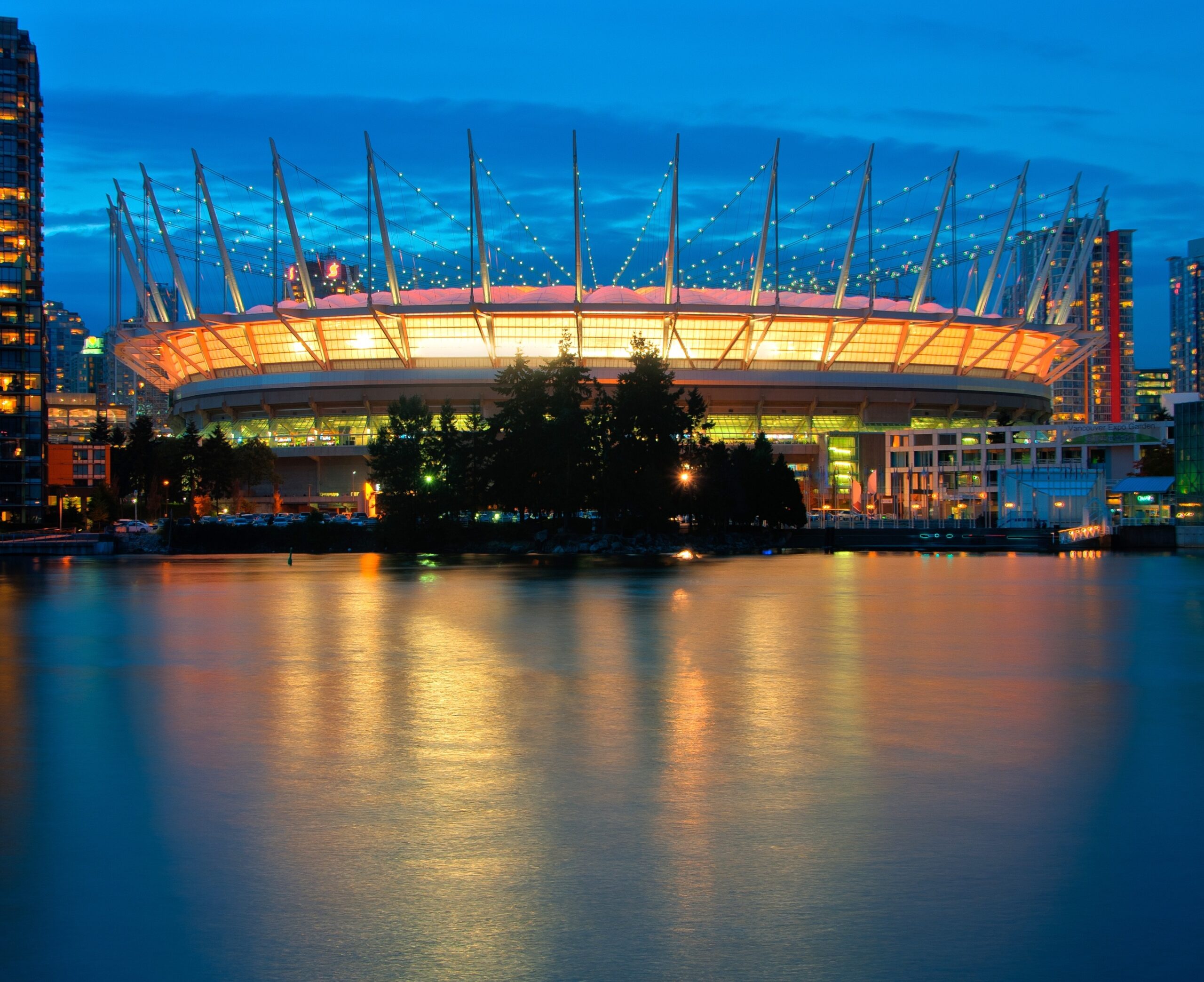
Photo: Yvrphoto / Wikimedia Commons / CC BY-SA 3.0

Over a million visitors are projected to come to British Columbia between 2026 and 2031 as a result of the World Cup. For the match weeks in June and July 2026, downtown Vancouver will feel that weight.
Common mistake: Assuming Stadium-Chinatown Station will be open on match days, it will be closed. Use Main Street–Science World Station on the Expo Line, then walk.
The official transit plan reroutes crowds to Main Street–Science World Station. From there, it’s a short walk across the Cambie Street Bridge to the stadium. Expect lines. If you’re driving, paid parking near the stadium will be scarce and expensive. Most attendees will use transit.
FIFA will establish official Fan Fest zones in the city, likely at locations like Jack Poole Plaza or other large public spaces. These are free, ticketed areas with live music, food, and broadcast screens for matches not happening at BC Place. The city will also host cultural events celebrating the tournament’s global nature.
Ticket sales will happen through FIFA’s official portal in phases. The first phase usually opens about a year before the event. Demand for Canada’s matches will be extreme. Register for FIFA ticket alerts now.
TL;DR: Use Main Street–Science World Station, not Stadium-Chinatown. Book accommodation early. Monitor FIFA for Fan Fest locations and ticket sale announcements.
What About Tickets and Pricing?
FIFA controls all ticket sales. Prices are not published yet, but historical patterns suggest a tiered system:
- Category 1: Central midfield, highest price.
- Category 2: Sideline or corners.
- Category 3: Upper bowl or behind goals.
- Category 4: Special affordability tickets for residents.
Group-stage matches for less glamorous teams will be cheaper. Canada’s matches, and any knockout game featuring a top nation, will be the most expensive and quickest to sell out.
I missed the ticket window for the 2014 World Cup in Brazil because I waited for “the right moment.” The moment was two days after sales opened, and everything was gone. Register for FIFA’s ticket alerts and buy during the first phase you qualify for, even if you’re not sure about your travel plans yet. You can resell later through FIFA’s platform if needed.
Expect dynamic pricing. If Canada advances to the Round of 16 and that match is in Vancouver, tickets for that game will skyrocket in the resale market.
TL;DR: Tickets are sold by FIFA in phases. Register early. Canada’s games will be the most expensive and sell out fastest.
Economic Impact and Local Legacy
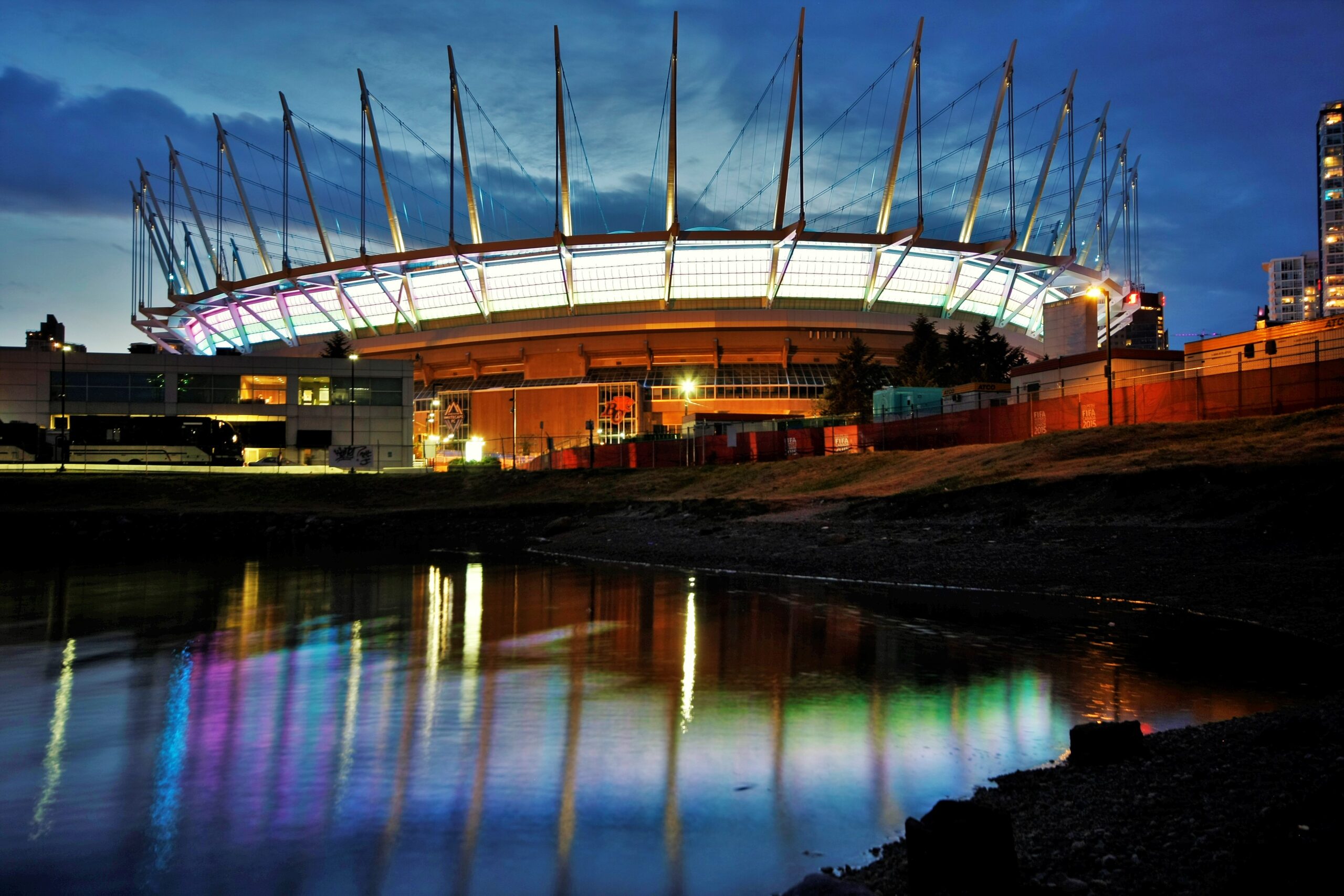
Photo: Mike / Wikimedia Commons / CC BY-SA 2.0
.jpg)
The provincial government projects $1.7 billion in tourism output and over $1 billion in direct visitor spending. Tax revenues from the event could reach between $448 million and $478 million.
That money flows to hotels, restaurants, transit, and retail. It also funds community programs tied to the tournament’s legacy. Vancouver 2026 organizers have pledged to support soccer infrastructure upgrades across British Columbia, from youth field renovations to coaching clinics.
The global exposure matters. Vancouver will be on worldwide broadcast for seven matches. That spotlight drives future tourism and business interest. It’s not just about the month of games.
Common mistake: Thinking the economic impact is only during the tournament month, visitor spending and tourism spikes will continue for years, with over a million extra visitors projected through 2031.
TL;DR: The World Cup will inject billions into the local economy and fund soccer infrastructure projects across BC. The impact lasts years beyond 2026.
Frequently Asked Questions
What are the exact dates for Canada’s matches at BC Place?
Canada plays Qatar on Thursday, June 18, 2026 at 12:00 PM Pacific Time (3:00 PM Eastern Time). They play Switzerland on Wednesday, June 24, 2026 at the same local time.
How many total World Cup matches will Vancouver host?
BC Place hosts seven matches: five in the group stage, one Round of 32, and one Round of 16.
Which SkyTrain station should I use for BC Place matches?
Use Main Street–Science World Station on the Expo Line. Stadium-Chinatown Station will be closed on match days.
When will tickets for BC Place matches be available?
FIFA ticket sales will occur in phases, starting roughly a year before the tournament. Exact dates are not announced yet. Register for alerts on FIFA’s official website.
Will the roof at BC Place be open or closed for matches?
It will likely be closed to ensure consistent lighting and acoustics for the global broadcast.
Can I attend if I don’t have a match ticket?
Yes. FIFA Fan Fest zones in the city will offer free, ticketed access to watch matches on big screens, with entertainment and food.
The Bottom Line
BC Place’s seven-match schedule is set. Canada’s two group games are midday fixtures in June. The knockout rounds in July could feature any team that advances from the groups.
The logistics are the real challenge. Transit changes, hotel scarcity, and ticket demand will define your experience more than the match schedule itself. Plan for the crowds, not just the games.
Vancouver gets a global showcase and a long-term economic boost. For fans, it’s a chance to see World Cup soccer in a downtown stadium with a roof closed under the Pacific Northwest sky.
I come from the “soccer heart” of Germany, the Ruhrpott. I have played, trained and followed soccer all my life and am a big fan of FC Schalke 04. I also enjoy following international soccer extensively.