World Cup Schedule at SoFi Stadium: Match Dates & Details
This post contains affiliate links. As an Amazon Associate, we earn from qualifying purchases.
SoFi Stadium will host eight 2026 FIFA World Cup matches from June 12 to July 10, including the US Men’s National Team’s opener against Paraguay on June 12, a second US group game against Turkey on June 25, two Round of 32 matches, and a quarterfinal. It is the only US city to host a quarterfinal and the tournament’s sole indoor venue.
Most guides list the dates and times but miss why this schedule matters. They don’t explain how the US getting two group games in LA is a tactical advantage, or why FIFA picked this stadium for the knockout stages. They also skip the physical transformation happening right now, over 400 seats are being ripped out to make the pitch fit.
This guide breaks down every match, the stadium’s unique features, and what fans need to know about tickets and travel. You’ll see why Los Angeles is the centerpiece of the 2026 World Cup.
Key Takeaways
- SoFi Stadium hosts eight matches: five group games, two Round of 32 matches, and one quarterfinal on July 10.
- The USMNT plays both its first and final group stage matches at this venue (vs. Paraguay on June 12 and vs. Turkey on June 25), a major logistical benefit.
- The stadium undergoes a significant conversion for FIFA, including seat removal and the installation of a natural grass pitch under a translucent roof.
- For the tournament, the venue will be officially called “Los Angeles Stadium” to comply with FIFA’s clean venue policy.
- Los Angeles is the only US host city awarded a quarterfinal match, underscoring the venue’s global importance.
The Complete SoFi Stadium Match Schedule (June 12 – July 10)
The fixture list is locked in. Los Angeles gets a prime slate of games designed for maximum drama and minimal travel fatigue for key teams. The schedule leverages the stadium’s indoor climate control and prime West Coast time zone for global broadcasts.
All kick-off times are in Pacific Time (PT). The early 12 PM starts are for European TV audiences, while the evening slots cater to prime time across the Americas.
SoFi Stadium (Los Angeles Stadium) will host eight 2026 FIFA World Cup matches. The schedule includes five group stage matches, two Round of 32 knockout games, and one quarterfinal. The venue features a climate-controlled environment under a fixed translucent roof and a capacity of approximately 70,000 for the tournament. Key matches include the United States’ Group D opener on June 12 and their final group match on June 25.
Here is the day-by-day lineup for the stadium:
| Date | Match | Stage | Kick-off (PT) | Global Significance |
|---|---|---|---|---|
| Thu, Jun 12 | USA vs Paraguay | Group D | 6:00 PM | USMNT home opener in a host city. |
| Sun, Jun 15 | Iran vs New Zealand | Group G | 6:00 PM | Asian-Oceania clash with high stakes. |
| Wed, Jun 18 | Switzerland vs Bosnia & Herzegovina | Group B | 12:00 PM | European derby with passionate fan bases. |
| Sat, Jun 21 | Belgium vs Iran | Group G | 12:00 PM | Potential group decider for a top European side. |
| Wed, Jun 25 | Turkey vs USA | Group D | 7:00 PM | USMNT’s critical final group match. |
| Sat, Jun 28 | Runner-up Group A vs Runner-up Group B | Round of 32 | 12:00 PM | First knockout match in Los Angeles. |
| Wed, Jul 2 | Winner Group H vs Runner-up Group J | Round of 32 | 12:00 PM | Could feature a South American giant. |
| Thu, Jul 10 | Winner Match 93 vs Winner Match 94 | Quarterfinal | 12:00 PM | Only US-based quarterfinal of the tournament. |
TL;DR: Mark June 12, June 25, and July 10 on your calendar. Those are the US games and the quarterfinal, the three biggest matches in the stadium.
Inside SoFi: The Only Indoor World Cup Venue
This isn’t just another stadium. SoFi is an engineering marvel built for American football that’s being meticulously converted for the world’s game. The challenge is fitting a regulation FIFA pitch inside a structure designed for a narrower NFL field.
Crews are removing over 400 lower-level seats near the corners to accommodate the wider soccer pitch. The new touchline will bring fans closer to the action than in any typical NFL configuration. They’re also laying a specialized natural grass surface over the existing hybrid turf, a system involving a vacuum ventilation layer for drainage and banks of grow lights to keep the grass healthy under the roof. It’s a farm, indoors.
The most obvious feature is the translucent roof. It lets in natural light but shields the pitch and fans from the sometimes oppressive Southern California sun. This guarantees perfect playing conditions and a consistent environment, a factor FIFA highly valued when awarding the quarterfinal.
Common mistake: Assuming an indoor stadium means artificial turf. FIFA mandates natural grass for all World Cup matches. SoFi’s solution, a real grass pitch grown indoors with specialized tech, is a first for a tournament of this scale.
The stadium’s official name during the tournament will be “Los Angeles Stadium.” FIFA’s clean venue policy requires all commercial branding to be covered. So, the giant “SoFi” logos will disappear from view for those eight matches. This is standard for FIFA events but always a surreal visual.
Why the USMNT Schedule at SoFi Is a Tactical Gift
Photo: Embassy of the United States / Wikimedia Commons / Public domain

The US Soccer Federation didn’t get lucky. They negotiated for this. Playing your first and last group games in the same stadium, in the same city, is a massive advantage. It eliminates travel between matchdays one and three, allowing for settled training routines and recovery.
The US opens against Paraguay on June 12. That’s a 6 PM local kick-off, a primetime slot for the home nation. Their third match, against Turkey on June 25, is at 7 PM. Both games are in the cool, controlled evening air under the roof. There’s no risk of a hot afternoon sun sapping energy, a real factor for teams playing in Dallas or Atlanta in June.
This stability allows coaches to build a consistent match strategy without the variable of changing climates or time zones. The team can establish a base camp in Los Angeles and not move. For player fitness and rhythm, it’s an ideal setup. Compare that to a team that might play in Vancouver one week and Guadalajara the next.
From Group Stage to Quarterfinal: The Knockout Path
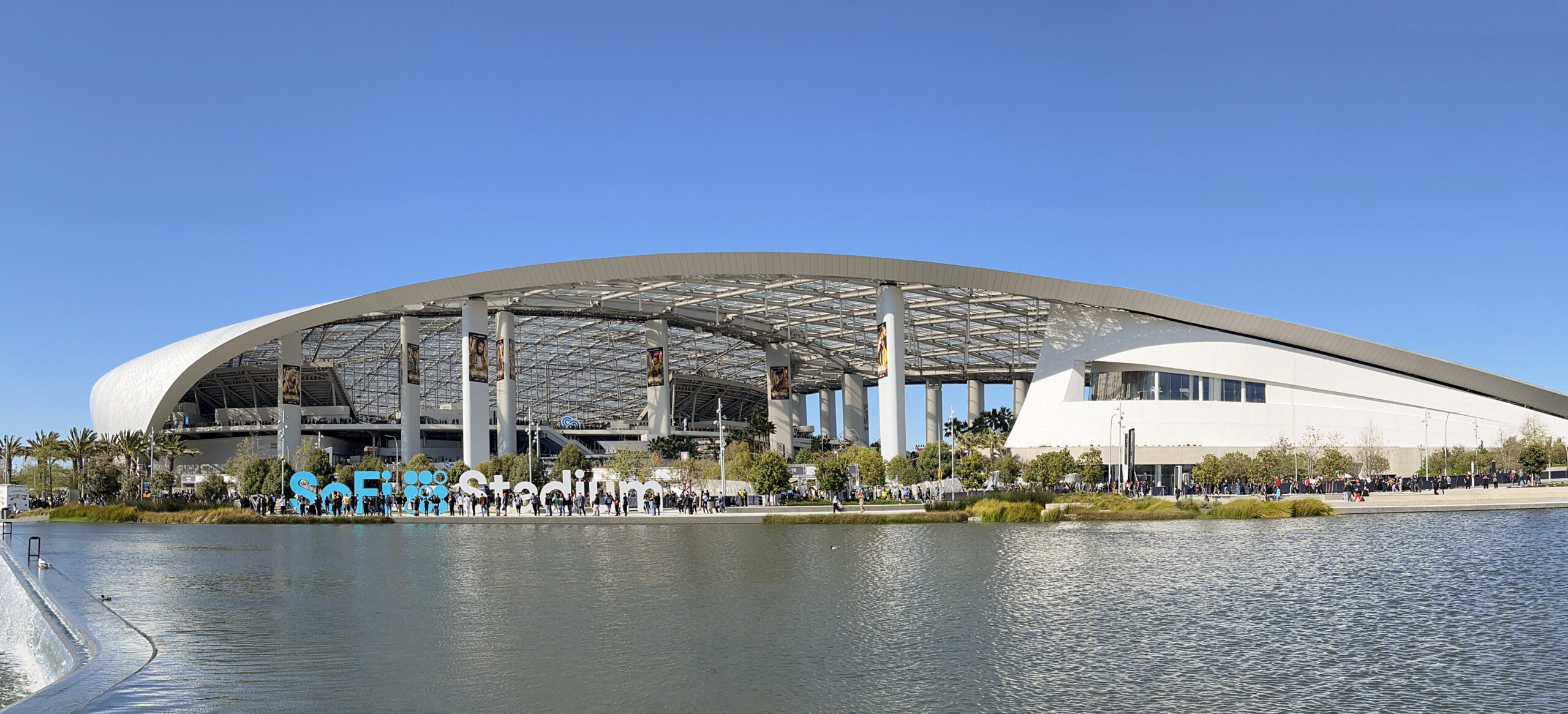
Photo: Troutfarm27 / Wikimedia Commons / CC BY-SA 4.0

Los Angeles isn’t just a group stage hub. It’s a knockout stage fortress. Hosting two Round of 32 games and the only US-based quarterfinal places SoFi Stadium at the heart of the tournament’s decisive phase.
The Round of 32 matches on June 28 and July 2 will feature runners-up and group winners from across the draw. The specific matchups, like “Winner Group H vs Runner-up Group J,” are designed to keep teams within a geographic cluster. A team that plays its group stage in Seattle or Vancouver could easily find its knockout path running through Los Angeles.
The quarterfinal on July 10 is the crown jewel. It will feature the winners of two specific Round of 16 matches (noted as Match 93 and Match 94 in the FIFA schedule). This is where a true tournament legend could be born. The pressure of a World Cup quarterfinal in an indoor cauldron is unique. There’s no wind, no rain, no heat, just 70,000 voices and the purest test of team tactics.
Winning here likely means a trip to the semifinals at AT&T Stadium in Arlington. The path to the final goes through LA.
Getting Tickets and Getting There: A Fan’s Reality Check
Photo: Ank Kumar / Wikimedia Commons / CC BY-SA 4.0

Let’s talk logistics. FIFA controls all ticket pricing and sales. The local host committee doesn’t set the costs. As highlighted in recent reports, category-one tickets for the US opener were priced at over $2,700. The “Front Category” seats reached above $4,000. These are not prices for casual fans.
Your only safe bet is FIFA’s official ticket platform. Anything else risks being a scam. Because of the cost, the host committee is promoting free “Fan Festival” sites across Los Angeles for those who want the atmosphere without the ticket.
Getting to the stadium is its own puzzle. The Metro K Line’s Downtown Inglewood station is a game-changer, dropping fans within a 15-minute walk. For major events, shuttle services often run from LAX and other hubs. Driving is a last resort. Parking is limited, expensive, and traffic around event time is a legitimate nightmare. Plan to arrive early.
If you’re coming from out of town, look for accommodations near other Metro lines, not just Inglewood. The connectivity is good, and you’ll have better options.
How SoFi Stadium Compares to Other 2026 Venues
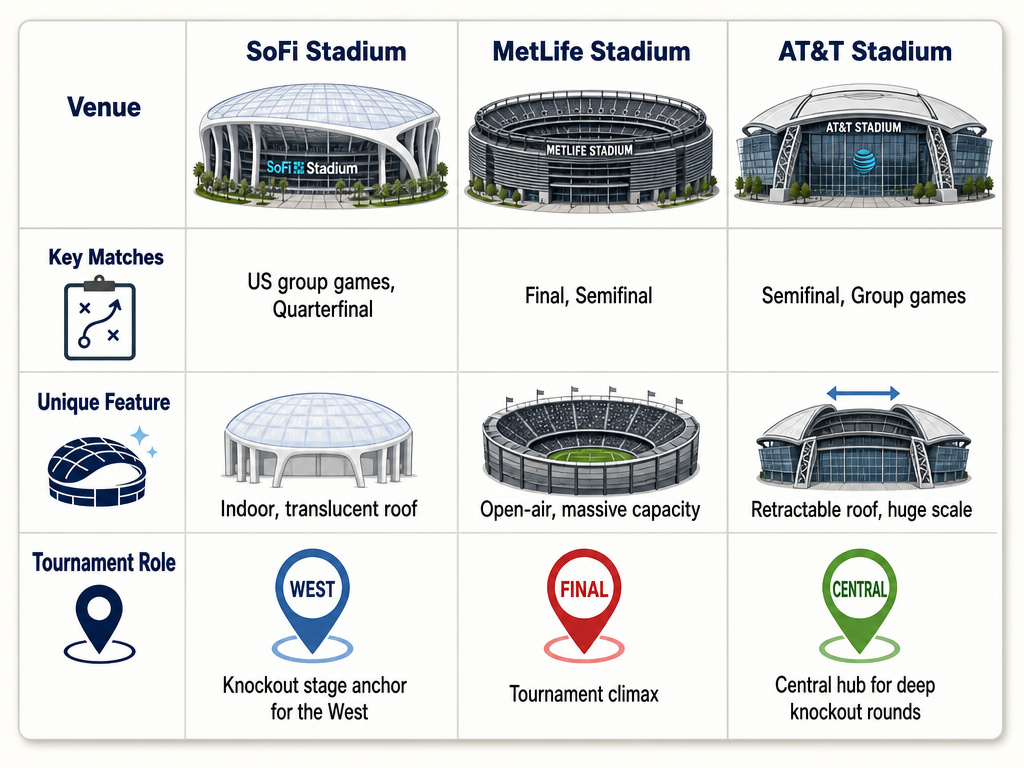
What makes this place different? Every other US venue is open-air. The climate control alone sets SoFi apart. But its role in the tournament structure is also unique.
| Venue | Key Matches | Unique Feature | Tournament Role |
|---|---|---|---|
| SoFi Stadium (LA) | US group games, Quarterfinal | Indoor, translucent roof | Knockout stage anchor for the West. |
| MetLife (NY/NJ) | Final, Semifinal | Massive East Coast capacity | Tournament climax. |
| AT&T Stadium (Dallas) | Semifinal, Group games | Retractable roof, huge scale | Central hub for deep knockout games. |
| Azteca (Mexico City) | Opener, Group games | Altitude, historic venue | Ceremonial and group stage focus. |
SoFi’s quarterfinal hosting rights are a statement. FIFA trusts its technology to deliver a pristine pitch for a high-stakes knockout match. It also creates a natural geographic progression: win your quarterfinal in LA, fly to Dallas for the semifinal. The extra time rules and pressure in those late-stage games demand a perfect field. SoFi guarantees it.
Frequently Asked Questions
What is SoFi Stadium’s capacity for the World Cup?
For the 2026 World Cup, the capacity will be approximately 70,000. This is slightly reduced from its NFL configuration due to the removal of some seats to accommodate the wider soccer pitch.
Will the World Cup games at SoFi Stadium be played on real grass?
Yes. FIFA mandates natural grass for all World Cup matches. SoFi Stadium is installing a temporary, state-of-the-art natural grass pitch over its existing surface, complete with grow lights and a specialized drainage system to maintain it under the roof.
Why is it called “Los Angeles Stadium” for the World Cup?
FIFA requires “clean venues” for its tournaments, meaning prominent commercial branding must be covered or removed. For the duration of the World Cup, the venue will use the non-commercial name “Los Angeles Stadium.”
Can I use public transportation to get to SoFi Stadium for World Cup matches?
Absolutely. The Metro K Line’s Downtown Inglewood station is the primary route. Event-day shuttles from LAX and other locations are also likely. Public transport is strongly recommended over driving due to limited parking and major traffic.
How many matches will the USMNT play at SoFi Stadium?
The US Men’s National Team is scheduled to play two of its three group stage matches at SoFi Stadium: their opener against Paraguay on June 12 and their final group match against Turkey on June 25.
What is the most important match at SoFi Stadium during the 2026 World Cup?
The quarterfinal on July 10 is the most significant match. It is the only quarterfinal to be played in the United States, and the winner advances to the semifinals, putting SoFi at the center of the tournament’s decisive phase.
The Bottom Line
SoFi Stadium is more than a venue; it’s a strategic pillar of the 2026 World Cup. Its eight-match schedule, capped by a quarterfinal, gives Los Angeles a status no other American city can claim. For the USMNT, playing two group games there is a tangible home-field advantage.
For fans, the reality is a mix of high-stakes football and high-cost logistics. Secure tickets early through FIFA, plan your journey around the Metro, and if the stadium is out of reach, seek out the official fan zones. The 2026 World Cup is coming to Inglewood, and its indoor stage is set to host some of the tournament’s most memorable moments.
I come from the “soccer heart” of Germany, the Ruhrpott. I have played, trained and followed soccer all my life and am a big fan of FC Schalke 04. I also enjoy following international soccer extensively.