Close Control Dribbling in Soccer: 3 Key Skills & 7 Drills
Close control dribbling in soccer is the technique of keeping the ball extremely near your feet using small, precise touches from all foot surfaces. It requires a low center of gravity, quick footwork, and constant head movement to retain possession under pressure, deceive defenders, and navigate tight spaces effectively.
Close control dribbling in soccer is the technique of keeping the ball within one to two feet of your body using small, precise touches from all surfaces of both feet. It combines a low center of gravity, quick footwork, and constant head movement to retain possession under pressure, deceive defenders, and exploit tight spaces. Mastery requires foot specialization, progressive skill building, and thousands of deliberate repetitions.
Most players try to run with the ball before they can walk with it. They kick it forward and chase it, sacrificing all control for raw speed. That works on an open pitch with no one around. Put a defender within five yards, and that big touch becomes a turnover. The game happens in tight spaces, and close control is your passport through them.
This guide breaks down the three non-negotiable movement skills, the seven drills that build them, and the mental shift required to make the ball feel like an extension of your foot.
Key Takeaways
- Specialize your feet: designate a support foot for balance and propulsion and an attack foot for fine touches.
- The foundational skill is the Glide, a pushing motion, not a kick, which keeps the ball rolling along your foot.
- Master moving inward and outward with the ball before adding speed; control precedes pace.
- Your first two weeks of dedicated practice will feel rough. Consistent, focused reps for 50 touches a day build the necessary muscle memory.
- Keep your head up. Scanning the field is useless if you cannot do it while the ball is at your feet.
What Close Control Dribbling Actually Is (And Isn’t)
Forget fancy step-overs for a moment. Real close control is a functional, economical movement system. It is the difference between possessing the ball and merely transporting it from point A to point B.
Close control dribbling is a player’s ability to manipulate the ball within a tight radius using all foot surfaces, maintaining a low center of gravity and an upright posture to scan the field, thereby enabling quick changes of speed and direction under defensive pressure.
This is not showboating. It is the core competency that allows a midfielder to turn away from a press, a winger to beat a fullback in a phone booth, and a striker to create a yard of space in a crowded penalty area. The ultimate expression of this is seen in players like Lionel Messi, whose entire game is built on close control mastery that seems to defy physics. His ability to keep the ball glued to his boot while shifting direction is the textbook definition of the skill.
The opposite is speed dribbling, longer touches into open space, used in transition. Both are valid, but close control is the prerequisite. You cannot reliably execute speed dribbling exercises if you cannot first secure the ball under your spell.
TL;DR: Close control is about micro-touches and body positioning, not flashy moves. It’s the essential skill for playing in confined spaces.
The Three Foundational Close Control Skills
You need to move forward, sideways, and stop on a dime. These are not separate tricks. They are interconnected movements built from the same principles: foot specialization, the pushing touch, and controlled body hops.
1. The Glide: Moving Forward with the Ball Attached
This is the first and most critical skill. Do not kick the ball.
Angle your dominant foot, your attack foot, slightly inwards. Bend your knee, and extend your leg forward slowly, making contact with the ball using the area between your instep and the inside of your foot. You are pushing it, not striking it. The ball should roll along your foot as you move.
Your non-dominant foot is your support foot. It stays on the ground longer, providing the power for your little hop forward. As you push off with your support foot, you glide through the air, pushing the ball along with your attack foot before landing on it. The sequence is push-hop-push-land. It looks and feels like a controlled, forward frog hop.
Common mistake: Kicking the ball forward and chasing it, this severs the connection between your foot and the ball, making every subsequent touch a recovery attempt instead of a controlled progression.
I learned this the hard way playing in the muddy pitches of the Ruhrpott. My first ten attempts sent the ball skidding three meters ahead. I was just kicking and running. It took forcing myself to slow down, to feel the ball roll along my laces for a full second, before the coordination clicked. That was after about 50 deliberate repetitions per day for nearly two weeks.
2. Moving Laterally: Inward and Outward Drags
Beating a defender is rarely about going straight through them. You need to go around them. This requires moving the ball sideways while keeping it close.
To move outward (to your right with your right foot), use the same Glide technique but change your body direction. Step to the side of the ball with your support foot, then push off to hop sideways, using the inside of your attack foot to guide the ball out. Your body moves as one unit with the ball.
To move inward (cutting back onto your left foot with your right foot), the technique changes. Angle your attack foot outwards, exposing your instep. As you hop inward with your support foot, use your instep to drag the ball across your body. It is a pulling motion, not a push. The ball stays tucked close to your ankle.
| Movement Direction | Foot Surface Used | Key Cue | Risk if Done Wrong |
|---|---|---|---|
| Forward (Glide) | Inside / Mid-foot | Push, don’t kick | Ball runs away, forcing a chase |
| Outward | Inside of foot | Step sideways, then hop | Ball rolls too far, easy tackle |
| Inward | Instep | Drag, don’t hit | Ball gets stuck under feet, stumble |
3. The Stop and Turn: Killing Momentum to Change It
This is the skill that separates controlled players from predictable ones. When you run into pressure, you must be able to stop completely and exit another way.
For an outside-edge stop, angle your foot outwards and extend it slightly in front of the ball. Chop your foot down and back, using the outside edge to halt the ball’s momentum. Your body weight shifts onto that foot as you pivot 180 degrees.
For an instep stop, angle your foot inwards as much as comfortably possible, think of trying to hug the ball with the inside of your ankle. Extend and plant your foot on top of the ball or just in front of it, using the friction to kill its roll. Again, pivot on that foot.
Both stops are complete momentum killers. They are your emergency brake. Practice them from a slow Glide first. The ball should die within six inches of the stopping touch.
TL;DR: Master the forward Glide, then the side drags, then the full stops. This progression builds the complete movement vocabulary for close control.
Why Your Feet Need Specialized Jobs
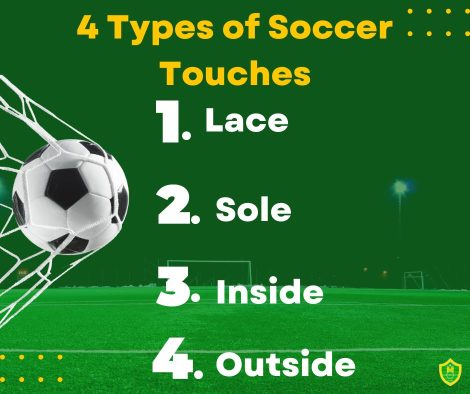
Look at a worn-out pair of soccer cleats from a player with good close control. The dirt tells a story. One shoe, the attack foot, will be scuffed and dirty across the toe and instep from constant ball contact. The other shoe, the support foot, will have a pristine upper but a worn-down sole. That support foot does all the heavy lifting: pushing off, braking, stabilizing.
Your brain cannot efficiently manage fine motor skills with both feet simultaneously in a dynamic situation. By specializing, you free up cognitive load. Your support foot handles balance and power automatically. Your attack foot is dedicated to touch, feel, and deception. This is not about having a “weak foot.” It is about assigning clear roles under pressure. Your non-dominant foot must still be competent for passing and necessary touches, but your primary dribbling foot is your sculptor’s tool.
This specialization is why agility ladder drills are so valuable off the ball. They program your support foot to move quickly and precisely without you having to think about it, which directly improves your balance during the Glide and your push-off power for sudden changes of direction.
7 Essential Close Control Drills
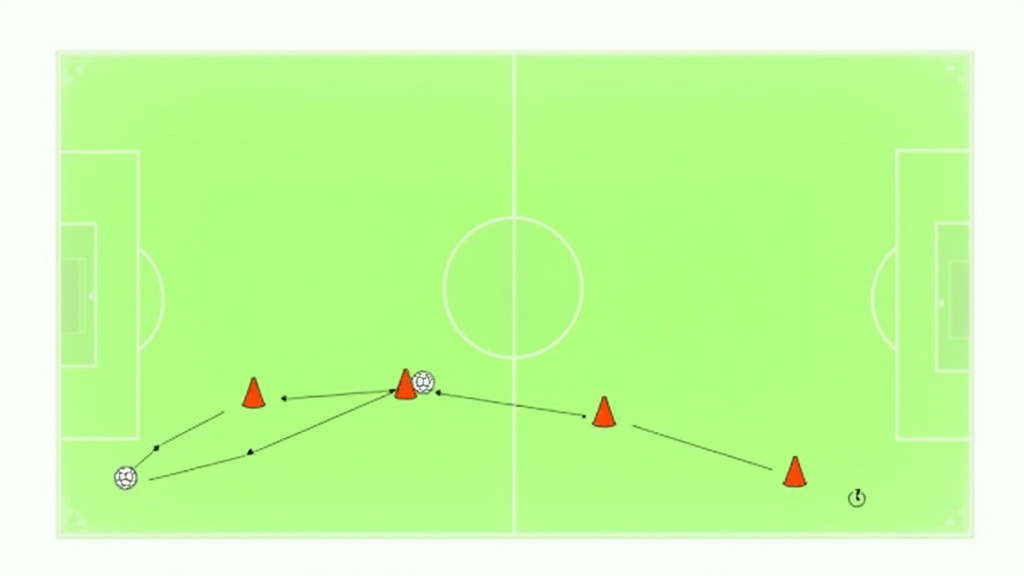
Theory is nothing without sweat. These drills progress from basic feel to game-realistic pressure.
- The Glide Circuit. Mark a 20-meter channel. Glide the ball to the end, turn, and glide back. Focus only on the push-hop-push-land rhythm. Do not look at the ball after the first touch; force your eyes up. Skip this, and your touch will never develop consistency. The ball will bobble with every step.
- Circle Drill. Place a ball. Step to its side and practice the outward Glide, moving in a circle around it. Then switch to inward drags. This isolates the lateral movement patterns. Start slow. The goal is control of the ball’s path, not speed.
- Cone Weave. Set 10 cones in a straight line, one meter apart. Dribble through using only the inside and outside of your feet. Keep touches small, the ball should not leave a one-foot radius from your center. Progress by reducing cone spacing to 0.75 meters.
- Box Dribbling. Create a 3×3 meter square with cones. Your task is to dribble freely within the box without leaving it for 60 seconds. Use every part of your foot: soles, insides, outsides, heels. This builds comfort in truly confined spaces and is a fantastic precursor to understanding offensive team play in tight midfield areas.
- Wall Pass & Control. Stand 3 meters from a wall. Pass the ball firmly against it and control the rebound with one touch, setting it up for your next pass. Alternate feet. Vary the power and angle. This drill directly improves your first touch control, which is the cousin of close control, if you can’t kill a pass dead, you’ll never dictate your next dribble.
- 1v1 in a Grid. In a 10×10 meter grid, one attacker tries to dribble past one defender to the opposite line. This is where skills meet resistance. The attacker must use feints, changes of speed, and stops and turns. It teaches the decision-making layer: when to dribble, when to shield, when to pass. This pressure cooker is where tactical dribbling intelligence is forged.
- Sole Roll Series. Stationary, use the sole of your foot to roll the ball forward, backward, and in small circles. Then, incorporate a sole roll into your Glide, roll the ball slightly ahead with your sole, then catch up to it with your next Glide touch. This develops an incredibly sensitive touch and is a core part of any home ball control drills routine when space is limited.
I spent an entire winter doing nothing but box dribbling and wall passes in my garage. The first week was frustrating, the ball constantly escaped the box. By the fourth week, I could maneuver it with my eyes closed, feeling the ball’s position through my foot. That specific sensitivity is what allows you to focus on the game, not the ball.
| Drill Name | Primary Skill Developed | Ideal Duration/Frequency | Progression Trigger |
|---|---|---|---|
| Glide Circuit | Forward ball feel, head-up habit | 10 mins, 3x/week | Add a stop-and-turn at each end |
| Cone Weave | Tight-space footwork, touch precision | 15 mins, 2x/week | Reduce cone spacing by 0.25m |
| Box Dribbling | All-surface comfort, spatial awareness | 5x 60-sec sets, 2x/week | Reduce box size to 2x2m |
| 1v1 in a Grid | Decision-making under pressure | 20 mins, 1x/week | Add a second passive defender |
The Mental Component: Playing with Your Head Up
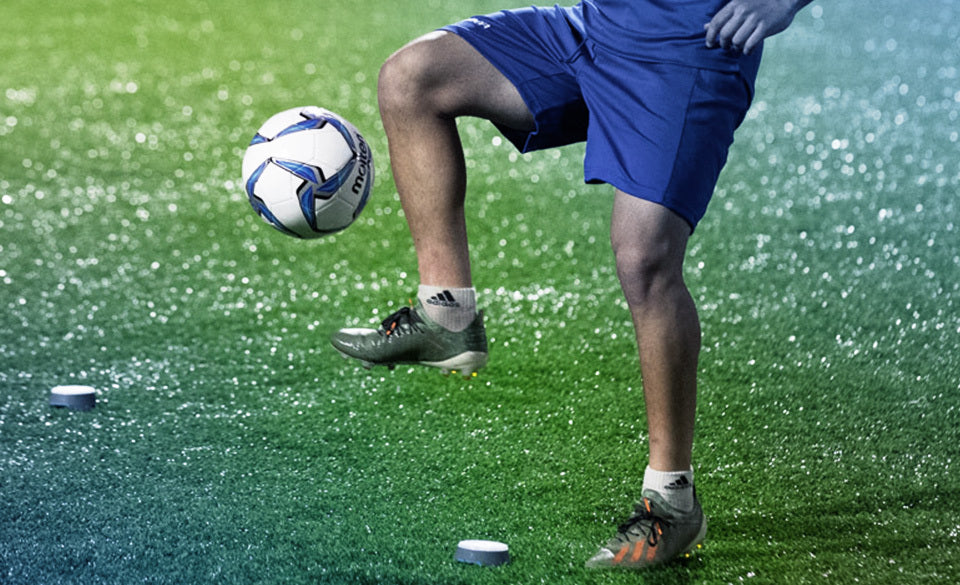
Your feet can be perfect, but if your eyes are locked on the ball, you are a danger to yourself and your team. The final layer of close control is perceptual.
The goal is to process the ball’s location through proprioception, the sense of where your limbs are in space, so your eyes can scan for defenders, passing lanes, and space. Start by forcing yourself to look up immediately after your first touch in a drill. Glance at a specific point, a tree, a window, then back at the ball. Gradually extend the time your eyes are up.
This skill integrates directly with broader soccer tactics. Seeing a midfielder’s run or a defender’s step a half-second earlier is what turns good control into a decisive through ball or a successful dribble. It also informs your on-field positioning, allowing you to drift into dangerous spaces before you even receive the ball.
TL;DR: Drills build the muscle memory so you don’t have to look down. Use that freedom to read the game. That is where control becomes attack.
How to Structure Your Practice Week
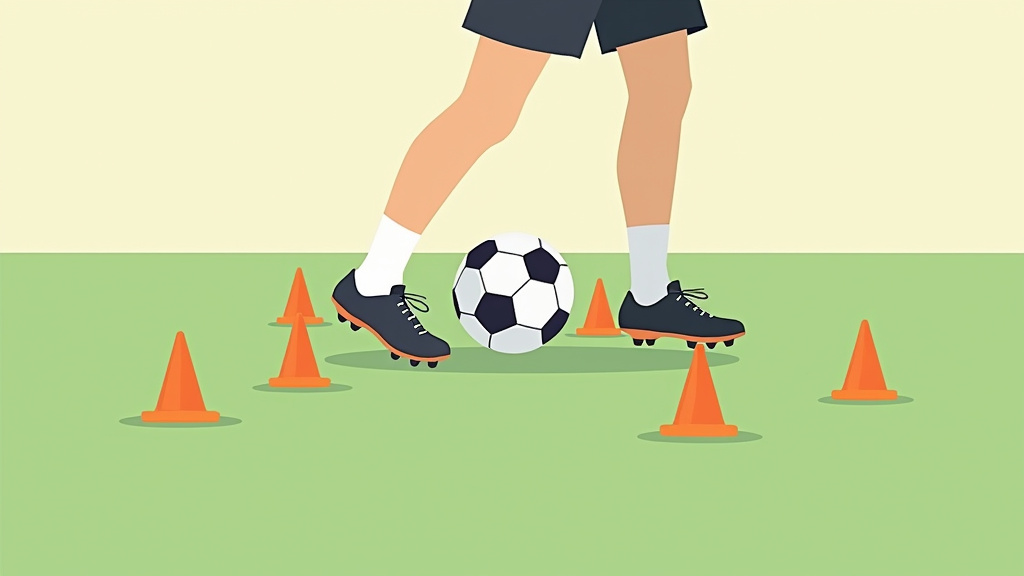
Random practice yields random results. Here is a simple, effective weekly plan for a player serious about improvement.
- Day 1 (Skill Acquisition): Focus on the isolated techniques. 15 minutes of Glide circuits. 15 minutes of Circle/Box dribbling. No defenders, just ball feel.
- Day 2 (Integration & Pressure): 10 minutes of cone weaves. 20 minutes of 1v1 in the grid. This is the day you apply your techniques against real, thinking opposition.
- Day 3 (Active Recovery & Touch): Light ball juggling skills session (10 mins). 15 minutes of wall pass and control. Focus on quality, not intensity.
- Day 4 (Full Integration): Repeat Day 2, or incorporate your dribbling into small-sided games (3v3, 4v4). The chaos of a game is the ultimate test.
- Day 5 (Speed & Agility): Work on dribbling speed drills without the ball (ladder drills, plyometrics) and with the ball over longer distances. Remember, close control is the foundation for speed.
- Weekend: Play. Apply everything in a match. Note what works and what fails, that informs your focus for next week.
This structure balances technical repetition, pressured application, and athletic development. It mirrors the periodization used in professional advanced tactical principles training, scaled for the individual.
Frequently Asked Questions
What’s the fastest way to improve close control dribbling?
There is no fast way, only the correct way. Dedicate 20-30 minutes daily to deliberate, focused practice of the basic drills like the Glide and box dribbling. Quality repetitions matter more than marathon sessions. Improvement becomes noticeable after about two consistent weeks.
Can I learn close control if I’m not naturally skilled?
Absolutely. Close control is a learned motor skill, not a genetic gift. It requires coordination, which is built through repetition. Start with stationary sole rolls and wall passes to build basic feel. The beginner juggling techniques outlined in our foundational guide are a perfect parallel, they build the same delicate touch and foot-eye coordination.
How do I know which is my attack foot?
It’s usually your dominant foot, the one you naturally prefer to kick with. Test it: stand over a ball and try the Glide motion. The foot that feels more comfortable making fine, pushing adjustments is your attack foot. Your other foot becomes your dedicated support and power foot.
My touch is always too hard. How do I soften it?
You are likely using your ankle like a stiff hammer. Relax. Bend your knee more and think about cushioning the ball with your foot, not striking it. Practice the Glide on a soft surface like grass first, where a hard touch is more obvious and punishing. The touch and feel development from juggling is also excellent for teaching soft, receptive touches.
When should I use close control vs. speed dribbling in a game?
Use close control when within 10 yards of an opponent, in crowded midfield areas, or when shielding the ball. Use speed dribbling when you have clear space ahead to run into, such as on a counter-attack or after beating the last defender. Understanding this difference is a key part of your player position guide and role on the pitch.
Before You Go
Close control dribbling is not magic. It is mechanics, repetition, and courage. It is the willingness to practice the boring Glide for two weeks before you feel it click. It is the understanding that your shoes will wear unevenly because your feet have different jobs. It is the commitment to look up when every instinct screams to look down.
Forget beating five players in a row. Focus on beating the first one, consistently. That starts with a push, not a kick. It starts with control, not speed. Grab a ball, find a patch of grass or a quiet garage, and put in your first fifty touches. The rest of the game opens up from there.
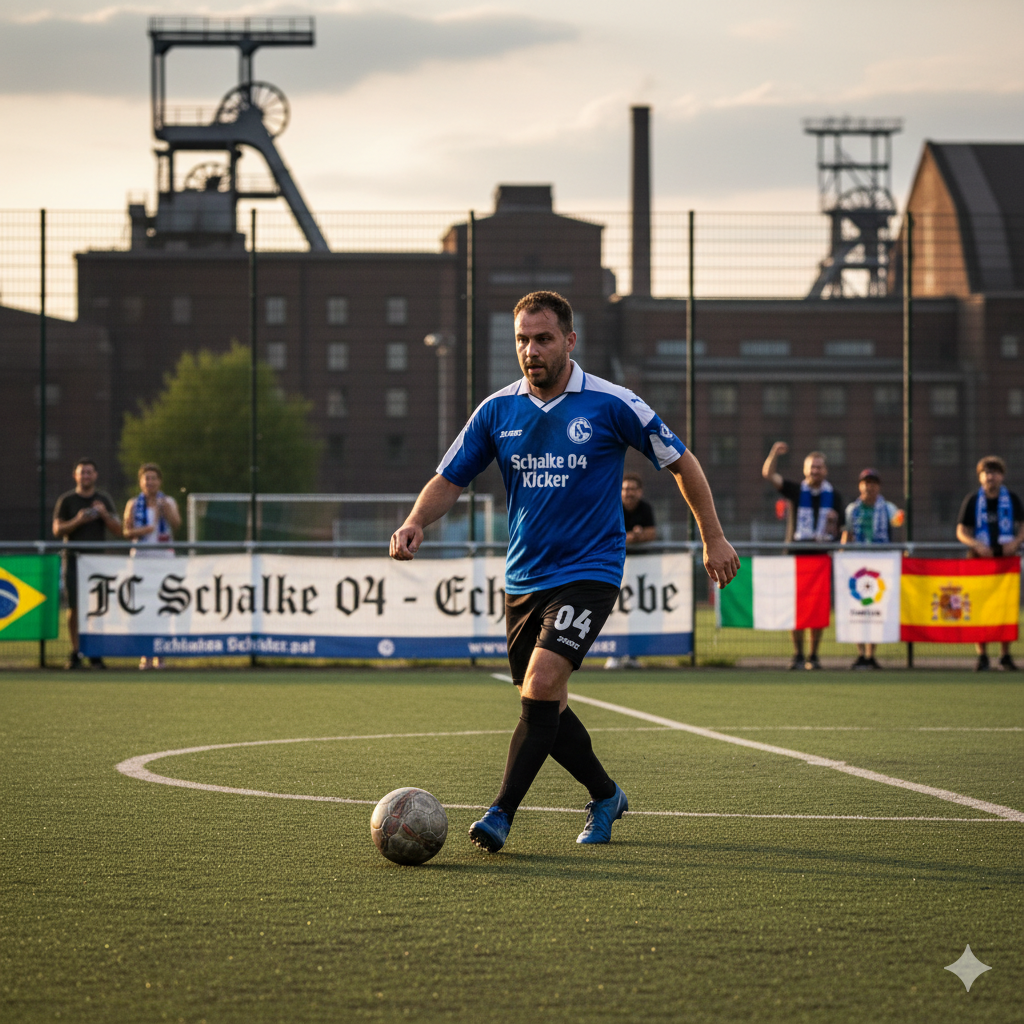
I come from the “soccer heart” of Germany, the Ruhrpott. I have played, trained and followed soccer all my life and am a big fan of FC Schalke 04. I also enjoy following international soccer extensively.