What Makes Messi’s Dribbling So Effective? The Key Reasons
What makes Messi’s dribbling so effective is a unique synthesis of four systems. It combines a biomechanically optimized body, a lightning-fast neuromuscular engine, a predictive cognitive processor, and tactical intelligence. This rewiring of human movement and perception allows him to eliminate defenders and create space milliseconds before others see it.
Lionel Messi’s dribbling is effective because it combines four distinct, interconnected systems: a biomechanically optimized body with a low center of gravity and rapid ground contact; a neuromuscular engine with an electromechanical delay nearly 50% faster than elite peers; a cognitive processor that scans the field and predicts defender reactions; and a tactical intelligence that uses dribbling not for show, but as a tool to eliminate defenders and create passing angles. This isn’t just skill. It’s a re-wiring of human movement and perception applied to a football.
Most analysis stops at “low center of gravity” or “quick feet.” They miss the real story happening inside the milliseconds between his brain’s command and his foot’s reaction, and how he sees spaces that haven’t opened yet. Watching him is one thing. Understanding why defenders look frozen is another.
This guide breaks down the four pillars of his genius, the science behind them, and why trying to copy just the footwork is a dead end.
Key Takeaways
- Messi’s electromechanical delay (EMD) is roughly 40 milliseconds, nearly 50% faster than a typical elite player’s 60 ms. This is the hidden wiring behind his seemingly instant changes of direction.
- He maintains ball contact within 12 inches of his foot and touches it 6-7 times per 2-second burst, compared to the standard 4 touches. This hyper-dense control collapses a defender’s reaction window.
- His visual focus is on opponents and space 70% of the time; he looks at the ball less than 30% while dribbling at full speed. This is a measurable cognitive advantage.
- The classic “Messi body feint” works because he initiates the visual cue of a direction change 0.1 seconds before his body actually moves, exploiting the defender’s neural lag.
- His style has fundamentally shifted. The explosive, direct dribbles of his early 20s have given way to a playmaking dribble, he now uses his control to draw defenders and release a pass, often from a deeper position.
The Biomechanical Foundation: A Built-In Advantage
Forget trying to replicate his footwork if your body isn’t built like his. Messi’s physical architecture is the non-negotiable hardware his software runs on. His center of gravity sits about 0.9 meters from the ground. For comparison, Cristiano Ronaldo’s is estimated around 1.05 meters. That 15-centimeter difference is the difference between a sports car and an SUV taking a corner.
A lower center of gravity reduces rotational inertia. This lets him whip through direction changes with a stability taller players can’t match. When he plants his left foot to cut right, his body doesn’t fight the turn. It flows into it. This isn’t just an agility thing. It’s a physics thing.
The second part is his stride. His ground contact time per step is 0.12 to 0.15 seconds. The typical elite player sits between 0.18 and 0.20 seconds. That’s a 30% difference. It means his foot is on the ground, gathering force, and pushing off again in the blink of an eye. This rapid cycle of eccentric (braking) to concentric (propelling) muscle contraction is what makes his accelerations look explosive from a standstill. He’s not generating more force than a powerful winger. He’s applying it faster, more often.
Common mistake: Young players try to emulate Messi’s sharp cuts without first lowering their own center of gravity. They stay upright, lose balance on the turn, and the ball runs away. You have to drop your hips like you’re sitting into a chair. Every time.
This biomechanical setup enables his signature close control dribbling. The ball stays within a 12-inch orbit of his foot. Not by accident. His short, choppy steps and low stance make it physically impossible for the ball to stray far without an intentional push. This proximity is the first layer of his defensive puzzle, it gives the defender no clear point to attack.
TL;DR: Messi’s low center of gravity and ultra-short ground contact times create a stable, explosive platform. You can’t copy the footwork without first copying the posture.
The Neuromuscular Engine: Speed You Can’t See
Biomechanics gives him the chassis. His nervous system is the Formula 1 engine. The key metric here is electromechanical delay (EMD). This is the time lag between your brain sending the signal “change direction now” and your muscles actually beginning to contract. For an average professional, it’s about 60 milliseconds. Research into Messi’s movement suggests his EMD is closer to 40 milliseconds.
That 20-millisecond edge doesn’t sound like much. Over a five-step, two-second dribble, it compounds. It’s why a defender commits to a tackle, and Messi’s foot has already moved the ball six inches to the side. The defender is reacting to where the ball was, not where it is.
His body and the ball operate as a single biomechanical system. The signal to cut left goes to his foot and the ball-contact point simultaneously. There’s no “move foot, then move ball.” It’s one fluid motion.
This seamless integration is why his dribbling acceleration seems effortless. There’s no noticeable deceleration before the change of direction. A taller player must slow slightly to re-anchor their weight. Messi’s system absorbs and redirects force in a wave-like pattern through his kinetic chain, ankle, knee, hip, core. It looks smooth because the transition from brake to accelerator is near-instantaneous.
| Neuromuscular Metric | Lionel Messi | Typical Elite Player | Why It Matters |
|---|---|---|---|
| Electromechanical Delay (EMD) | ~40 ms | ~60 ms | Faster signal from brain to muscle means quicker reaction to defensive cues. |
| Ground Contact Time | 0.12–0.15 s | 0.18–0.20 s | More force applications per second, leading to rapid, micro-adjustments. |
| Turn Latency | 0.2–0.3 s faster | Baseline | Cuts and direction changes happen before a defender can shift their weight. |
His proprioception, the sense of where his body parts are in space, is also off the charts. It allows for near-instantaneous foot position correction mid-stride. If the ball takes a bad bobble, his ankle adjusts before his conscious brain even registers the error. This is trained, yes. But the baseline wiring is exceptional.
TL;DR: Messi’s brain-to-muscle signal speed is roughly 50% faster than his peers. This hidden wiring makes his direction changes appear instantaneous to defenders.
The Cognitive Blueprint: Seeing the Game in Slow Motion

The physical tools are useless without the software to run them. Messi’s perceptual-cognitive system is where the magic truly happens. Watch his eyes. He looks at the ball less than 30% of the time during a dribbling sequence. The other 70%? He’s scanning defenders’ hips, checking passing lanes, and mapping the geometry of the space ahead.
This is called visual-spatial dominance. While most players need to glance down to ensure clean contact, Messi’s precise ball control is so automated he can free up his visual cortex to process threats and opportunities. His vestibular-cerebellar system, responsible for balance and spatial orientation, works overtime so his head stays remarkably still. He doesn’t need to look down because his body knows exactly where the ball is.
Then there’s his predictive intelligence. He doesn’t just react to a defender’s move. He anticipates it, about half a second early. He reads the defender’s posture: weight planted on the left foot, right shoulder dipped. That tells him the defender is committing to a slide tackle to his right. So he goes left. The decision is made before the defender even begins his lunge.
The famous Messi body feint is a masterclass in exploiting neural lag. He initiates the visual cue of going right, a slight head and shoulder drop, about 0.1 seconds before his body actually moves left. The defender’s visual system fires, his brain processes it, and his muscles begin to react toward the feint. By the time the defender realizes the deception, Messi is already two steps into the real move. The defender isn’t just beaten. He’s frozen by his own nervous system.
I coached a youth player who could replicate Messi’s feint motion perfectly in training. In a match, against a defender actually trying to take the ball, he’d telegraph it a full second early. The defender would just wait. The timing isn’t in the move. It’s in reading the defender’s readiness to bite. That’s the part you can’t drill in an empty gym.
TL;DR: Messi uses 70% of his visual focus to read defenders and space, not the ball. His feints work because he triggers them 0.1 seconds before moving, hijacking the defender’s reaction time.
The Tactical Evolution: From Dribbler to Conductor
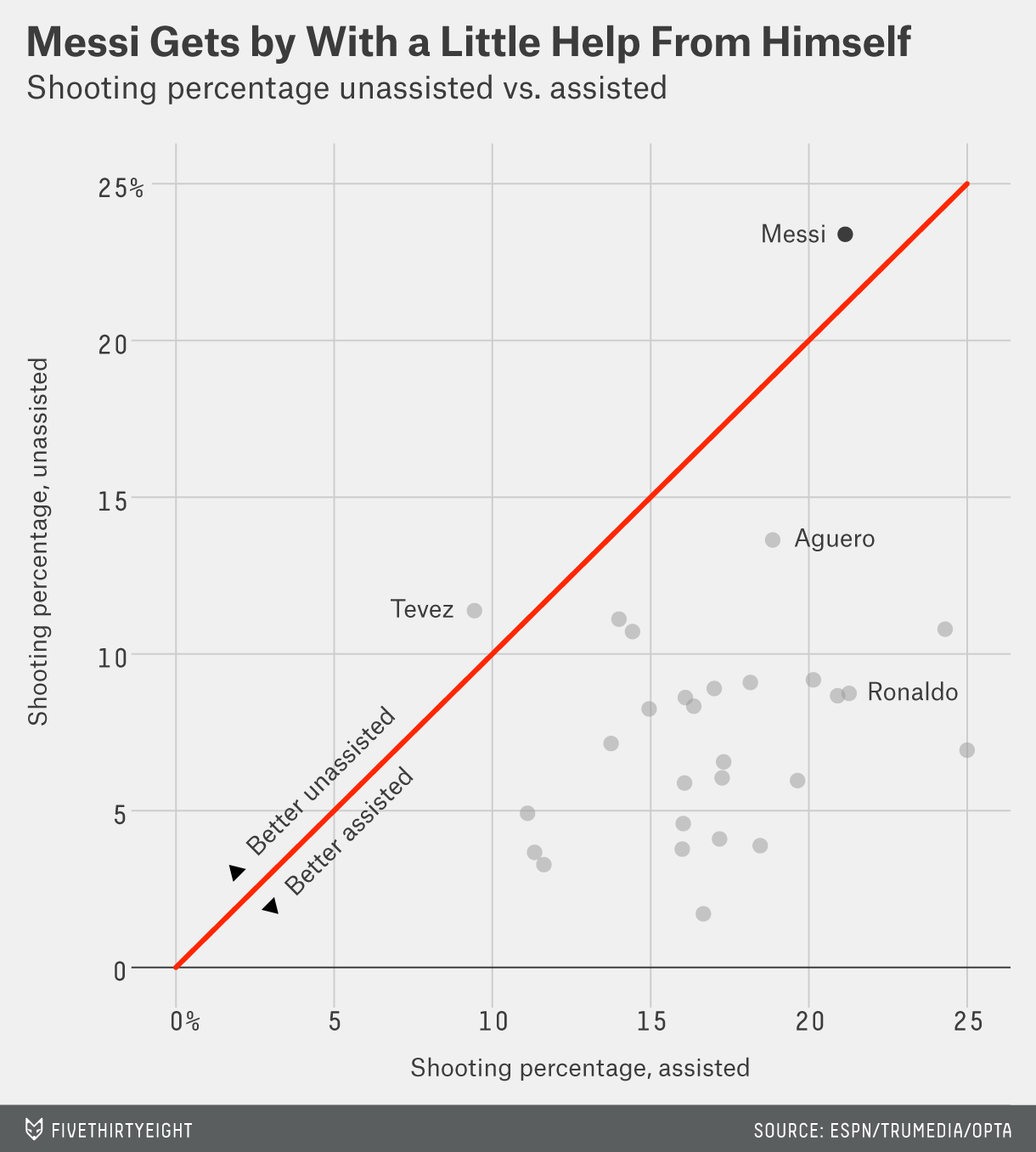
Messi’s dribbling technique at 22 was about annihilation. Receive the ball, drop a shoulder, explode past three men, and finish. It was a weapon of direct destruction. The fundamental dribbling techniques were the same, but the intent was pure aggression.
Watch him now. The dribble is a tool of manipulation. He receives the ball deeper, often turning with his back to goal. He’ll drive forward just enough to commit two defenders. Then, with a defender on his hip, he’ll play a disguised pass into the space those defenders just vacated. The dribble didn’t score the goal. It created the chance.
This evolution was necessary. His explosive dribbling speed in his youth came from a metabolism and muscle fiber type that naturally declines after 30. He adapted. The intelligence was always there. Now it’s the primary weapon. Ilkay Gündogan, a former teammate, said playing against him was a “10-minute lesson” in humility because Messi would improve your first touch simply by showing you the spaces you never saw.
| Young Messi (2009-2015) | Current Messi (2018-Present) | Why the Shift Matters |
|---|---|---|
| Direct, vertical dribbling | Dribbling to attract and disorganize | Creates more chances for teammates; conserves energy. |
| High-volume take-ons in final third | Fewer, more decisive dribbles in midfield | Increases his influence on overall game tempo and build-up. |
| Dribbling to shoot | Dribbling to pass or draw fouls | Makes him less predictable and more involved in playmaking. |
| Reliance on peak acceleration | Reliance on timing and defensive manipulation | Extends career effectiveness despite physical decline. |
This adaptability is a hallmark of soccer legends. It’s what separates a flash-in-the-pan talent from a player who defines an era. Comparing Pelé’s legendary skills to Messi’s is often about era and style, but this capacity to reinvent one’s game while maintaining dominance is the common thread. It’s not just about Messi’s achievements, but how he secured them over two decades.
TL;DR: Messi’s dribbling has morphed from a solo scoring weapon into a playmaking tool. He now uses his control to draw defenders out of position and create for others.
How to Apply These Principles (You Can’t Copy Him, But You Can Learn)
You will never have his 40-millisecond electromechanical delay. You can’t shrink your femur to lower your center of gravity. Trying to directly replicate Lionel Messi’s dribbling style is a fool’s errand. The value is in understanding the principles and applying them to your own game.
First, work on your proprioception. Dribble with your head up. Not just occasionally, but as a drill. Set up cones, pick a point across the field, and keep your eyes locked on it while navigating the course. This trains the vestibular-cerebellar link between balance and vision. It’s the foundation of visual-spatial dominance.
Second, shorten your touches. In your next training session, deliberately keep the ball within a one-foot radius of your boot at all speeds. This forces the short, choppy steps that improve close control dribbling. It feels unnatural at first. Your calves will burn. That’s the point.
Third, study defenders, not moves. Watch how a defender stands. Which foot is forward? Where is their weight? Practice triggering a body feint only when you see them plant that weight. The move itself is secondary. The timing is everything. This is the core of predictive intelligence.
Finally, understand the “why.” Are you dribbling to beat a man? Or to force a second defender to step, opening a pass? The latter is the evolved Messi model. It’s more effective and sustainable. This shift in intent is what separates a good dribbler from a smart player.
Common mistake: Players drill feints and step-overs in isolation, then get frustrated when they don’t work in games. The move is useless without the preceding second where you read the defender’s commitment. Drill the read, not the move.
TL;DR: Focus on training your head-up awareness, shortening your touch distance, and reading defender weight distribution before attempting any fancy footwork.
Frequently Asked Questions
Can Messi’s dribbling style be taught?
The specific biomechanics are unique to his body. The underlying principles, low center of gravity, rapid touch, head-up awareness, and reading defenders, are absolutely teachable. Most players fail by copying the aesthetics (the feints) without building the foundational hardware (the posture and perception) first.
What is Messi’s signature dribbling move?
It’s the body feint, often called the “La Croqueta” or simply a drop of the shoulder. Its effectiveness comes from its timing, not its complexity. He sells the fake direction with his eyes and upper body 0.1 seconds before moving the ball the other way, exploiting the defender’s neural reaction lag.
How has Messi’s dribbling changed with age?
He dribbles less often but more intelligently. In his prime at Barcelona, he used dribbling as a direct route to goal. Now, at Inter Miami and with Argentina, he uses it as a tool to manipulate defensive shapes, often from a deeper midfield position, to create passing lanes for teammates.
Why do defenders struggle so much against him?
They are fighting multiple, stacked disadvantages. His low center of gravity lets him change direction faster than they can adjust. His superior neuromuscular speed means he reacts to their movements before they finish them. And his cognitive processing allows him to see and exploit gaps that haven’t fully opened yet. It’s a physical, neural, and mental mismatch.
What’s the most important thing a young player should learn from Messi?
It’s not a specific move. It’s the concept of dribbling with a purpose. Every touch should either progress the ball, eliminate a defender, or create a better option. If your dribble doesn’t do one of those three things, you’ve likely just lost possession. His genius is that every single action is calculated for advantage.
The Bottom Line
Messi’s dribbling isn’t a collection of tricks. It’s a fully integrated system where biomechanics, neurology, perception, and tactics fuse. The low center of gravity is the platform. The lightning-fast neuromuscular wiring is the engine. The predictive, off-ball vision is the guidance system. And the evolving tactical brain is the pilot.
You can spend a lifetime trying to copy his feints and come up short. Or you can spend a season lowering your stance, training with your head up, shortening your touches, and asking “why” before every dribble. The second path won’t make you Messi. But it will make you a player defenders actually have to think about. And in a game decided by milliseconds and millimeters, that’s the real victory.

I come from the “soccer heart” of Germany, the Ruhrpott. I have played, trained and followed soccer all my life and am a big fan of FC Schalke 04. I also enjoy following international soccer extensively.