Driven Pass vs Lofted Pass: The Real Difference in Soccer
A driven pass moves the ball with pace along the ground over 15-35 meters, using the laces. A lofted pass lifts the ball aerially over an obstacle to a teammate, using the instep to strike underneath the ball. The choice depends on one thing: is the direct ground lane to your target open or blocked?
Most players learn the difference too late, in a game, under pressure, when the wrong choice turns possession over. They see a teammate making a run and boot the ball hopefully into the air. Or they try to zip a pass along the deck through a forest of legs. The result is the same: the other team gets the ball, and your coach throws his hands up.
This guide breaks down the mechanics, the decision triggers, and the hard consequences of picking the wrong tool. You will learn to read the game a half-second faster and execute the pass that actually solves the problem.
Key Takeaways
- The driven pass is for speed and penetration on the ground; the lofted pass is for elevation and overcoming obstacles.
- Body position is everything: nose over the ball for a driven pass, slight lean back for a lofted pass.
- Using a lofted pass when a driven pass is available gives defenders extra time to adjust and intercept.
- In video games like EA FC 26, the driven through pass (R1/RB + Triangle/Y) is a specific, low-trajectory through ball, distinct from a standard lofted through ball.
- Mastery requires drilling both techniques under pressure until the correct choice becomes automatic.
The Technical Breakdown: How Each Pass Works
The difference starts in your body, not your brain. Each pass demands a unique set of physical commitments. Get one detail wrong, and the ball does something you did not intend.
The driven pass is characterized by a locked ankle, a strike through the center of the ball with the laces, and a low follow-through that keeps the chest over the ball. The lofted pass requires the plant foot placed behind the ball, a strike on the lower half with the instep, and a sweeping follow-through across the body to generate lift and backspin.
Anatomy of a Driven Pass
Your goal is to transfer energy directly through the ball’s center. Power comes from leg speed, not upper-body strength.
First, approach the ball at about a 30-degree angle. This opens your hips. Place your plant foot right next to the ball, toes pointing at your target. Now lock the ankle of your kicking foot, toes down, hard like a hammer. Swing through and strike the ball with the laces, the bony ridge on top of your foot. You want to hear a solid thud.
Follow through low, driving your foot toward the target. Your chest should stay over the ball. This “nose over toes” position is non-negotiable. It keeps the ball from rising and floating.
Forget the 40-yard Hollywood ball. A proper driven pass is effective between 15 and 35 meters. It is the engine of a quick transition, the tool for a soccer tactics guide that values verticality. The mechanics share DNA with powerful shooting drills, where clean ball-striking is paramount.
Anatomy of a Lofted Pass
Here, you are not punching the ball, you are lifting it. The objective is elevation, not raw speed.
Your approach is more straight-on. Place your plant foot behind the ball, roughly six inches back and to the side. You must lean back slightly at the moment of contact. This changes the angle of attack.
Strike underneath the ball with your instep, the area just inside your laces. Think of a scooping or sweeping motion. Your follow-through goes up and across your body. This action imparts backspin, which helps the ball sit down for your teammate.
A common coaching point is to use a shorter, sharper swing for a delicate “chip” over a defender’s leg. A longer, fuller swing is for switching play across the soccer field lines to the opposite wing.
| Technical Element | Driven Pass | Lofted Pass |
|---|---|---|
| Primary Purpose | Speed, ground penetration | Elevation, overcoming obstacles |
| Plant Foot | Next to the ball | Behind and to the side of the ball |
| Strike Point | Center of the ball | Bottom half of the ball |
| Foot Surface | Laces (instep drive) | Instep |
| Body Position | Chest over the ball | Slight lean back |
| Follow-Through | Low, toward target | Up and across the body |
| Sound of Contact | Solid thud | Softer swish or pop |
TL;DR: Driven pass: laces, punch, stay over it. Lofted pass: instep, scoop, lean back.
When to Use a Driven Pass (And When to Avoid It)
The driven pass is your weapon against a retreating defense. It compresses time for the opponent.
Use it when you need to break a defensive line. Picture a central midfielder receiving the ball, with an opposing midfielder and defender in front. A driven pass sliced between them to your striker’s feet forces the back line to turn and react. It is the essence of a proactive soccer tactics guide.
It is also the best choice for switching play with purpose. A raking, low ball from one fullback area to the opposite winger travels faster than a lofted ball, giving the winger more time to attack the space. This move exploits the width defined by the soccer field lines.
Common mistake: Using a driven pass into a teammate’s feet when they are tightly marked, the pace of the ball makes it impossible to control, and it ricochets to an opponent. If the receiver doesn’t have a cushion of space, choose a softer push pass.
Do not use a driven pass in your own penalty area under pressure. The risk of a mis-kick is too high. Avoid it for short distances under 10 meters, it is overkill. The pass requires a teammate ready to handle pace. A player with poor first-touch technique will struggle, turning your best pass into a turnover.
This pass demands and builds player fitness levels, as it often triggers explosive runs into space that the passer must also support.
When the Lofted Pass is the Right Call
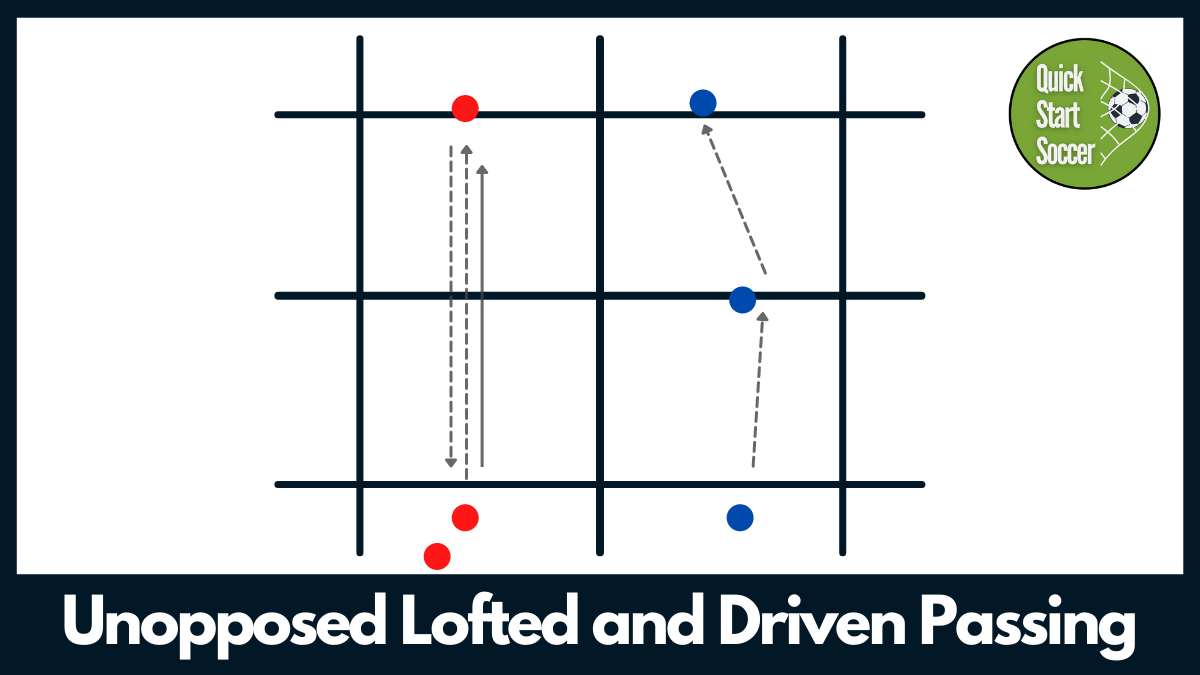
The lofted pass is a solution to a specific problem: a blocked passing lane. It is a bypass, not a default.
Its premier use is playing a striker in behind a high defensive line. When the opponent’s back four is holding a line near the halfway line, a well-weighted lofted ball over the top is a constant threat. It changes a game of chess into a footrace.
Use it for emergency clearances when you are under siege in your box. Getting height and distance is the only priority. It is also the standard technique for switching play with diagonal balls from deep areas, allowing teammates time to settle under the dropping ball.
In tight spaces around the box, the chip pass is a refined lofted pass. Use it to lift the ball over a sliding defender’s leg or to find a teammate making a near-post run. It requires a delicate, stabbing instep contact.
Common mistake: Lofting a pass when a simple ground pass is on, the ball hangs in the air for ages, allowing defenders to recover, reorganize, and intercept. This single error kills attacking momentum more than any other.
The lofted pass is a high-risk, high-reward tool. It requires excellent vision and timing. Misjudge the weight, and you gift possession. It also tests the physical demands of soccer on the receiver, who often must withstand a challenge to bring it down.
The Decision Matrix: Choosing in Real Time

Thinking loses half a second. You need a mental flowchart. The game presents two key questions.
First, what is the distance to the target? For passes over 35 meters, a lofted pass is often the only physically feasible option to maintain accuracy. For the 15-35 meter range, you have a choice based on the next question.
Second, and most critical, is the direct ground lane open? Scan the space between you and your target. If you see an opponent’s leg or body that can intercept a ground pass, the lane is blocked. The lofted pass is your only solution. If the lane is clear, the driven pass is almost always superior, it is faster and easier for your teammate to handle.
| Situation | Best Pass Choice | Why It Wins | Risk if Wrong |
|---|---|---|---|
| Teammate checking to feet, 20m away, no pressure | Driven Pass | Delivers ball quickly before defender closes | Overhit pass skips to opponent |
| Striker running behind high line, 30m away | Lofted Pass | Exploits space behind defense | Underhit pass is intercepted by keeper |
| Switching play from left back to right winger, 40m | Lofted Pass | Allows winger time to control | Slow, hanging ball lets defense shift |
| Threading ball between two midfielders, 25m | Driven Pass | Beats defenders’ reaction time | Slight misdirection intercepted |
| Clearance from own penalty area | Lofted Pass | Maximizes height and distance | Skied ball gives possession right back |
Your ideal soccer position influences how often you use each. Deep-lying playmakers need both in their locker. Wingers might use more driven crosses. The choice is a core strategic passing technique.
TL;DR: Clear ground lane? Driven pass. Lane blocked? Lofted pass. Over 35 meters? Usually lofted.
The Video Game Lens: Driven Pass in EA FC 26
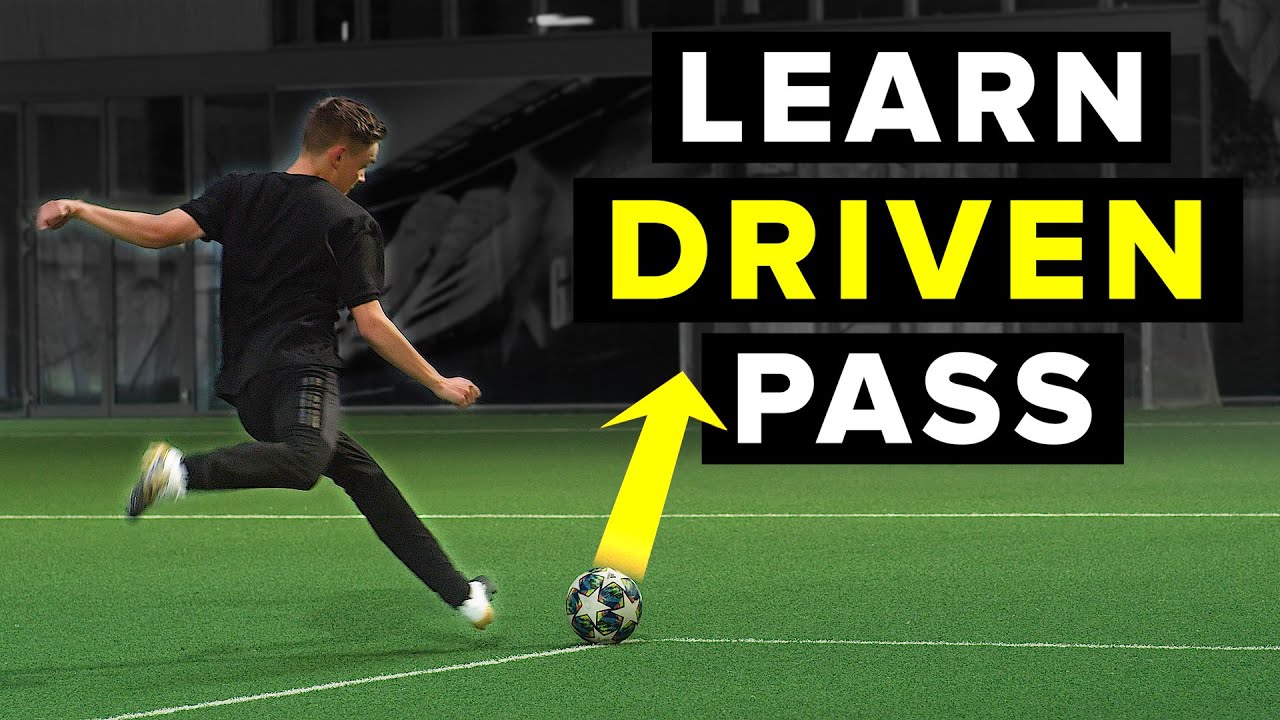
The digital pitch has its own rules. In EA FC 26, the “Driven Through Pass” is a distinct command, not just a descriptive term.
You execute it by holding R1/RB + Triangle/Y. This produces a low, zipped through ball along the ground, as opposed to the standard lofted through ball (just Triangle/Y). It is devastating for splitting a defense that is holding a high line in the game, because the AI defenders struggle to adjust to the pace.
The in-game “sweet spot” is about 1.5 to 2.5 bars of power. Any more, and you overhit it out of play. It mirrors the real-life principle: use it when you want the ball to travel fast on the deck to a runner. It is a pure coaching passing fundamental translated into a button combo.
Common Mistakes and How to Fix Them
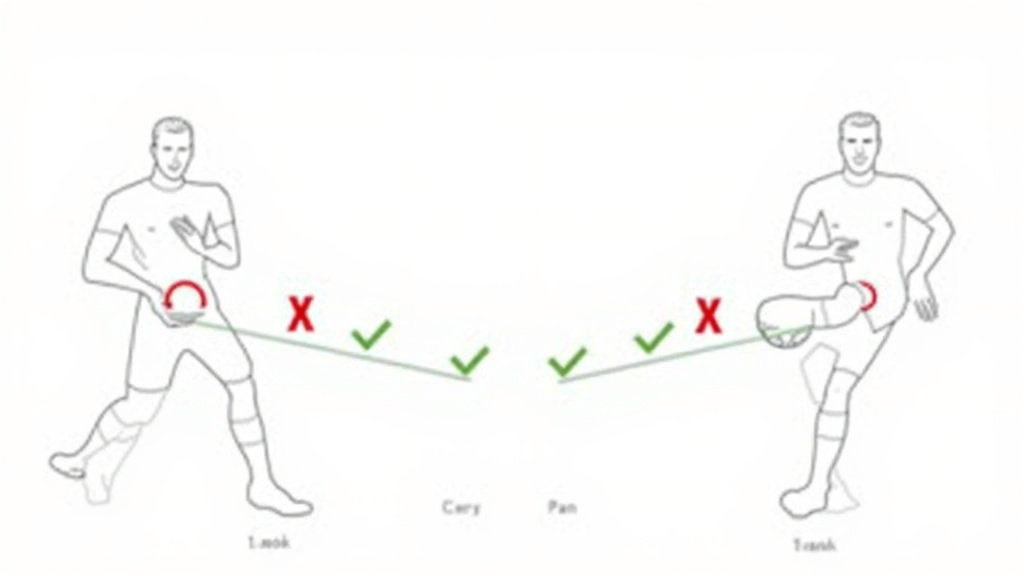
Everyone makes errors. The trick is to know what you did wrong immediately.
For the driven pass, the classic error is ballooning the ball. Your body is too far back. You are leaning back, subconsciously trying to “help” the ball into the air. The fix is obsessive: keep your chest over the ball, and watch your knee drive through the point of contact. Drill it until your muscles remember.
Another driven pass mistake is a weak, slappy contact. That is the sound of using the inside of your foot, not the laces. It generates spin and loses all power. Lock that ankle. Practice striking the ball with just your laces from five yards away to rebuild the muscle memory. This ties directly into ball striking techniques used in finishing.
For the lofted pass, the usual failure is not enough lift. The ball skims along and is easily blocked. You did not lean back enough or you struck too close to the center. Commit to the lean and focus on the sweeping, under-the-ball contact. It feels exaggerated at first.
The opposite problem is the “moon ball”, too much lift, not enough distance. It hangs forever. This comes from leaning back too much and “scooping” without any forward momentum. Your plant foot is probably too far behind the ball. Move it slightly closer and focus on a follow-through that goes through the ball, not just under it.
These fixes are not just technical. They require the athletic performance training to maintain balance and the core strength exercises to control your torso in motion.
Drills to Master Both Techniques

Theory is useless without sweat. Isolate each skill, then combine them under pressure.
1. The Gate Drill (Driven Pass):
Set up two cones two meters apart to form a “gate” 20 meters away. Partner with a teammate. Your goal is to pass the ball through the gate so it reaches your partner on the ground. Every pass must use the laces. Start stationary, then add a one-touch control before passing. This builds consistency in your strike.
2. The Chip & Chase (Lofted Pass):
Place a cone 15 meters away. Dribble toward it, then chip the ball over it and run to collect it on the other side. Focus on a short, sharp stab of the instep to get the ball up and down quickly. This simulates chipping over a defender’s leg.
3. The Defender’s Shadow Drill (Decision Making):
This is the money drill. Have a teammate stand as a passive defender halfway between you and a target player. The defender can stick a leg out but not move their feet. You receive a ball and must choose, driven pass around the defender, or lofted pass over them, to find the target. Start slow, then increase the defender’s activity. This bridges the gap to real-game principles of play.
Incorporate these drills into a comprehensive soccer workout plan that also includes agility ladder drills for footwork and is supported by proper nutrition for performance.
Frequently Asked Questions
What is a driven pass in soccer?
driven pass is a technique for moving the ball quickly and accurately over medium-to-long distances (15-35 meters) along the ground. It is executed by striking the center of the ball with the laces of the foot while keeping the body over the ball and following through low toward the target.
When should you use a lofted pass?
Use a lofted pass when the direct ground passing lane to a teammate is blocked by an opponent. It is the correct choice for playing the ball over a defensive line, for chipping over a pressing foot in tight spaces, or for longer diagonal switches of play where you need the ball to sit down for the receiver.
Is a driven pass more accurate than a lofted pass?
Over medium distances with a clear lane, a well-executed driven pass is typically more accurate and reaches its target faster than a lofted pass. The lofted pass introduces variables like wind and backspin, making consistent precision more challenging. However, its accuracy is defined by successfully bypassing an obstacle, not just reaching a spot.
What’s the difference between a driven pass and a long ball?
driven pass is defined by its technique (laces, low trajectory) and its intent to find a teammate with pace over medium distance. A “long ball” is a broader tactical term describing any pass that covers a large distance, which can be either driven or lofted. All driven passes over 30 meters are long balls, but not all long balls are driven passes.
How do you do a driven through pass in EA FC 26?
On PlayStation, hold R1 + Triangle. On Xbox, hold RB + Y. This triggers a low, powerful through ball along the ground, which is highly effective for splitting a high defensive line in the game. Use between 1.5 and 2.5 bars of power.
Before You Go
The driven pass and the lofted pass are not interchangeable. One is a laser, the other is a parabola. Your ability to diagnose the game and select the right one separates a reactive player from a proactive one.
Commit the decision matrix to memory: ground lane open, use the driven pass; ground lane blocked, use the lofted pass. Then, put in the repetitive, boring work on the training ground to make both techniques automatic. Your first instinct in a match should be a scan, not a guess. When your soccer finishing skills are sharp and your passing fundamentals are sound, the game slows down. You see the pass before the opportunity fully unfolds. That is the difference.

I come from the “soccer heart” of Germany, the Ruhrpott. I have played, trained and followed soccer all my life and am a big fan of FC Schalke 04. I also enjoy following international soccer extensively.