The Crucial Difference: Extra Time vs Stoppage Time in Soccer
Extra time vs stoppage time difference soccer boils down to two things: purpose and duration. Extra time is a mandatory 30-minute tie-breaker period used only in knockout tournaments. Stoppage time is variable minutes added by the referee at the end of each half to compensate for delays during normal play.
Most fans mix them up because both happen after the clock hits 90 minutes. They hear “additional time” and think it’s the same thing. That confusion leads to arguments in pubs when someone says a World Cup final “went to extra time” and another insists it was “just long stoppage time.”
This guide cuts through the noise. You’ll get the official definitions, the physical impact on players, the referee’s hidden biases, and the historical formats that tried to replace them.
Key Takeaways
- Extra time is always 30 minutes (two 15-minute halves) and only happens in knockout matches where a winner is mandatory, like the World Cup final or Champions League quarter-final.
- Stoppage time is variable, decided by the referee on the spot to account for injuries, substitutions, and other delays during each 45-minute half.
- Teams get one additional substitution if a match goes to extra time. No extra subs are given for stoppage time.
- The 2022 World Cup saw 5 out of 16 knockout games go to extra time, and all of those were decided by penalty shootouts.
- Referees consistently add more stoppage time in the second half than the first, and research shows they add unexplained minutes when the score is close.
The Core Rule: What Each Term Actually Means
Open any FIFA rulebook. You’ll find two separate sections.
Stoppage time, often called injury time or added time, is a corrective tool. Its sole job is to reclaim playing minutes lost within a half. Think of a player down for three minutes, six substitutions, a long VAR check. The referee tallies those seconds and adds them back after the 45-minute mark. The amount is never fixed. It’s a judgment.
Extra time is a structural extension. It’s a full extra period tacked onto the match, not just onto a half. It exists because the tournament rules demand a winner and the 90 minutes produced a draw. It’s a scheduled 30-minute match segment with its own halftime break.
The official FIFA Laws of the Game define stoppage time as “allowance for time lost” through specific events: substitutions, assessment and removal of injured players, disciplinary sanctions, delays for goal celebrations, and hydration breaks. Extra time is defined as “two equal periods of not more than 15 minutes each” played after the end of regulation time in knockout matches.
The linguistic mess starts because both get called “additional time.” Broadcasters say “we’ll have additional time at the end of this half” for stoppage time. Then they say “the match will go into additional time” for extra time. Listen for the preposition. “At the end of” points to stoppage. “Go into” points to extra.
TL;DR: Stoppage time reclaims lost minutes within a half. Extra time is a new 30-minute period added after a full match because a winner is needed.
When Does Each One Happen? The Tournament Divide
This is the cleanest split. League matches never have extra time. Ever.
If you’re watching a Premier League Sunday, a Bundesliga clash, or any regular season game, the only “additional time” you’ll see is stoppage time. A draw gives each team one point. No winner is forced. The 2022 World Cup group stage? Same rule. Draws are fine.
Knockout tournaments flip the script. The FA Cup third round, the Champions League from the quarter-finals on, the World Cup from the last-32 stage, these demand a victor. If it’s tied after 90 minutes plus stoppage time, the referee orders extra time. Everyone plays another 30 minutes.
That’s the procedural trigger. The physical trigger is different.
Common mistake: Assuming a cup final will automatically go to extra time if it’s tied, it only goes if the tie persists after the second half’s stoppage time has been played and the 90-minute mark is passed. A goal in second-half stoppage time wins the match outright.
I learned this watching Schalke in a DFB-Pokal semi-final years ago. We were tied 1-1 deep into the second half. Our opponents scored in the 92nd minute, during stoppage time. The whistle blew right after. No extra time. The rulebook was clear, but the emotional shock wasn’t. The match ended on a delay, not an extension.
| Match Context | Extra Time Possible? | Stoppage Time Always Used? |
|---|---|---|
| League / Group Stage | No | Yes |
| Knockout Tournament | Yes (if tied after 90+stoppage) | Yes |
| Friendly Match | No | Rarely (often waived) |
The Physical Toll of Extra Time
Stoppage time is a sprint. Extra time is a marathon.
Players already cover 10-12 kilometers in a standard match. Adding 30 minutes of high-intensity play changes everything. A systematic review of soccer extra-time demands lays out the data: distance covered per minute drops 5-12%. Shot speed falls. Passes and dribbles decrease. The technical quality withers.
Why? Muscle glycogen stores deplete. Mental fatigue blurs decision-making. You see more long, hopeful balls and fewer intricate plays. The distance run in a match spikes, but the efficiency plummets.
This fatigue shapes tactics. Managers often use their extra substitution to bring on a fresh defender or a penalty specialist. The classic move becomes parking the bus and aiming for a shootout. It’s why so many extra-time periods end 0-0, the 2022 World Cup knockouts proved that.
The risk of injury jumps too. Hamstrings, calves, groins, muscles fail under cumulative load. I’ve seen players who were fine at 80 minutes pull up lame at 110. Their bodies hit a wall.
I won’t recommend pushing a team to attack aggressively in extra time if they’re not built for it. The soccer tactics guide for endurance says to conserve energy in the first 15-minute half, then probe in the second. Going all-out from the whistle burns the tank before the shootout.
TL;DR: Extra time degrades player performance and increases injury risk. Most teams shift to defensive, shootout-oriented tactics.
The Referee’s Discretion: Why Stoppage Time Is Never Exact
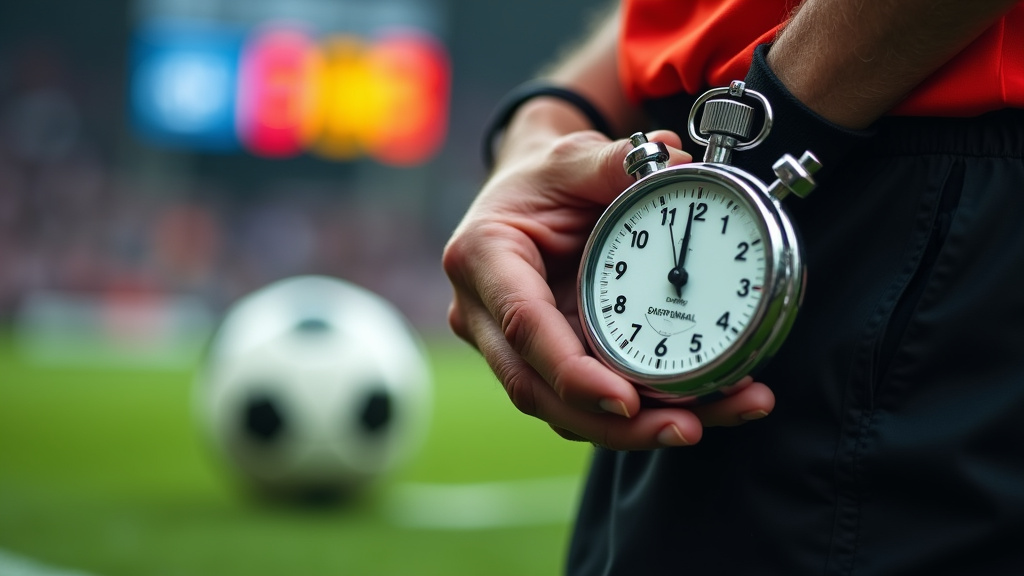
The referee’s watch is not a stopclock. It’s a tool for estimation.
FIFA’s guidelines list what counts: substitutions, injuries, disciplinary actions, hydration breaks, “excessive” delays for restarts. What’s “excessive”? That’s the referee’s call. A 30-second goal celebration might be ignored. A 90-second one might get added.
This discretion creates wild inconsistency. A University of Stirling referee timekeeping study analyzed the 2022 World Cup and 2024 Euros. Referees added nearly double the stoppage time in second halves versus first halves. More revealing: they added unexplained minutes when the score was close.
The pressure of a tight game subconsciously influences the calculation. A referee might “feel” the need for more time to find a winner. It’s human, but it breaks the ideal of impartiality.
FiveThirtyEight tracked the 2018 World Cup. They found referees added only about half of the actual lost time. The average added was 6:59 minutes; the estimated actual lost time was 13:10. Underestimation is standard.
New rules aim to fix this. For 2024/2026, FIFA introduced five-second countdowns for goal-kicks and throw-ins. Substituted players must leave within 10 seconds. The goal is more accurate recovery of lost time.
The drama factor is real. About 15% of all goals at the 2022 World Cup came in stoppage time. Those minutes are a psychological battleground. Teams chasing a goal push. Teams defending a lead wilt. The strategic adjustments here are about mental stamina, not just physical.
TL;DR: Stoppage time is inconsistently applied, often underestimated, and can be subconsciously extended by referees in close games.
Historical Tie-Breakers: Golden Goal and Silver Goal
Extra time wasn’t always a full 30-minute slog. FIFA experimented with sudden-death formats.
The Golden Goal ruled from 1993 to 2004. The first team to score in extra time won instantly. The match ended right there. Euro 1996 and Euro 2000 used it. It created incredible tension but also conservative play, no team wanted to risk conceding that single decisive goal.
UEFA tried the Silver Goal as a compromise in 2002-2004. If a team led at the end of the first 15-minute half of extra time, they won. No second half played. It was a half-measure, and it was scrapped.
Both formats died because they felt unfair. They rewarded a single moment over a full period of play. The current 30-minute format, while grueling, gives both teams a complete chance to respond.
The Wikipedia entry on overtime in sports covers these variations across different games. Soccer’s journey is typical: search for excitement, then retreat to fairness.
Common mistake: Believing the Golden Goal is still used in any major competition, it was abolished 20 years ago. Every current FIFA and UEFA knockout tournament uses the standard 30-minute extra time followed by penalties.
I remember the 2002 World Cup quarter-final between South Korea and Italy. A Golden Goal would have changed everything. Italy scored early in extra time, but under the old rules, that would have been the final whistle. Instead, they played the full 30, and South Korea equalized late. The format itself decided the narrative.
TL;DR: Golden Goal (sudden death) and Silver Goal (half-time lead) were historical extra-time formats abandoned for the current 30-minute period.
Substitutions and Other Rule Differences
The rulebook treats extra time and stoppage time as separate entities with different allowances.
The big one is substitutions. In standard matches, teams can make five subs across three windows. If the match goes to extra time, they get a sixth substitution window and can make one more change. This is crucial for managing fatigue and introducing a penalty specialist.
No extra subs are granted for stoppage time. Those minutes are considered part of the original half.
Other subtle differences:
– Ball-in-play time: Stoppage time aims to increase it. Extra time often sees it decrease due to fatigue.
– Tactical shifts: Coaches plan specific formation pros and cons for extra time, like switching to a 5-3-2 for defensive solidity. Stoppage time tactics are more reactive.
– Player mentality: Stoppage time is a frantic dash. Extra time is a weary grind.
The FIFA World Cup cycle means players face this extra-time physical test only every four years in the biggest tournament. Club knockout competitions, like the Champions League, test them annually.
How to Spot the Difference While Watching
You don’t need the rulebook open. Watch the referee’s signals and the broadcaster’s language.
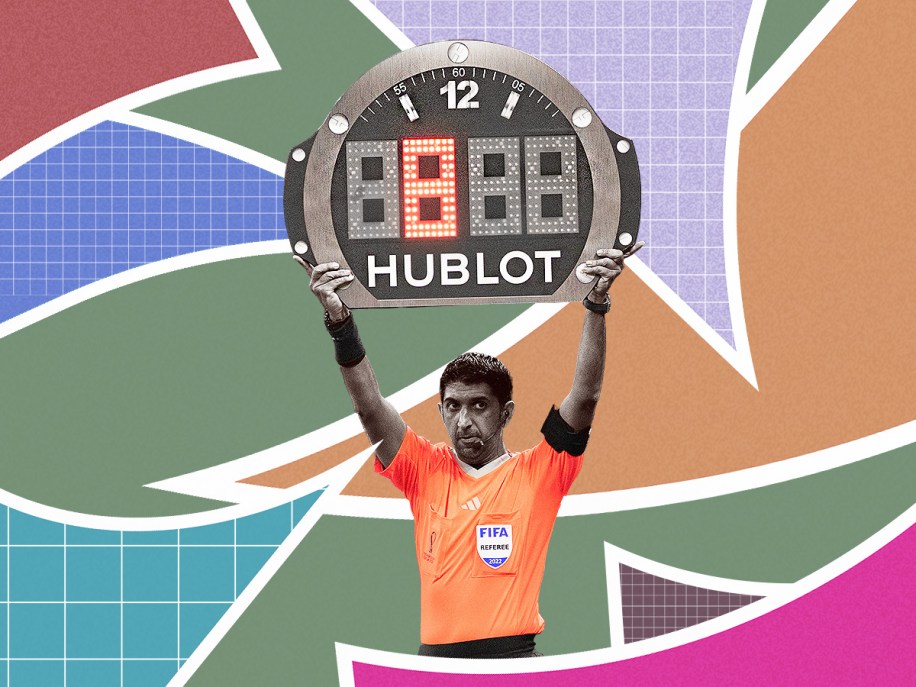
At the end of the first or second half, the referee points to their watch and holds up fingers indicating minutes. That’s stoppage time. The fourth official usually displays a board with the number. The half ends when that added time expires, regardless of goals.
At the end of the full 90 minutes in a knockout match, if the score is tied, the referee will gather both teams and indicate a short break before restarting. There’s no finger-counting for minutes. They’ll blow the whistle to start a new 15-minute half. That’s extra time.
Listen to the commentator. “There will be four minutes of added time at the end of this half”, stoppage. “This match is heading into extra time”, extension.
The crowd’s reaction is another tell. Stoppage time brings urgent, focused noise. Extra time brings a mix of weary anticipation and renewed hope.
TL;DR: Watch for the referee’s finger-count at the end of a half (stoppage time) versus a new whistle after a break after 90 minutes (extra time).
Frequently Asked Questions
Does stoppage time get added to extra time?
No. Extra time is a fresh 30-minute period. Each 15-minute half of extra time can have its own stoppage time added at the end, following the same rules as normal halves. So a match could theoretically have: 90 minutes + stoppage time, then 30 minutes of extra time + stoppage time.
Can a team score in stoppage time and still go to extra time?
Yes, but only if the goal ties the match. If a team is losing 1-0 and scores in second-half stoppage time to make it 1-1, the match proceeds to extra time after the stoppage time ends. If they score to go ahead 2-1, the match ends immediately.
Why do referees add more stoppage time in the second half?
Studies show two reasons: more cumulative delays (substitutions, injuries, tactical time-wasting) build up in the second half, and referees may subconsciously feel a need for more time to find a winner in a close game. The academic study on stoppage time decisions quantified this bias.
Is there extra time in youth soccer matches?
Typically, no. Youth matches prioritize player safety and development. High school halves are 40 minutes, junior high 35 minutes, elementary 30 minutes, and they usually waive stoppage time as well. Extra time is almost never used; draws are accepted.
What happens if it’s still tied after extra time?
The match proceeds to a penalty shootout. Five players from each team take alternating kicks from the penalty spot. If still tied after five kicks, it goes to sudden-death penalties until one team misses and the other scores.
The Bottom Line
Extra time and stoppage time are siblings, not twins. One is a scheduled extension for knockout drama. The other is a corrective patch for in-game delays.
Knowing the difference changes how you watch. You’ll understand why a league match never goes past 90-plus, why World Cup finals can stretch to 120, and why that last-minute goal might end the game or just extend the pain.
Remember the triggers. Stoppage time: referee’s fingers, end of a half. Extra time: new whistle, after a full match, only in tournaments.
Next time you’re debating in the pub, cite the substitution rule or the 30-minute fixed duration. That’s the expert’s proof.
I come from the “soccer heart” of Germany, the Ruhrpott. I have played, trained and followed soccer all my life and am a big fan of FC Schalke 04. I also enjoy following international soccer extensively.