How Long Is Extra Time in Soccer? (Duration & Rules)
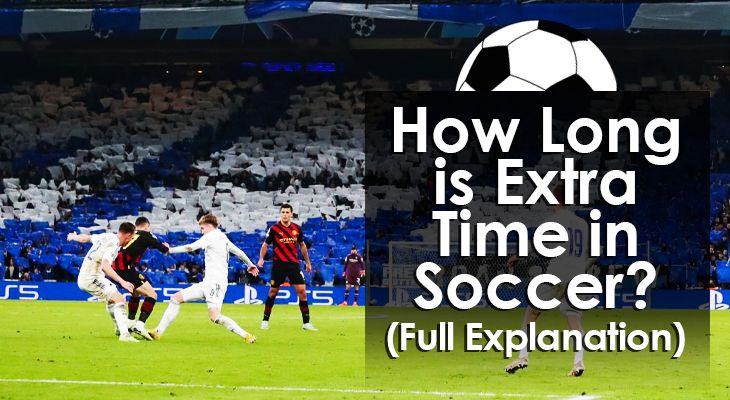
Extra time in a soccer match is a fixed 30-minute period, split into two 15-minute halves. It is only played if a knockout-stage match is tied after the standard 90 minutes of regulation and any added stoppage time. Its sole purpose is to force a winner before resorting to a penalty shootout.
Most people think a soccer game is over after 90 minutes. They see the clock hit 90:00 and assume the whistle blows. That’s wrong. The real clock is in the referee’s head, and the real game often starts after the regulation time ends. This confusion between added time and extra time costs casual fans their nerves during every major tournament.
This guide breaks down the exact length of extra time, when it’s triggered, and the physical and mental battle that happens inside those 30 minutes. You’ll learn the official rules, the tournament applications, and why teams often play not to win in regulation but to survive until the penalties.
Key Takeaways
- Extra time is a mandatory 30-minute extension, not sudden death. A goal does not end the match early.
- It applies exclusively to knockout matches where a winner is required, like World Cup rounds of 16 and finals.
- The 30 minutes is played in full after a short break, with teams granted an extra substitution.
- If the tie persists after extra time, the match is decided by a penalty shootout.
- Strategically, the prospect of extra time drastically alters team management, often leading to conservative play in the final 15 minutes of regulation.
Extra Time Duration: The 30-Minute Rule
The duration is not flexible. According to Law 7 of the IFAB Laws of the Game, extra time consists of two equal periods of 15 minutes. The referee must play both halves in full.
There is a brief interval between the two 15-minute halves. This isn’t a full halftime. Players get maybe a minute or two for water and quick instructions on the pitch. Then they switch ends and go again. The clock resets to 0:00 at the start of each half, just like in regulation.
Common mistake: Believing a “golden goal” ends extra time early. FIFA abolished this rule after the 2002 World Cup. The full 30 minutes is always played out, even if a team scores in the first minute of the first period.
The mental shift is brutal. You’ve already expended 90 minutes of physical and psychological energy. Now you have to find 30 more. Coaches use their final substitution here, almost always for fresh legs in midfield or for a specialist penalty taker. The game slows down. Risk-taking plummets. Everyone starts thinking about the shootout.
TL;DR: Extra time is a rigid 30-minute add-on, split into two 15-minute halves with a short break. No golden goal.
When Is Extra Time Used? (And When It Isn’t)
Extra time is a knockout-stage tool. You will never see it in a Premier League match or a World Cup group stage game. Those competitions allow draws. Extra time exists solely to break a draw when a winner must advance.
The trigger is simple: a knockout match ends 90 minutes (plus stoppage time) with the score level. The referee does not blow the final whistle. Instead, they signal for extra time. The teams get a five-minute rest on the pitch before starting the first 15-minute period.
| Competition Type | Extra Time Used? | Reason |
|---|---|---|
| World Cup Group Stage | No | Draws award points; no winner required. |
| World Cup Round of 16 | Yes | Winner must advance to quarter-finals. |
| UEFA Champions League Final | Yes | Winner must lift the trophy. |
| Domestic League Match | No | Draws award one point each. |
| Domestic Cup (e.g., FA Cup) | Yes (in later rounds) | Winner advances to next round. |
The most famous applications are in the latter stages of the FIFA World Cup and UEFA Champions League. I remember watching Schalke in the 2011 German Cup final. We were tied with MSV Duisburg after 90 minutes. The atmosphere didn’t relax, it tightened. The next 30 minutes were a war of attrition, with every player visibly calculating their energy for the looming penalty shootout. We lost that shootout. The memory of those exhausted players standing on the halfway line is sharper than the match itself.
TL;DR: Extra time is exclusively for knockout matches where a draw is not a valid result. League matches and group stages never use it.
Extra Time vs. Stoppage Time: The Critical Difference
This is the single biggest point of confusion. Stoppage time (or injury time) is added within each 45-minute half. Extra time is a separate period added after the full 90 minutes.
Stoppage time compensates for pauses in play. The fourth official signals a minimum amount, usually 2 to 8 minutes, but the referee has final say and can extend it. A goal can be scored in stoppage time to win a match. The game ends when the referee decides the allocated time has been played, even mid-attack.
Stoppage time is reactive, accounting for lost seconds. Extra time is procedural, a pre-planned extension to resolve a tie. Conflating the two terms will leave you shouting at the TV when the clock hits 90 minutes and play continues for five more.
Extra time is a scheduled 30-minute block. It has its own two halves and its own rules. Understanding this difference between extra and stoppage time is fundamental to following knockout football. The referee’s management of stoppage time rules has become more stringent, with recent directives to more accurately calculate time lost to celebrations, VAR checks, and substitutions.
What Happens After Extra Time? The Penalty Shootout
If the 30 minutes of extra time expire with the score still tied, the match proceeds directly to a penalty shootout. There is no second period of extra time. The shootout is the definitive decider.
The procedure is standardized: five kickers per team, taking alternate kicks. If still tied after five rounds, it goes to sudden death. The entire shootout is a distinct competition, separate from the match itself. The result is recorded as a win for the shootout victor, often noted as a “win on penalties.”
Common mistake: Thinking aggregate goals from extra time carry over to the shootout. They don’t. The shootout is a standalone tiebreaker. A team that wins 5-4 on penalties is credited with a win, not a 5-4 victory.
The psychological weight is immense. After 120 minutes of football, the match rests on a series of high-pressure, one-on-one duels. Teams now plan for this moment, making specific extra time substitution rules to bring on penalty specialists. The tie-breaking procedures are clear, but executing them under fatigue is what separates champions.
The Physical and Strategic Impact of Extra Time
Managers don’t just plan for 90 minutes. From the quarter-finals onward, they plan for 120. This changes everything in the final third of a knockout match.
You’ll see it around the 75-minute mark. The leading team stops pressing. They drop into a low block, conserve energy, and invite pressure. The chasing team often hesitates, unwilling to overcommit and get caught on the break. Both are already gaming for extra time. The spectacle suffers. It becomes a tactical stalemate.
Player fatigue is quantifiable. Studies show a sharp increase in muscle injuries after the 90-minute mark. The additional 30 minutes of play doubles the high-intensity running distance for midfielders. That’s why the additional substitution in extra time is so critical, it’s a lifeline for cramping legs.
The prospect of extra time also warps tournament scheduling. A team that plays 120 minutes on a Wednesday has a severe recovery disadvantage for a Saturday semi-final. Winning in regulation isn’t just about glory; it’s a tangible physical advantage for the next round.
A Brief History: From Golden Goal to Today
The rules haven’t always been static. For a period, FIFA experimented with the “golden goal” (or “sudden death”) rule. The first goal scored in extra time would immediately end the match, with that team declared the winner.
It was used in major tournaments like Euro 96 and the 1998 and 2002 World Cups. The idea was to encourage attacking play. The reality was the opposite. Teams became even more terrified of conceding, leading to catenaccio-style defensive football. The golden goal was abandoned after the 2002 World Cup, replaced by the current “silver goal” rule (which was itself quickly dropped), returning to the plain 30-minute format.
This historical pivot matters. It shows that the standard match length of 90 minutes is sacred, but the tie-breaking mechanics are still subject to tinkering. The current 30-minute period is a compromise, long enough to seek a winner, short enough to not be utterly debilitating.
Understanding this evolution helps explain why the duration of extra time is now a fixed, non-negotiable part of the game’s architecture. It’s a settled answer to a perennial problem.
Frequently Asked Questions
Does a goal in extra time end the match?
No. Since the abolition of the golden goal rule, a goal in extra time does not end the match early. The team that scores plays out the remainder of the 30-minute period. The full time must be completed.
Can a team make substitutions during extra time?
Yes. In competitions following the latest IFAB protocols, teams are allowed to make an additional substitution if the match goes to extra time. This is on top of the standard five substitutions permitted during regulation time.
What is the longest extra time ever played?
While extra time itself is a fixed 30 minutes, the longest overall match including multiple extra-time periods was a 1922 FA Cup match between Stockport County and Doncaster Rovers. It lasted 3 hours and 23 minutes over three replays and extra periods. In the modern era, matches with long stoppage time calculation can push the total time beyond 100 minutes before extra time even begins.
Is there a halftime break during extra time?
There is a short interval between the two 15-minute halves, but it is not a full 15-minute halftime. Players typically take a brief drinks break on the pitch and receive instructions before switching ends and resuming play.
Do yellow cards from regulation time carry over into extra time?
Yes. A player’s disciplinary record is continuous for the entire match, including extra time. Two yellow cards received at any point, one in regulation and one in extra time, result in a red card and ejection.
The Bottom Line
Extra time is a 30-minute crucible. It’s not an afterthought; it’s a deliberate, grueling test designed to separate teams before the lottery of penalties. Remember the sequence: 90 minutes of regulation, possible added stoppage time, then, only if the knockout match is tied, the 30-minute extra time period.
The real understanding comes from watching those moments. The slumped shoulders at the 90th minute whistle, the frantic gulps of water and electrolytes, the tactical reshuffle. It’s where tournaments are truly won and lost, not in the flashy goals of the first half, but in the desperate, fatigued battles of the added half-hour. Now you know exactly how long it lasts and why every second of it counts.
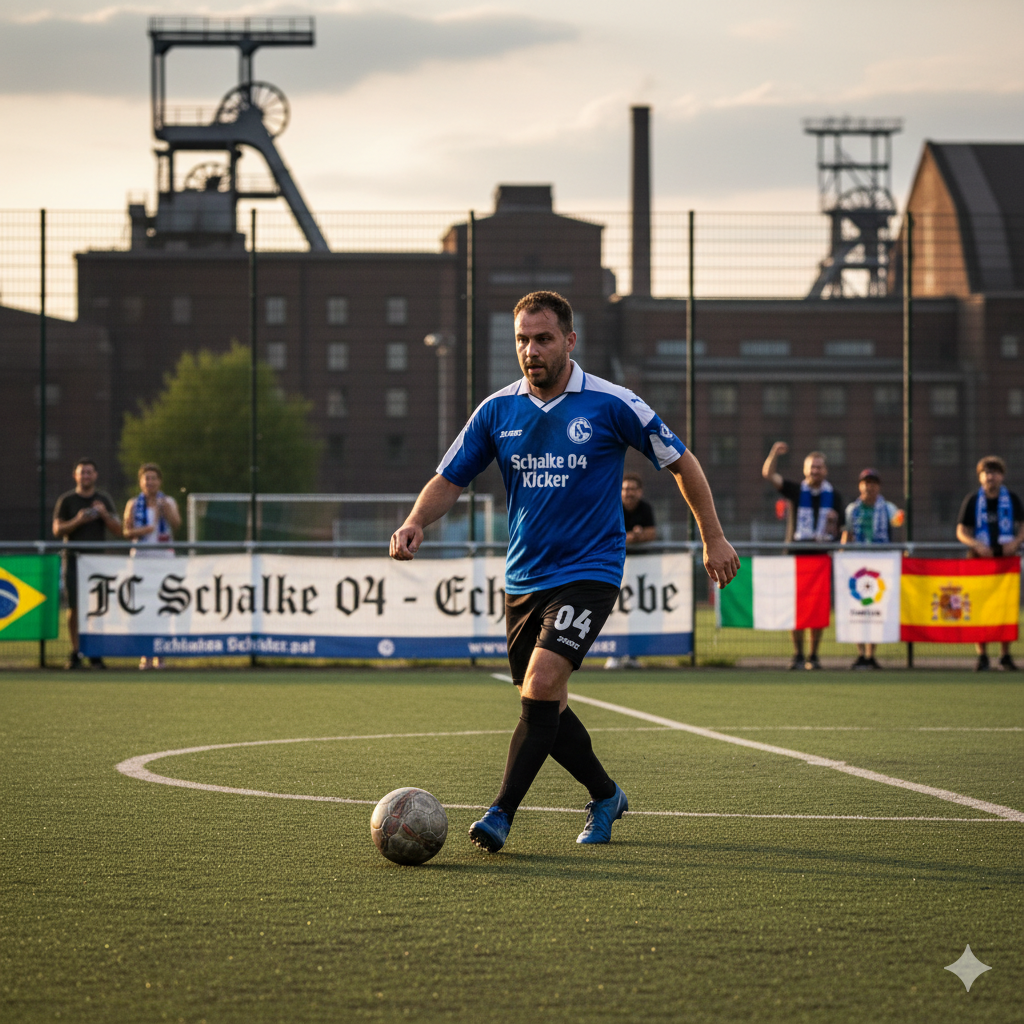
I come from the “soccer heart” of Germany, the Ruhrpott. I have played, trained and followed soccer all my life and am a big fan of FC Schalke 04. I also enjoy following international soccer extensively.