MLS Season Structure Explained: Regular Season & Playoffs
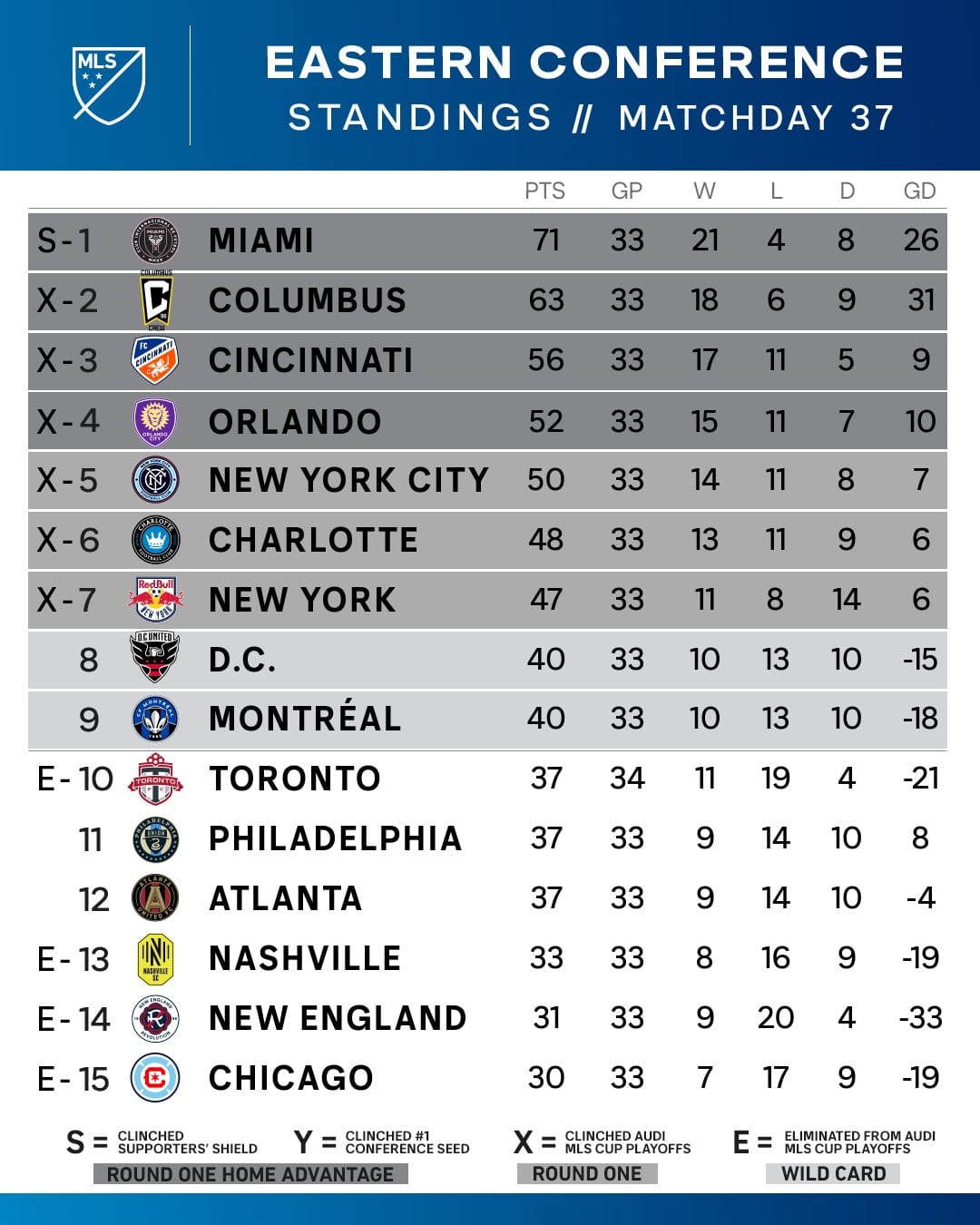
The MLS season structure works on a spring-to-fall calendar through 2026, where 30 teams play a 34-game regular season followed by a playoff tournament for the top nine clubs in each conference. Starting in 2027, the league will permanently shift to a summer-to-spring calendar, beginning with a unique 14-game transition season.
Most fans look at the table and see wins, losses, and points. They miss the engine underneath, a specific conference schedule, a playoff format designed for TV drama, and a ticking clock counting down to the biggest calendar change in league history. The structure isn’t just a schedule; it’s the blueprint that dictates everything from a team’s travel miles to its winter transfer strategy.
This guide breaks down the current MLS season format, the detailed playoff road to MLS Cup, and the seismic shift coming in 2027. We’ll cover the number of games, the tiebreaker rules, and why the league is abandoning its traditional calendar.
Key Takeaways
- The 2026 MLS regular season is 34 games per team (17 home, 17 away), with a scheduled six-week break for the FIFA World Cup.
- Nine teams from each conference qualify for the Audi MLS Cup Playoffs, starting with a Wild Card round for seeds 8 and 9.
- The first playoff round uses a best-of-three series format, a unique North American twist on knockout football.
- In 2027, MLS will permanently switch to a summer-to-spring calendar, aligning with top global leagues like the Premier League and Bundesliga.
- The transition will be marked by a short 14-game “Sprint Season” in early 2027, determining continental qualification.
The 2026 MLS Season: A Final Spring-to-Fall Campaign
The 2026 season is the last of its kind. It follows the league’s traditional North American model, running from late February to early November. This format has defined MLS since its 1996 inception, but it ends here.
Each of the 30 clubs plays 34 matches. The schedule is heavily weighted toward conference play for rivalry and reduced travel. Teams face each of their 14 conference opponents twice, once at home and once away. That accounts for 28 games. The remaining six fixtures are against cross-conference opponents, selected by the league to highlight certain matchups or balance the schedule.
The 2026 MLS regular season begins on February 21 and concludes with Decision Day on November 7. It features a mandatory six-week break from May 25 to July 16 to accommodate the FIFA World Cup 2026, which will be hosted in the United States, Canada, and Mexico. All 510 regular-season matches are broadcast globally on Apple TV.
A subtle but important change for 2026 is the introduction of 14 “Ball Stands” around each pitch. This rule targets time-wasting. When the ball goes out of play, a ball retriever (a “Ball Stand”) must immediately supply a new one to the player for the restart. The clock keeps running. The goal is to increase effective playing time and reduce the gamesmanship of slow ball retrieval. It’s a small structural tweak with a big impact on game flow.
The race ends on Decision Day, when all final regular-season matches are played simultaneously. This creates a dramatic, league-wide finale where playoff fates and seeding are decided in real time. The team with the most points across the entire league wins the Supporters’ Shield. But the real prize is a top-nine finish in your conference.
TL;DR: The 2026 season is a 34-game sprint with a World Cup break, ending on a dramatic Decision Day where playoff spots are finalized.
How Do MLS Playoffs Work?
The Audi MLS Cup Playoffs are a 18-team tournament. They are a pure knockout competition, but with a distinctly North American first round. The format is built for television drama and home-field advantage.
Qualification is simple: the top nine teams from the Eastern and Western Conferences qualify. Points are the sole decider. The tiebreaker sequence, used if teams are level on points, is: 1) total wins, 2) goal difference, 3) total goals scored, 4) fewest disciplinary points, 5) away goal difference, 6) away goals scored, 7) home goal difference, 8) home goals scored, 9) a coin toss.
Common mistake: Assuming the higher seed always advances easily in the best-of-three series. The format gives the lower seed a real chance if they can steal a win on the road in Game 1, turning the series into a sudden-death Game 3 on the higher seed’s home field, a massive pressure cooker.
The playoff bracket is a mix of single-elimination and series play. Seeds 8 and 9 in each conference face off in a one-off Wild Card match, hosted by the 8th seed. The winner advances as the 8th seed into the Round One bracket.
| Round | Format | Teams | Advancement |
|---|---|---|---|
| Wild Card | Single-elimination | Seed 8 vs. Seed 9 (per conference) | Winner becomes 8-seed in Round One |
| Round One | Best-of-Three Series | 1 vs. 8, 2 vs. 7, 3 vs. 6, 4 vs. 5 | First to two wins advances |
| Conference Semifinals | Single-elimination | Round One winners | Winner advances to Conference Final |
| Conference Finals | Single-elimination | Semifinal winners | Winner advances to MLS Cup |
| MLS Cup | Single-elimination | Eastern vs. Western Conference Champions | Winner is MLS Champion |
Round One is the unique part. It’s a best-of-three series, not a two-legged aggregate. The higher seed hosts Games 1 and 3. The first team to win two games advances. This format creates more playoff games and revenue, but it can feel alien to global football fans accustomed to home-and-away legs. The subsequent rounds. Conference Semifinals, Finals, and MLS Cup, revert to single-elimination, with the higher seed hosting.
This entire MLS playoff structure is under review for the post-2027 calendar era. The league has hinted that the best-of-three series might not survive the transition to the new global-aligned schedule.
The 2027 Revolution: Switching to a Summer-to-Spring Calendar
In 2027, MLS will tear up its calendar and start over. The league is abandoning its spring-to-fall schedule to align with the global football calendar used by Europe’s top leagues. This is the most significant structural change in MLS history.
The transition requires a bridge. That bridge is the 2027 MLS Sprint Season.

The 2027 Sprint Season (February – May 2027)
This is a one-off, condensed competition. It will run from February to May 2027 and serves two critical purposes: it concludes the “old” cycle and qualifies teams for the 2028 Concacaf Champions Cup and 2028 Leagues Cup.
* Each team plays only 14 regular-season games.
* All matches are intra-conference (East vs. East, West vs. West).
* The top eight teams from each conference qualify for a single-elimination playoff.
* MLS Cup will be awarded in May 2027.
Think of it as a supercharged mini-league. The short schedule means every game has amplified importance, and a slow start could doom a team’s continental hopes immediately. The regular season conclusion for this sprint will feel abrupt compared to the traditional 34-game marathon.
The New Standard: 2027-28 Season Onwards
The first full season under the new calendar will kick off in mid-to-late July 2027. The regular season will run through late May 2028, culminating in MLS Cup.
The most crucial new feature is the midwinter break. The league will pause from mid-December through early February, with no matches scheduled in January. This is a direct concession to climate. The league’s mandate is to “limit home matches in northern markets during December and February.” You won’t see Minnesota United hosting a match in a Minneapolis blizzard. Teams will use this break for training camps, player rest, and transfer window activity.
This shift fundamentally changes team planning. The summer transfer window now aligns with the start of the season, not the middle of it. Preseason moves in July will have an immediate impact, unlike the old system where a mid-season signing had to adapt on the fly.
Why Is MLS Making This Massive Calendar Change?
The rationale isn’t a secret, but the depth of the reasons matters. Surface-level logic says it’s about “aligning with the world.” The real reasons are operational and financial.
First, it syncs the MLS transfer window with the global market. When the European season ends in May, their transfer window opens. Under the old calendar, MLS was in the middle of its season and couldn’t easily buy or sell players. Now, the MLS season will end in May, allowing it to participate actively in the summer transfer period. This should improve the quality of incoming players and allow MLS to sell talent abroad at a more logical point in the player’s contract cycle.
Second, it improves player welfare and performance for international duty. MLS players called up for FIFA international windows in September, October, and November will no longer be pulled from the climax of their club season. They’ll be taken from the early or middle phase, reducing club-vs-country conflict. It also better prepares MLS-based players for the World Cup, which is always held in the northern hemisphere summer.
Finally, it’s a branding and perception play. Operating on the same calendar as the Bundesliga, Premier League, and La Liga makes MLS feel less like an outlier and more like a peer. This matters for international broadcasting deals and attracting global fans who are used to a summer-to-spring rhythm. The league’s global league structures page details how this move places MLS within the worldwide football ecosystem.
The move is not without risk. The midwinter break is long. Maintaining player sharpness over a six-to-eight-week period without competitive matches is a challenge European leagues don’t face to the same degree. Coaches will need to master the art of the “second preseason.”
Frequently Asked Questions
How many games are in the MLS regular season?
For the 2026 season, each team plays 34 games. For the transition 2027 Sprint Season, each team will play only 14 games. When the new summer-to-spring calendar begins in full for the 2027-28 season, the game count is expected to return to a number in the mid-30s, though the exact figure hasn’t been finalized.
What is the difference between the Supporters’ Shield and MLS Cup?
The Supporters’ Shield is awarded to the team with the most total points at the end of the regular season. It recognizes consistent excellence over 34 games. MLS Cup is won through the playoff tournament. It’s possible, and common, for different teams to win each. The playoff vs. single-table format creates this dual championship dynamic.
Will there be promotion and relegation in MLS?
No. MLS uses a closed closed league model, like other major North American sports leagues. Team spots are fixed through expansion fees, not sporting merit from a lower division. This MLS single-entity model of centralized ownership makes promotion and relegation financially and structurally improbable.
How does the World Cup affect the MLS schedule?
For the 2026 World Cup, MLS has built a mandatory six-week break directly into the schedule from late May to mid-July. The league will pause, allowing players to join national teams and fans to focus on the tournament. This is a one-off accommodation for a North American-hosted World Cup.
Where can I watch MLS games?
All MLS regular-season, playoff, and Leagues Cup matches are streamed globally on Apple TV through the “MLS Season Pass.” In the United States, select matches also broadcast on FOX and FS1. In Canada, games air on TSN and RDS.
The Bottom Line
The MLS season structure is a hybrid creature, blending American playoff drama with global football’s core rules. For two more years, it’s a 34-game spring-to-fall race followed by a knockout tournament. Memorize the best-of-three series quirk, it’s the playoff’s defining trait.
Then, clear the mental deck for 2027. The shift to a summer-to-spring calendar is the league’s biggest structural gamble. The success of the Sprint Season and the management of the long midwinter break will determine if this move elevates MLS on the world stage or creates new, unexpected problems. The structure is the story.
I come from the “soccer heart” of Germany, the Ruhrpott. I have played, trained and followed soccer all my life and am a big fan of FC Schalke 04. I also enjoy following international soccer extensively.