How Many Players on a Soccer Field Total
This post contains affiliate links. As an Amazon Associate, we earn from qualifying purchases.
You’re watching a crucial World Cup match, the stadium pulses with energy, and you suddenly wonder: “How many players on soccer field total are actually competing right now?” That question has a beautifully precise answer that unites every official soccer match globally. The standard answer—22 players—might seem simple, but the reasons behind this number and its variations across different formats reveal soccer’s elegant design. Whether you’re a new fan, parent at a youth game, or casual observer, understanding this core rule transforms how you experience the sport. This guide cuts through the confusion with authoritative clarity straight from the sport’s governing laws.
Imagine trying to count players during a fast-paced match—players sprinting, shifting positions, and diving for the ball. It’s easy to lose track, but the answer remains constant in professional play: 22 players total share the field at any given moment. This isn’t arbitrary; it’s Law 3 of the IFAB Laws of the Game, the universal rulebook binding soccer from local leagues to the Champions League. Knowing this foundational number helps you grasp tactical formations, substitution strategies, and even why matches get abandoned in extreme circumstances. Let’s break down exactly how this 22-player structure shapes every aspect of the beautiful game.
Standard 11v11: Why 22 Players Dominate Professional Soccer

The moment you tune into any top-tier soccer broadcast, you’re witnessing the 22-player standard in action. This 11-versus-11 configuration creates the perfect balance between strategic depth and individual impact that defines modern soccer. Teams deploy their 11 players across specialized roles to control space, launch attacks, and defend goals—all within this non-negotiable numerical framework.
Team Composition Per Side
- 1 goalkeeper (the only player legally using hands within the penalty area)
- 10 outfield players dynamically filling defensive, midfield, and forward positions
- Zero flexibility during official matches—no adding or removing players beyond substitutions
This precise structure forces coaches into fascinating tactical puzzles. With just 11 players per side, every position shift creates vulnerabilities elsewhere. A team pushing for a late goal might pull a defender forward, leaving space for counterattacks. This constant risk-reward calculation—happening within the fixed 22-player limit—is why soccer captivates billions. The beauty lies in how teams maximize limited resources: 11 players must cover 7,140 square yards of turf, creating the sport’s signature ebb and flow.
Youth Development: How Player Counts Scale for Learning
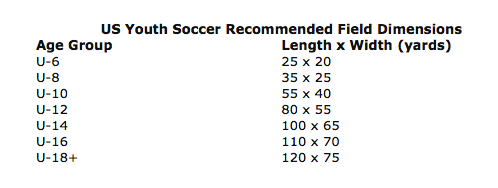
Soccer intelligently scales player numbers to match developing skills, ensuring young athletes aren’t overwhelmed. This progression builds confidence while teaching core principles before introducing full complexity. Recognizing these variations prevents confusion when watching different age groups.
Age-Appropriate Player Progression
- U6-U8 (4v4): Only 8 total players on miniature fields. Focuses on constant ball contact and basic movement—no goalkeepers yet. Kids never stand idle waiting for touches.
- U9-U10 (7v7): Expands to 14 total players with simplified positions. Introduces goalkeepers and basic formations while keeping the field small enough for frequent involvement.
- U11-U12 (9v9): 18 total players on larger fields. Teaches positional awareness and transitional play as teams start developing distinct defensive and attacking phases.
- U13+ (11v11): The full 22-player setup begins. Players now master advanced tactics like offside traps and coordinated pressing within professional rules.
Specialized Small-Sided Formats
- Futsal (5v5): 10 total players on hard courts. Demands lightning-fast passing and close control—no walls, but out-of-bounds restarts keep play continuous.
- Beach soccer (5v5): Another 10-player format where sand slows movement, emphasizing aerial skills and acrobatic finishes amid shifting terrain.
- Recreational 7-a-side: Common in adult leagues with 14 total players. Features smaller goals and no offside rule, prioritizing fun and fitness over strict tactics.
Critical Exceptions: When the 22-Player Count Changes During Matches
Even with the ironclad 22-player standard, real-game scenarios force temporary reductions. Understanding these exceptions explains dramatic match moments where teams battle with numerical disadvantages.
Red Card Impact on Player Totals
When a referee shows a straight red card, that team immediately drops to 10 players. Two red cards? Now they’re at 9. The critical threshold is 7 players per team—fall below this (e.g., three red cards), and the match terminates immediately. This rule prevents farcical situations where a team couldn’t reasonably defend its goal. You’ll see this rarely in top leagues, but it creates unforgettable tension when it happens—like when 10-man Real Madrid held off Barcelona in a 2022 El Clásico.
Managing Injury Crises Without Substitutions
If a team exhausts all substitutions (now five in FIFA competitions) and suffers another injury, they continue with fewer than 11 players. No replacements exist—just exhausted athletes covering extra ground. This tests squad depth dramatically: imagine defenders suddenly playing as strikers to chase a late equalizer. Such scenarios separate resilient teams from the rest, turning numerical disadvantage into psychological warfare.
Emergency Goalkeeper Situations
When goalkeepers get injured with no subs left, any outfield player must instantly become the goalkeeper. They don’t even need gloves—just the willingness to dive headfirst into shots. This creates chaotic, heroic moments: remember when Manchester City’s Ederson played through injury, or when outfielders like John Terry famously saved penalties in goal? These adaptations happen within the same 22-player total framework—just redistributed under pressure.
Global Consistency: Why 22 Players Unify Soccer Worldwide
From the Premier League’s floodlit stadiums to dusty fields in remote villages, the 22-player standard creates universal understanding. This consistency is why tactics translate seamlessly across continents—coaches don’t reinvent strategies for different regions.
Every FIFA-recognized match—whether the World Cup final, MLS Cup, or local league—uses exactly 22 players on the field. This isn’t regional preference; it’s enforced by IFAB’s Law 3, which all 211 FIFA member associations must follow. That Brazilian 4-3-3 formation means identical spacing in Tokyo as in Turin. Even leagues with unique rules (like MLS’s shootout tiebreakers) never alter the core 11v11 player count. This global uniformity lets fans instantly recognize formations and strategies anywhere, making soccer truly the world’s shared language.
Positional Breakdown: How Teams Deploy Their 11 Players

Knowing “how many players on soccer field total” matters less than understanding how those 11 per side create soccer’s tactical chess match. Formations represent how teams distribute their finite player resources across the pitch.
Formation-Specific Player Allocation
- 4-4-2 Classic: 4 defenders mark opponents, 4 midfielders battle for possession, 2 strikers press defenses. Creates balanced shape ideal for counterattacks.
- 4-3-3 Modern: 4 defenders, 3 central midfielders controlling tempo, 3 forwards stretching play wide. Dominates possession but leaves midfield vulnerable.
- 3-5-2 Flexible: 3 defenders with wing-backs, 5 midfielders overwhelming central areas, 2 strikers linking play. Risks space behind overlapping fullbacks.
- 4-2-3-1 Defensive: 4 defenders, 2 holding mids shielding defense, 3 attacking mids supporting 1 striker. Prioritizes structure over flair.
Each formation uses all 11 players differently, but none exceeds the 22-player total. When Manchester City’s fullbacks push high as “inverted wingers,” they’re not adding players—they’re repurposing existing ones within the fixed count. This constraint fuels soccer’s genius: creativity within strict numerical limits.
Historical Context: How Soccer Settled on 22 Players
Early soccer resembled rugby’s free-for-all, with teams fielding 8 to 15 players per side before standardization. Matches became chaotic mismatches when uneven numbers clashed. The Football Association’s 1870s rulebook changed everything by mandating 11 players per team—a number tested to optimize coverage of standard field dimensions. This created the 22-player foundation we know today, transforming soccer from mob football into a strategic sport. The choice wasn’t random; it perfectly balanced individual freedom with collective structure—enough players to defend space but few enough for stars to shine.
Quick Reference: Soccer Player Counts Across All Formats
| Format | Players Per Team | Total Players | When You’ll See It |
|---|---|---|---|
| Standard Adult | 11 | 22 | World Cup, Premier League, MLS |
| U13+ Youth | 11 | 22 | Competitive youth leagues |
| U11-U12 | 9 | 18 | Middle school tournaments |
| U9-U10 | 7 | 14 | Elementary school matches |
| U6-U8 | 4 | 8 | First-time player programs |
| Futsal | 5 | 10 | Indoor professional leagues |
| Beach Soccer | 5 | 10 | Coastal tournaments |
Beyond the 22: Match Officials Who Don’t Count Toward the Total
While 22 players battle for victory, four key officials ensure fairness—but none are counted in the player total. The referee (1) controls the match flow, assistant referees (2) monitor touchlines and offside calls, and the fourth official (1) manages substitutions and timekeeping. In top competitions, VAR teams add video review without altering the on-field player count. Remember: even with VAR interventions, the how many players on soccer field total answer remains unchanged at 22 during active play.
Final Takeaway: Whether you’re watching a World Cup final or your child’s first match, the answer to “how many players on soccer field total” anchors your understanding of the game. The standard 22-player count (11 per side) isn’t arbitrary—it’s the product of 150 years of refinement to create soccer’s perfect strategic balance. When youth games scale down to 4v4 or beach tournaments use 5v5, those variations serve a purpose: building toward that magical 22-player standard where every pass, tackle, and goal emerges from the dance of exactly 22 athletes chasing one ball. Next time you watch soccer, you’ll instantly recognize how teams maximize their limited player resources within this timeless framework. For deeper insights, explore our guides on soccer formation tactics or youth development pathways—where the 22-player foundation shapes every decision.

I come from the “soccer heart” of Germany, the Ruhrpott. I have played, trained and followed soccer all my life and am a big fan of FC Schalke 04. I also enjoy following international soccer extensively.