What Is Soccer’s Goal? Score More Than Your Opponents
The objective of a soccer game is for one team to score more goals than its opponent within the allotted match time. A goal is scored when the entire ball crosses the goal line between the posts and under the crossbar. The team with the higher total at the final whistle wins; an equal score results in a draw or triggers tiebreakers like extra time.
Most people get this wrong by overcomplicating it. They think the aim is endless possession, fancy footwork, or just not conceding. Those are tactics, not the objective. The only thing that changes the numbers on the scoreboard is the ball crossing that line.
This guide breaks down exactly how that simple objective plays out across 90 minutes. We’ll cover what a legal goal looks like, the universal rules that govern every match, and what happens when the clock runs out with the scores level.
Key Takeaways
- The sole objective is to outscore the opponent. Every pass, tackle, and run is a means to that end.
- A goal only counts if the entire ball crosses the entire goal line between the posts. Video Assistant Referee (VAR) technology now scrutinizes this millimeter by millimeter.
- Matches are 90 minutes of continuous clock time, but the referee adds stoppage time for injuries and delays, often 3 to 8 minutes per half.
- A tied score after 90 minutes is a draw in league play. Knockout competitions use extra time and penalty shootouts to force a winner.
- The game’s fairness is guarded by the International Football Association Board (IFAB) and its universal Laws of the Game, which prioritize safety and the sport’s spirit.
The 90-Minute Objective: Score, Then Protect
You have two 45-minute halves to put the ball in the net more times than the other side. The clock rarely stops. This creates a specific pressure. Leading 1-0 with ten minutes left feels entirely different than leading 3-0. The objective subtly shifts from scoring to protecting.
The Laws of the Game, maintained by the International Football Association Board (IFAB), state the match lasts two equal periods of 45 minutes. Allowance is made for time lost through substitutions, assessment of injuries, and deliberate time-wasting, all at the referee’s discretion.
I learned this watching my club, Schalke, in the Bundesliga. We’d dominate possession for 80 minutes, then concede a desperate long ball in the 88th. The objective isn’t possession. It’s the scoreline when the ref blows his whistle. Those final minutes where a team parks eleven men behind the ball? Ugly, but logical. They are protecting the primary objective.
TL;DR: Win by outscoring your opponent within 90 minutes plus stoppage time. Leading changes your tactical goal from attack to structured defense.
How Do You Actually Score a Goal? The Law in Detail
Scoring sounds simple. It isn’t. The ball must completely pass over the goal line, between the goalposts, and beneath the crossbar. “Completely” is the key. If a millimeter of the ball’s curvature hangs over the line, it’s not a goal. This is why goal-line technology and VAR cause such celebration or anguish.
The ball can go in off any player, including accidental deflections. It cannot be scored directly from a throw-in or an indirect free kick. And the goal must stand at the moment of scoring, if the referee had already whistled for a foul, nothing counts.
Common mistake: Celebrating a ball hitting the side netting or the outside of the post. The sound is similar, but only the net behind the goalkeeper counts. Learn the visual cue: the net must ripple from the inside.
Here are the only ways a goal is disallowed:
* Offside: An attacking player was involved from an offside position when the ball was played forward. The assistant referee’s flag goes up.
* Foul in the buildup: A referee calls a foul against the attacking team immediately before the ball goes in. Think a shove or a handball.
* Goalkeeper interference: An attacker unfairly impedes the keeper’s ability to make a play on the ball.
* Ball out of play: If the ball had wholly crossed the touchline or goal line before being put into the net, the goal is void.
The official laws of the game are precise on this. So is the Wikipedia soccer overview. Their universality means a goal in a Buenos Aires park is judged by the same standard as one in the UEFA Champions League final.
TL;DR: The entire ball must cross the entire line. Goals are chalked off for offside, fouls, or keeper interference, know the difference between a good goal and a near-miss.
Win, Draw, or Lose: How the Match Outcome is Decided
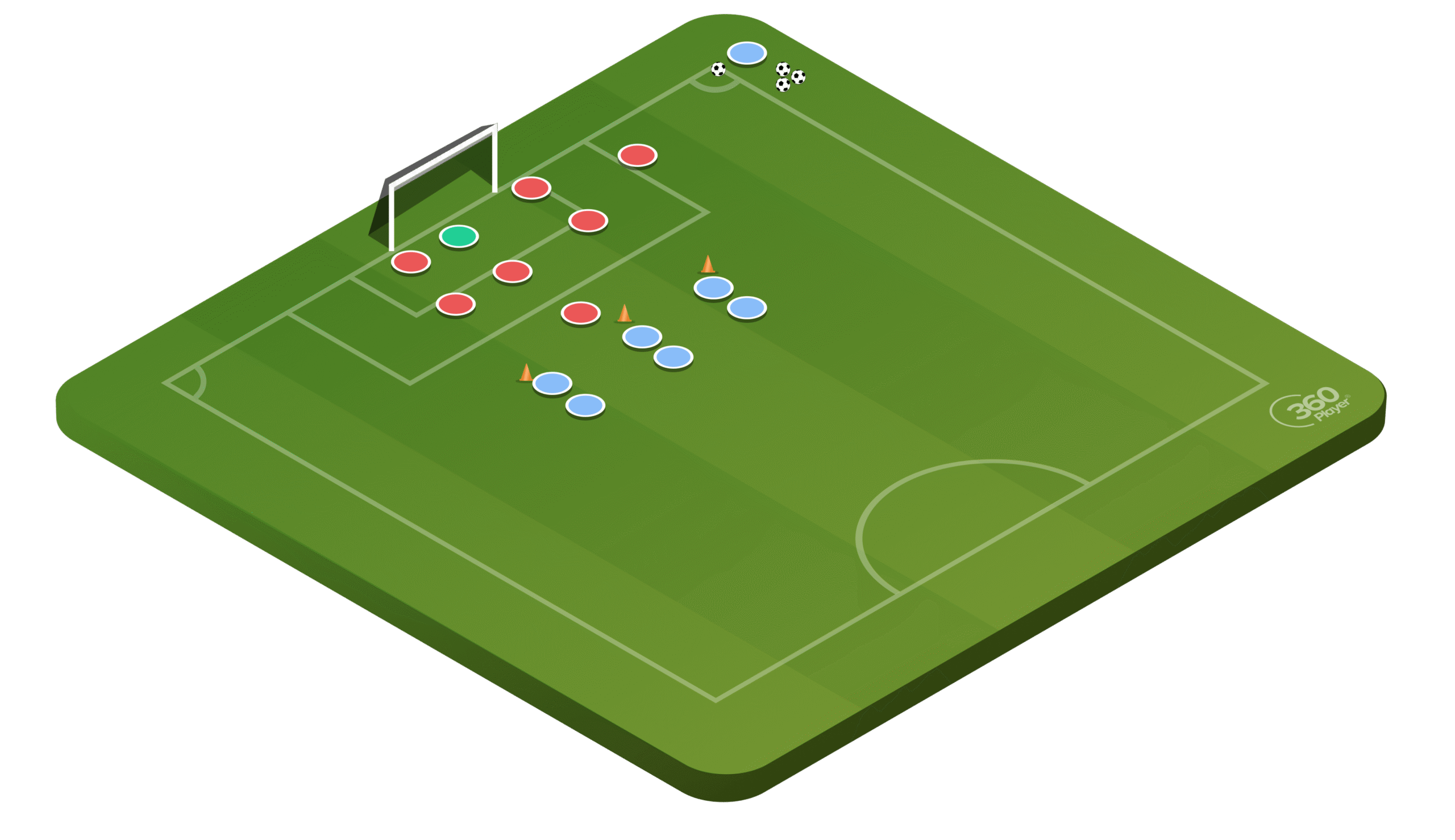
The outcome hinges entirely on the score after regulation time. It’s a binary result dictated by a simple comparison.
| Score at 90+ Minutes | Match Outcome | Typical Context |
|---|---|---|
| Team A goals > Team B goals | Team A wins | Standard result in all matches. |
| Team A goals = Team B goals | Draw | Common in league standings; each team gets 1 point. |
| Team A goals < Team B goals | Team B wins | Standard result in all matches. |
In league formats, like the Premier League or Bundesliga, a draw awards one point to each team. The season-long objective becomes accumulating more points than everyone else. Here, avoiding loss is sometimes as valuable as chasing a win, especially away from home.
Knockout competitions, think the FIFA World Cup or FA Cup, cannot tolerate draws. They need a winner to advance. This is where the objective extends beyond 90 minutes.
The Tiebreaker Sequence (if a winner is required):
- Full-Time: 90 minutes plus stoppage time. If one team leads, they win.
- Extra Time: Two 15-minute periods are played in full. If one team leads after 120 minutes, they win.
- Penalty Shootout: If still tied, a shootout decides the winner. Five kicks per team initially, then sudden death.
The pressure warps completely in a shootout. The objective condenses from a team sport to a series of isolated one-on-one duels. The aggregate score rule in two-legged ties adds another layer, where the objective is to win the total score across two matches, not just the game you’re in.
TL;DR: More goals wins. A draw is a final result in leagues but triggers extra time and penalties in knockout tournaments to force a winner.
The Laws That Frame the Objective: IFAB’s Universal Rules
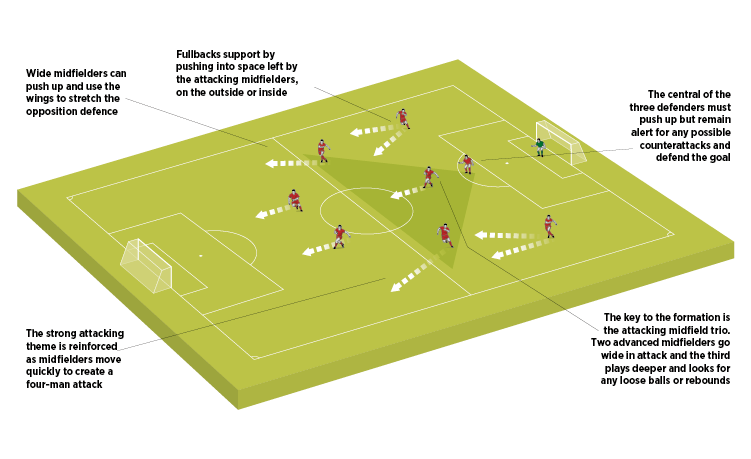
The objective exists within a strict framework. The International Football Association Board (IFAB) writes and guards the Laws of the Game. These 17 laws are non-negotiable and global. They ensure the objective is pursued fairly and safely, from a youth match to the World Cup final.
I prefer the IFAB’s constant tweaks to a static rulebook. When concussions became a glaring issue, they introduced temporary concussion substitutes. The objective of winning should never override the objective of player safety.
The laws cover everything: the field’s dimensions (Law 1), the ball (Law 2), the number of players (Law 3). For the attacker trying to score, Law 11 (Offside) is the biggest hurdle. For the defender trying to prevent it, Law 12 (Fouls and Misconduct) defines the line between a clean tackle and a penalty.
This universality is soccer’s genius. The basic soccer rules you learn as a kid are the same ones the pros follow. It’s why you can drop into a game anywhere on earth and understand the objective immediately. The soccer field markings are identical, the goal is the same size. The framework is constant.
| Law Category | Direct Impact on Scoring Objective | Consequence of Violation |
|---|---|---|
| Law 10: Determining Outcome | Defines a goal and match result. | Misapplication changes the result. |
| Law 11: Offside | Prevents goal-hanging for easy scores. | Free kick to defending team; goal disallowed. |
| Law 12: Fouls | Penalizes illegal attempts to stop attacks. | Direct free kick or penalty kick for attackers. |
| Law 13: Free Kicks | Restarts play after fouls; scoring opportunity. | Can be shot directly (direct) or require a touch (indirect). |
| Law 14: Penalty Kick | Awards a high-probability shot for fouls in the box. | Major scoring chance; keeper must stay on line. |
TL;DR: The IFAB’s 17 Laws create a universal, fair framework for pursuing the objective. They evolve to protect players while keeping the game’s essence intact.
Equipment and Setup: What You Need to Chase the Objective
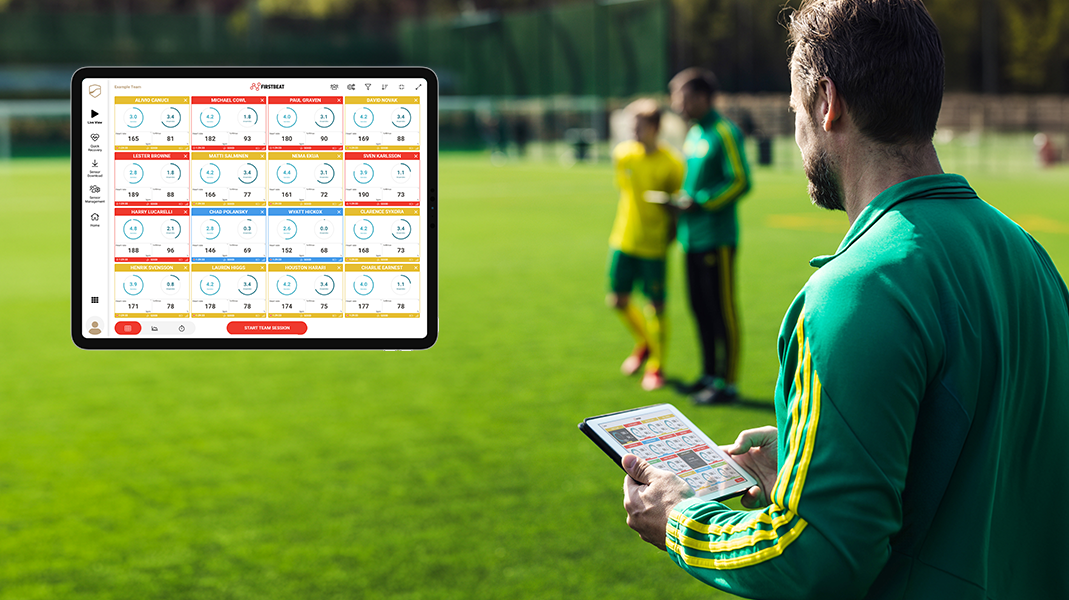
You need shockingly little. A ball. Something to mark a goal. Open space. This minimalism is why it’s the world’s game. The objective is accessible to anyone.
For organized play, the specs standardize the challenge:
* The Ball: Size 5 for adults, circumference 68–70 cm. It must be spherical, of suitable material. The feel and weight affect shooting accuracy.
* The Goal: 7.32 meters wide, 2.44 meters high. The net catches the ball, but the frame defines the target.
* The Field: Rectangular, 90-120m long, 45-90m wide for senior matches. The size influences fatigue and tactical space. Larger pitches favor fitter, more technical sides.
The players need boots, shin guards, and matching kits. The goalkeeper wears distinct colors. That’s it. No sticks, no helmets, no billion-dollar stadium tech (though VAR is changing that). The focus stays on the objective, not the gear.
TL;DR: A ball, two goals, and a field. The equipment’s simplicity keeps the global focus on skill and tactics to achieve the scoring objective.
Tactics vs. Objective: Possession Doesn’t Win Games
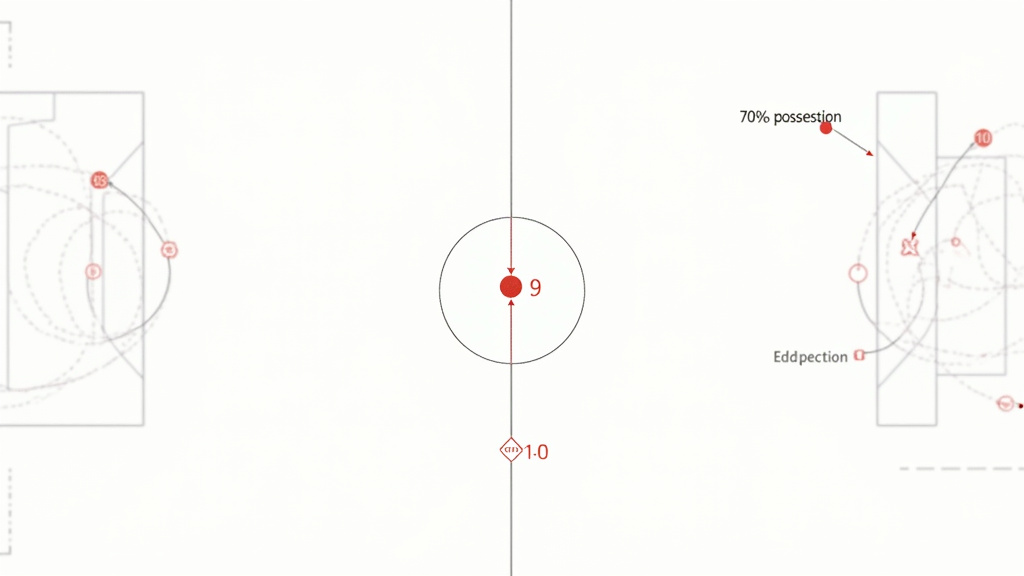
This is the eternal lesson. My youth coach drilled it into us: “You can’t score from the halfway line.” Possession, passing accuracy, and tactical formations are tools. They are not the objective.
A team can have 70% possession and lose 1-0 to a single counter-attack. The team that wins is the one that converts its chances, not the one that controls the midfield. Defensive, “park-the-bus” tactics are often criticized, but they are a valid strategy for achieving the objective of conceding fewer goals than you score.
Common mistake: Confusing a high pass-completion percentage with success. A hundred passes in your own half achieve nothing if the final ball into the penalty area is poor. The only statistic that ultimately matters is the scoreline.
Modern analytics track “expected goals” (xG), measuring the quality of chances. It quantifies what veterans know: creating two clear-cut chances is better than taking ten hopeless shots from distance. The objective is to create high-quality opportunities and convert them. Understanding how soccer works means seeing past possession stats to the underlying chance creation.
TL;DR: Tactics are a means to an end. The objective is scored goals, not owned possession. A 1-0 win is worth the same three points as a 5-4 win.
When the Objective Extends Beyond 90 Minutes

In league play, the final whistle ends it. A draw is a result. In tournaments where a team must advance, the objective persists until a winner is found. This is where mental fortitude becomes as important as skill.
Extra time is a war of attrition. Legs are heavy, cramps set in. The objective remains the same, but the method shifts. Risk-taking increases because a draw is no longer an option. A single mistake is catastrophic. The introduction of a fourth substitute in extra time is a tactical lifeline.
If extra time yields no winner, the penalty shootout arrives. The objective is brutally simplified: score more of your 12-yard kicks than the opponent. It’s a psychological duel. The historical tiebreaker of away goals used to add another strategic layer in two-legged ties, but its abolition of away goals by UEFA shifted the focus back to scoring in extra time. The shootout is a lottery, but it’s a lottery every player practices for. The pressure is unique, the crowd falls silent, the walk from the center circle feels miles long.
TL;DR: Knockout matches demand a winner, pushing the objective into extra time and penalty shootouts, where nerve and composure decide outcomes.
Frequently Asked Questions
What is the main goal of a soccer player?
The main goal is to help their team score more goals than the opponent. For a forward, that means shooting. For a defender, it means preventing shots. For a midfielder, it means linking defense to attack. Every position serves the collective objective.
Can a goalkeeper score a goal?
Yes. A goalkeeper can score from a goal kick, punt, or drop kick if the ball travels the length of the field and goes into the opponent’s net. It’s rare, but it counts the same as any other goal.
What happens if a soccer game ends 0-0?
The game is a scoreless draw. In a league, each team receives one point. In a knockout tournament requiring a winner, the match proceeds to extra time and, if necessary, a penalty shootout.
Why is soccer called “the beautiful game”?
The nickname speaks to the aesthetic combination of athleticism, skill, teamwork, and dramatic narrative involved in pursuing the simple objective of scoring goals. A perfectly executed team move ending in a goal is often described as beautiful.
How does the offside rule help achieve soccer’s objective?
The offside rule prevents attackers from simply camping near the opponent’s goal waiting for a long pass. It encourages build-up play, midfield creativity, and tactical complexity, making the pursuit of the objective more skillful and engaging.
What’s the difference between a direct and indirect free kick in scoring?
goal can be scored directly from a direct free kick (if the kicker kicks it straight into the net). An indirect free kick requires the ball to touch another player before a goal can be scored. This distinction changes the attacking strategy from that set-piece.
The Bottom Line
The objective of soccer is beautifully simple: put the ball in the net more times than the other team. Everything else, the 90-minute clock, the offside rule, the penalty shootout, is just the structure built around that primal goal. This clarity is why a child in a dusty lot and a superstar in a packed stadium are playing the same game. Whether you’re learning the basic rules of soccer or analyzing complex global soccer leagues, always return to that basic premise. The team that scores more, wins. Everything else is commentary.
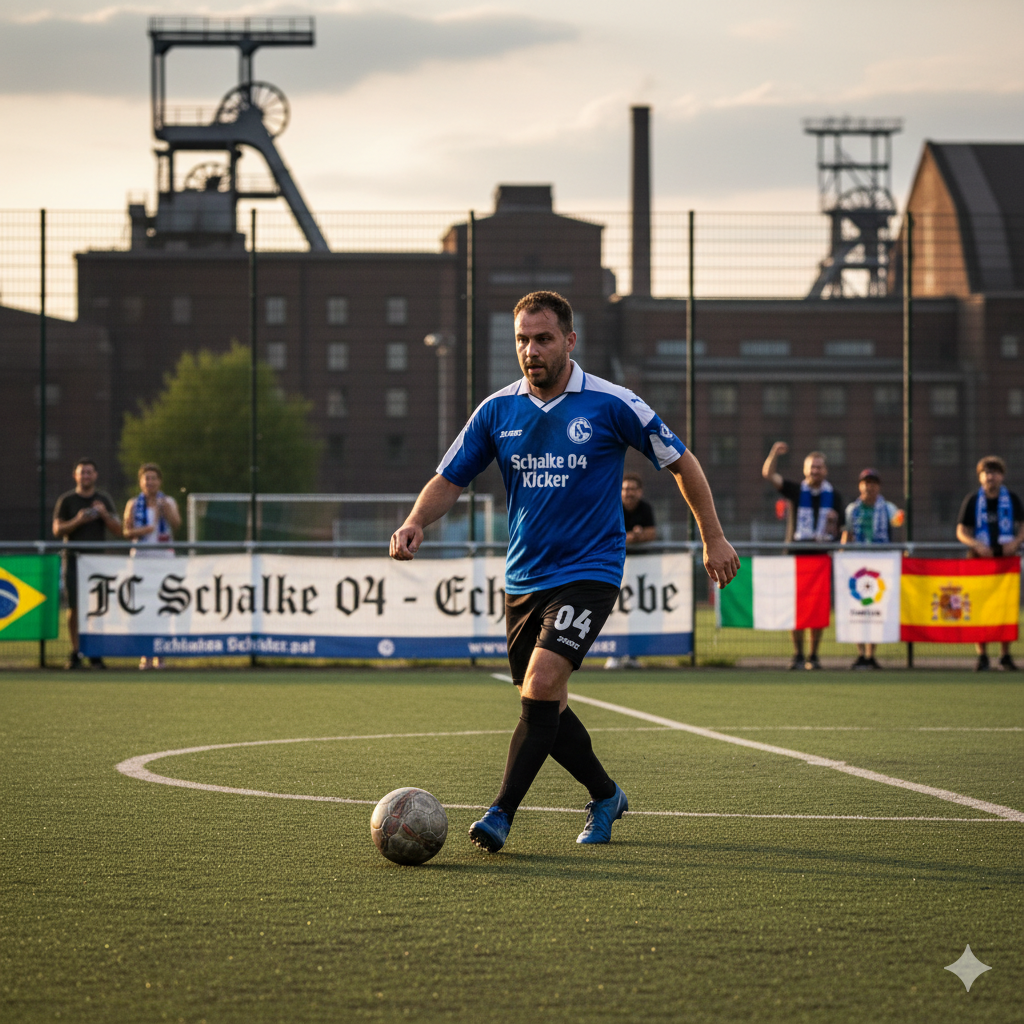
I come from the “soccer heart” of Germany, the Ruhrpott. I have played, trained and followed soccer all my life and am a big fan of FC Schalke 04. I also enjoy following international soccer extensively.