How to Clean Soccer Cleats Properly in 5 Proven Steps
To clean soccer cleats properly, you need to act fast, use the right mild cleaners for your boot’s material, and never, ever use heat to dry them. The core process is knocking off mud, removing laces and insoles, scrubbing with a soapy brush, wiping dry, and air-drying with newspaper stuffing. That sequence preserves adhesives, prevents material cracking, and stops odors before they start.
Most players wait. They toss wet, muddy cleats into a dark bag where bacteria feast on sweat and the mud bakes onto the synthetic or leather. By morning, the stench is permanent and the dried-on grime requires sandpaper-level force to remove. That force shreds the upper’s fibers and weakens the glue holding the soleplate.
This guide walks through the exact steps I use after every Sunday league match in the Ruhrpott mud. We’ll cover material-specific tricks, tournament cleaning hacks, and the one drying mistake that ruins more boots than any tackle.
Key Takeaways
- Clean cleats within an hour of play. Dried mud acts like sandpaper and sweat turns acidic, degrading materials.
- Hand-wash only. A washing machine’s spin cycle warps soleplates and shreds knit uppers.
- Match your cleaner to the upper: damp cloth for leather, soapy water for synthetic, gentle circles for knit.
- Dry with cool air only. Direct sun, radiators, or hair dryers crack leather and melt adhesives.
- Fight odor at the source: remove and wash insoles after every use, and use baking soda overnight.
The 5-Step Cleaning Process (Do This First)
Open your cleat bag right after the final whistle. The clock is already ticking.
Moisture from sweat and pitch water starts breaking down interior padding in about three hours. Dirt particles harden as they dry, becoming abrasive. Your first move isn’t at the sink.
Begin by knocking the cleats together, sole-to-sole, over grass or a trash can. This dislodges 80% of the mud that would otherwise gum up your brush. For stubborn, caked-on mud in the studs, use a wooden toothpick or a plastic peg from a tool kit, never metal, which scratches the plastic.
Next, pull the laces out completely and remove the insoles if they’re not glued down. This is non-negotiable. The space under the insole is a bacterial swamp.
TL;DR: Clean immediately, knock off mud, remove laces and insoles, scrub gently with mild soap, dry with cool air and newspaper.
Step 1: Prep Your Tools and Workspace
Gather your kit before you wet the boots. You need a soft-bristle brush (an old toothbrush is perfect), several microfiber cloths, mild dish soap, and two bowls of water, one for your soapy solution, one for rinsing your cloth.
Work on a flat surface you can get wet, like a garage floor or kitchen sink. Lay down an old towel.
I learned the hard way that using the kitchen sponge meant for dishes leaves a faint grease film on the cleat’s synthetic surface. The next game, dirt stuck to that spot twice as fast. Now I keep a dedicated cleat-cleaning brush in my gear bag.
Step 2: Mix Your Cleaner and Start Scrubbing
Pour a liter of warm water into a bowl. Add three drops of mild dish soap. Swirl it with your hand until it’s slightly sudsy.
Common mistake: Using a strong detergent or all-purpose cleaner, these strip the water-repellent coatings and dyes from the upper, leaving the material dull and less protective. The damage shows up as faded color patches after four or five cleanings.
Dip your brush, don’t soak it. Scrub the soleplate and studs first, moving the brush along the grooves, not across them. Then move to the upper. Use gentle, circular motions. For knit uppers, imagine you’re brushing a delicate sweater. Press too hard and you’ll pull loops.
Rinse your brush frequently in the clean water bowl to avoid grinding dirt back into the material.
Step 3: Wipe Down and Rinse (Minimally)
Wring out a clean microfiber cloth in plain warm water. Wipe the entire cleat to remove soap residue. Follow immediately with a dry cloth to absorb surface moisture.
For non-leather cleats, you can hold them under a low, cool tap stream for a second to rinse the soleplate. Never submerge them.
Leather cleats should only be wiped with the damp cloth. Water soaks into the leather’s pores, expanding and contracting the fibers. That’s what causes permanent wrinkling and stiffness.
Step 4: Address the Laces and Insoles
This step kills the smell.
Soak the laces in your leftover soapy water for ten minutes. Scrub them between your fingers, rinse, and lay flat to dry.
If your insoles are removable, wash them under the tap with a drop of soap. You can even machine-wash them inside a pillowcase on a cold, delicate cycle. The key is total drying before they go back in.
Common mistake: Putting slightly damp insoles back into the cleat, this recreates the moist, dark environment bacteria love. The odor returns stronger within a day.
Step 5: The Correct Way to Dry Soccer Cleats
This is where boots go to die.
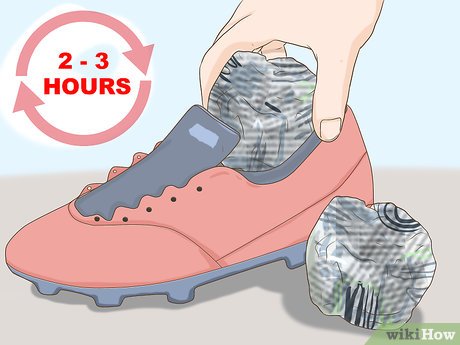
Crumple sheets of newspaper or use a dry, absorbent cloth. Stuff it tightly into the toe box and throughout the cleat’s interior. The stuffing absorbs internal moisture and helps the boot keep its shape.
Place the stuffed cleats in a well-ventilated room, away from windows, heaters, or radiators. A fan on low speed across the room helps.
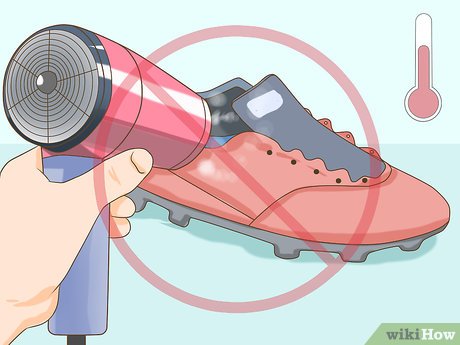
If you use a boot dryer, confirm it only blows room-temperature or cool air. Any heat above 30°C (86°F) risks melting the thermoplastic polyurethane in the soleplate and weakening glued seams.
| Drying Method | Best For | Risk If Used Wrong |
|---|---|---|
| Newspaper stuffing + air flow | All cleat types, daily use | None if done correctly |
| Dedicated cool-air boot dryer | Wet climates, frequent use | Melts adhesives if unit blows hot air |
| Near a radiator or in direct sun | Never recommended | Warps soleplate, cracks leather within 2–3 uses |
| Washing machine / tumble dryer | Never recommended | Destroys structure, separates sole in one cycle |
Material-Specific Care Guide
A universal cleaning method doesn’t exist. Your cleat’s upper material dictates the rules.
Leather uppers require a damp-cloth wipe only, followed by a dedicated leather conditioner like Bick 4. Synthetic and knit uppers tolerate more water but are more vulnerable to abrasive scrubbing and heat deformation.
Using the wrong technique here shortens your cleat’s life by half. I ruined a pair of premium kangaroo leather boots by trying to “deep clean” them with saddle soap. The leather dried out, lost its supple feel, and cracked across the flex point after a month.
Cleaning Leather Soccer Cleats
Leather is skin. It breathes, but it also absorbs.
After wiping with a damp cloth, let the cleat dry naturally for an hour. Then apply a pea-sized amount of leather conditioner (Bick 4 is a reliable, non-darkening option) to another clean cloth. Rub it into the leather in circular motions, focusing on the toe and heel areas that flex and scuff.
Let the conditioner absorb for 20 minutes, then buff off any excess with a dry cloth. This replenishes the natural oils removed by play and cleaning, preventing the stiff, cracked feel.
Never use saddle soap, mink oil, or wax-based products. They clog the leather’s pores and make it too soft, robbing you of the touch you paid for.
Cleaning Synthetic & Knit Soccer Cleats
Synthetic uppers, like those on the Adidas X Speedportal or Nike Mercurial, are more forgiving of water. You can use your soapy brush solution more liberally.
The danger is abrasion. A stiff brush or scrubbing pad will leave micro-scratches that cloud the shiny finish. Always use a soft-bristle brush.
For knit uppers (like the Nike Phantom GX), use the same soft brush with almost no pressure. Imagine you’re dusting a photograph. Scrub in one direction to avoid pulling and distorting the knit pattern. Rinse by wiping with a well-wrung cloth, never under running water.
| Upper Material | Cleaning Solution | Tool | Critical Don’t |
|---|---|---|---|
| Full-Grain Leather | Damp water cloth, then leather conditioner | Microfiber cloths | Soak, use saddle soap, dry with heat |
| Synthetic (TPU, Mesh) | Mild dish soap + warm water | Soft-bristle brush | Use abrasive pads, scrub against grain |
| Knit / Sock-Fit | Mild soap, minimal water | Ultra-soft brush or sponge | Pull fibers, soak, machine wash |
Solving the Stubborn Odor Problem
If your cleats smell like a locker room floor, you’re too late for prevention. You need an intervention.
The odor comes from bacteria and fungi feeding on sweat salts in the insole and interior lining. Spraying a perfume just masks it. You have to kill the colony.
First, wash the insoles as described. If the smell persists, make a paste of baking soda and a few drops of water. Spread a thin layer over the interior lining and insole. Let it sit overnight, then vacuum or brush it out the next day.
For a nuclear option, place the dry, cleaned cleats in a sealed plastic bag and put them in the freezer overnight. The cold doesn’t kill all bacteria, but it puts them dormant and breaks their life cycle. It works for about two weeks before the smell returns if you don’t fix the moisture issue.
A long-term fix is using activated charcoal odor absorbers. Drop two small pouches into each cleat after every use. They pull moisture and odor molecules from the air inside the boot.
I once left a pair of cleats in my car trunk over a warm weekend after a rainy game. The resulting smell was so potent it lingered in the trunk fabric for weeks. Freezing helped, but only a full baking soda treatment and consistent use of charcoal pouches finally solved it.
What Not to Do: The Cleat-Killing Mistakes
Good cleaning adds seasons to your cleats’ life. Bad cleaning ends it next week.
Never put cleats in a washing machine or dryer. The agitation bends the soleplate, the heat melts glue, and the spinning shreds internal stitching. I’ve seen a pair come out with the sole completely detached, hanging by a thread.
Avoid direct sunlight, heaters, and hair dryers. Heat dries out leather from the inside, making it brittle. For synthetics, it weakens the plastic polymers, leading to premature cracking. The damage is cumulative and irreversible.
Skip the harsh chemicals. Bleach, ammonia, nail polish remover, or strong degreasers will fade colors, break down synthetic fibers, and destroy any waterproofing. If you must treat a white cleat stain, use a diluted bleach solution (1:10 with water) on a Q-tip for spot treatment only, and rinse immediately.
Don’t wear cleats off-pitch. Concrete and asphalt sand down studs dramatically faster than grass. Worn-down studs lose traction and change your biomechanics, increasing injury risk. Keep a pair of slides or trainers in your bag.
Advanced Care: Travel, Storage, and Repair Decisions
A Saturday tournament three hours from home changes the game. You can’t air-dry cleats properly between matches.
Pack a small kit: a dry microfiber cloth, a travel-sized bottle of mild soap, and a gallon Ziploc bag. After the first game, do a quick knock-off and wipe-down. Stuff the cleats with the dry cloth or paper towels from the venue bathroom. Seal them in the Ziploc bag to contain the smell in your luggage. It’s a stopgap, but it’s better than letting them fester.
For off-season storage, clean and dry the cleats perfectly first. Apply a leather conditioner if applicable. Stuff them with acid-free tissue paper (newspaper ink can transfer over months). Place them in their original box or a breathable cloth bag, never a plastic bin, which traps residual moisture. Store them in a cool, dry place like a closet shelf.
Knowing when to repair or replace is key. Minor soleplate separation near the toe can often be fixed with a flexible adhesive like Shoe Goo. A torn upper or a completely detached soleplate means it’s time for a new pair. Continuing to play in compromised cleats affects performance and safety.
Your cleaning routine directly informs this decision. A well-maintained cleat with a separated soleplate might be worth fixing. A neglected, cracked, and odorous one is almost certainly not.
Frequently Asked Questions
Can I use the washing machine just once to clean my soccer cleats?
No. Not even once. The risk isn’t just dirt, it’s structural failure. The machine’s spin cycle applies uneven force that can warp the lightweight carbon or nylon soleplates on modern cleats. The glue holding the upper to the sole softens in warm water, and the tumbling can start the separation process immediately.
How do I get deep grass stains off white soccer cleats?
For synthetic white cleats, make a paste of baking soda and water. Apply it to the stain, let it sit for 15 minutes, then gently scrub with a soft brush and rinse. For stubborn stains, a highly diluted bleach solution (one part bleach to ten parts water) on a cotton swab applied only to the stain can work. Rinse thoroughly within 60 seconds. For leather white cleats, avoid bleach; use a specialized white leather cleaner.
My leather cleats got soaked in a rain game. How do I dry them without damage?
Follow the standard drying protocol with newspaper stuffing, but be patient. It may take 48 hours for them to dry completely. Once they are fully dry to the touch inside and out, condition the leather immediately to replace lost oils. The leather will feel stiff after water exposure; the conditioner restores flexibility.
What’s the best way to prevent odors from the start?
Remove the insoles and laces after every single use. Let them air dry separately. After the cleats are dry, place odor-absorbing pouches (charcoal or cedar) inside them for storage. This simple habit is more effective than any weekly deep-clean.
Are there eco-friendly cleaning alternatives to dish soap?
Yes. A 50/50 solution of white vinegar and warm water is an effective cleaner and mild disinfectant. For scrubbing power, use a paste made from baking soda and a few drops of water. Both break down naturally and won’t harm the environment when rinsed away.
The Bottom Line
Cleaning soccer cleats isn’t a chore you save for the end of the season. It’s a five-minute post-game ritual that directly translates to better touch, longer stud life, and no locker-room shame. The formula is simple: act fast, clean gentle, dry cool.
Ignore the shortcuts. The washing machine, the sunny windowsill, the “I’ll do it tomorrow”, they all cost you more in replacement cleats than the few minutes of care ever will. Stuff them with newspaper, wipe them down, and they’ll be ready to go when you are. Your feet will notice the difference.

I come from the “soccer heart” of Germany, the Ruhrpott. I have played, trained and followed soccer all my life and am a big fan of FC Schalke 04. I also enjoy following international soccer extensively.