How to Inflate Soccer Ball to Correct Pressure
Your soccer ball feels like a rock or bounces like a beach ball—both are game-killers. Proper inflation transforms wild kicks into precise passes and gives every touch the response you expect. Whether you’re a weekend warrior or coaching youth soccer, knowing how to inflate soccer ball to correct pressure ensures consistent performance and extends your ball’s lifespan. This guide delivers the exact pressure specifications, tools, and step-by-step techniques to eliminate guesswork from your inflation routine.
Find Your Ball’s Exact PSI Rating
Locate Manufacturer Pressure Specifications
Every match-ready soccer ball hides its pressure requirements near the valve stem. Flip your ball over and examine the panel closest to the inflation point—most manufacturers print the recommended PSI range directly on the ball. These specifications trump generic guidelines because they’re engineered specifically for your ball’s construction. Ignoring these markings leads to inconsistent bounce, unpredictable flight paths, and premature wear on the internal bladder.
Convert Pressure Units Accurately
Soccer ball pressure appears in three measurement systems depending on where your ball was manufactured:
- PSI (pounds per square inch): Standard in North America, ranging from 4.4 to 14.5 for most balls
- Bar: International standard, typically between 0.3 and 1.0 Bar
- kPa (kilopascals): Metric system measurement from 300 to 1,000 kPa
A quick unit conversion prevents dangerous over-inflation—use a digital converter app if your pump gauge doesn’t match your ball’s specifications. Remember that 1 Bar equals approximately 14.5 PSI, so a ball rated at 0.6 Bar requires about 8.7 PSI.
Match Pressure to Your Playing Context
Your soccer ball’s pressure needs change based on usage. Practice sessions benefit from slightly lower pressure within the recommended range (closer to the minimum PSI) for better touch and control. Match conditions demand firmer inflation (near the maximum PSI) for accurate long passes and powerful shots. Playing on artificial turf requires 0.5-1 PSI higher than grass fields to compensate for the harder surface. Always prioritize the manufacturer’s range over league averages—your ball’s specific construction determines its ideal pressure.
Gather Your Essential Inflation Equipment
Select the Right Pump Type
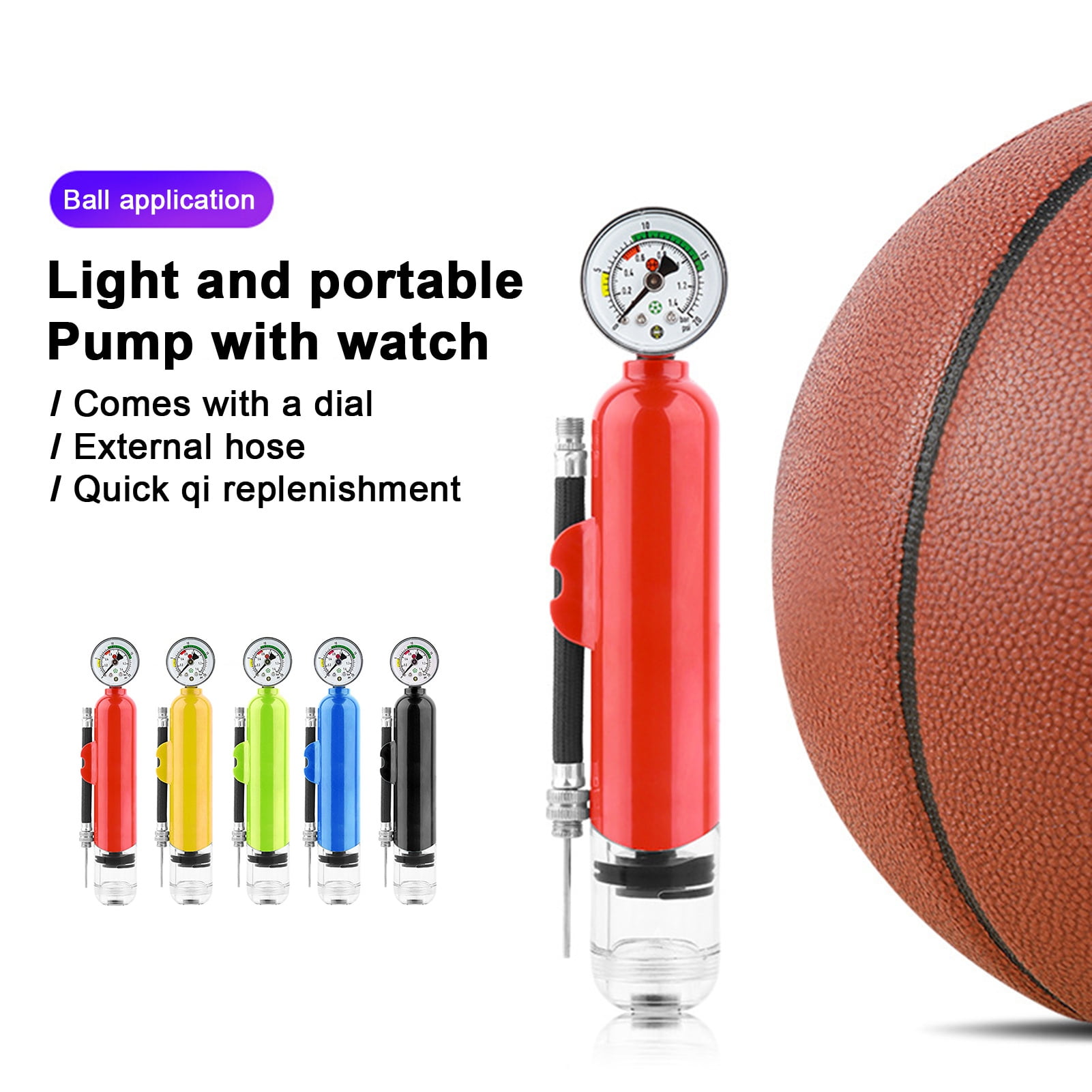
Hand pumps remain the most portable and reliable option for most players. Look for models with dual-action cylinders that inflate on both push and pull strokes, reducing effort by 30-50%. For teams or frequent use, electric pumps with digital pressure displays eliminate guesswork and save valuable pre-game time. Avoid cheap single-action pumps with unreliable gauges—they often deliver inaccurate readings that lead to over or under-inflation.
Choose Quality Valve Accessories
Your needle choice directly impacts valve longevity. Metal needles outperform plastic alternatives by maintaining rigidity during insertion and resisting bending. Always carry a spare needle—bent needles compromise seals and cause slow leaks. Before each use, lubricate the needle with a drop of water or petroleum jelly to create a smooth entry that prevents valve tears. This simple step extends your ball’s usable life by months.
Verify Gauge Accuracy
Pump gauges frequently lose calibration over time. Test yours against a known accurate gauge or digital pressure meter before important games. If your gauge reads consistently high or low, adjust your target pressure accordingly—never trust a questionable gauge blindly. For critical match preparation, use a separate digital pressure gauge that clips onto the valve stem for the most precise reading.
Pre-Inflation Valve Assessment
Inspect Valve Condition Thoroughly
Your soccer ball’s valve deserves careful examination before inflation. Gently press the center pin with your fingernail—air should hiss out briefly then stop when released. Continuous airflow indicates a damaged valve core requiring replacement. Check for cracks in the rubber housing or bent pins that prevent proper sealing. A compromised valve makes accurate pressure maintenance impossible, no matter how carefully you inflate.
Clean Valve Before Connection
Dirt and debris inside the valve stem cause inaccurate pressure readings and slow leaks. Wipe the valve opening with a damp microfiber cloth before inserting your needle. For stubborn grime, use a cotton swab dipped in rubbing alcohol to clean the interior. Never use sharp objects that could scratch the valve lining—these micro-scratches create permanent leak paths. Clean valves ensure accurate pressure readings and prevent premature air loss.
Execute Precision Inflation Technique
Prepare for Flawless Needle Insertion
Your inflation success begins with proper needle positioning. Hold the ball firmly against your body while inserting the needle perfectly straight—no tilting or angling. Misaligned insertion tears the valve lining, creating leaks that appear days later. Apply gentle but steady pressure until the needle seats completely. If you encounter resistance, withdraw and reposition rather than forcing entry. A properly lubricated needle should slide in smoothly with minimal effort.
Monitor Pressure During Inflation
Inflate in small increments, checking pressure after every 5-7 pumps. Balls gain pressure rapidly in the final stages—especially size 3 and 4 models. Stop inflating when you reach 0.5 PSI below your target to account for air compression during needle removal. For critical match preparation, use the burst method: add air in half-second bursts while monitoring the gauge closely. This technique prevents overshooting your target pressure by allowing immediate adjustment.
Final Pressure Verification
After removing the pump, wait 30 seconds for the air to stabilize before conducting final checks. Perform the thumb test: press firmly with both thumbs—you should feel solid resistance with slight give. Over-inflated balls feel rock-hard with no compression; under-inflated balls collapse easily under thumb pressure. For objective verification, use your separate digital gauge to confirm the reading matches your target specification.
Size-Specific Pressure Standards

Size 5 Balls (Adult Competition)
Practice sessions: 7.3–8.7 PSI (0.5–0.6 Bar)
Official matches: 8.7–13.1 PSI (0.6–0.9 Bar)
Professional play: 10.2–14.5 PSI (0.7–1.0 Bar)
Adult match balls require higher pressure for responsive long passes and powerful shots. During critical matches, err toward the upper end of the range for maximum accuracy, but never exceed the manufacturer’s maximum rating.
Size 4 Balls (Youth Development)
Training sessions: 5.8–7.3 PSI (0.4–0.5 Bar)
Youth matches: 7.3–10.2 PSI (0.5–0.7 Bar)
This size balances bounce responsiveness with touch development. Younger players benefit from slightly lower pressure during skill drills, while match conditions require firm inflation for consistent performance.
Size 3 Balls (Young Children)
Beginner practice: 4.4–5.8 PSI (0.3–0.4 Bar)
Youth competitions: 5.8–8.7 PSI (0.4–0.6 Bar)
Lower pressure helps small hands control the ball during dribbling and passing exercises. The softer surface reduces sting on young feet while developing proper technique.
Diagnose Pressure Problems Immediately

Identify Over-Inflation Signs
Over-inflated soccer balls display three clear warning signs: excessive hardness when pressing with your thumbs, abnormally high bounce (exceeding 75% of drop height), and distorted panel shapes that create uneven surfaces. Playing with an over-inflated ball risks sudden bladder failure and creates unpredictable ball behavior that hinders skill development.
Recognize Under-Inflation Symptoms
An under-inflated ball feels spongy when kicked, produces a muffled sound on impact, and rolls inconsistently on flat surfaces. Under-inflated balls absorb power from shots rather than transferring energy efficiently, leading to weak passes and shots that lack accuracy. The most reliable test: drop the ball from shoulder height—it should rebound to 60-70% of the original height.
Prevent Common Inflation Errors
Avoid Temperature-Related Pressure Shifts
Soccer balls lose approximately 1 PSI for every 10°F temperature drop. Inflate balls at the same temperature where you’ll play—never in a warm garage for a cold-weather game. Check pressure immediately before play if the ball has been in a hot car or cold storage. For tournament play in varying conditions, carry a portable pump to make last-minute adjustments.
Prevent Valve Damage During Deflation
Releasing air too quickly damages valve components. Instead of holding the pin down continuously, use short, controlled presses while monitoring pressure changes. Rapid deflation creates turbulence inside the valve that can dislodge or damage the internal mechanism. If you accidentally over-inflate, release air gradually in 0.5 PSI increments until reaching your target.
Maintain Consistent Pressure Long-Term
Implement Pre-Game Pressure Protocol
Establish a reliable pre-game routine: inflate your ball 30 minutes before play to allow air temperature stabilization. Conduct the three-point verification—gauge reading, thumb test, and bounce test—to confirm optimal pressure. Professional teams check ball pressure twice: once during initial preparation and again immediately before kickoff.
Optimize Storage Conditions
Store soccer balls at room temperature (65-75°F) away from direct sunlight. Extreme heat causes air expansion that can over-pressurize balls even when stored properly. Never store balls fully inflated in attics, garages, or car trunks where temperature fluctuations occur. For long-term storage, reduce pressure to 50% of maximum to relieve stress on the bladder.
Schedule Regular Pressure Maintenance
Even unused balls lose 0.5-1 PSI per month due to natural air permeation through the bladder. Check stored balls monthly and top off to maintain shape and prevent permanent deformation. Before seasonal use, inspect all stored balls for pressure loss and signs of valve deterioration. Consistent maintenance extends your ball’s peak performance period by 30-50%.
Properly inflating your soccer ball isn’t complicated—it’s systematic. By following these precise pressure guidelines, using quality equipment, and implementing regular maintenance, you’ll transform inconsistent kicks into reliable performance. Check your ball’s pressure before every session, and you’ll experience the difference that correct inflation makes in every pass, shot, and touch. When you know how to inflate soccer ball to correct pressure, you’re not just preparing equipment—you’re optimizing your entire playing experience.

I come from the “soccer heart” of Germany, the Ruhrpott. I have played, trained and followed soccer all my life and am a big fan of FC Schalke 04. I also enjoy following international soccer extensively.