What Are Soccer Balls Made Of? A Guide to Material Layers
A modern soccer ball is made of four distinct material layers: a synthetic outer cover (usually polyurethane), a foam backing layer, multiple polyester fabric lining plies, and a rubber inner bladder (latex or butyl). These materials are chosen for water resistance, consistent bounce, air retention, and durability, replacing heavy, water-absorbent leather.
Most people think a ball is just a rubber bladder inside a stitched leather shell. That image is thirty years out of date. The leather ball your grandfather headed is a museum piece. Today’s ball is a polymer engineering project, and the material choices decide whether a pass holds its line in rain or skids off a wet surface.
This guide breaks down each layer, from the chemistry of the cover to the air molecules trapped inside the bladder. You will learn why a Champions League ball feels different from a training ball, and what that $20 price difference actually buys.
Key Takeaways
- The outer cover is almost never leather; high-end balls use polyurethane (PU) for its balance of soft feel and water resistance, while budget balls use polyvinyl chloride (PVC) which feels plasticky and cracks faster.
- The bladder material is the biggest performance trade-off: latex offers a softer, more responsive kick but loses air pressure daily, while butyl rubber holds air for months but feels dead and hard off the foot.
- Multiple polyester lining plies between the cover and bladder are critical for shape memory; cheaper balls use 2 plies and go oval after a season, while match balls use 4 or more to stay round under repeated impact.
- Thermal bonding (gluing panels) creates a smoother surface with fewer seams than traditional stitching, which can alter flight aerodynamics at the professional level.
- Always match the ball’s materials to its use: a butyl-bladder, PVC-covered ball is fine for casual kickabouts, but for any serious training or match play, the investment in a PU/latex construction is non-negotiable.
The 4 Core Layers of a Soccer Ball
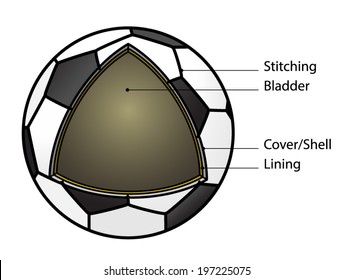
Look at a ball’s surface and you see color and texture. Cut it open and you find a laminated sandwich. Each layer has a specific job, and skipping one or using a cheaper substitute changes everything about how the ball behaves. The order matters.
From the outside in, the layers are: Cover, Backing, Lining, Bladder. The cover takes the abrasion. The backing modulates the impact. The lining locks the shape. The bladder holds the air. Get one wrong and the whole system fails.
A regulation soccer ball’s construction is a composite of specialized materials. The outer casing, typically a textured polyurethane (PU) or polyvinyl chloride (PVC) sheet, is die-cut into panels. Beneath it, ethylene-vinyl acetate (EVA) foam provides cushioning. Multiple cross-woven polyester fabric plies form a stabilizing carcass around the inner bladder, which is made from either latex or butyl rubber for elasticity and air retention.
1. The Outer Cover: PU vs. PVC vs. TPU
This is the layer your foot meets. Thirty years ago, it was tanned leather. Today, it is a synthetic polymer sheet, and the type of polymer defines the ball’s grade.
Polyurethane (PU) is the premium choice. Its long polymer chains are flexible and resist scuffing. A PU cover feels like a soft, grainy leather, it has what manufacturers call “touch”. More importantly, PU is hydrophobic. Water beads up and rolls off. A PU ball in a downpour might gain 5-10% in weight from surface water; an old leather ball could soak up 30% of its weight and become a dangerous, head-injury risk.
Polyvinyl Chloride (PVC) is the budget plastic. It is stiffer, less flexible, and feels slick and cold. PVC cracks in cold weather and the printed graphics wear off quickly. It is fine for a promotional give-away or a ball that lives in a school equipment cage. Do not expect consistent flight or a kind first touch.
Thermoplastic Polyurethane (TPU) sits in the middle. It is more flexible and durable than PVC but lacks the premium feel of PU. You find it on mid-range training balls and some futsal models.
The cover is not just a sheet. It is stamped with a texture, tiny dimples or grooves, that manages airflow. A smoother ball has more predictable flight in calm conditions. A textured one gripes the air better in wind or rain. This is where the modern soccer ball materials have seen the most innovation since the switch from leather.
TL;DR: PU for feel and weather resistance, PVC for low cost and durability be damned, TPU for a middle-ground training option.
2. The Foam Backing: Where the “Feel” Lives
Glued directly to the back of the cover panel is a layer of foam. This is the shock absorber. Without it, every pass would feel like kicking the side of a car tire.
The most common foam is ethylene-vinyl acetate (EVA). Its thickness and density are tuned variables. A thicker, softer foam gives a cushioned, controlled feel, great for touch passing and receiving. A thinner, firmer foam creates a more direct, responsive feel, preferred for powerful shooting and long passes.
Match balls often use a variable-thickness foam. It might be thicker under the pentagon panels and thinner under the hexagons to fine-tune the ball’s deformation profile upon impact. This level of detail separates a $150 match ball from a $50 replica.
Common mistake: Choosing a ball based only on cover material, the foam backing’s density dictates whether a powerful volley stings your foot or feels like a clean strike. A hard foam on a cheap PVC ball is why kids stop wanting to play goalkeeper.
3. The Lining (Carcass): The Shape-Keeper
This is the most overlooked layer. The lining, or carcass, is 2 to 4 layers of fabric wrapped around the bladder. Its only job is to be rigid. It is the exoskeleton that prevents the ball from turning into a wobbly egg.
The fabric is almost always polyester, woven or knitted for strength. Each layer is called a “ply”. More plies mean more stability.
| Number of Plies | Typical Ball Grade | Consequence of Fewer Plies |
|---|---|---|
| 2 Plies | Low-cost training ball | Loses shape quickly; becomes oval after one season of hard use. |
| 3 Plies | Mid-range club ball | Holds shape decently; may warp if over-inflated or stored deflated. |
| 4+ Plies | Official match ball | Maintains near-perfect sphericity through hundreds of impacts; required for FIFA Quality Pro certification. |
The lining is why you should never store a ball deflated for long periods. The constant pressure from the inflated bladder trains the polyester fibers to remember the round shape. Release that pressure, and the fibers relax into a new, potentially lumpy form. Our guide on proper ball storage explains how to maintain that perfect shape season after season.
4. The Bladder: Latex vs. Butyl – The Eternal Trade-Off
The bladder is a sealed, balloon-like sphere that holds the air. Its material choice is the single biggest divider between a performance ball and a practical one.
Latex rubber bladders are made from the sap of the rubber tree, processed to be thin and elastic. When you kick a latex-bladder ball, the bladder stretches dramatically upon impact, storing energy, then snaps back to shape. This gives that lively, responsive “pop” off the foot. The downside is porosity. Latex has microscopic gaps between its polymer chains. Air molecules, especially smaller ones like nitrogen and oxygen, slowly seep out. A latex-bladder ball needs topping up before every session, sometimes even daily. This is the standard for all professional match ball construction.
Butyl rubber is a synthetic rubber, a copolymer of isobutylene and isoprene. Its molecules pack together tightly, making it far less porous. A butyl bladder can hold consistent pressure for weeks or even months. The trade-off is stiffness. It does not stretch as easily, so it feels harder and less responsive, more like kicking a rock. Most recreational and training ball materials use butyl for sheer convenience.
The valve is part of the bladder system. High-end balls sometimes use a silicone valve seat instead of rubber for an even tighter seal. Knowing the official ball pressure (8.5-15.6 PSI) is useless if your bladder leaks. Always use a pump with a needle coated in a drop of silicone oil; it lubricates the insertion and helps the valve seal after removal.
TL;DR: Latex for feel and performance (but check pressure constantly). Butyl for maintenance-free durability (but accept a dead touch).
How Materials Affect Performance and Flight
The layers do not work in isolation. They interact. A stiff PVC cover over a thin foam layer over a 2-ply lining will produce a ball that is hard, unpredictable in flight, and loses its shape. That combination is typical for low-grade balls. Understanding the interactions lets you diagnose problems.
A ball that feels too hard at the correct soccer ball PSI usually has a butyl bladder and a firm foam backing. A ball that goes out of round quickly has an insufficient polyester lining. A ball that becomes heavy in damp conditions has a PVC cover, not a hydrophobic PU one.
The ball stitching techniques or thermal bonding also play a role. Stitching creates raised seams. Those seams can create turbulence, which in some conditions can make the ball dip or swerve more unpredictably, the famous “Jabulani” effect from the 2010 World Cup. Thermally bonded balls have flatter seams, leading to a smoother, more consistent flight path favored for modern professional play. This is a key detail in the soccer ball quality tiers between a replica and the real deal.
A Brief History: From Leather to Polymers
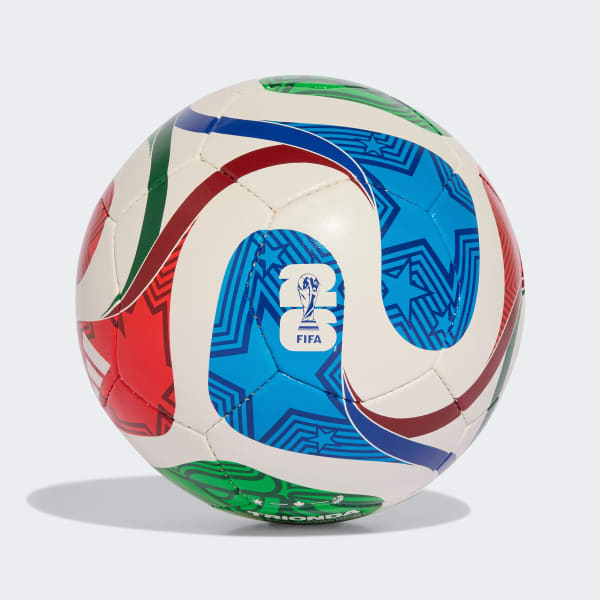
The shift in materials is a story of solving problems. The classic 32-panel leather ball was heavy, inconsistent, and dangerous when wet. The 1970 World Cup introduced the Telstar, the first black-and-white ball, but it was still leather. The real change came in the 1980s with the first synthetic covers.
Adidas’s 1986 Azteca ball for the World Cup in Mexico used a polyurethane-coated leather, a hybrid step. By the 1990s, fully synthetic PU took over. The switch was not just about feel; it was about manufacturing consistency. A synthetic panel cut in Pakistan is identical to one cut in China. Leather hides vary in thickness and stretch.

The bladder evolved too. Early bladders were pig’s bladders, literally. Rubber latex bladders arrived in the late 1800s. Butyl rubber, a product of WWII synthetic rubber research, became the durable standard for mass-market balls in the latter 20th century. Today’s top football ball models represent the pinnacle of this material evolution, balancing every layer for a specific purpose.
Choosing the Right Ball for Your Needs
Do not buy a ball by its team logo alone. Match the materials to the pitch, the frequency of use, and the skill level.
- For Match Play (Club/Adult League): Invest in a PU cover, latex bladder, 4+ ply lining ball. It requires care, regular inflation, cleaning, proper storage, but the performance payoff is absolute. Check our performance ball reviews for current models that fit this spec.
- For Serious Training: A PU or TPU cover with a butyl bladder and 3-ply lining is the workhorse. It survives daily abuse, holds air, and provides decent feel. This is the sweet spot for academy or high-school use.
- For Casual/Backyard Use: A PVC cover with butyl bladder and 2-ply lining is sufficient. Durability and cost are the priorities here. Pair it with the correct age-appropriate ball size for the players.
- For Collectors or Traditionalists: Authentic traditional leather footballs still exist. They are for display or gentle kickabouts on dry days. Understand they are a historical artifact, not a performance tool. Our deep dive into leather ball construction explains their unique maintenance.
Frequently Asked Questions
Are any professional soccer balls still made of real leather?
No. No top-tier professional match ball has used real leather since the 1990s. The last major tournament with a leather ball was the 1982 World Cup. Leather absorbs water, becomes extremely heavy, and is inconsistent in thickness and stretch. Modern synthetic polyurethane (PU) provides a superior, consistent, and waterproof playing surface.
What is the difference between a $30 soccer ball and a $150 one?
The $30 ball uses a PVC cover (stiff, plasticky), a butyl bladder (poor feel, but holds air), and 2 polyester lining plies (loses shape). The $150 ball uses a PU cover (soft, grippy), a latex bladder (excellent feel, loses air), and 4+ polyester plies (holds shape). The expensive ball also has tighter manufacturing tolerances, better balance, and often thermal bonding instead of stitching.
Why does my new soccer ball need pumping up every week?
You almost certainly have a ball with a latex rubber bladder. Latex is porous, allowing air molecules to escape slowly. This is normal and a sign of a higher-performance bladder. Use a pressure gauge to maintain it at the recommended PSI (usually 8.5-15.6 PSI, check the ball’s stamp). Butyl bladder balls can hold air for months but offer a much worse touch.
How does panel design (like 32 panels vs. fewer) affect the materials?
The panel design dictates how the cover material is stressed and stitched. A 32-panel ball (20 hexagons, 12 pentagons) spreads stress evenly across many small seams. Newer designs with fewer, larger panels (like 6 or 8) place more stress on each seam and require stronger, more flexible cover materials like advanced PU and reliable thermal bonding. The outer casing and bladder system remains the same, but the panel layout changes how those materials are assembled.
What is the best way to clean and maintain a soccer ball’s materials?
Use a soft cloth, mild soap, and warm water. Never use harsh chemicals, abrasive brushes, or submerge the ball, as this can degrade the adhesives in the lining and damage the cover’s texture. For specific steps on dealing with mud, turf stains, and proper drying, follow our detailed guide on cleaning a soccer ball. Proper care extends the life of every layer.
The Bottom Line
A soccer ball is not a simple toy. It is a precision object built from laminated synthetic materials, each chosen for a specific physical property. The polyurethane cover repels water. The foam backing absorbs shock. The polyester lining plies lock the shape. The latex or butyl bladder holds the air, each with a major trade-off between feel and convenience.
When you pick up a ball, you are feeling decades of material science aimed at one goal: predictable, consistent performance. Forget leather. The modern ball is a product of chemistry and engineering. Choose the material stack that matches your game, and you will never blame your equipment for a bad pass again. For the definitive breakdown of how these layers come together in the best options today, our analysis of soccer ball construction layers is the next step.

I come from the “soccer heart” of Germany, the Ruhrpott. I have played, trained and followed soccer all my life and am a big fan of FC Schalke 04. I also enjoy following international soccer extensively.