How to Store Soccer Agility Ladder
This post contains affiliate links. As an Amazon Associate, we earn from qualifying purchases.
You’ve just finished a demanding soccer training session where your players navigated the agility ladder with impressive footwork, but now you’re staring at a tangled web of straps that will take precious minutes to sort before tomorrow’s practice. Improper storage of your agility ladder creates more than just frustration—it can permanently damage your training equipment, forcing costly replacements that strain team budgets. Whether you’re a youth coach managing multiple ladders or a serious player investing in personal training gear, mastering how to store agility ladder for soccer properly will transform your preparation process from chaotic to streamlined.
That frustrating 15-minute untangling session before practice could become a thing of the past with the right storage technique. Proper storage extends your ladder’s lifespan by 2-3 years, saving hundreds in replacement costs while ensuring your equipment deploys perfectly every time. This guide delivers field-tested methods for storing soccer agility ladders that match your specific space constraints and usage frequency, so you can maximize training time and minimize equipment headaches.
Roll Your Agility Ladder for Quick Field Storage
Start by laying your ladder completely flat on the training surface, ensuring all rungs align perfectly parallel. This critical step prevents warping that creates uneven spacing during your next session. Begin rolling from the end opposite any built-in straps, applying steady tension without forcing tight coils that create permanent creases.
Pro tip: Roll toward the velcro fasteners so they’re positioned on the outside of your bundle for instant securing after practice. Your finished roll should form a compact cylinder 12-18 inches in diameter—large enough to prevent strap damage but small enough to fit in equipment bags.
This method works best for standard 15-30 foot ladders and creates the most portable storage solution. When unrolled next time, your ladder will deploy smoothly without frustrating twists, saving valuable warm-up time that translates directly to more quality training minutes.
Prevent Tangles with the Figure-Eight Coil Technique
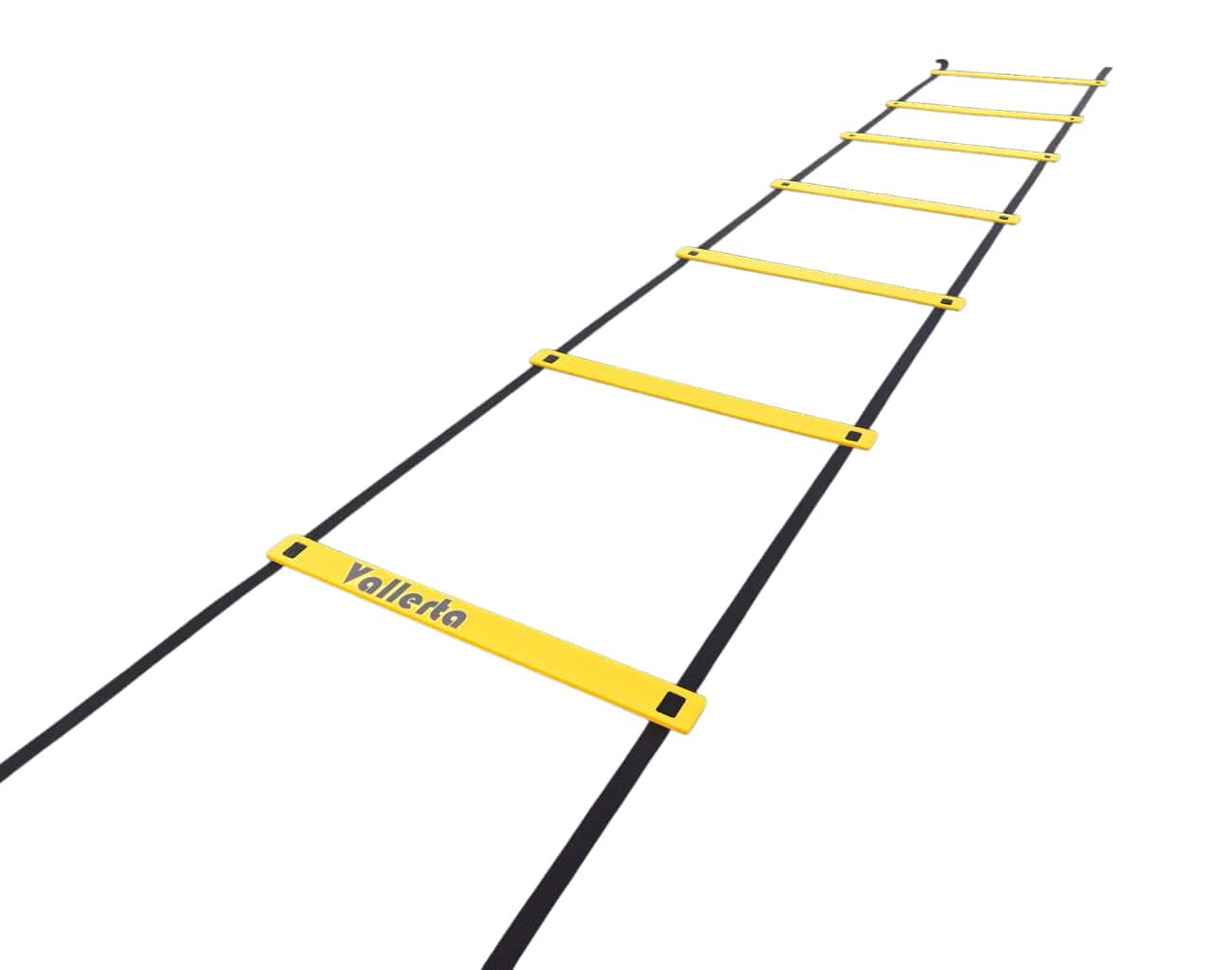
For ladders with longer straps or those that constantly tangle using traditional rolling, the figure-eight method solves your problems naturally. Create alternating loops about 10-12 inches wide, forming a sideways figure-eight pattern as you coil toward the center. This technique distributes stress evenly across the straps and prevents the memory creasing that plagues standard rolling methods.
Key benefit: The opposing loops cancel out twists, making deployment smoother than traditional rolling—especially valuable when you’re rushing between training stations.
Secure the coil using the ladder’s fastening system or a dedicated storage strap. This method excels for professional-grade ladders with reinforced stitching that can handle the additional handling, and it’s ideal when multiple coaches need to deploy the same ladder consistently.
Keep Your Ladder Safe with Flat Storage Solutions
When space allows in your facility, flat storage represents the gentlest approach for preserving your equipment. Lay the ladder completely extended on a flat surface—garage floor, equipment room, or storage shelf—ensuring no folds or sharp bends in the straps that can create permanent weak points.
Ideal for: Fixed facilities with dedicated storage areas or wall-mounted systems designed specifically for agility equipment.
Flat storage maintains the ladder’s original shape and prevents any stress on connection points between rungs and straps. This method is particularly beneficial for adjustable ladders where consistent rung spacing is critical for training effectiveness. Simply drape the ladder over padded racks or shelves, keeping it elevated off concrete floors that can cause moisture absorption.
Optimize Indoor Storage Locations for Maximum Protection
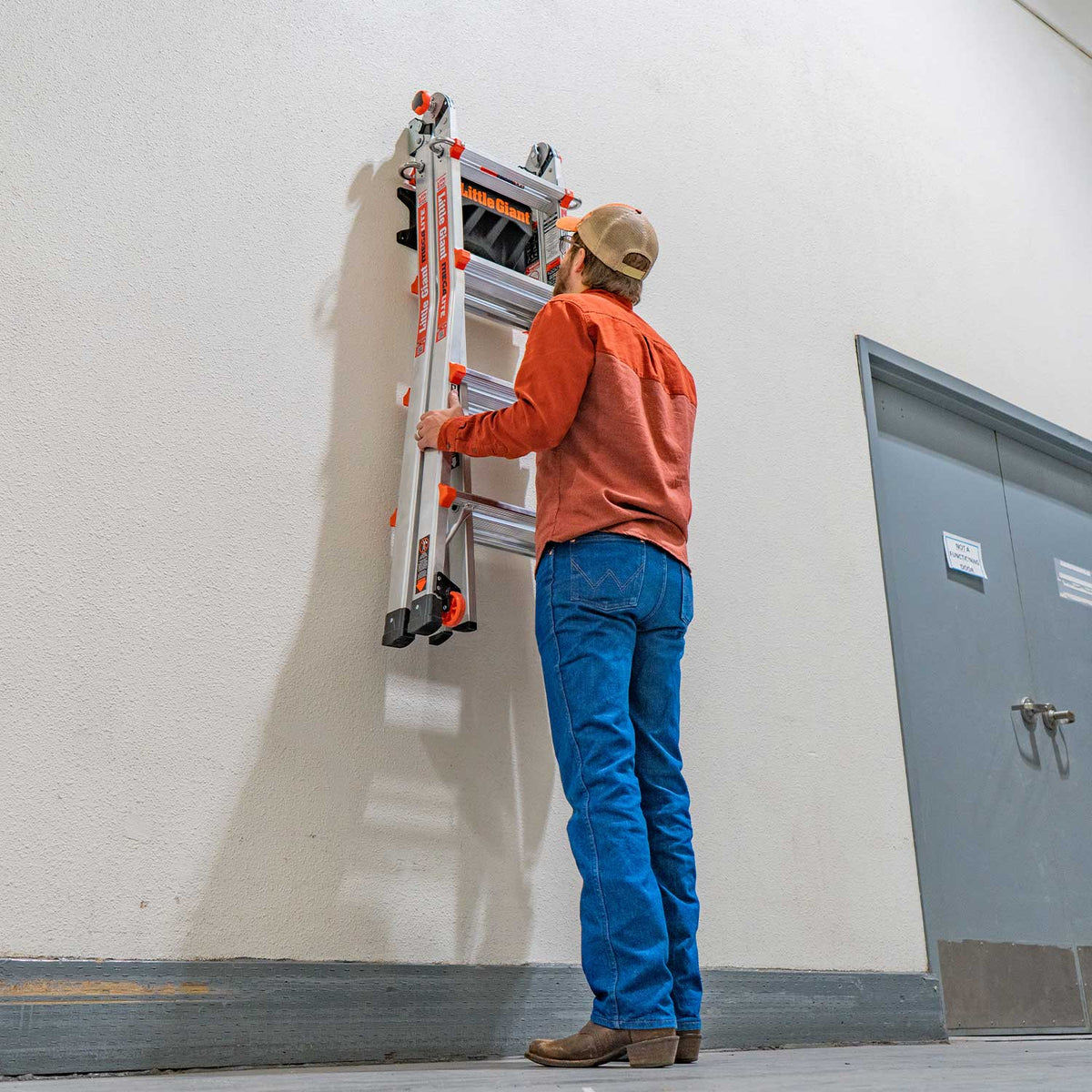
Climate-controlled spaces provide optimal protection for your agility ladder. Aim for consistent temperatures between 50-70°F with 30-50% humidity—conditions that prevent material degradation from temperature extremes. Ideal indoor locations include equipment rooms, storage closets, or athletic facility storage areas away from direct heating sources.
Wall-mounted systems offer superior organization:
– Install horizontal bars at varying heights for multiple ladders
– Use protective rubber coating on contact points
– Label each position for quick identification
Keep ladders elevated off the floor using hooks or racks. This prevents moisture absorption from concrete floors and keeps equipment away from potential pest damage. For facilities managing multiple ladders, implement a color-coding system matching ladder lengths to specific storage positions.
Secure Outdoor Storage Setup When Indoors Isn’t an Option
When indoor space isn’t available, weatherproof containers become essential for protecting your investment. Choose bins that are:
– Waterproof with tight-fitting lids
– UV-resistant to prevent strap degradation
– Elevated off ground level
– Positioned away from direct sunlight
Emergency solution: Heavy-duty duffel bags with waterproof lining work for temporary outdoor storage, but require daily inspection for moisture buildup.
Never store ladders in areas prone to temperature extremes—attics can exceed 100°F, while unheated garages may drop below freezing, both causing material stress. If you must store outdoors, position containers in shaded areas and check them weekly for moisture accumulation.
Master Vehicle Storage Strategies for On-the-Go Coaches
Transporting ladders between training sites demands compact, secure solutions that prevent damage during transit. Trunk organizers with adjustable compartments prevent sliding during transport, while specialized equipment bags with reinforced bottoms protect against abrasion.
Quick-access tip: Pre-roll ladders identically so any team member can deploy them without adjustment—this consistency saves critical minutes before practice.
For frequent transport, consider investing in collapsible storage containers that fit specific vehicle dimensions while protecting equipment. Always secure ladders so they can’t shift during sudden stops, which can cause rung damage or create safety hazards.
Complete This 30-Second Pre-Storage Inspection Checklist
Before storing any ladder, complete this essential inspection to prevent future issues:
– Check strap integrity for frays or loose stitching
– Examine rung attachment points for wear
– Clean with damp cloth to remove grass and dirt
– Verify all adjustment mechanisms are secured
Critical: Allow 2-4 hours drying time if the ladder is wet—moisture during storage causes mold and strap degradation. Document any damage immediately to prevent safety hazards during your next training session.
This simple routine extends your ladder’s life significantly while ensuring player safety. Skipping this step might save 30 seconds today but could cost you hours of untangling or hundreds in replacements later.
Choose the Right Storage Accessories for Your Needs

Professional Storage Bags That Last
Premium bags accommodate 2-3 standard ladders with:
– Reinforced handles for heavy loads
– Internal compartments for organization
– Ventilation panels preventing odor buildup
– Weather-resistant materials for outdoor use
Portable Solutions for Mobile Training
For coaches who travel between fields:
– Collapsible containers with backpack straps
– Padded compartments protecting rungs
– Separate pockets for cones and markers
– Quick-release buckles for rapid deployment
Budget option: Large mesh laundry bags provide basic protection and ventilation at minimal cost, though they lack durability for long-term use.
Fix These Common Storage Mistakes Immediately
Never do these:
– Roll ladders too tightly, creating permanent creases
– Fold at sharp angles, weakening strap connections
– Store near heating sources causing material brittleness
– Leave exposed to direct sunlight causing UV degradation
Red flag indicators: If your ladder requires significant untangling before each use, your storage method needs immediate revision. Properly stored ladders deploy in seconds, not minutes.
Create a Quick-Deployment Storage System
Develop muscle memory for 30-second deployment by:
– Rolling ladders identically every time
– Using quick-release straps instead of knots
– Practicing the technique weekly
– Creating visual guides for team members
Travel protocol: Pack ladders in dedicated travel bags with inventory checklists. Include spare storage straps for emergency repairs during tournaments.
Well-stored agility ladders mean more time training and less time troubleshooting—exactly what your soccer program needs. By implementing these storage techniques, you’ll extend your equipment’s life, save valuable preparation time, and ensure consistent training quality session after session.
Final Note: Your agility ladder’s storage method determines tomorrow’s training efficiency. Choose the technique matching your space constraints and usage frequency, then maintain consistency. A properly stored ladder deploys in seconds, trains safely, and lasts seasons longer than neglected equipment—making how to store agility ladder for soccer knowledge one of your most valuable coaching tools.

I come from the “soccer heart” of Germany, the Ruhrpott. I have played, trained and followed soccer all my life and am a big fan of FC Schalke 04. I also enjoy following international soccer extensively.