Where Did Soccer Originate and When? The Real Answer
Modern association football, or soccer, was formally codified in London, England, on October 26, 1863, with the founding of The Football Association. The sport’s deeper origins, however, span millennia and continents, from ancient Chinese Cuju and Mesoamerican ballgames to chaotic medieval European mob football.
Most people get this wrong because they look for a single inventor or a eureka moment. Soccer wasn’t invented. It evolved. The real story is a messy, centuries-long negotiation between kicking games, schoolyard rules, and a Victorian meeting in a London pub.
This guide walks you from the leather balls of ancient China to the heated debate over a 17th-century Scottish field. We’ll separate the ancient precursors from the modern birth certificate, name the key rulebooks that shaped the game, and explain why historians are still arguing about where it truly began.
Key Takeaways
- The modern game’s legal birthdate is October 26, 1863, with the formation of The Football Association in London.
- Ancient ball-kicking games like Chinese Cuju (3rd century BC) and Mesoamerican ballgames existed over 2,000 years prior but lack direct rule continuity.
- The Cambridge Rules (1848) and Sheffield Rules (1857) were critical precursors that the FA synthesized into its first “Laws of the Game.”
- Recent archaeology suggests organized football was played in Scotland in the 1600s, challenging England’s exclusive claim to the sport’s organized origins.
- The term “soccer” derives from “Association Football,” an Oxford slang term from the same era as the FA’s founding.
Ancient Ball Games: The Deep Roots
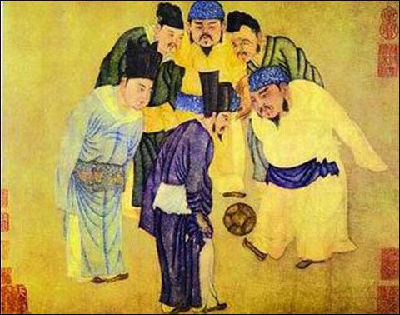
Kicking a ball for sport is a human impulse with ancient receipts. Long before leagues and sponsors, cultures worldwide played their own versions. The earliest scientifically recognized ancestor is Cuju, from China’s Han Dynasty around the 3rd century BC. Soldiers played it for fitness. The goal was to kick a leather ball stuffed with feathers into a small net fixed between bamboo poles. Handling was forbidden.
Cuju, which translates to “kick ball,” was standardized enough to have rulebooks and professional players during the Tang Dynasty (618–907 AD). Its influence spread to Korea and Japan, evolving into games like Kemari.
Across the Pacific, a different kind of ancient ball game origins was thriving. Mesoamerican civilizations like the Maya and Aztecs played a ritual ballgame with a solid rubber ball over 3,000 years ago. Yale professor Mary Miller argues this game essentially invented the concept of a team sport with a ball, though it involved using hips and elbows, not feet, to keep the ball in play. The National Geographic soccer origins article details how these courts have been found from Mexico to Honduras.
In Europe, medieval “mob football” was the chaotic precursor. Villages would play against each other with an inflated pig’s bladder, with goals miles apart and few rules. It was often banned by kings for causing public disturbances and injuries. Parallel games existed in Italy (calcio storico fiorentino) and Wales (cnapan).
TL;DR: Ancient China, Mesoamerica, and medieval Europe all had ball games, but they are ancestors, not the direct parents, of modern soccer.
The Path to Codification: Schoolyards and Rulebooks
The journey from village chaos to a unified sport happened in England’s public schools. In the early 1800s, each school—Rugby, Eton, Harrow—developed its own football rules. Rugby allowed handling and hacking. Eton forbade it. This made inter-school matches impossible.
The need for a common code led to the Cambridge Rules, first drafted in 1848 by a committee of students from different schools. These rules explicitly forbade handling the ball and tripping opponents. They were a major step toward the modern game. Meanwhile, in Sheffield, the world’s first official football club was founded in 1857 and created the Sheffield Rules, which introduced concepts like corners and free kicks for fouls.
| Rule Set | Year | Key Innovation | Lasting Influence |
|---|---|---|---|
| Cambridge Rules | 1848 | Outlawed handling and hacking | Established the “kicking only” principle central to association football. |
| Sheffield Rules | 1857 | Introduced corners, free kicks, headed goals | Added structural set-pieces that defined match flow. |
| FA Laws of the Game | 1863 | Codified 13 universal laws, created the goalkeeper position | The definitive founding document that split football from rugby. |
This period of competing rulesets was the crucible. The historical development of soccer wasn’t a straight line but a messy argument over how the game should be played. The Sheffield and Cambridge codes directly shaped the men who would write the final draft.
The Formal Birth: England, 1863
On October 26, 1863, representatives from eleven London football clubs met at the Freemasons’ Tavern. Their goal was to unify the rules. After six meetings, they formed The Football Association and published the first “Laws of the Game” in December. Ebenezer Cobb Morley, the FA’s first secretary, is credited as the primary drafter.
The 1863 laws made several decisive breaks. They banned carrying the ball and hacking—kicking an opponent’s shins. This final point is what caused the Blackheath club to walk out, leading to the formal split between rugby football and association football. The laws also created the unique position of the goalkeeper, the only player allowed to handle the ball.
The original Laws of the Game from 1863 consisted of 13 rules. They established the pitch dimensions, the kick-off procedure, and the concept of a goal. Offside was included, but in a primitive form requiring three defenders between the attacker and the goal line.
Common mistake: Thinking the FA invented football. It didn’t. It synthesized and standardized the existing codification of modern rules from the schools and clubs, then enforced them as the universal standard. That act of formalization is the birth.
The FA’s work provided the stable rulebook needed for the global adoption of soccer to begin. Within decades, the sport would be exported worldwide by British sailors, engineers, and merchants. The Wikipedia history of association football documents this rapid spread, leading directly to the need for an international governing body.
The Scottish Challenge: An Older Claim?
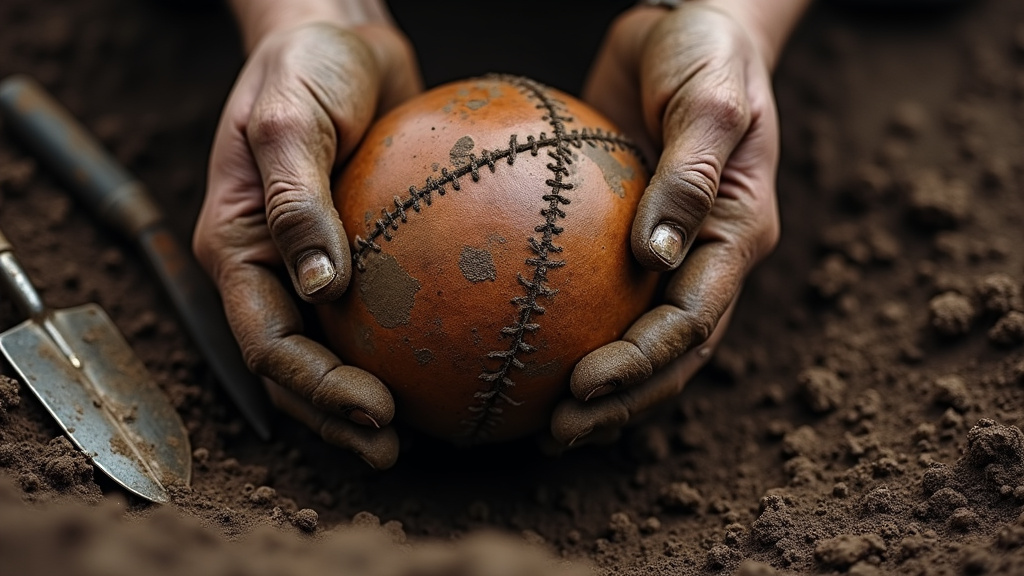
Just when the English origin story seemed settled, a spade hit dirt in Scotland. In 2019, archaeologists identified a field in Stirling as a 17th-century “fute-ball” pitch, referenced in a minister’s letters from 1627-1638. Historian Ged O’Brien argues this proves organized football with matches, dedicated fields, and rules existed in Scotland over 200 years before the FA’s founding.
The find includes a handmade leather ball from the same period. O’Brien’s interpretation challenges the notion that medieval football was only disorganized mob violence. It suggests a more structured game was alive in Scotland. Other experts, like Steve Wood of the Sheffield Home of Football, are skeptical. He cautions that this Scottish game may have “no known connection to modern association football.”
Common mistake: Dismissing all pre-1863 football as mere “mob” games. The Scottish discovery suggests gradations of organization existed, complicating the simple narrative of chaos before codification.
This isn’t about switching the birthplace from England to Scotland. It’s about layering the history. The FA’s 1863 codification remains the indisputable origin of the modern global sport. But the archaeological evidence for Scottish football forces a re-examination of what “organized football” means and how long it has existed in the British Isles. The debate is alive.
| Claimant | Time Period | Nature of Evidence | Connection to Modern Soccer |
|---|---|---|---|
| Ancient China (Cuju) | 3rd century BC | Historical texts, artifacts | Conceptual ancestor (kick-only game), no rule continuity. |
| Medieval Scotland | 17th century AD | Archaeological site, period letters | Evidence of organized matches with rules, but no direct link to FA laws. |
| England (FA) | 1863 AD | Founding documents, published Laws | Direct, unbroken legal and rule-based lineage to the global sport. |
What About the Name “Soccer”?
The word “soccer” isn’t an American invention. It’s British. In the late 19th century, Oxford University slang added “-er” to shortened words. Rugby Football was called “rugger.” Association Football logically became “soccer.” For decades, “soccer” and “football” were used interchangeably in England.
The linguistic origins are clear. The term fell out of favor in the UK in the latter 20th century, becoming seen as an Americanism. It persisted in countries like the United States, Canada, and Australia, where other sports (American football, rugby) had already claimed the “football” moniker. The divergence of the terms is a story of cultural diffusion and local competition, not linguistic error.
The Engine of Global Spread

A rulebook alone doesn’t create a world sport. Two forces propelled soccer globally: the British Empire and industrialization. British workers, soldiers, and diplomats took the game everywhere. The first international match was played between Scotland and England in 1872.
Local clubs sprang up in Europe and South America. The need for an international governing body led to the founding of FIFA in Paris in 1904. FIFA’s mission was to oversee international competition and maintain a single set of laws. Its crowning achievement was organizing the first FIFA World Cup tournament in Uruguay in 1930.
The sport’s growth followed trade routes and migration patterns. It was cheap to play, easy to understand, and required minimal equipment. This accessibility fueled its adoption as the true global game, transcending the cultural reasons for terminology debates.
Frequently Asked Questions
When was the first official soccer game played?
The first match played under the newly published FA Laws of the Game was on December 19, 1863, between Barnes and Richmond clubs. It ended in a 0-0 draw.
Who invented the soccer ball?
No single person invented it. Early balls were inflated animal bladders. The modern rubber bladder and standardized leather panel design evolved in the mid-19th century, with Charles Goodyear’s vulcanized rubber proving key. The first mass-produced, spherical balls came from manufacturers like Mitre and Thomlinson’s in the UK.
Why do some countries say football and others say soccer?
It depends on which sport claimed the generic name “football” first. In the US and Canada, rugby-derived games were codified as “football” first, so “soccer” was retained for association football. In most of the world, no other major sport used “football,” so it stuck. Our terminology guide breaks down the country-by-country usage.
What is the oldest soccer club in the world?
Sheffield Football Club, founded in England in 1857, is recognized by FIFA and the FA as the world’s oldest active football club. It was founded before the FA and played under its own Sheffield Rules.
Did soccer originate in Africa?
There is no direct evidence that modern soccer’s codified rules originated in Africa. However, various African cultures have long histories of ball games involving kicking. These are part of the global tapestry of foot-ball games but are not direct precursors to the FA’s 1863 laws.
Before You Go
The search for soccer’s origin isn’t a hunt for a single point on a map. It’s a timeline with two distinct markers: the deep, global history of kicking games, and the specific, documented birth of the modern sport in London in 1863. The ancient Chinese, Mesoamericans, and medieval Europeans all played their part. The English public schools and clubs drafted the blueprints.
But on October 26, 1863, a group of men in a pub made it official. They wrote the laws that billions follow today. The recent Scottish discovery adds fascinating texture, proving organized football has older roots in Britain than we knew. Yet the FA’s rulebook remains the unbroken thread connecting every World Cup final, every Sunday league match, and every kickabout in a park back to that founding moment. The game evolved for millennia. It was born on a specific Tuesday.

I come from the “soccer heart” of Germany, the Ruhrpott. I have played, trained and followed soccer all my life and am a big fan of FC Schalke 04. I also enjoy following international soccer extensively.