How to Train for Soccer Without a Ball
You’re stuck in a cramped hotel room before tomorrow’s derby, nursing a minor ankle sprain that bans ball work, or simply forgot your soccer ball at practice. Panic sets in—how do you maintain your edge? Elite players like Messi and Ronaldo never let ball access limit their development. Training for soccer without a ball isn’t a setback; it’s your secret weapon to build explosive power, tactical IQ, and mental resilience that ball drills alone can’t develop. This guide delivers actionable, equipment-free methods proven to elevate your game even when confined to a 10×10 foot space. You’ll discover how to replicate match-intensity cardio in parking garages, sharpen decision-making through mental visualization, and prevent injuries with hotel-room mobility routines—all without touching a single ball.
Build Explosive Power Without Equipment

Transform your body into a soccer-specific power generator using only gravity and your imagination. These exercises target the fast-twitch muscle fibers critical for explosive sprints and aerial duels.
Master Bodyweight Plyometrics
Skip box jumps requiring equipment—use stairs for depth jumps instead. Stand on the second-highest step, step off (don’t jump), then immediately explode upward upon landing. Complete 3 sets of 8 reps, focusing on minimizing ground contact time. For horizontal power, perform single-leg bounds down hallways: drive off your right foot, land softly on your left, and bound 10 times per leg. Measure your starting point—aim to increase your total distance by 5% weekly. These mimic the explosive pushes needed to beat defenders off the mark.
Progressive Strength Systems
Bulgarian split squats build unilateral leg strength essential for shooting power. Rest your rear foot on a bed or chair, lower until your front thigh is parallel to the floor, and push through your heel. Do 4 sets of 10 reps per leg with a 3-1-1 tempo (3 seconds down, 1-second pause, 1-second up). Pair this with Nordic hamstring curls: kneel with ankles anchored under a heavy dresser, then slowly lower your torso forward over 3 seconds. Catch yourself with your hands, return to start, and repeat for 3 sets of 5. This prevents the hamstring tears that sideline 30% of soccer players.
Create Cardio Workouts That Mimic Match Demands
Soccer demands stop-start bursts, not marathon running. These protocols replicate the 90-minute metabolic chaos of actual matches.
HIIT Protocols for Soccer Fitness
Replicate match sprints with 30-second all-out efforts followed by 90 seconds of walking recovery. In tight spaces, use “shadow sprints”: explode forward 5 steps, decelerate over 3, then jog in place. Repeat 10 times. For hill equivalents, find stairwells: sprint up 3 flights, walk down for recovery, and complete 8 sets. This builds the same power-to-weight ratio as outdoor hill sprints while reducing joint impact—ideal when rehabbing injuries.
Fartlek Training Adaptations
Turn mundane jogs into tactical conditioning. During a 30-minute run, sprint to every third mailbox, jog to the next stop sign, then accelerate up any incline. This unstructured variation mirrors soccer’s unpredictable pace changes better than rigid intervals. When space is limited, perform “tactical tempo runs” indoors: jog in place at 75% effort for 4 minutes, then burst into high knees for 30 seconds. Repeat 6 times to build the aerobic base that powers 90th-minute goals.
Develop Tactical Intelligence Without Playing

Top players spend 20% of training time on off-ball movement. Master these solo tactics to outthink opponents.
Visualize Match Scenarios
Close your eyes and rehearse specific game situations for 10 minutes daily: “I receive a pass under pressure—check left, spin right, and play a through ball.” Studies show this mental practice activates the same neural pathways as physical execution, boosting real-world performance by up to 23%. Before bed, visualize defensive positioning: “Opponent switches play left—I shuffle to cut passing lanes while maintaining cover shadow.” This embeds tactical patterns into muscle memory.
Study Movement Patterns
Practice curved runs in small spaces to lose imaginary markers. Set two water bottles 5 yards apart. Start at one, curve around the other while varying speed, then return. Focus on body lean and shoulder checks—key for creating separation. For defensive shape, shuffle laterally between markers, imagining attackers at different angles. Hold your stance for 3 seconds when “pressing,” then recover into “cover position.” This builds the spatial awareness that makes elite defenders seem psychic.
Prevent Injuries Through Smart Training
80% of soccer injuries stem from poor movement mechanics. Fix this with daily 10-minute protocols.
Daily Mobility Routines
Start with leg swings: 10 forward/backward and 10 side-to-side per leg, gradually increasing height. This lubricates hip joints for explosive cuts. Next, perform walking lunges with rotation: step forward into a lunge while twisting your torso toward the front leg. Complete 10 per side to activate glutes and thoracic spine—critical for balance during physical challenges. Finish with ankle circles (15 each direction) to prevent the rolled ankles that plague 25% of players.
Foam Rolling Protocols
Roll quads for 30 seconds per leg, pausing on tender spots until tension releases. This maintains tissue quality for sprinting. For calves (vulnerable during shooting), cross one leg over the other and roll slowly for 45 seconds—this preserves ankle mobility for precise passing. Never roll IT bands aggressively; use light pressure for 20 seconds to avoid nerve irritation. Do this post-workout to slash next-day soreness by 40%.
Optimize Recovery Between Sessions
Recovery separates dedicated players from weekend warriors. Maximize it with precision timing.
Nutrition Without Guesswork
Fuel HIIT sessions with a banana 45 minutes pre-workout—its 30g carbs prevent energy crashes. Within 30 minutes post-training, consume 20g protein (Greek yogurt works perfectly) plus 50g carbs from honey toast. This combo replenishes glycogen 37% faster than carbs alone. Hydrate with 500ml water 2 hours pre-session and 250ml 15 minutes prior—dehydration reduces sprint performance by 12% in just 30 minutes.
Sleep as Performance Enhancer
Track sleep quality on a 1-10 scale nightly. If below 7 for two consecutive days, reduce training intensity. Create a 65°F sleep environment with blackout curtains—cool temps deepen REM cycles for faster muscle repair. Perform 5 minutes of progressive muscle relaxation (tense toes for 5 seconds, release, move upward) to lower cortisol by 28%. This accelerates adaptation from your ball-free sessions.
Track Progress Without Ball Metrics
Measure gains objectively to stay motivated.
Monthly Testing Battery
Test aerobic capacity with the Yo-Yo Intermittent Recovery Test: mark two 20m cones, sprint to the far cone when beeps accelerate, and rest 10 seconds. Record your final level—aim for 10% improvement monthly. For power, stand sideways to a wall, reach up on tiptoes, then jump and slap the wall. Measure the difference—target 2-inch gains in 8 weeks. These metrics predict match performance better than ball skills alone.
Weekly Monitoring Systems
Track resting heart rate immediately upon waking using a phone app. A 5+ BPM increase signals overtraining—scale back that day. Rate muscle soreness on a 1-10 scale post-workout; if above 6 for two days, prioritize mobility. Weigh yourself daily; a 2+ pound drop indicates dehydration impairing recovery. Adjust training based on these signals, not just effort.
Adapt Training to Any Environment
Turn constraints into advantages with space-smart protocols.
Hotel Room Workouts
Build quad endurance with wall sits: slide down until knees hit 90 degrees, hold 60 seconds, then add 10 calf raises. Complete 4 sets. For core stability, perform plank-to-push-up transitions: hold plank 30 seconds, push up to high plank, then lower—repeat 12 times. This builds the anti-rotation strength needed to hold off defenders during duels, all within your room’s footprint.
Small Space Speed Development
Develop foot speed with “ropeless jump rope”: stand tall, jump lightly while rotating wrists, keeping ground contact under 0.2 seconds. Do 45-second intervals. Pair with shadow boxing—3-minute rounds mixing lateral shuffles, defensive crouches, and explosive “shot” motions. This replicates match footwork patterns while improving coordination, turning dead time into tactical development.
Ball-free training isn’t a compromise—it’s strategic mastery of the unseen foundations of soccer excellence. Implement these protocols for 30 days, and you’ll return to the pitch with faster acceleration, sharper tactical reads, and bulletproof resilience. The true test comes when the whistle blows: while others fade, you’ll dominate on fresh legs and a prepared mind. Start today—your next goal begins without a ball at your feet.
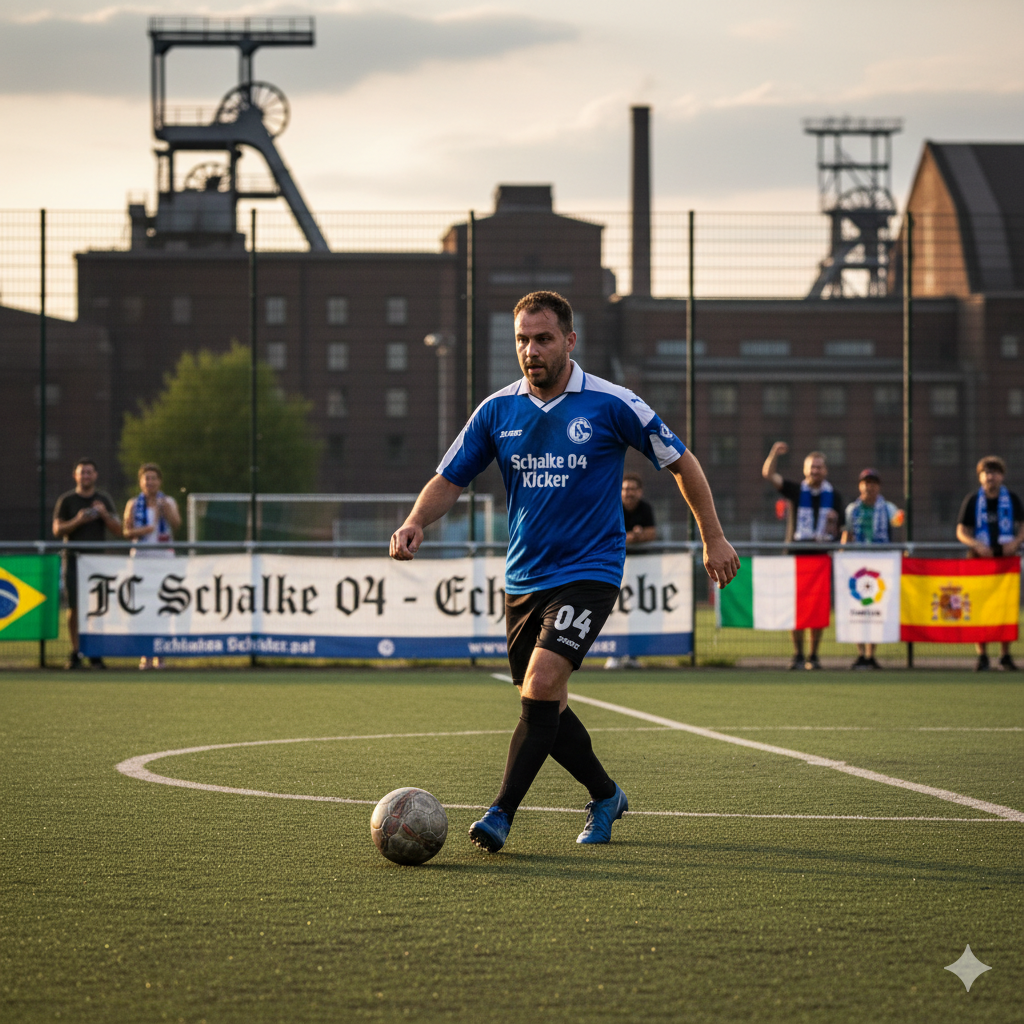
I come from the “soccer heart” of Germany, the Ruhrpott. I have played, trained and followed soccer all my life and am a big fan of FC Schalke 04. I also enjoy following international soccer extensively.