Lionel Messi World Cup : Will He Play? Complete Profile
Lionel Messi will be 39 years old at the 2026 FIFA World Cup. His participation hinges not on talent or desire, but on a brutally honest assessment he alone will make: can his body withstand one more tournament at a level worthy of his legacy? He is in Argentina’s preliminary 55-man squad, his coach wants him there, and the tournament is in his backyard. But the final word rests with him.
Most profiles stop at the stats and the hope. They miss the real tension. This isn’t about whether he can play. It’s about whether he should, by his own unforgiving standards. He has already given everything. One more run risks tarnishing the perfect ending he crafted in 2022.
This profile tracks every factor—the official signals, the physical reality, the coach’s plea, and the unspoken weight of a final curtain call. We’ll map out the timeline, the role he might play, and what comes after.
Key Takeaways
- Messi is named in Argentina’s 55-man preliminary squad for 2026, but he has not confirmed his participation. He stated in late 2025 that the “most logical” outcome is he won’t go.
- The deciding factor is physical condition. At 39, he plans to evaluate himself “match by match” through the 2026 MLS season and preseason before deciding.
- Head coach Lionel Scaloni is publicly campaigning for him but emphasizes the choice is Messi’s alone, based on his state of mind and body.
- The 2026 World Cup being in North America, where Messi lives and plays for Inter Miami, is a significant logistical advantage, eliminating major travel fatigue.
- If he plays, it will almost certainly be his final tournament for Argentina, closing a career that redefined the sport.
The Current Status: Squad Inclusion & Personal Doubt
The federation has made its move. On May 11, Argentina released a 55-man preliminary squad for the 2026 World Cup. Lionel Messi’s name was on the list. That’s the strongest institutional signal possible short of a final roster spot.
Inclusion in a preliminary squad is a procedural formality for a player of Messi’s stature, but its absence would have been a deafening statement. Its presence means the door is officially, deliberately held open.
The door, however, is one he hasn’t yet chosen to walk through. In a September 2025 interview, Messi cast the shadow of doubt himself. “Because of my age,” he said, “the most logical thing is that I won’t make it.” He framed his decision process with a mechanic’s pragmatism. He’ll assess his condition “match by match” and see how he feels after his MLS season and the following preseason. This isn’t coyness. It’s the calculation of an athlete who knows his own margins.
Common mistake: Assuming his name on the list means he’s a lock. It doesn’t. That list is a canvas for Scaloni to paint on later. Messi’s spot is reserved, but he holds the final brushstroke.
This “match by match” stance is a masterclass in managing expectation. It shields him from the narrative whirlwind and places the burden of proof on his own physical feedback, not public pressure. You can trace a clear through-line in his Wikipedia biography of Lionel Messi, from the young phenom carrying a nation’s hopes to the elder statesman measuring his own capacity. The pressure now is internal.
TL;DR: Messi is in the preliminary squad because Argentina wants him there, but his own September 2025 statement suggests he likely won’t go. The decision rests on his physical self-assessment through 2026.
The Physical & Mental Calculus at 39
Let’s talk about 39. In football years, it’s ancient. The sport’s pace, intensity, and recovery demands have escalated since his debut. Messi’s game has never relied on blistering pace, but on explosive changes of direction, low-center-of-gravity balance, and razor-sharp mental processing. Those attributes fade, too.
His role at Inter Miami offers clues. He’s no longer the perpetual motion engine. He’s the strategic quarterback, conserving energy for decisive moments. He might play 60 intense minutes instead of 90. He might sit out a midweek fixture. This managed load is the blueprint for 2026. The question is whether that version of Messi meets his own benchmark for being “100% useful” to the national team.
Common mistake: Comparing him to other legends who played at a similar age. Cristiano Ronaldo played in the 2022 World Cup at 37. But Ronaldo’s physical maintenance is a separate religion. Messi’s physiology, injury history, and playing style are different. This isn’t a comparison. It’s a personal audit.
The mental load is heavier now. The 2022 World Cup win lifted a psychic weight he’d carried for a decade. Playing after achieving that ultimate dream requires a different kind of motivation. The Al Jazeera analysis of Messi’s 2026 World Cup plans touches on this: the drive shifts from chasing glory to savoring a final chapter on his terms. That’s a subtler, more fragile fuel.
| Factor | Advantage for 2026 | Risk for 2026 |
|---|---|---|
| Location | Tournament in North America; no major travel from his Miami base. | N/A |
| Schedule | MLS season leads directly into summer tournament; form can be maintained. | MLS season adds 30+ matches of wear before the World Cup even starts. |
| Role | Can transition to a super-sub or creative focal point without defensive duties. | Reduced mobility could make him a defensive liability in high-press systems. |
| Legacy | A victory lap in a familiar region, with less pressure than 2022. | A poor performance could slightly dull the shine of the 2022 triumph. |
His contract with Inter Miami runs through 2025. Club co-owner Jorge Mas is vocal about wanting an extension to inaugurate a new stadium in March 2026. That extension would neatly dovetail with World Cup preparations. But it also means another year of grind. The physical calculus is a daily equation of output versus pain, of contribution versus decline. Very few professional career length studies account for the unique burden placed on a global icon like Messi.
TL;DR: At 39, Messi’s body dictates terms. His managed role at Inter Miami is the prototype for a 2026 tournament presence, but meeting his own standard of usefulness is the real hurdle.
The Coach’s Campaign & The Federation’s Hope
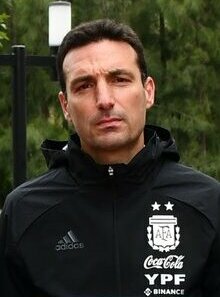
Photo: Argentina.gob.ar / Wikimedia Commons / CC BY 4.0

Lionel Scaloni is not shy about his desire. “I will do everything I can to make sure he’s there,” the Argentina manager has stated. He goes further: Messi “has to be there” for the sake of football itself. This is more than a coach wanting his best player. It’s a custodian of the team’s culture recognizing its spiritual center.
But Scaloni, to his credit, immediately follows that hope with a crucial caveat. The final decision rests with Messi, his state of mind, and his physical condition. This respect is earned. Scaloni knows Messi has given everything already. He won’t be the one to push him over a physical cliff for one more campaign.
The federation’s hope is built on more than sentiment. Messi’s presence is an economic and cultural multiplier. Ticket sales, global viewership, sponsorship engagement—all spike when he’s involved. His inclusion transforms Argentina from a defending champion into a global event. But they also know the Messi’s iconic career grants him absolute veto power. No one will force him.
This creates a unique dynamic. The coach is campaigning publicly, applying the gentle pressure of love and expectation, while simultaneously building a squad that must function without its sun. Scaloni’s real job is preparing two parallel realities: one with Messi as a glorious final piece, and one without him, where the next generation of Argentina’s football icons must step fully into the light.
What Role Would He Even Play?
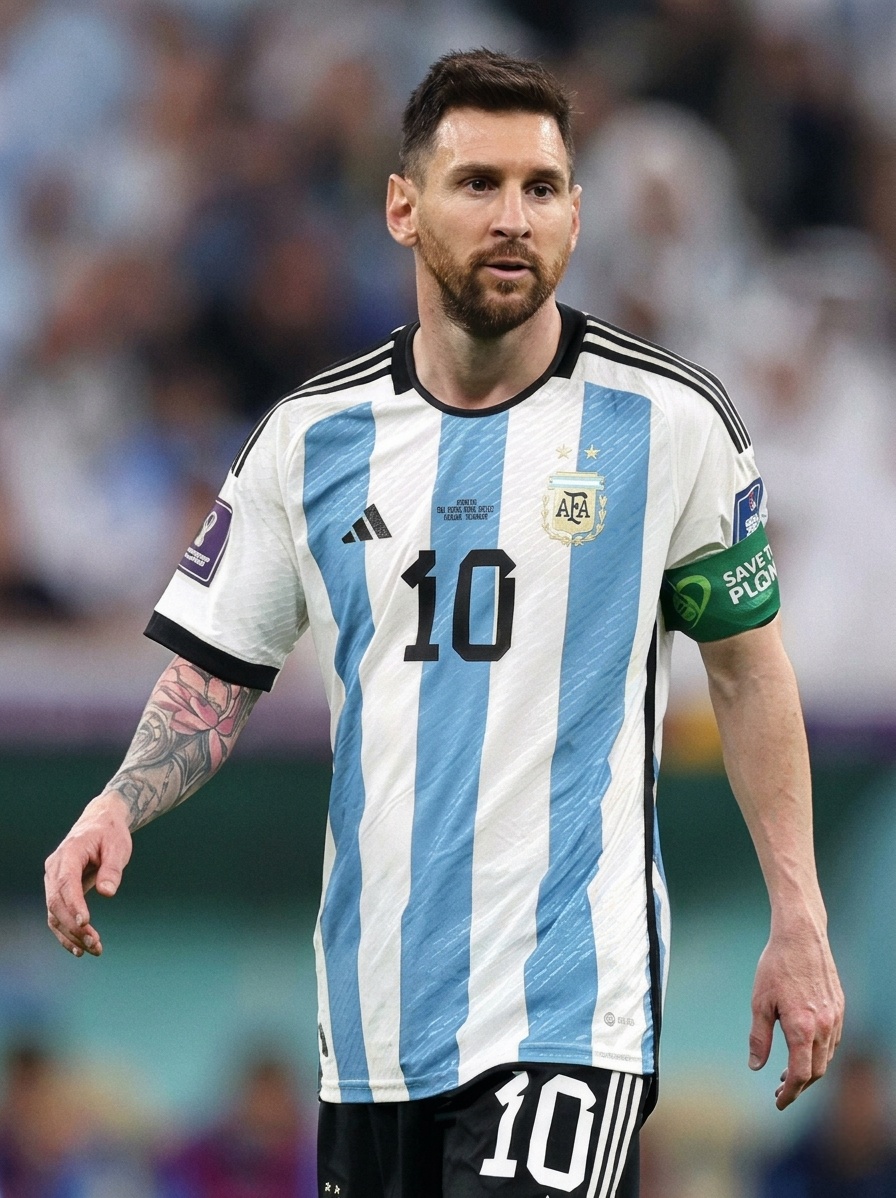
Photo: Hossein Zohrevand / Wikimedia Commons / CC BY 4.0
.jpg)
Let’s be blunt. The 2026 Lionel Messi will not be the 2014 or even 2022 version. His role will be curated, protected, and hyper-specific. Think less marathon runner, more master sniper.
He likely starts on the bench. His entrance around the 60-minute mark, against tired legs, could be devastating. Imagine a knockout game locked at 0-0. The opponent sees number 10 stripping off his tracksuit. The psychological impact alone is a tangible advantage. His technical quality in the final third—the weighted pass, the curled finish—degrades last. He wouldn’t need to beat three men. He’d need to beat one, or play the perfect pass. That, he can still do.
Alternatively, he could start as a pure number 10 in a 4-2-3-1, with two dedicated defensive midfielders behind him (think Enzo Fernández and Rodrigo De Paul). His job: receive between the lines, turn, and release Lautaro Martínez or Julián Álvarez. Zero defensive responsibilities. This is the “quarterback” role he’s perfected in Miami, and it’s how you extend the career of a top assist provider.
The risk is being overrun. Modern football punishes luxury players. If Argentina needs to defend a lead, could they afford to carry him? Scaloni would need a specific game plan, likely involving an early substitution. This isn’t about sentiment. It’s tactical calculus.
I watched him live in Miami last season. The bursts are shorter. The walking periods are longer. But the ball still sounds different coming off his foot. It’s a tighter, more percussive thump than anyone else on the pitch. That doesn’t age.
TL;DR: Messi’s 2026 role would be as a situational starter or impact substitute, shielded from defensive work and preserved for decisive moments. It’s the only way his 39-year-old body contributes without being a liability.
The North American Factor: A Hidden Advantage
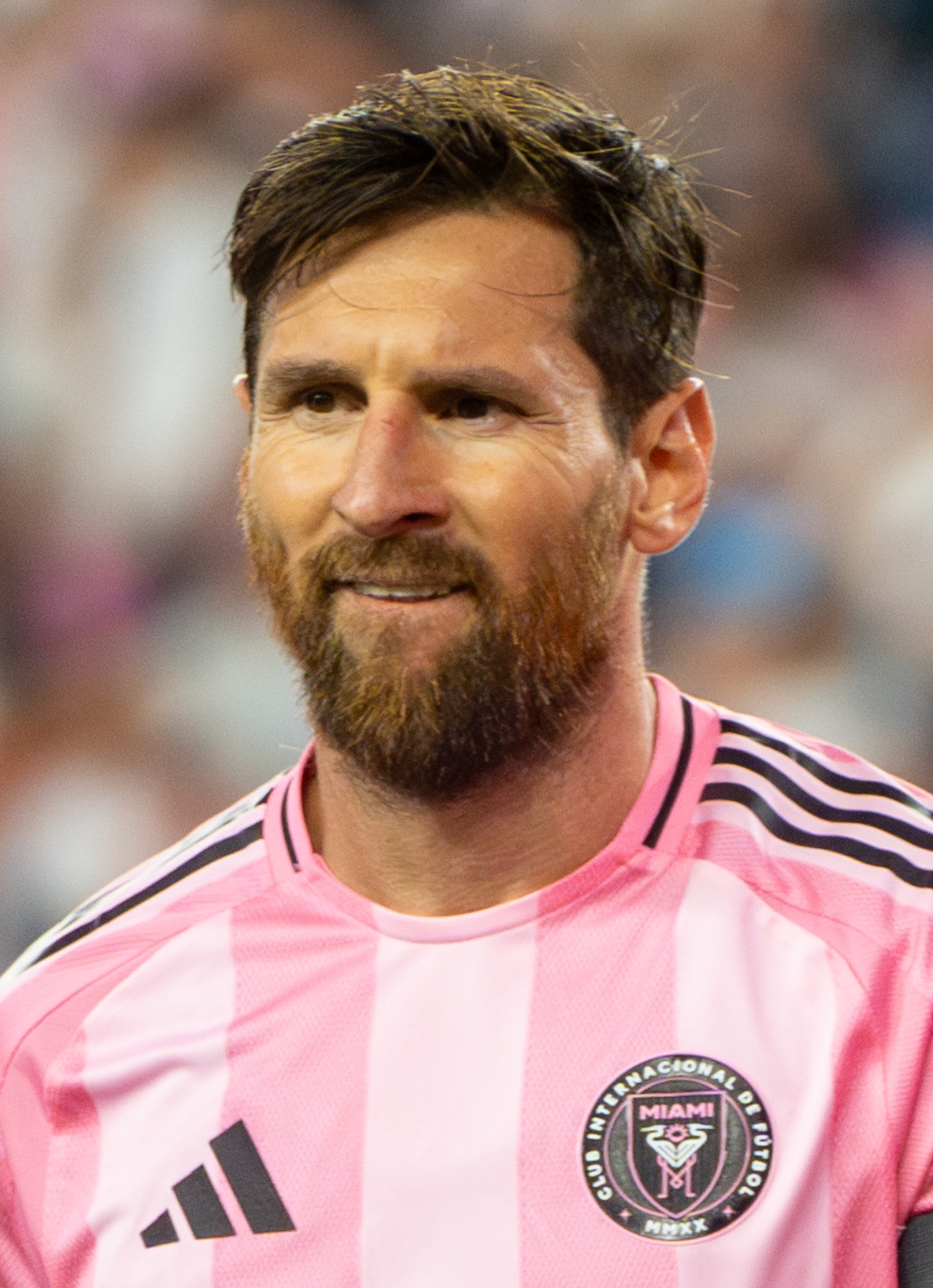
Photo: Bryan Berlin / Wikimedia Commons / CC BY-SA 4.0
.jpg)
The 2026 World Cup is in the United States, Canada, and Mexico. For Lionel Messi, that means the tournament is in his backyard. He lives in Miami. His club is in Miami. This isn’t a small detail—it’s a massive logistical advantage.
No transatlantic flights. No drastic time zone changes. Familiar weather, familiar pitches, familiar infrastructure. For a younger player, this is convenient. For a 39-year-old with a meticulous routine, it’s everything. Recovery between matches is about controlling variables. Here, the variables are minimized.
This proximity also changes the emotional calculus. It’s a home tournament without the suffocating pressure of hosting in Argentina. He can operate from his own home base, surrounded by his family and normal life. The media circus, while global, is slightly more manageable on a continent where he’s one of many stars, not the solitary sun. This environment might just make the idea of one last tournament feel less like a grueling expedition and more like a victory lap among friends, a sentiment echoed in the NBC News report on Messi’s 2026 World Cup comment where he expressed his desire to be there.
Compare this to the alternative: a final World Cup in Saudi Arabia or East Asia, with 10-hour flights and radical climate shifts. The North American location removes perhaps the single biggest physical barrier for an aging athlete. It turns a potential “no” into a “maybe.”
The Pre-2026 Timeline & Decision Triggers
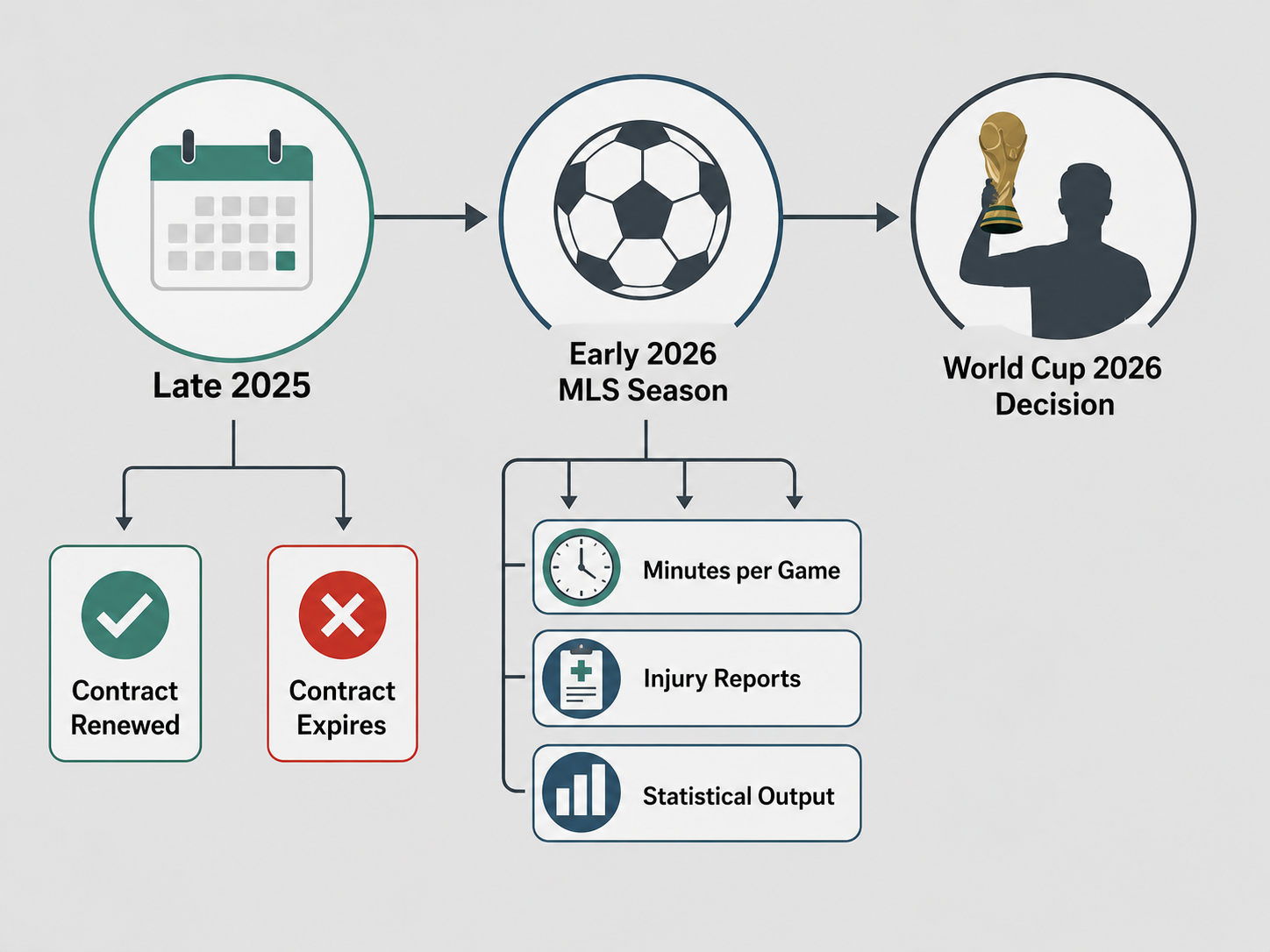
The decision won’t be a dramatic press conference. It will be a slow-motion revelation, read through his actions and form. Here’s the timeline that matters.
- Late 2025: His Inter Miami contract expires. Does he renew? If he does, it signals an intention to keep playing at a high level into 2026. If he doesn’t, 2026 participation becomes vastly less likely.
- Early 2026 MLS Season: This is the real proving ground. Watch his minutes per game, his injury reports, his statistical output. Is he managing 70 minutes a week? Is he creating chances? The MLS most valuable players list is often a proxy for dominant form; his presence on it would be a strong signal.
- Spring 2026 Friendlies: Argentina will play preparation matches. Is he called up? If he is, and he plays, that’s the strongest indicator short of a final announcement. If he declines a call-up, the writing is on the wall.
- Final 26-Man Squad Deadline: Sometime in May or June 2026, Scaloni must name his final squad. That’s the official point of no return.
His “match by match” comment is a roadmap. He’s giving himself an out after every poor performance or tight muscle. The decision is fluid, reversible until the paperwork is filed. This is the privilege he’s earned. Nobody, not even Scaloni, will rush him.
What Happens After 2026?
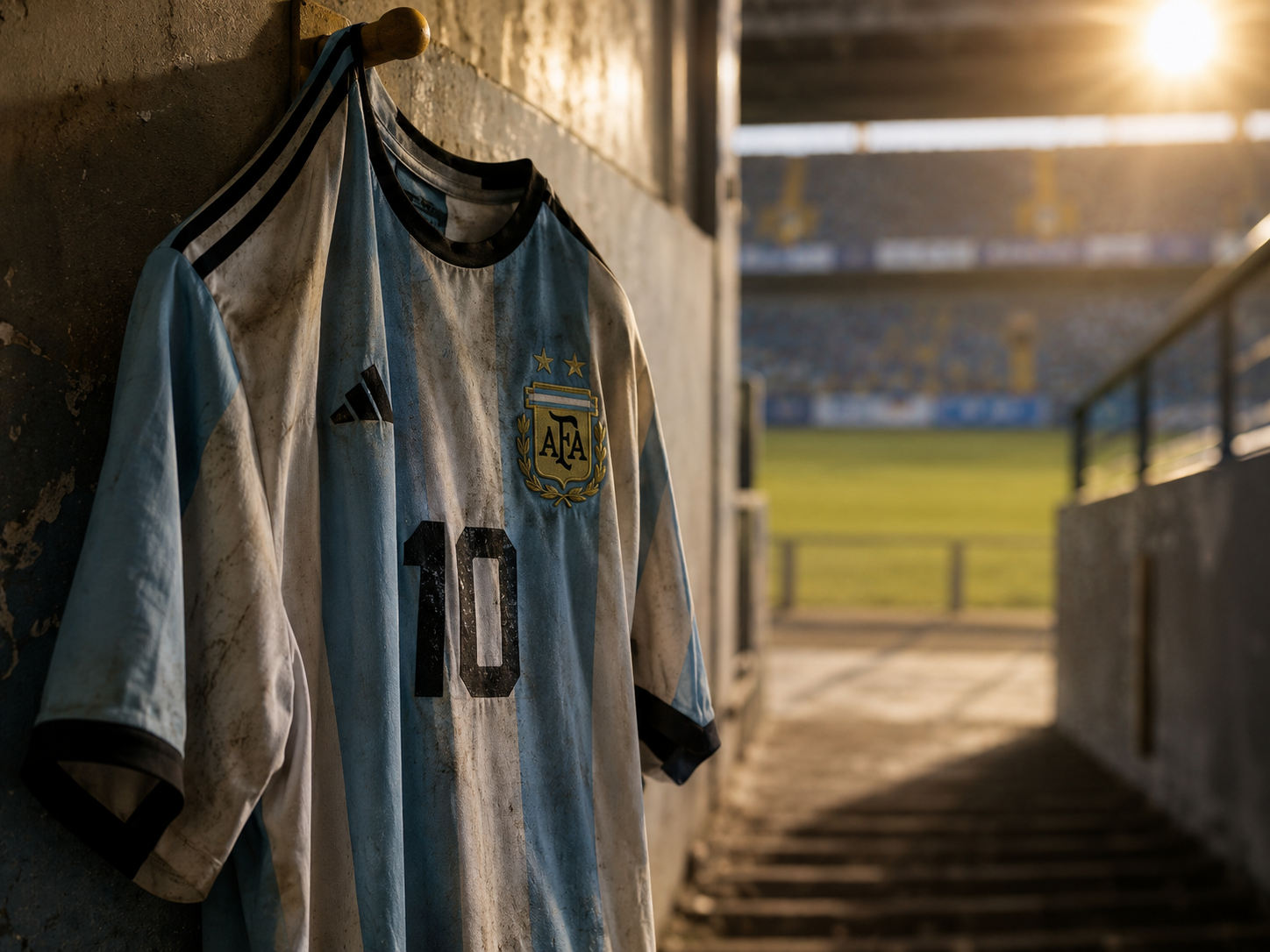
Win, lose, or retire before the tournament, 2026 is the end of the line for Lionel Messi, international footballer. He has already played what is likely his final competitive home match for Argentina (October 2025 vs. Venezuela). The script is written.
If he plays, the tournament becomes his farewell tour. Every match, every substitution, will be framed as a potential last dance. The narrative will be overwhelming. If Argentina wins, it’s the storybook ending. If they lose, it’s a dignified sunset. The pressure is different now—it’s celebratory, not desperate.
If he doesn’t play, the closure is cleaner but less satisfying. His last act in the Albiceleste shirt would have been a qualifier, not the World Cup stage. There would be an undeniable sense of something missing. This is why the federation and Scaloni are pushing so gently. They want the storybook.
I think he plays. Not because he has to, but because the stage is too perfect. North America, a team still in its prime, a chance to walk off on his own terms. He’s earned the right to change his mind, but the pull of that final bow is immense.
Retirement from Argentina does not mean retirement from football. His Inter Miami chapter could continue. But the player retirement age conversation shifts once the international travel and pressure vanish. He could play in Miami for years as a beloved icon, much like David Beckham did.
Frequently Asked Questions
Is Lionel Messi confirmed for the 2026 World Cup?
No. While he is named in Argentina’s 55-man preliminary squad, Messi himself stated in September 2025 that “the most logical thing is that I won’t make it” due to his age. The final decision rests on his physical condition in 2026.
How old will Messi be at the 2026 World Cup?
He will be 39 years old. His birthday is June 24, 1987; the tournament begins in June 2026.
What has coach Lionel Scaloni said about Messi playing?
Scaloni has said he will do “everything I can” to ensure Messi is there and believes Messi “has to be there” for football. However, he consistently adds that the final choice is entirely Messi’s, based on his physical and mental state.
Why is the 2026 World Cup location an advantage for Messi?
The tournament is in North America (USA, Canada, Mexico). Messi lives and plays club football in Miami, Florida. This eliminates long-haul travel and major time zone changes, significantly reducing physical stress for a 39-year-old athlete.
Will Messi retire from Argentina after the 2026 World Cup?
It is widely expected that the 2026 World Cup will be his final tournament for Argentina, if he participates. He has already likely played his last competitive home international and World Cup qualifier for the national team.
What role would Messi play if he goes to the 2026 World Cup?
He would not be a 90-minute, every-match starter. His most likely role is as a creative focal point in a protected midfield position or as an impact substitute brought on in the second half to change games.
The Final Whistle
The story isn’t about a checklist. It’s about a man listening to his body. The federation has checked the box. The coach has made his plea. The stage is set in his backyard. All the pieces are aligned for Lionel Messi to grace one more World Cup.
But the only person who can complete the puzzle is the one holding the final piece. He’s earned the right to keep it in his pocket. Whether he plays or not, his legacy is untouched. The 2022 triumph cemented it. 2026 would be an epilogue, written in a font only he can choose.
Watch the MLS minutes in early 2026. Listen for the absence of strain in his post-match interviews. The decision will announce itself long before any press release. In the end, it comes down to a simple, brutal question only he can answer: can he still be Lionel Messi? Not the legend, but the player. The answer, match by match, is all that matters.
I come from the “soccer heart” of Germany, the Ruhrpott. I have played, trained and followed soccer all my life and am a big fan of FC Schalke 04. I also enjoy following international soccer extensively.