Retirement Age for Soccer Players: When and Why They Stop
Professional soccer players typically retire between the ages of 34 and 36, with an average career length of 8 to 11 years. This number is a composite average, heavily skewed by position: goalkeepers often play into their 40s, while forwards usually hang up their boots by 32. The decision is rarely about age alone; it’s a collision of physical decline, injury history, mental fatigue, and financial readiness.
Most fans see the headline age and miss the machinery behind it. They think a player wakes up at 35 and decides it’s time. The reality is a slow drip of missed tackles, a knee that swells after every match, and the brutal self-awareness that the 18-year-old kid on the bench is just faster. Retirement is less a birthday and more a diagnosis.
This guide breaks down the real numbers, the positional math, and the unspoken pressures that end careers. We’ll look at why a goalkeeper’s career can last 20 years while a winger’s might end at 30, what forces a player out against their will, and how the smart ones plan their exit long before the final whistle.
Key Takeaways
- The 34–36 age range is an average that hides dramatic splits: goalkeepers (late 30s/40s), defenders (mid-30s), midfielders (33), forwards (32).
- Physical decline is the lead actor, but the supporting cast includes mental burnout, lucrative player contracts offering early exit options, and scary health diagnoses.
- Forced retirement from injury or illness is common; planned, graceful exits at the top are the rare exception, not the rule.
- Post-career planning is critical. The psychological drop-off after leaving structured team life is steep, and many struggle without a clear soccer fitness regimen or new purpose.
- Modern sports science is pushing the ceiling higher, but the floor is also lower, players who debut at 16 often face early burnout from cumulative physical demands of soccer.
The 34–36 Rule: Averages and Why They Lie
Look at any aggregated data set from player associations, and the number stares back: 34 to 36. The European Football Players’ Association (EFPA) pins the typical professional male footballer’s retirement in this window, after 8 to 11 years of first-team play. This is the statistical truth. It is also mostly useless for understanding any individual player.
That average is a blender. It purees the 45-year-old goalkeeper with the 28-year-old striker whose ACL shredded for the third time. The number tells you what happened, not why. The “why” lives in the deviations. A forward’s career is a sprint. A goalkeeper’s is a marathon. Averaging them gives you a confusing middle-distance race that nobody actually runs.
According to the European Football Players’ Association, the average retirement age for a professional male footballer falls between 34 and 36 years. This figure represents a mean calculated across all playing positions, with career length typically ranging from eight to eleven years at the senior level. Geographical league competitiveness and access to advanced sports medicine cause significant variance around this central tendency.
TL;DR: The 34–36 average is a composite statistic; ignore it and look at position, league, and injury history for a real prediction.
Position is Destiny (With a Few Exceptions)
Your position on the pitch is the single strongest predictor of your retirement age. The physics are simple: different roles demand different physical currencies, and some bodies mint that currency longer than others.
| Position | Typical Retirement Age | Primary Reason for Timeline |
|---|---|---|
| Goalkeeper | 38–40+ | Minimal sprinting; relies on positioning, experience, and handling. Joint wear is lower. |
| Central Defender | 35–37 | Requires strength and reading of the game; pace declines but can be masked by intelligence. |
| Full-Back / Wing-Back | 32–34 | High-speed repeat sprints up and down the flank cause extreme muscular and joint fatigue. |
| Central Midfielder | 33–35 | Constant movement, tackling, and turning; a blend of endurance and agility that degrades. |
| Winger / Forward | 30–32 | Explosive acceleration and top speed are the first physical traits to decline with age. |
A center-forward’s value is tied to a half-step of pace they lose forever sometime in their early 30s. They can adapt, play smarter, but the threat that defines them diminishes. Meanwhile, a goalkeeper like Gianluigi Buffon played Serie A matches at 45. His role required explosive power in short bursts, a lateral dive, but not the 90-minute, high-speed metabolic carnage of a midfielder. The difference in career wear and tear is astronomical.
This positional clock starts ticking the moment a player turns pro. A winger who debuses at 18 has maybe a 12-year shelf life at the highest level. A keeper who debutes at 22 might have an 18-year career ahead. This is why a holistic soccer fitness regimen focused on longevity looks completely different for a striker than for a center-back.
The Goalkeeper Exception
Goalkeepers are the outliers that break the model. Their career arc is so distinct it deserves its own rulebook. While outfield players peak around 27, a goalkeeper often hits their prime between 30 and 35. The role is cerebral. It’s about organizing a defense, understanding angles, and making split-second decisions. These skills mature with experience.
The physical demands are specialized. It’s about power in the legs for elevation, quick hands, and agility in a confined space. This creates less cumulative damage than the 10 kilometers of running, cutting, and jumping an outfield player absorbs each match. The result is a career that can span three decades at the top. Buffon, Edwin van der Sar, and Manuel Neuer didn’t just play late; they were world-class late.
But even this has a limit. Reflexes eventually slow. The body takes longer to recover from the impact of hitting the ground. The position has its own ankle injury prevention needs, with constant stress on joints from landing. The great ones manage this decline, transitioning from spectacular shot-stoppers to commanding generals. The retirement decision, when it comes, is often more about a loss of that razor’s-edge reflex than a collapse of general fitness.
What Actually Ends a Career? The Four Forces

Age is just the calendar. The real retirement decision is made by four converging forces, and usually, one breaks first.
1. The Body Quits (The Most Common Story)
This is the predictable end. The knees go. The ankles lose stability. A recurring hamstring issue becomes a permanent resident. The data from associations is clear: accumulated injuries and the inability to perform at the required level are the number-one reason for hanging up the boots. It’s a war of attrition.
A player doesn’t retire because they’re “old.” They retire because their 30-year-old body has the mileage of a 45-year-old’s. The physical demands of soccer, the sprints, tackles, and twists, are degenerative. Each match is a debt taken out against the body’s future. Eventually, the payments come due. The recovery window between games stretches from one day to three, then four. You’re not ready for Saturday. The manager looks at the medical report and then at the hungry 22-year-old on the training pitch. The writing is on the wall.
Common mistake: Assuming a player retires solely due to one catastrophic injury. More often, it’s the accumulation of smaller issues, a chronic ankle that needs weekly draining, a back that seizes up on long flights, that erodes their reliability and forces them out.
2. The Mind Checks Out
This one is quieter but just as decisive. The passion evaporates. The daily grind of training, the pressure, the media scrutiny, the time away from family, it stops being worth it. This often hits players who achieved massive success early or those who’ve been fighting relegation battles for a decade.
Eric Cantona retired at 30, at the peak of his powers at Manchester United. He was bored. He’d won everything and felt the creative spark fade. Japanese star Hidetoshi Nakata walked away at 29, disillusioned with the commercial machine of modern football. For these players, financial security from lucrative player contracts gave them the freedom to choose a life beyond the pitch. When the love is gone, no amount of money or physio work can make you stay.
3. The Bank Account Says Yes
Modern football’s economics have rewritten the retirement script. A player earning hundreds of thousands per week for a decade can achieve generational wealth by 35. This changes the calculation entirely. Previous generations played until they physically couldn’t because they needed the paycheck.
Today, a player with prudent management can retire at 32 and never work again. This safety net allows for earlier retirement when the body is merely starting to complain, not when it’s screaming. It also empowers players to leave toxic environments or declining leagues without financial fear. The calculus shifts from “Can I still play?” to “Do I still want to play, given what it costs me?” Understanding career financial planning is now as important as understanding tactics for a long-term pro.
4. The Heart Says No (The Sudden Stop)
This is the forced, unplanned retirement that nobody sees coming. A routine medical scan reveals a heart condition. A concussion leads to a warning about long-term brain health. It’s immediate and non-negotiable.
Enzo Mwepu, a talented midfielder for Brighton & Hove Albion, was forced to retire at 24 due to a hereditary heart condition. Fabrice Muamba’s career ended after his on-pitch cardiac arrest. While rare, these events are a stark reminder that the game carries risks beyond torn ligaments. Growing awareness of conditions like Chronic Traumatic Encephalopathy (CTE) from heading the ball may also lead more players to make early, precautionary exits in the coming years. In these cases, retirement isn’t a decision; it’s a medical directive.
Forced vs. Chosen Retirement: Reading the Signs
You can often tell which force ended a career by how the announcement is made.
A chosen retirement often comes at the end of a season, with a club legend giving a farewell tour. There’s a testimonial match, tears, and a sense of celebration. Philipp Lahm retired at 33 after captaining Bayern Munich to another Bundesliga title. He left on his own terms, at the top. These are the fairy tales. They are incredibly rare.
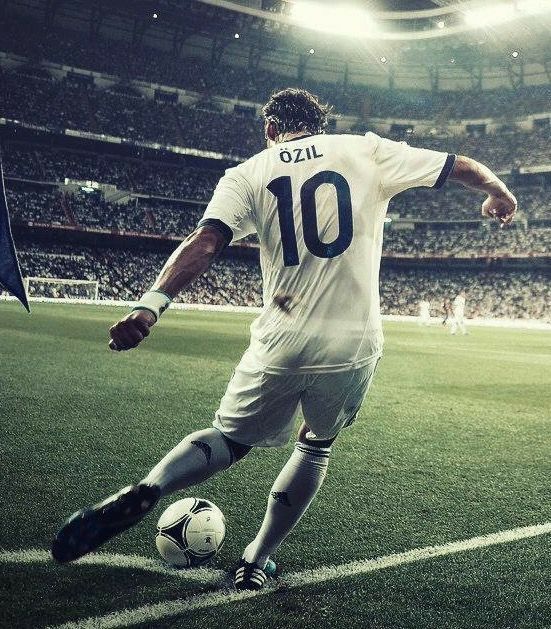
A forced retirement feels different. The announcement is often mid-season or during a rehab period. The language is somber, citing “medical advice” or “the inability to overcome this injury.” There’s a sense of unfinished business. Marco van Basten, one of the greatest forwards ever, retired at 28 because his ankle was destroyed. His prime was stolen. For every Lahm, there are a dozen van Bastens.
The middle ground is the “managed decline.” The player moves from a top European league to a less demanding one, the MLS, the Middle East, or back to their home country. They’re still playing, but the competitive chapter at the highest level is closed. This is a slow-motion retirement, a gradual letting go. It’s a pragmatic choice that acknowledges the body’s limits while postponing the finality of the end.
Life After the Final Whistle: The Hardest Shift

The most overlooked part of retirement is what happens next. For 20 years, a player’s life has been structured by the club: training at 10 AM, meals provided, travel scheduled, identity defined by the badge on their chest. Then, it stops. Overnight.
The psychological impact is severe. Studies show disproportionately high rates of depression, anxiety, and substance abuse among retired professional athletes. The loss of routine, camaraderie, and public purpose is a profound shock. This is where player associations and forward-thinking clubs are vital, offering career transition programs, educational grants, and mental health support.
The successful transitions follow a pattern. Some stay in the game as coaches, managers, or pundits, jobs that replicate the structure and passion. Others leverage their fame for business ventures. The least prepared are those who defined themselves solely as players, with no hobbies, education, or external interests. Their entire soccer-specific conditioning was for a race that ended abruptly, with no track laid out for what comes after.
TL;DR: Retirement is a psychological crisis as much as a career end. The smartest players cultivate an identity and skills outside the game years before they need them.
Frequently Asked Questions
What is the earliest age a top soccer player has retired?
Some are forced out shockingly young. Enzo Mwepu retired at 24 due to a heart condition. Former Bolton midfielder Fabrice Muamba was 24 when his career ended after a cardiac arrest. For non-medical reasons, Brian Laudrup retired at 31 due to persistent knee issues, and Eric Cantona chose to leave at 30. True “top-level” retirements before 30 are almost always due to severe injury or health scares.
Do female soccer players retire at the same age as men?
Historically, they retired earlier, often in their late 20s or early 30s. Factors included lower pay leading to a need for a second career, less advanced sports medicine, and societal pressures around family planning. This is changing. With professionalization, better pay, and improved player nutrition for recovery, stars like Megan Rapinoe (retired at 38) and Christie Pearce Rampone (played until 41) are extending careers. The gap is narrowing, but the average is still a few years younger than men’s.
Can a retired soccer player make a comeback?
It’s exceptionally rare at the highest level. The physical drop-off from even one year out of elite strength training for longevity is immense. Johan Cruyff made a brief comeback in the US and Netherlands after initial retirement, but it was more ceremonial. Paul Scholes came out of retirement for Manchester United for half a season and was effective, but he was a unique talent and had never lost touch with the club. These are famous exceptions that prove the rule: once you stop the daily grind, you almost never get back to that peak.
How does league competitiveness affect retirement age?
It’s a huge factor. A player in the English Premier League or UEFA Champions League faces a higher physical toll, more games, and fiercer competition for places. They may be “forced out” of that league at 33 but can extend their career for another 4–5 years in the MLS, the Saudi Pro League, or the Dutch Eredivisie. The retirement age from top-tier football is often younger than the retirement age from professional football. A player’s league compensation standards often drop with this move, but it buys more time on the pitch.
What’s the number one thing players regret about retirement timing?
From talking to former pros, the regret is rarely “I played one season too many.” It’s almost always “I wasn’t ready for what came next.” The regret is about a lack of planning, for identity, for routine, for a new purpose. The players who transition smoothly are those who, during their career, earned coaching badges, started a business, or pursued a degree. They viewed their playing days as Chapter One, not the whole book.
The Bottom Line
Forget the neat average of 34 to 36. A soccer player’s retirement is a personal equation with too many variables to solve from the stands. It’s the goalkeeper playing at 45 because his body banked its capital differently. It’s the winger finished at 30 because his knees surrendered to a decade of sprints. It’s the midfielder who walks away at 29, wealthy and weary, because the fire went out.
The real story isn’t in the birthday they retire on, but in the reasons stamped across their medical records, bank statements, and passport. Physical decline sets the outer boundary, but mental fatigue, financial freedom, and plain bad luck draw the final line. The modern trend points to longer careers through science, but also to earlier, voluntary exits through wealth.
The final whistle isn’t an ending for the prepared. It’s a pivot. The legends who navigate it best are those who saw themselves as more than just players long before the boots went into the box for the last time.
I come from the “soccer heart” of Germany, the Ruhrpott. I have played, trained and followed soccer all my life and am a big fan of FC Schalke 04. I also enjoy following international soccer extensively.