Penalty Kick Technique & Placement: The Data-Backed Truth
Effective penalty kick technique and placement relies on three things: a repeatable pre-shot routine, a committed target choice before your run-up, and a clean strike that prioritizes accuracy over raw power. The ball must be stationary on the penalty mark, and your run-up should be consistent every time.
Most players get this wrong by fixating only on power or picking a corner at the last second. They rush, change their mind mid-stride, and blast the ball over the bar or into the goalkeeper’s comfortable reach. The difference between a 67% conversion rate and an 85% personal rate is not physical. It’s procedural.
This guide breaks down the biomechanics of the strike, the data on where to actually aim, and the psychological games played from both the spot and the goal line. We’ll cover the techniques that work, the mistakes that break you, and how top goalkeepers prepare to stop you.
Key Takeaways
- The statistically most effective shot placement is the center of the goal, yet it’s the least attempted due to fear and tradition. In decisive elite penalties, central shots are converted at a significantly higher rate.
- A powerful strike to an anticipated zone is harder to save, but a placed shot into the bottom corner is more consistently successful. Accuracy drops sharply when players prioritize maximum velocity.
- Goalkeepers almost always dive due to “action bias”, the psychological need to be seen trying, even though staying central is, statistically, the better save strategy.
- Your non-kicking foot must point at your target. If it’s angled wide, your hips open and the ball will inevitably drag wide of the post. This is the most common technical flaw.
- Changing your target after starting your run-up is strongly correlated with missed penalties. Decide, commit, and execute.
The Three Pillars of a Perfect Penalty Kick
A penalty is not a lottery. It’s a repeatable technical action broken into a sequence. Fail one pillar, and the whole structure wobbles.
The first pillar is your pre-shot routine. This isn’t superstition. It’s neurological priming. Walk from the center circle the same way every time. Place the ball on a decent tuft of grass just off the exact center of the penalty mark, that spot is often worn into a slight depression. Take your three steps back and one to the side. Breathe. This 15-second ritual tells your brain it’s time for a familiar task, not a crisis.
A consistent pre-shot routine reduces cognitive load and anchors motor memory, allowing the kicker to execute under high-pressure conditions without conscious overthinking. The ritual spans from ball placement to final breath before the run-up.
The second pillar is target commitment. You must pick your spot, the exact intersection of crossbar and post, the middle of the net, the lower left corner, before you initiate your run. The data is clear. Last-moment changes are a miss waiting to happen. Your conscious brain is a terrible pilot in the half-second before impact. Let your training fly the plane.
The third pillar is clean striking technique. This is where form meets outcome. Your run-up should be a controlled acceleration, not a sprint. Your plant foot lands beside the ball, its toe pointing at your chosen target. This foot placement dictates everything. If it’s off by 20 degrees, your hips can’t square up, and you will miss.
TL;DR: Build a ritual, pick your spot early, and ensure your plant foot points where you want the ball to go. These three non-negotiable steps separate a practiced penalty from a hopeful punt.
Placement vs. Power: The Biomechanical Trade-Off
Every player faces this choice in the moment. Do I blast it or place it? The answer lies in understanding what each method does, and what it costs.
A power strike, using the instep or laces, maximizes ball velocity. A ball traveling at over 65 mph gives the goalkeeper less than 0.3 seconds to react from the moment it’s struck. If it’s on target, it’s often unsaveable. The cost is accuracy. The smaller sweet spot and longer follow-through make precise placement difficult. Under pressure, the margin for error shrinks. You see more balls skied over the bar or dragged wide.
A placement shot, typically using the inside of the foot, prioritizes precision. You can roll the ball into the bottom corner with ease. The success rate for this method, in practice, is extremely high. The cost is that a goalkeeper who guesses correctly, or reads your hips, has a much better chance of getting a foot to it. The ball is moving slower.
Here is the crucial insight most coaches miss. The real danger of a power shot isn’t just missing the frame. It’s that the required technique often telegraphs your intent. A long, straight run-up and a big backswing signal “power shot to my strong side” to any prepared goalkeeper. A placement shot can be disguised more easily with a shorter, angled approach.
| Shot Type | Best For | Primary Risk | Goalkeeper Tell |
|---|---|---|---|
| Instep Power | Beating a guessing keeper with pure speed | Loss of accuracy; ball rises over bar | Long, straight run-up; large backswing |
| Inside-Foot Placement | Guaranteeing on-target accuracy | Saveable if keeper guesses correctly | Shorter, angled run; focused on ball |
| Driven Placement | Combining pace and precision (hardest) | Requires perfect technique; rare | Disguised run-up; late hip shift |
I learned this trade-off the hard way in a regional cup final. I was the designated taker, known for a powerful laces drive. In the shootout, I went for my usual blast to the right side. The goalkeeper had studied me. He didn’t guess; he knew. He was already moving as I struck it, palming it onto the post. The next season, I spent months developing a disguised, side-footed shot to the low left corner. My conversion rate climbed. The power was still there, but it was no longer my only weapon.
The Data on Where to Place Your Penalty
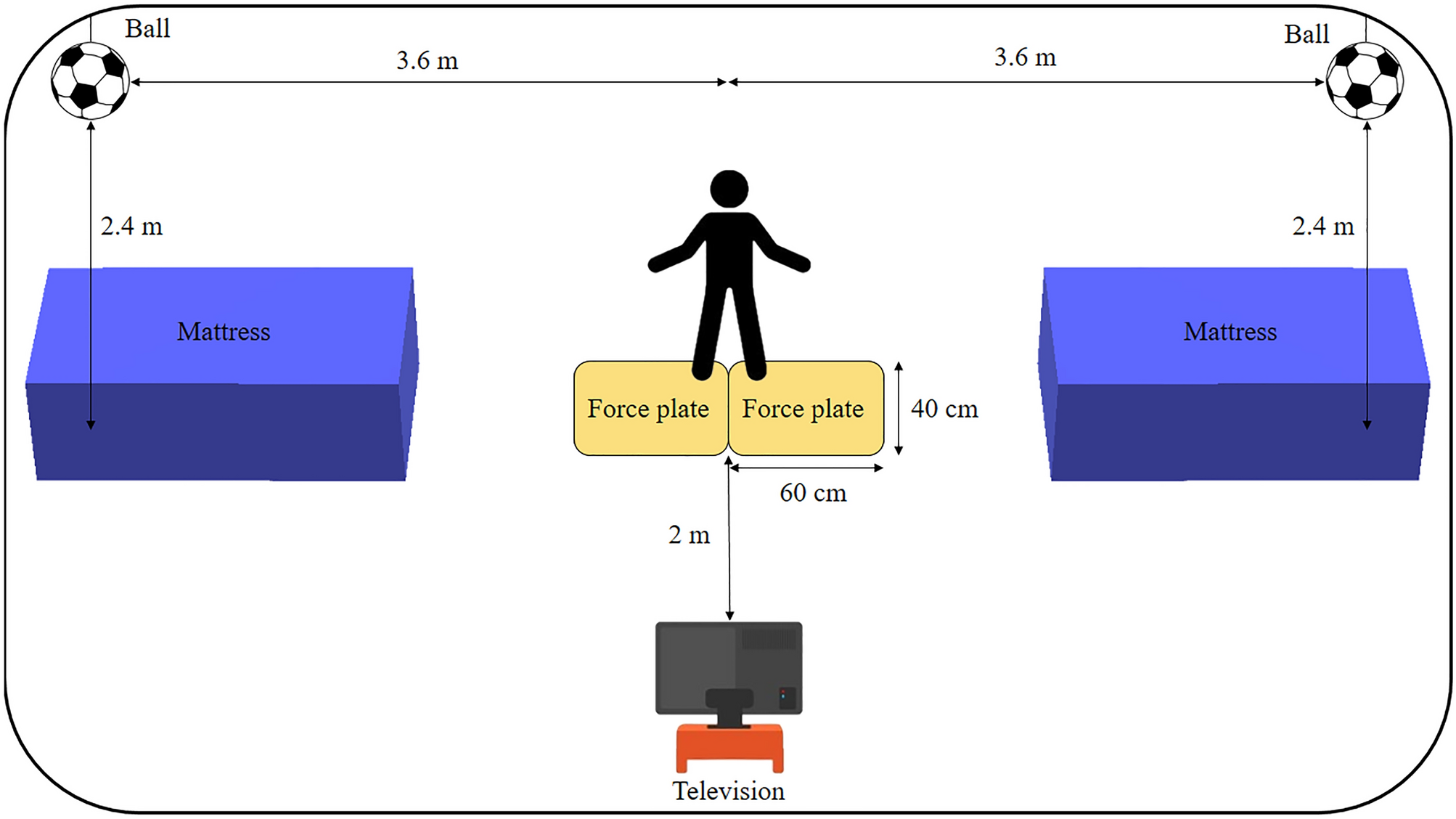
For decades, the universal coaching mantra was “pick a corner.” The top corners are unsaveable. The bottom corners are reliable. The middle is for amateurs who panic. Modern analysis of thousands of penalties, especially in high-stakes shootouts, has turned that logic on its head.
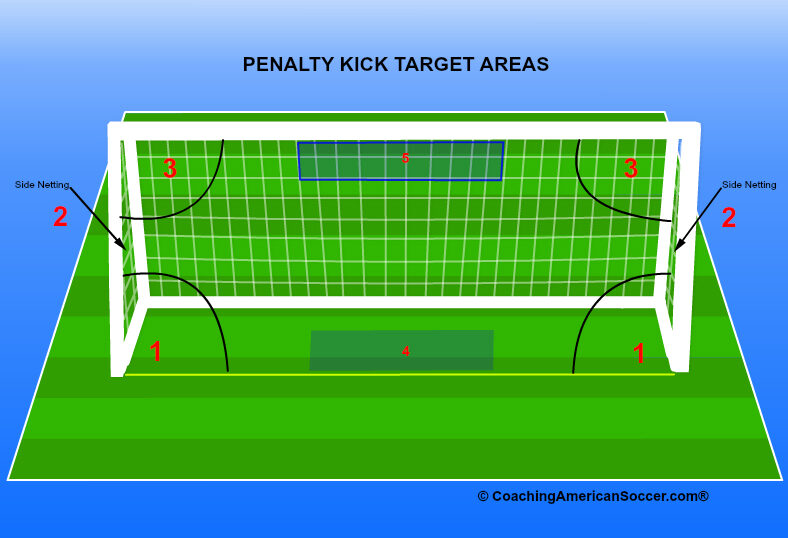
The common conversion rate for all penalties is 76-78%. But a study of 212 decisive penalties in elite men’s football found a 67.5% conversion rate. The pressure changes the math. More revealing is the placement data. Shots aimed centrally, within the goalkeeper’s standing reach, were converted at a statistically higher rate than shots to the sides. Yet, they were attempted significantly less often.
Common mistake: Always aiming for a corner out of habit, you surrender the highest-percentage zone (the center) to psychological fear, not tactical logic.
Why does the center work? Goalkeeper action bias. Almost every keeper dives. They feel compelled to pick a side, to be seen making an effort. A shot down the middle exploits this ingrained behavior. It looks terrible if it’s saved, which is why players avoid it. But it is saved far less often than you’d think.
| Goal Zone | Perceived Risk | Actual Conversion Rate (High-Pressure) | Goalkeeper Reaction |
|---|---|---|---|
| Top Corners | High (miss over bar) | Very High (if on target) | Near impossible save |
| Bottom Corners | Low | High | Requires correct dive + reach |
| Central (Mid-High) | Medium (keeper stands) | Highest | Exploits “action bias” dive |
| Central (Low) | Medium (keeper stands) | Very High | Often kicked into standing feet |
Height matters immensely. A ball in the upper half of the goal, especially the upper corners, has a dramatically higher conversion rate than a low shot to the same side. A goalkeeper who commits to a low dive cannot readjust upwards. Their momentum is gone. The trade-off is obvious: aiming higher increases the chance of missing the frame entirely. That’s a risk-reward calculation you make in training, not in a shootout.
TL;DR: The corners are safe, high-percentage targets. But the central zones, particularly mid-height, are underutilized and statistically more successful because they exploit the goalkeeper’s psychological need to dive.
Goalkeeper Strategy: What You’re Actually Beating
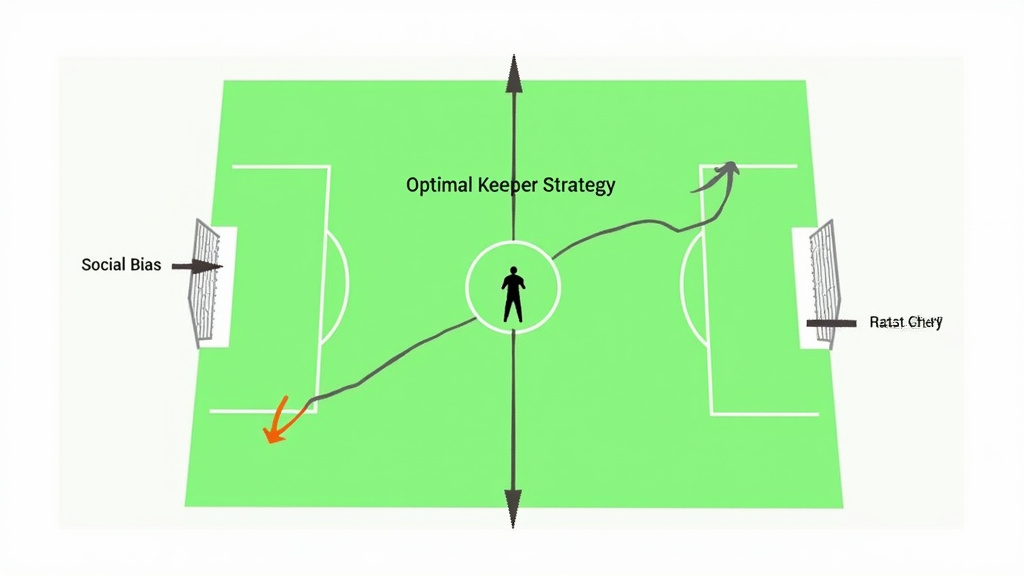
When you stand at the spot, you’re not beating a person. You’re beating a system of preparation, psychology, and physical limits. Modern goalkeepers prepare for penalties with the detail of a military campaign.
They use data. Analysts compile “leaflets” or digital reports on every potential kicker. This includes preferred side (80% of right-footed players go to their left, the goalkeeper’s right), shot height trends, run-up patterns, and even historical shots under specific match conditions. The USMNT’s Matt Freese famously used a Harvard research project on penalty statistics to inform his shootout strategy.
The goalkeeper’s physical strategy is about reducing your angles and buying reaction time. They will stand slightly off-center, maybe a half-step to one side, to subtly encourage you to shoot where they are stronger. They will delay their set position until the last second to disrupt your rhythm. They might wave their arms or say something. This is all noise.
The core psychological battle is against their own “action bias.” The statistically optimal strategy for a goalkeeper is to stay in the center of the goal. The numbers prove it. But almost no one does it. Why? Because diving and missing provides a socially acceptable excuse, “at least he tried.” Standing still and watching the ball go past is seen as passive, blameworthy. As a kicker, your job is to make them commit to that dive before you strike the ball.
I won’t recommend trying to read the goalkeeper’s eyes during your run-up. It’s a distraction that leads to last-second changes and missed kicks. Your focus is the ball and your target. Let their bias work for you.
Their greatest weapon is your hesitation. If they can force you to doubt your chosen spot for even a tenth of a second, your technique will break down. Your plant foot will be late, your head will come up, and your strike will be weak. This is why target commitment is the non-negotiable mental rule.
Step-by-Step: Executing Under Pressure
Let’s translate theory into a repeatable physical sequence. Follow these steps in order. Skipping one breaks the chain.
- Retrieve and Place the Ball. Walk it back calmly. Set it on a firm piece of turf, just off the exact center of the penalty mark. Use your foot to bed it in so it won’t wobble. Do not let the referee rush you. This is your time.
- Establish Your Visual Target. Look at the goal. Do not look at the goalkeeper. Pick your specific spot, the inside of the left post, the center of the net, the top right V. Visualize the ball hitting that spot. This decision is now final.
- Perform Your Ritual Steps. Walk back to your starting point using your practiced stride pattern. For most, this is three steps back and one to the side. Turn and face the ball. Take one deep breath.
- Initiate the Controlled Run-Up. Start your approach. It should be an acceleration, not a flat sprint. Your eyes are on the back of the ball. The goalkeeper’s movement is now irrelevant peripheral noise.
- Plant and Strike. Your non-kicking foot lands firmly beside the ball, its toe pointing directly at your target. Keep your head down and your knee over the ball. Strike through the ball’s center with the chosen surface of your foot. Do not lean back.
- Follow Through. Your kicking leg should follow through toward the target, with your body coming over the ball. This keeps the shot low and driven.
- Finish the Play. Your job isn’t done. Be ready to sprint for the rebound. According to the penalty rebound rules, the ball is live immediately after the save. Many goals are scored on the second chance.
The moment most players fail is Step 5. They see the goalkeeper shift and try to adjust their plant foot mid-stride. It’s impossible. The shot flies wherever that misaligned plant foot sends it. Trust your preparation.
Common mistake: Leaning back during the strike in an attempt to lift the ball, this opens the hips, takes power off the shot, and causes you to sky the ball over the bar nine times out of ten.
Training Your Penalty Technique
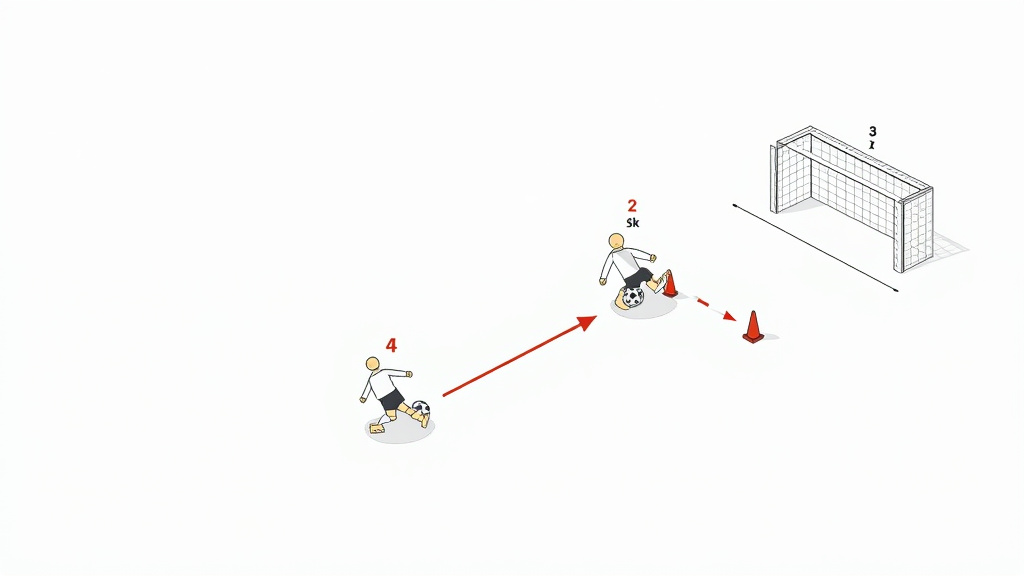
You don’t learn penalties during a game. You learn them in repetitive, isolated practice. Here is a training progression that builds real competency.
- Stage 1: Technique Without Pressure. Start with no goalkeeper. Place a ball on the spot. Work solely on your run-up, plant foot alignment, and striking a stationary ball into an empty net. Use cones to mark target zones in the corners and center. Hit 50 shots focusing only on clean contact. This builds the motor pathway.
- Stage 2: Adding Accuracy. Introduce a goalkeeper, but tell them not to move. Their job is to be a visual presence. Your job is to place the ball past a static obstacle into your pre-chosen zones. Practice your instep kick technique for power to the corners and your inside foot technique for placement.
- Stage 3: Simulating Pressure. Now the goalkeeper can try to save. Start with them guessing randomly. Then, allow them to study you and try to read your hips. This is where you practice disguising your intent. Mix your placements. This stage is about reinforcing commitment, seeing a keeper move and still executing your original plan.
- Stage 4: The Fatigue Drill. At the end of a hard training session, when your legs are heavy and your mind is tired, take five penalties. This simulates the physical and mental fatigue of extra time. It reveals if your technique is robust or if it crumbles under stress.
Incorporate specific shooting accuracy drills that translate to penalty precision. One simple drill is the “gate drill.” Set two cones just inside each post, creating a small gate in each corner. From the penalty spot, you must pass the ball through the gate without touching the cones. This sharpens your focus on a small target.
Your training must also include practicing the central shot. It feels unnatural at first. Set a cone in the very center of the goal, three yards from the line. Your task is to strike the ball with enough pace to beat a diving keeper, but directly at the center. This develops the technical and mental comfort to use this highly effective option when the moment is right.
Frequently Asked Questions
What is the official penalty kick distance?
The ball is placed on the penalty mark, which is 12 yards (10.97 meters) from the goal line. This is defined by the penalty kick rules in Law 14 of the game’s laws. All other players must be outside the penalty area and at least 9.15 meters from the penalty mark.
Can the goalkeeper move before the ball is kicked?
The goalkeeper movement rules require the keeper to have at least part of one foot touching, in line with, or behind the goal line when the ball is kicked. They can move sideways along the line, but cannot come forward off the line until the ball is in play. They also cannot unfairly distract the kicker.
What happens if my penalty is saved?
The ball remains live. You, or any other player, can play the rebound as long as the ball was touched by the goalkeeper and has not gone out of play. This is a critical part of follow-up play; never assume the penalty is over once the keeper makes contact.
Should I always aim for the corners?
Not necessarily. While the corners are traditionally the highest-percentage targets, data from high-pressure situations shows shots to the center of the goal are converted at a higher rate. The best strategy is to be proficient at placing the ball in multiple zones, corners and center, so you are unpredictable and can exploit the goalkeeper’s tendencies.
How can I improve my mental strength for penalties?
Develop and never deviate from a pre-shot routine. This ritual triggers automatic behavior. Practice visualization extensively, see yourself walking up, placing the ball, and scoring. Most importantly, practice under simulated pressure in training so the real moment feels familiar, not foreign.
The Bottom Line
Penalty kick technique is a science of repetition, and placement is a game of psychology. The perfect penalty isn’t the hardest shot; it’s the most certain one. It uses a rock-solid routine to quiet the mind, a committed decision made before the run, and a technically sound strike that puts accuracy first.
Forget the idea that penalties are a coin flip. They are a test of preparation. Train the central shot until it feels normal. Understand that the goalkeeper is fighting their own instincts to dive. Make your technique so reliable that pressure cannot break it. That’s how you move your personal conversion rate from the average 76% into the 90s. It’s not magic. It’s method. Now go practice.
I come from the “soccer heart” of Germany, the Ruhrpott. I have played, trained and followed soccer all my life and am a big fan of FC Schalke 04. I also enjoy following international soccer extensively.