What Happens if a Penalty Kick is Saved? The Real Rules
If a penalty kick is saved and the ball stays in play, the game continues immediately. Any player except the original kicker can play the rebound. The kick is only over, and a retake may be ordered, if a rule is broken, like the goalkeeper leaving the line early or a player encroaching into the penalty area before the ball is kicked.
Most people watching think the drama ends with the save. They see the keeper parry it away and assume the next sound is the referee’s whistle. That’s wrong. The loudest noise after a good save is the shout from a coach whose defenders switched off. The ball is still live, and the real scramble is just starting.
This guide breaks down the exact laws from the moment the keeper gets a hand on the ball. We’ll cover when play stops, when a penalty must be retaken, and the tactical chaos that follows a block.
Key Takeaways
- The original penalty taker cannot touch the ball again until another player has. If they take the rebound, it’s an indirect free kick against them.
- If the goalkeeper leaves the goal line early and makes the save, the penalty is retaken. The first offense is a warning; a second in the same match brings a yellow card.
- Encroachment by a defender that results in a save forces a retake. Encroachment by an attacker that results in a save gives the defending team an indirect free kick.
- After a save, play continues unless the ball goes out. The defending team must react instantly to clear the rebound or start a counter-attack.
- The goalkeeper’s focus should shift from celebration to organizing the defense or launching a fast break within two seconds of the save.
The Core Rule: When Play Stops and When It Continues
A penalty kick is only complete when the ball stops moving, goes out of play, or the referee blows the whistle for an offense. The save itself is just an event.
The ball remains in play after a goalkeeper saves a penalty kick provided it stays within the field boundaries. The Laws of the Game designate the penalty kick as completed when the ball clearly stops moving, is played by any player (with the exception of the original kicker touching it first), or the referee stops play for an infringement.
If the keeper pushes the ball onto the post and it bounces back into the penalty area, that’s a live ball. If they tip it over the crossbar, that’s a corner kick. If they push it wide and it rolls out over the goal line, that’s a goal kick. The restart is determined solely by which team last touched the ball before it left the field.
The immediate consequence is a moment of high tactical tension. Attackers must follow up, but the one who took the kick is barred from the first touch. Defenders must clear their lines immediately, not stand and admire the save. I’ve seen youth teams concede a tap-in rebound because three defenders raised their arms to claim an offside that doesn’t exist on a saved penalty.
TL;DR: The whistle doesn’t automatically blow on a save. If the ball is on the field, the game is on.
Common Infringements and Their Consequences
This is where referees earn their money. Multiple things can be illegal during the kick, and the outcome changes based on who sinned and what happened to the ball.
Goalkeeper Offenses: Early Movement
The goalkeeper must have at least part of one foot touching the goal line when the kick is taken. Stepping off a split-second early to gain momentum is the oldest trick in the book.
- If the goalkeeper infringes and the penalty is scored: The goal stands. The offense is ignored because it didn’t impact the outcome.
- If the goalkeeper infringes and the penalty is missed or saved: The kick is retaken. The goalkeeper’s illegal action is deemed to have unfairly affected the kicker.
The disciplinary action is specific. For a first offense in the match, the goalkeeper receives a warning. For any subsequent offense in the same match, they receive a caution (yellow card). This is a point most basic guides miss. I watched a lower-league cup tie where the same keeper came off his line early to save two penalties in a shootout. He got a warning on the first, and a very confused yellow card on the second, the referee got it exactly right.
Common mistake: Celebrating a save after leaving the line early, the referee will order a retake, and your warning turns to a yellow card on the second offense, putting your team at risk.
Player Encroachment: Attackers and Defenders
Encroachment means any player other than the kicker and goalkeeper entering the penalty area or the arc surrounding the penalty spot before the ball is kicked. The treatment is asymmetrical, favoring the defending team.
| Encroaching Player | If the penalty is SAVED or MISSED | If the penalty is SCORED |
|---|---|---|
| Defender | Penalty is retaken | Goal stands |
| Attacker | Indirect free kick to defending team | Goal is disallowed; indirect free kick to defending team |
The logic is about advantage. A defender encroaching and affecting a save illegally deprives the attacking team, so they get another chance. An attacker encroaching and affecting a save illegally gains an advantage, so they are punished.
You see this called most often in tense shootouts. Players creep forward, desperate to reach the rebound. A linesman’s sole job is to watch that line.
The Kicker’s Illegal Rebound
This rule catches out even experienced players. Law 14 is clear: the kicker cannot play the ball again until it has touched another player. This includes the goalkeeper, a post, the crossbar, or another field player.
If the keeper saves it back to the taker’s feet and they slot it in, the goal does not stand. The referee awards an indirect free kick to the defending team from the spot of the second touch. It’s a brutal way to waste a golden chance. I remember a Bundesliga 2 match where a seasoned striker did exactly this in the 89th minute, thinking he’d won the game. The referee’s signal for an indirect free kick crushed the entire stadium.
What the Goalkeeper and Team Must Do After the Save
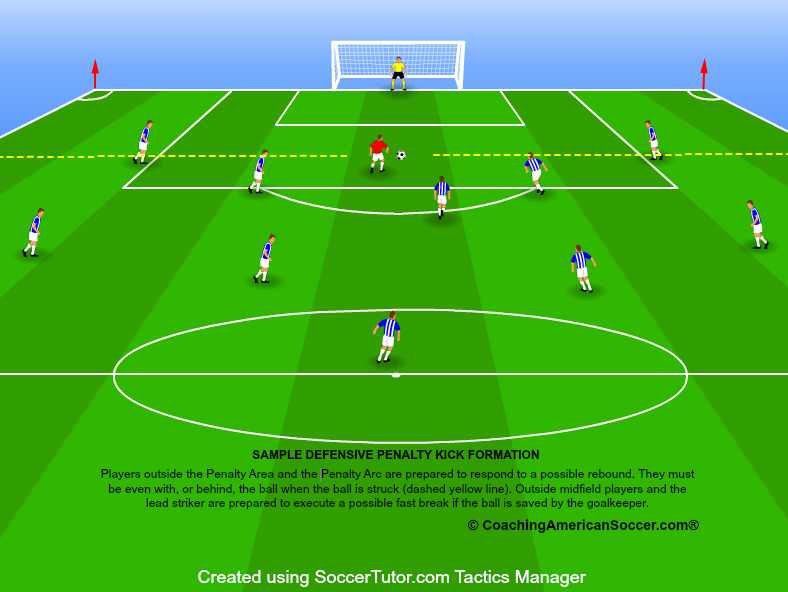
The physical save is only half the job. The next three seconds decide whether you turn defense into attack or gift away a second chance.
- Secure or Redirect the Ball: The first priority is to either catch it cleanly or parry it into a safe zone, wide and away from the center of the goal. A soft palm straight back into the six-yard box is an invitation to disaster.
- Initiate the Counter or Organize: If you catch it, look up instantly. Is there a forward making a break? Launch it. If not, secure it, get up, and bark orders to your defenders to push out and reset the line. The opposing team is often mentally deflated after a missed penalty; a quick throw to a winger can catch them flat.
- Never Celebrate Prematurely: This isn’t the final whistle. The play is alive. I’ve coached keepers who made a spectacular save only to lie on the ground while an opponent ran in and scored. Get back to your feet and into a ready position immediately.
The outfield players have jobs too. The nearest defender must attack any loose ball. Midfielders must provide passing options for the keeper. The players who were outside the area for the kick must react faster than the opposing attackers.
I once saw a goalkeeper dislocate his shoulder making a penalty save in a playoff match with no substitutes left. The medical staff popped it back in on the field. His first action after standing up? He immediately pointed and shouted to organize his wall for the ensuing free kick, then went on to save two more in the shootout. That’s the mentality.
Referee Interpretation and the “Grey Area”
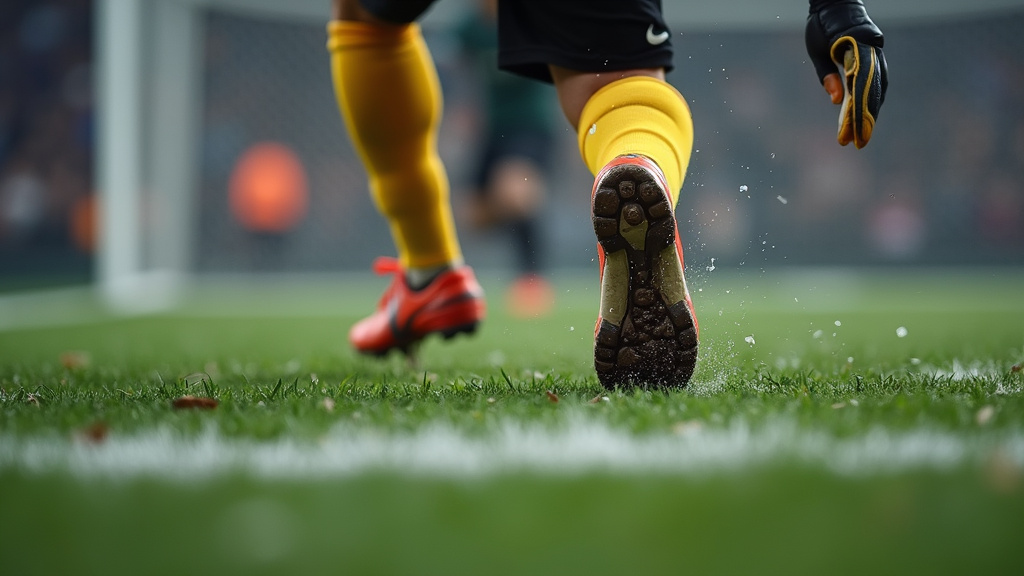
The laws are black and white on paper. On the pitch, there’s a spectrum of tolerance, especially regarding goalkeeper movement.
At the professional level, with VAR, keepers are scrutinized pixel by pixel. Even a centimeter off the line before the ball is struck can force a retake. In youth or amateur matches, referees are instructed to be stricter on education. They’ll often call a retake for any clear early movement to teach the rule.
However, there’s a practical “grey area” in real-time speed. If a keeper’s back foot lifts from the line as the kicker’s planting foot strikes the ground, a natural momentum shift, many referees will let it go unless it’s egregious. The key factor is impact. Did the early movement clearly disadvantage the kicker? If the ball is blasted into the top corner, no one cares. If the keeper saves a shot aimed down the middle because he dove early, that’s a retake.
TL;DR: At top levels, expect strict enforcement. At lower levels, referees look for clear, unfair advantages.
The Psychology and Odds: Why the Save is So Rare
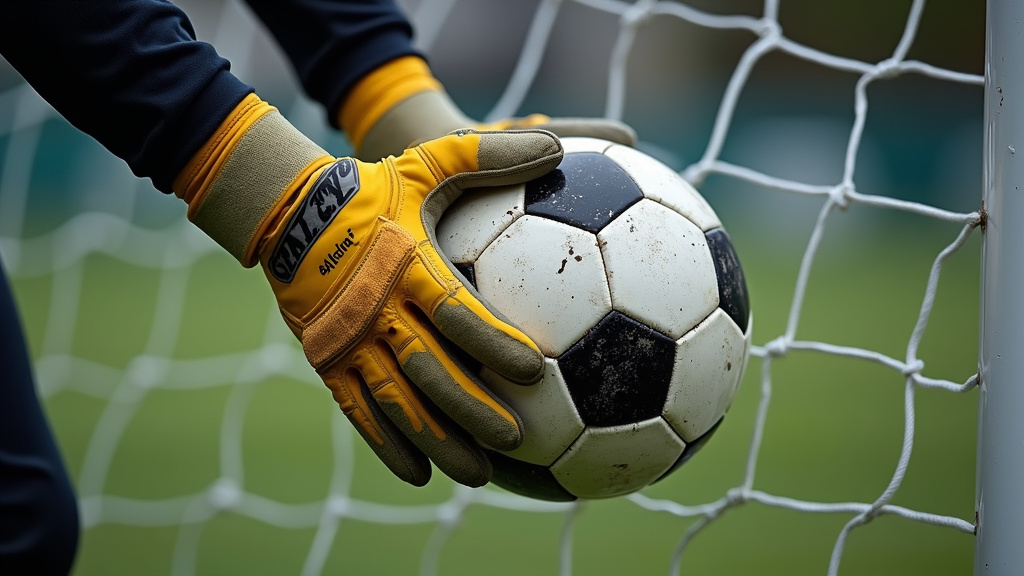
Understanding the rules is easier when you know the context. The odds are stacked heavily against the goalkeeper.
Approximately 80% of penalties are scored. About 5% are missed outright (skied over the bar or shanked wide). That leaves only about 15% that are even potentially saveable. And within that 15%, the keeper must guess correctly, reach the ball, and keep it out. The actual save rate in top leagues often sits between 10-12%.
This is why the rules surrounding retakes for keeper infringement are so punitive. The kicker already has an overwhelming advantage; the goalkeeper cannot be allowed to cheat to gain more.
This pressure changes the body language of both players. A nervous taker will often glance at their intended spot or have a stuttered run-up. A keeper trying to “psych out” the taker by moving early is playing with fire, the retake and yellow card are a steep price for a mental game.
Frequently Asked Questions
Can the goalkeeper be sent off for saving a penalty illegally?
Yes, but not directly for the encroachment itself. A goalkeeper who receives two yellow cards in a match for repeated penalty kick offenses (like leaving the line early) will be sent off. A straight red card could occur for violent conduct or denying an obvious goal-scoring opportunity with a foul, but not for the technical offense of early movement.
What happens if both the goalkeeper and the kicker break the rules?
If both infringe simultaneously (e.g., keeper off the line and kicker feints illegally in the run-up), the kicker is penalized. The kicker receives a yellow card for unsporting behavior, and the defending team is awarded an indirect free kick.
Does the “double touch” rule apply if the ball hits the post?
Yes. If the penalty hits the post, rebounds, and the same kicker touches it before anyone else, it’s a violation. The restart is an indirect free kick for the defending team. The ball must touch another player first.
What is the signal for a penalty retake?
The referee will point clearly to the penalty spot while blowing the whistle. They will not signal for a corner or goal kick. They will often communicate the reason (e.g., pointing at their feet to indicate goalkeeper encroachment) to the players.
Who can be in the penalty area during the kick?
Only the kicker and the defending goalkeeper. All other players must be outside the penalty area and the penalty arc until the ball is kicked. The goalkeeper must stay on the goal line.
The Bottom Line
A saved penalty kick is not an endpoint. It’s a trigger for a complex set of possible outcomes governed by Law 14 of the IFAB Laws of the Game. The immediate scramble for the rebound is just as important as the initial shot.
Remember the hierarchy: the keeper’s early movement brings a retake and a warning; a defender’s encroachment brings a retake; an attacker’s encroachment kills the chance and yields a free kick. And the kicker who follows their own saved shot will be punished every single time.
Master these rules not just to argue with the referee, but to gain an edge. Defenders who know the encroachment rules hold their line better. Goalkeepers who understand the retake risk stay disciplined on their line. And every player on the field knows that the whistle doesn’t blow until the ball is dead.
I come from the “soccer heart” of Germany, the Ruhrpott. I have played, trained and followed soccer all my life and am a big fan of FC Schalke 04. I also enjoy following international soccer extensively.