Guide to Single Pivot vs Double Pivot in Soccer Formations
The difference between a single pivot and double pivot in soccer is the number of dedicated central defensive midfielders (CDMs) shielding the defense. A single pivot uses one deep-lying midfielder, while a double pivot uses two. The choice isn’t about which is better, but which solves your specific tactical problems regarding defensive coverage, midfield control, and attacking freedom.
Most coaches get this wrong by picking a system based on a player’s reputation, not their actual skill set. They force a ball-winner into a single pivot role because he’s “tough,” then wonder why the build-up play stutters. Or they deploy two similar defensive-minded players in a double pivot and kill their own attacking transitions.
This guide breaks down the mechanics, player requirements, and formation fits for both systems. You’ll learn why the single pivot is a high-risk, high-reward specialist role, why the modern game leans toward the double pivot, and how to diagnose which one your team actually needs.
Key Takeaways
- A true single pivot requires a rare, complete midfielder who can defend, dictate tempo, and resist pressure alone. Most squads don’t have one.
- The double pivot’s main advantage is rest defense; one midfielder can hold position while full-backs attack and the other presses.
- Communication failure in a double pivot creates a fatal gap straight through the center of your pitch. Drilled coordination is non-negotiable.
- Formations like the 4-3-3 and 3-4-3 naturally use a single pivot. The 4-2-3-1, 3-5-2, and some 4-4-2 setups are built for a double pivot.
- Choose a single pivot to dominate possession and a double pivot to control transitions and counter-press.
What is a Single Pivot in Soccer?
A single pivot is one central defensive midfielder positioned directly in front of the central defenders. This player is the team’s primary shield and its primary launch point for attacks. They operate alone in the deepest midfield channel.
The single pivot is defined by its positional isolation. This midfielder must scan, intercept, and distribute under pressure without a dedicated partner at the same depth, making spatial awareness and one-touch passing non-negotiable skills for the role.
The system asks everything of one player. Think of Sergio Busquets under Pep Guardiola at Barcelona. He was the anchor in a 4-3-3, dropping between the center-backs to receive the ball, pivoting away from pressure, and breaking lines with a single pass. His job wasn’t just to win the ball. It was to never lose it. When it works, it creates a numerical advantage in build-up and suffocates opponents with possession. When it fails, your defensive line is naked.
TL;DR: The single pivot is a lone #6 who must be an elite defender, passer, and pressure-reliever all at once. It’s a specialist role for specialists only.
The Player Profile: Finding Your Anchor
You cannot install a single pivot with just any defensive midfielder. The player must have a specific, rare blend of attributes.
- Tactical Intelligence & Scanning: Their head is on a swivel. Before the ball arrives, they’ve mapped all pressing opponents and passing options. A slow reader of the game gets caught in possession here, and that turnover is in the most dangerous area of the pitch.
- Press Resistance: This is the physical manifestation of that intelligence. They receive with their back to goal, often marked, and need a repertoire of moves: the blind-side turn, the one-touch lay-off, the feint to open a passing lane. A player who can only play safe, square passes kills the system’s progression.
- Positional Discipline: They must hold their position. Chasing the ball sideways leaves the center-back gap exposed. The best single pivots defend by positioning, not by tackling. They funnel attacks into areas where teammates can help.
- Passing Range: They need to hit the “third pass” – not just to a nearby full-back, but a diagonal switch to a winger or a vertical ball that splits the opposition’s midfield line. This long-range threat stretches the game and prevents the opponent from compacting around them.
Common mistake: Using a pure ball-winner as a single pivot – their aggressive tackling pulls them out of position, and their limited passing stalls attacks. The team wins the ball back only to give it away again immediately.
I learned this the hard way watching my own youth team. We had a tough, aggressive tackler as our #6. In a 4-3-3, he’d chase every loose ball. We’d win a tackle 30 yards from our goal, he’d play a hopeful ball forward, and we’d lose possession. By the 60th minute, our center-backs were exhausted from facing constant counter-attacks. We switched him to a double pivot with a more technical partner, and our entire defensive stability improved overnight. The single pivot role went to a less physical but far smarter player.
What is a Double Pivot in Soccer?
A double pivot uses two central defensive midfielders operating as a partnership in front of the defense. They share the defensive, distributive, and transitional duties that fall solely on a single pivot. This is the default midfield structure in modern soccer tactics guide for a reason.
The two players are not identical. A typical partnership features a “destroyer” (more defensive, covers ground, breaks up play) and a “regista” (more creative, sets the tempo, launches attacks). Think of the old Juventus pairing of Claudio Marchisio and Andrea Pirlo, or more recently, Declan Rice and Martin Odegaard at Arsenal. One provides the legs and security, the other provides the vision.
| Player Role | Primary Duty | Key Attribute | Risk If Absent |
|---|---|---|---|
| Destroyer (#6) | Break up opposition attacks, cover space, shield defense | Tackling, stamina, positional sense | Creative partner gets overwhelmed by pressure; defensive line gets no protection. |
| Regista/DLP (#8) | Dictate tempo, switch play, play line-breaking passes | Passing range, composure, vision | Team lacks attacking direction; build-up becomes slow and predictable. |
| Hybrid/Box-to-Box | Link defense and attack, provide late runs into the box | Endurance, all-round passing, tactical versatility | Partnership lacks clear specialization; can become two “jacks of all trades, masters of none.” |
This partnership creates a stable platform. It allows for more attacking freedom elsewhere on the pitch, particularly for the full-backs and a central #10. The core strength is flexibility and rest defense – the ability to maintain a defensive structure even when attacking.
TL;DR: The double pivot is a partnership that splits the single pivot’s immense responsibilities, offering greater defensive coverage and tactical flexibility at the cost of one fewer pure attacker.
The Communication Imperative
The double pivot fails faster and more spectacularly than the single pivot if the two players aren’t synchronized. Their movement is a dance, not a solo act.
- The Cover-Shadow Rule: When one steps to press an opponent, the other must immediately shift to cover the space left behind and block the passing lane (the “cover-shadow”) into that zone. If both step to the same player, a gaping hole opens behind them.
- Staggered Positioning: They should rarely be on the same horizontal line. One sits slightly deeper to receive from center-backs, the other is a few yards ahead to connect to attackers. This creates natural passing triangles and makes it harder for one opponent to mark both.
- Verbal and Non-Verbal Cues: Constant communication is mandatory. “Left!” “Time!” “Man on!” They also need to read each other’s body shape – a dropped shoulder, a glance over the shoulder – to anticipate movements.
When this communication breaks down, you get the classic “swiss cheese” midfield. The opponent’s attacking midfielder finds acres of space between your lines, and your center-backs are forced to step out, destabilizing your entire defensive block. Drilling these coordinated movements is more important than any individual technique for a double pivot.
Formation Compatibility: Where Each Pivot Thrives
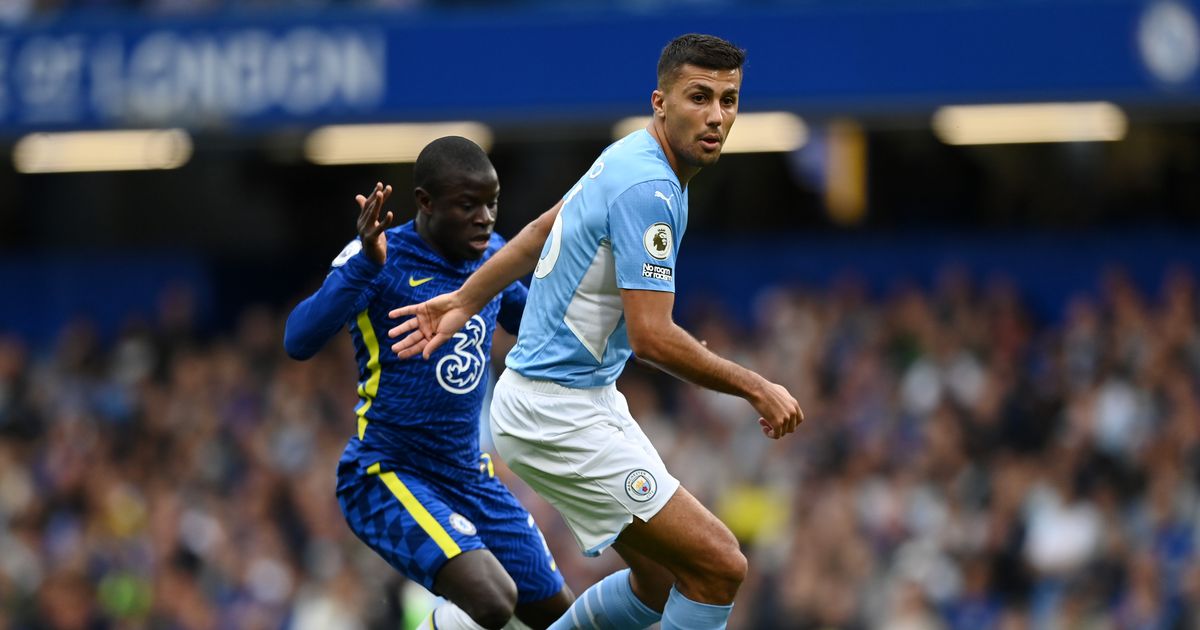
Your chosen formation often dictates which pivot system is not just possible, but optimal. You can’t force a square peg into a round hole without creating major weaknesses.
Formations Built for a Single Pivot
These shapes naturally provide the central cover and wide outlets that a lone #6 needs to function.
- The 4-3-3: The classic single pivot home. The #6 sits behind two advanced #8s (e.g., a Mezzala and a Box-to-Box). The two #8s provide the vertical passing options and defensive support the pivot lacks. The wingers provide width, stopping the midfield from getting congested around the isolated pivot.
- The 3-4-3 / 3-4-2-1: With three center-backs, the single pivot has more security behind them. Their role shifts slightly to being a pure distributor, as the back three handles most of the first-phase defending. The dual wing-backs provide the width and attacking thrust.
The single pivot excels here because the formation provides built-in support players. The 3-4-3 formation is a perfect example, where the wing-backs and inside forwards create a structure that protects and utilizes the pivot.
Formations Built for a Double Pivot
These systems use the two deep midfielders as the tactical foundation for both defense and attack.
- The 4-2-3-1: The most common double pivot formation. The two #6s protect the back four and feed the advanced playmaker (#10) and the wingers. It’s the bedrock of modern balanced play.
- The 3-5-2: The double pivot here is crucial. They screen the three center-backs and link play to the wing-backs and two strikers. It provides the central stability that allows the wing-backs to be ultra-attacking. This is a key feature of the modern 3-5-2.
- The 4-4-2 (Diamond or Flat): In a diamond 4-4-2, the base of the diamond is a single pivot. But in a flat 4-4-2, the two central midfielders often operate as a double pivot, especially in a more defensive setup. This is a core concept in understanding the traditional 4-4-2.
The choice between a 4-2-3-1 formation and a 4-3-3 often comes down to this exact pivot decision. Do you want a dedicated #10 (double pivot) or two #8s (single pivot)?
Single Pivot vs Double Pivot: The Strategic Trade-Offs
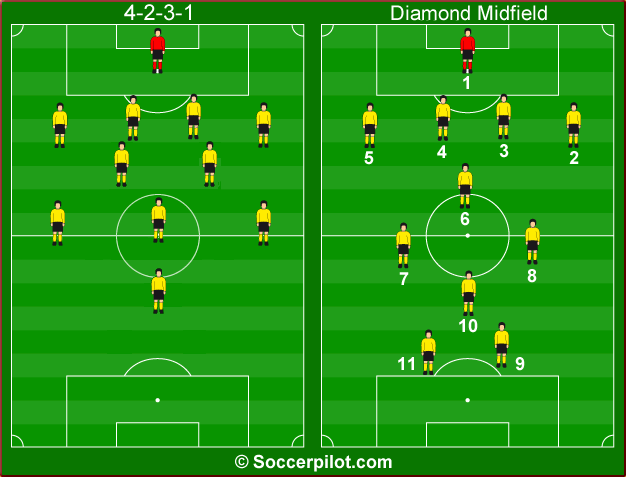
Choosing between these systems is a series of compromises. You are trading one set of strengths for another, and the right choice depends entirely on your players and your match plan.
| Aspect | Single Pivot Advantage | Double Pivot Advantage |
|---|---|---|
| Defensive Coverage | Excellent in a compact low block, clogs the very center. | Superior horizontal coverage, better at stopping attacks from wide areas drifting inside. |
| Build-Up Play | Creates a +1 in the first line (CB-CB-Pivot), easier to bypass the first press. | Safer, more passing options, less reliant on one player’s press resistance. |
| Attacking Numbers | Pushes one more player into advanced areas (the second #8). | Sacrifices an attacker for a midfielder, but provides safer platform for full-backs to attack. |
| Tactical Flexibility | Limited. The pivot’s role is fixed. The two #8s have freedom. | High. The two can swap roles, one can join attack, the other holds. |
| Player Dependency | Extremely high. System collapses without the right specialist. | Lower. Can compensate for one player having an off day. |
| Counter-Press | Weaker. If the pivot is bypassed, the defense is exposed immediately. | Stronger. One can press the ball, the other cuts the passing lane. |
When to Choose a Single Pivot
Pick the single pivot when you have that rare, transcendent anchor man and your game plan is built around possession dominance. Use it against teams that sit in a mid or low block, where you don’t need two dedicated destroyers. The single pivot is for imposing your will, not reacting to the opponent’s.
It’s also a strong choice in a 5-3-2 formation that morphs into a 3-4-3 in possession. The security of the back five allows the single pivot to focus purely on distribution.
When to Choose a Double Pivot
Choose the double pivot in 90% of modern scenarios. It’s the safer, more flexible, and more robust option. It’s mandatory if your full-backs are primary attackers – they need the cover. It’s essential against opponents who attack with a #10 and two #8s, as the double pivot can match up numerically.
It’s also the better system for transitional teams. The double pivot provides instant structure for counter-pressing after losing the ball and a stable base for launching quick counters. The physical demand is shared, which is crucial for the modern midfielder running stats that often exceed 7 miles per match.
Making the Decision for Your Team
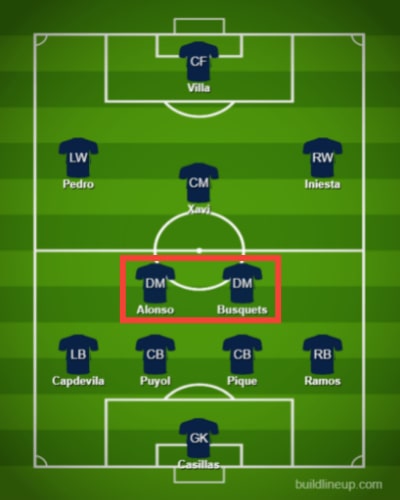
Forget what the top club does. Your decision tree is simpler.
- Look at your #6 candidate. Can he play with his back to goal under pressure, hit long diagonals, and resist the urge to chase? If you hesitate, you need a double pivot.
- Look at your opponent’s attacking shape. Do they flood the center with three players? A double pivot is your answer. Do they play with a lone striker and rely on wing play? A single pivot might work.
- Look at your full-backs. Are they your main source of width and crosses? If yes, you must play a double pivot to provide the rest defense they require. A single pivot leaves a highway behind them.
- Look at your creative players. Do you have a classic #10 who needs freedom? A double pivot unlocks him. Is your creativity coming from inverted wingers or advanced #8s? A single pivot can support that.
This is a foundational soccer coaching decision. It shapes everything else. Test both systems in training, be honest about your players’ limitations, and build from a position of stability, not fantasy.
Frequently Asked Questions
Can you switch between a single and double pivot in the same match?
Yes, but it requires specific formation changes and rehearsed player movements. A 4-3-3 (single pivot) can become a 4-2-3-1 (double pivot) if one #8 drops deeper alongside the #6, often to protect a lead. This shift needs to be drilled so players know their new defensive responsibilities instantly.
What’s the main physical difference for the players?
single pivot covers less ground but faces more intense mental and physical pressure in duels. A double pivot requires higher combined endurance, as the two players must constantly shift and cover more total space horizontally. Both roles demand elite levels of the specific fitness required for the defensive midfield role.
Is a double pivot more defensive than a single pivot?
Not necessarily. It’s more about defensive security, which in turn can enable more attacking freedom elsewhere. A double pivot allows your full-backs and #10 to attack with less defensive worry. A single pivot can be part of a very attacking 4-3-3. The label is less important than the total tactical package.
Which top players are the best examples of each pivot?
The archetypal single pivot is Sergio Busquets (2008-2019 Barcelona). For the double pivot, look at the partnership of Joshua Kimmich and Leon Goretzka at Bayern Munich, or any of the great Italian midfield pairings of the last two decades.
Can you use a double pivot in a 4-3-3?
Technically, no. A 4-3-3 has three central midfielders; if two are holding, it becomes a 4-2-1-3 or a 4-2-3-1. The formation number describes the base defensive shape. You might see a “double pivot” in possession, but defensively, the shape defines the system.
Before You Go
Stop thinking about single pivot vs double pivot as a debate about quality. It’s a toolbox. The single pivot is a specialized wrench for a specific job – possession dominance with a world-class operator. The double pivot is the versatile multi-tool – less brilliant at any one thing, but reliably effective at almost everything.
Most teams need the multi-tool. Assess your players with ruthless honesty. If you don’t have a conductor who can operate alone under siege, build the partnership. Drill their communication until it’s automatic. Use the double pivot to give your playmakers the platform they need. That’s how you build a resilient, modern team that can control games without relying on a single, irreplaceable genius.
I come from the “soccer heart” of Germany, the Ruhrpott. I have played, trained and followed soccer all my life and am a big fan of FC Schalke 04. I also enjoy following international soccer extensively.