Understanding 3-4-3 Formation Tactics: A Modern Attacking System
The 3-4-3 formation tactics deploy three center-backs, two central midfielders (a double pivot), two wing-backs, and a front three. It’s an attacking system built on width, vertical transitions, and a back-three foundation that morphs into a back-five in defense. The key is the wing-backs, who provide the system’s width and endless running.
Most guides tell you the 3-4-3 is about “balance.” That’s only half the story. The real point is controlled aggression. You commit five players to attack and five to defense, but the transitions between those phases are where games are won or lost. The system fails if your wing-backs can’t sprint the length of the pitch for 90 minutes, or if your center-backs panic when a winger isolates them one-on-one.
This guide breaks down the roles, the variations top coaches use, the very real physical demands, and the tactical traps you can set. It’s the blueprint used by Antonio Conte’s Chelsea and Thomas Tuchel’s Bayern Munich, adapted for anyone who wants to understand the modern game.
Key Takeaways
- The wing-backs are the system’s engine, required to provide attacking width and defensive cover, turning the shape from a 3-4-3 into a 5-2-3 or 5-4-1 without the ball.
- A stable double pivot in midfield is non-negotiable; these two players connect defense to attack, cover for advancing wing-backs, and must never be outnumbered.
- The three-center-back structure allows for superior build-up play and baiting the opponent’s press, but leaves massive spaces in the wide channels if the wing-backs are caught high.
- The 3-4-3 is a posession-killer, designed to disrupt teams that build from the back by creating overloads and pressing traps in midfield.
- Implementing this formation requires extreme physical conditioning and high tactical IQ; it’s notoriously difficult for amateur teams to execute without precise coaching.
What Is the 3-4-3 Formation? A Structural Blueprint
Forget seeing it as just numbers. The 3-4-3 is a philosophy of vertical football. You build with a back three, progress through a midfield two, and attack with a front five. The shape is fluid, but the principles are rigid.
The 3-4-3 formation in soccer is characterized by three central defenders, four midfielders arranged as a double pivot and two wing-backs, and three forwards. This structure provides a base for aggressive, width-based attacking play and a solid defensive block that can quickly transition between a back three and a back five.
The formation’s modern revival isn’t an accident. It directly counters the dominant 4-3-3 and 4-2-3-1 systems of the last decade. Where those formations rely on full-backs for width, the 3-4-3 dedicates two players purely to that role. Where they use a single pivot, the 3-4-3 uses two. It’s a system of specialists, and when it clicks, it overwhelms.
TL;DR: The 3-4-3 is a vertical, wing-back-driven system that attacks with five and defends with five, designed to beat modern possession-based teams.
The Historical Roots: From the W-M to the Modern Revival
Tactics are a circle. The 3-4-3’s grandparent is the W-M formation used by Herbert Chapman’s Arsenal in the 1920s. That system also used a back three (two full-backs and a center-half), a midfield four, and a front three. The game was slower, the roles different, but the structural similarity is undeniable. It was about balance and exploiting space in a more rigid, positional era.
The modern 3-4-3, as we know it, was resurrected as a weapon. Antonio Conte’s switch to it at Chelsea in 2016-17 is the landmark moment. His team had just been dismantled 3-0 by Arsenal. He shifted from a 4-1-4-1 to a 3-4-3 at halftime against Hull City, and Chelsea didn’t look back, winning the league with a record 30 wins. He proved it wasn’t a defensive, counter-attacking shell. It was a proactive, pressing, attacking machine. Thomas Tuchel later used a 3-4-2-1 variant to win the Champions League with Chelsea, further cementing its elite status. This lineage is crucial for any comprehensive soccer tactics guide.
What Are the Key Player Roles in a 3-4-3?

Every player has a specific, demanding job. Get one role wrong, and the entire structure cracks.
The Three Center-Backs: More Than Just Defenders
This isn’t a flat back three. One player, often the central one, steps into midfield as a libero. The outside center-backs must be comfortable defending vast channels alone. They initiate attacks, requiring passing range. If your outside center-back can’t hit a 40-yard diagonal to a wing-back, the system stalls.
Common mistake: Using three traditional, stay-at-home center-backs — the build-up becomes predictable, the midfield gets isolated, and the team can’t break the first line of pressure.
The Double Pivot: The Connective Tissue
These two central midfielders are the system’s heartbeat. They are not playmakers in the classic No. 10 sense. They are recyclers, progressors, and shields. One might sit deeper, the other might have license to push, but their primary duty is to never be bypassed. If the opposing midfield three overruns them, your back three is exposed with no protection. For teams that use a 3-5-2 formation pros and cons, this double pivot is even more critical.
The Wing-Backs: The Engine Room
This is the make-or-break position. They must have the stamina of a winger and the defensive awareness of a full-back. In attack, they provide the only true width, stretching the play. In defense, they must drop to form a back five within seconds. A tired wing-back is a tactical liability visible from the stands.
The Front Three: Fluid and Interchangeable
The configuration here defines the attack. You can use a classic striker with two wingers, a false nine with two inside forwards, or the modern 3-4-2-1 with two attacking midfielders behind a focal point. Their movement creates chaos. They must press from the front as a unit—the first line of defense.
| Role | Primary Duty | Physical Demand | Skill Required |
|---|---|---|---|
| Center-Back | Build play, defend channels | High (aerobic) | Long passing, 1v1 defending |
| Double Pivot CM | Connect lines, protect defense | Very High | Ball retention, positional sense |
| Wing-Back | Provide width, defensive cover | Extreme | Crossing, recovery speed, stamina |
| Forward | Create/finish chances, initiate press | High (anaerobic bursts) | Movement, combination play, finishing |
Major Variations of the 3-4-3 Formation
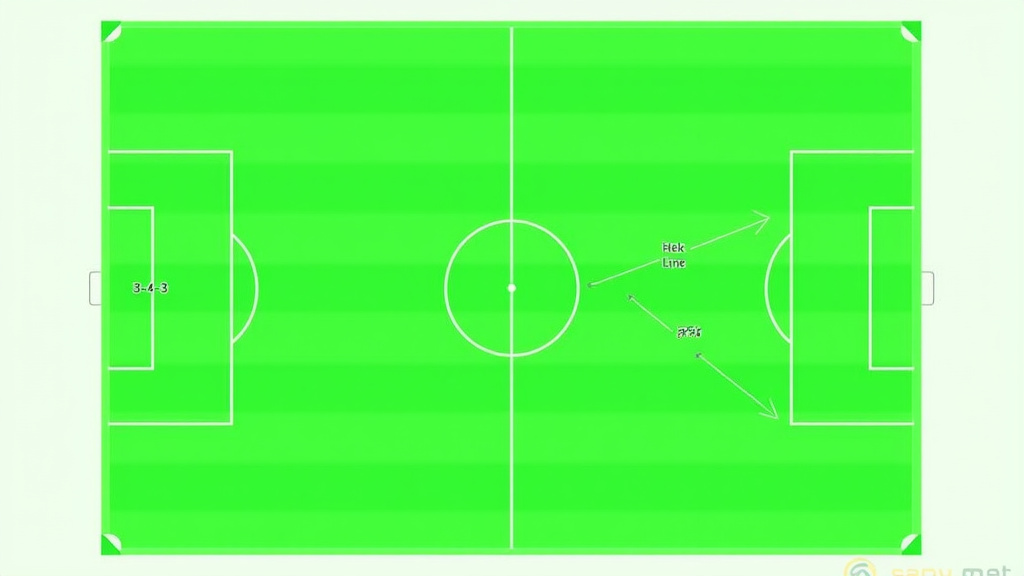
Not all 3-4-3s are created equal. The shape is a canvas for a coach’s ideas.
The 3-4-2-1 (Narrow Front Three): This is Thomas Tuchel’s signature. Two creative No. 10s (like Kai Havertz and Mason Mount) operate in the half-spaces behind a striker. It creates central overloads, suffocates the opponent’s holding midfielder, and allows for intricate combination play. The width comes solely from the wing-backs. It’s a possession-dominant variant.
The Flat 3-4-3: The more traditional look. Two out-and-out wingers stay high and wide, with a center-forward between them. It’s more direct, aiming for early crosses and transitions. It can leave a gap between the midfield and attack if the wingers don’t track back.
The 3-4-3 Diamond: This sacrifices a forward for an extra central midfielder. The midfield becomes a diamond (one defensive mid, two central mids, one attacking mid). It wins the midfield battle but places even more attacking burden on the wing-backs, as the front two are often isolated. It’s a rare but potent counter to teams that play with a midfield three.
Choosing your variation is the first step in a broader strategic formations overview. Each has a different answer to the question of how to control the game.
The 3-4-3’s Biggest Strengths and Weaknesses
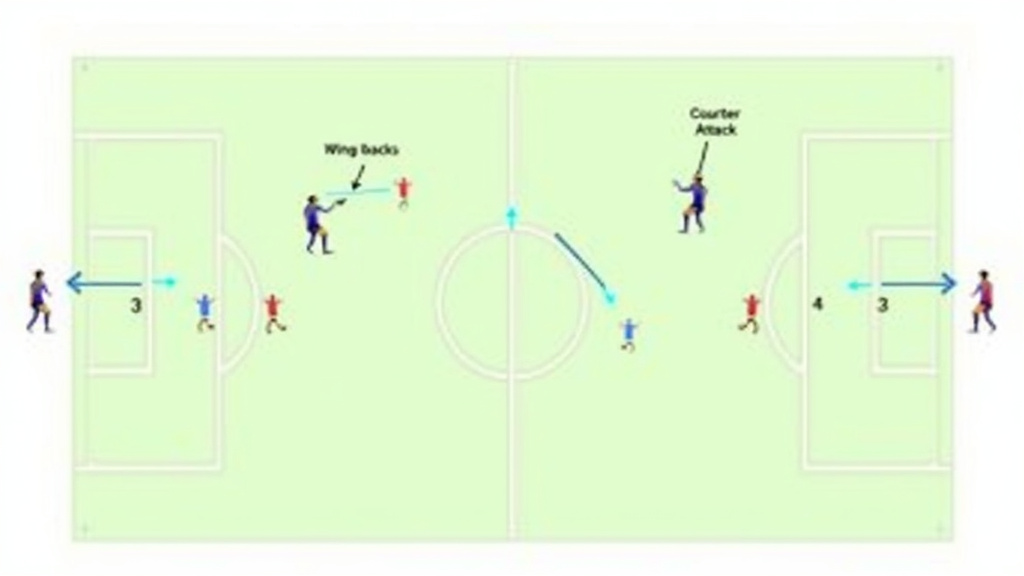
This formation is a double-edged sword. Its greatest asset is also its most glaring vulnerability.
Strengths: Why Coaches Love It
- Natural Width and Overloads: With wing-backs high and wide, you can stretch any defense. This creates 2v1 situations on the flanks against opposing full-backs.
- Solid Defensive Block: It transforms into a 5-4-1 or 5-2-3 without the ball, making it incredibly difficult to break down through the center. This is a shared principle with a defensive 5-3-2 setup.
- Excellent for Pressing and Transitions: The front three can press the opponent’s back line aggressively, knowing they have three center-backs and a double pivot behind them. Winning the ball high leads to quick, devastating attacks.
- Superior Build-Up Play: Three center-backs create better passing angles to beat the first line of pressure than a back four. It baits the press and then plays through it.
I’ve seen youth teams try to copy Conte’s 3-4-3 because it looks cool on TV. They install it in a week. By the second game, the wing-backs are walking after 60 minutes, the center-backs are yelling at each other, and they lose 4-0 to a simple 4-4-2. The formation doesn’t fail; the preparation does.
Weaknesses: Where It Can Be Exposed
- Vulnerable on the Counter-Attack: If the wing-backs are caught high, the outside center-backs are exposed in massive channels against speedy wingers. A quick switch of play can be fatal.
- Can Be Overrun in Central Midfield: The double pivot is often outnumbered by a midfield three (like in a 4-3-3). This requires immense work rate and discipline from the two central midfielders.
- Extreme Physical Demands: The system is a fitness test. If players aren’t in peak condition, the structure collapses in the final 20 minutes.
- Requires Specific Player Profiles: You can’t just plug in any full-back as a wing-back or any center-back in a back three. The system demands players with very particular skill sets.
How to Beat the 3-4-3: A Counter-Strategy Guide
If you’re facing a 3-4-3, your game plan is simple in theory, hard in execution.
- Exploit the Wide Channels: Target the space behind the wing-backs. Use fast wingers and instruct your full-backs to overlap. Force the outside center-backs into 2v1 situations out wide.
- Dominate the Midfield: Play with a central midfield three (a 4-3-3 or 4-1-4-1). Overload the double pivot, cut off passing lanes to the wing-backs, and control the game through the center.
- Press the Center-Backs Aggressively: Don’t let them settle. If you cut off the passing options to the double pivot and wing-backs, the center-backs are forced into long, hopeful balls. A high, organized press can trap them.
- Be Disciplined Against the Transition: When you lose the ball, your wide players must immediately track the marauding wing-backs. A lack of discipline here is how the 3-4-3 punishes you.
This is the chess match within the game. Beating a 3-4-3 often means adopting a different popular 11v11 formation specifically designed to target its gaps.
Training Drills to Implement the 3-4-3
Theory is useless without practice. These drills build the muscle memory for the system.
Drill 1: Wing-Back Endurance & Service
- Setup: Use a full-width channel from the byline to the halfway line.
- Execution: The wing-back starts from a deep defensive position, receives a pass from a center-back, and must drive forward with the ball to the byline and deliver a cross. Immediately upon crossing, they must sprint back to touch the halfway line before defending a 1v1 against a winger driving the other way.
- Why it works: It mimics the exact game scenario—attacking overlap followed by urgent defensive recovery.
Drill 2: Building Through the Thirds
- Setup: Play 7v7+2 in a 60×40 area divided into thirds.
- Execution: The team in possession (set up in a 3-2-2 shape) must progress the ball through each third using a minimum number of passes, focusing on switches from center-back to wing-back and vertical passes into the double pivot. The defending team presses in a 3-4-3 shape.
- Why it works: It ingrains the pattern of play: back three to double pivot, pivot to wing-back or forward.
Drill 3: Defensive Transition Shadow Play
- Setup: Full team on a marked pitch.
- Execution: The coach plays the ball into the attacking front three. They attempt to score. Upon the coach’s whistle (signaling loss of possession), the entire team must instantly recover shape: front three curve their press, wing-backs sprint to form a back five, double pivot slides to protect the center.
- Why it works: The 3-4-3 lives and dies by transition speed. This makes the reaction automatic.
Before you start: Implementing this formation at any level requires honest assessment. If your wing-backs can’t complete the endurance drill, you will concede late goals. If your center-backs are poor passers, you will lose possession in dangerous areas. Drill the fundamentals before the fancy patterns.
Famous Teams and Coaches Who Mastered the 3-4-3
The formation’s credibility comes from its winners. Antonio Conte’s Chelsea (2016-17) is the textbook example. Victor Moses, a converted winger, became a revelation at right wing-back. The system maximized Eden Hazard’s freedom and N’Golo Kanté’s energy in the double pivot.
Thomas Tuchel used a 3-4-2-1 to win the 2021 Champions League with Chelsea, beating Manchester City in the final. His use of two false nines/attacking midfielders completely nullified City’s single pivot.
Beyond England, managers like Gian Piero Gasperini at Atalanta have used an ultra-aggressive 3-4-3 to turn a provincial club into a Champions League regular, proving the system can work without superstar players. It relies on a coherent principles of play and collective understanding above individual brilliance.
Frequently Asked Questions
Is the 3-4-3 a defensive formation?
No, it’s inherently attacking. While it can defend in a low block of five, its primary purpose is to create attacking overloads and control games through possession and width. The defensive solidity is a bonus, not the aim.
What’s the difference between a 3-4-3 and a 5-2-3?
It’s about the starting position and mentality. A 5-2-3 typically implies the wing-backs are primarily defenders who occasionally join the attack. A 3-4-3 implies the wing-backs are midfielders who are expected to be a primary source of width and attack, starting higher. In practice, they often look identical without the ball.
Can you play a 3-4-3 with slow center-backs?
You can, but you must protect them. This means your wing-backs cannot fly forward simultaneously, and your double pivot must sit very deep. It negates the formation’s attacking strengths and turns it into a reactive, counter-attacking shell. It’s better to choose a different system, perhaps a classic 4-4-2, if your personnel don’t fit.
What is the best formation to counter a 3-4-3?
well-drilled 4-3-3 is generally considered the best counter. The front three can press the three center-backs, the midfield three can overload the double pivot, and the wide forwards can pin the wing-backs defensively, nullifying their attacking threat.
Is the 3-4-3 suitable for youth soccer?
It can be an excellent teaching tool for understanding spacing, width, and positional play. However, the physical demands and need for tactical discipline are high. It’s often more effective to teach the principles within simpler 7v7 indoor soccer formations first.
Before You Go
The 3-4-3 formation is more than a tactical fad. It’s a coherent, aggressive response to the modern game’s demands. Its success hinges on the wing-backs’ lungs, the double pivot’s brains, and the center-backs’ composure. It’s not a formation you can just scribble on a team sheet; it requires a preseason of specific conditioning and drilling.
If your team has the athletes and the IQ, it’s a weapon that can dominate possession and shred defenses. If not, its flaws are brutally exposed. Understand the roles, respect the physical demands, and drill the transitions until they’re instinct. That’s the difference between a team that plays a 3-4-3 and a team that is a 3-4-3. For a coach looking to implement it, the journey begins with a deep dive into a modern 3-4-3 tactics guide and a honest look at your squad’s capabilities.

I come from the “soccer heart” of Germany, the Ruhrpott. I have played, trained and followed soccer all my life and am a big fan of FC Schalke 04. I also enjoy following international soccer extensively.