Soccer Cleat Sizing vs. Regular Shoes: The Real Fit Guide
Soccer cleat sizing compared to regular shoes is not a direct translation. Your cleats must fit like a second skin, with only 0-5mm of space at the toe, which often means going a half or full size down from your casual shoe size. The exact conversion depends entirely on the brand, the cleat’s material, and your specific foot shape.
People get this wrong because they walk into a shop and grab the same size they wear in trainers. A running shoe needs room for your foot to swell and move forward. A soccer cleat needs to lock your foot down to transfer force directly to the ground and the ball. That quarter-inch of “comfortable” toe room you’re used to? It becomes a blister factory and kills your ball feel on the third sprint.
This guide cuts through the brand chaos. We’ll show you how to measure your foot the way boot fitters do, decode the major brands’ quirks, and explain why a painfully snug fit in the store is usually the right one for the pitch.
Key Takeaways
- Ignore your regular shoe size. Target a cleat interior length just 0-5mm longer than your foot. This often requires sizing down.
- Brands are not the same. Nike typically runs small and narrow, Adidas runs true-to-length but wider, and Puma is tight through the midfoot.
- Measure in centimeters. Your Japanese (JP/CM) foot length is the only reliable cross-brand reference. Find it by tracing your foot.
- Fit for the tightest point. The cleat must be snug across the ball of your foot and lock your heel. Toe space is the last check.
- Material dictates break-in. Full-grain leather will stretch 3-5mm widthwise. Synthetic uppers won’t. Buy for the final fit, not the try-on feel.
The Golden Rule: Cleat Fit vs. Shoe Fit
Forget everything you know about buying sneakers. The performance requirements are opposites. A running shoe cushions impact and allows natural foot expansion. A soccer cleat is an extension of your foot, a rigid lever for striking and a sensitive surface for controlling a ball.
A proper soccer cleat fit leaves 0 to 5 millimeters of clearance between your longest toe and the end of the boot. This “second skin” feel eliminates dead space that causes foot slip, blisters, and a lag between your intention and the ball’s movement. Heel lockdown is non-negotiable.
The biomechanics are simple. Every time you plant your foot to change direction or strike a ball, force travels from your body through your foot and into the cleat’s soleplate. If your foot can move inside the boot, that force is dissipated as friction and shear. You lose power, and your foot slides forward, jamming your toes. That’s why a “comfortable” fit is a performance lie.
TL;DR: Your cleat should feel almost too tight in the shop. If it feels like a comfortable sneaker, it’s already too big for the pitch.
Why Your Regular Shoe Size Lies to You
Your everyday shoe size is a suggestion, not a standard. Dress shoes, trainers, and hiking boots all have different “lasts”, the foot-shaped mold around which they’re built. They incorporate varying amounts of “functional room.” A cleat last is designed for minimal room and maximal wrap.
Here’s the tangible difference. Put on your best-fitting running shoe. Press your thumb down on the toe box above your big toe. You likely have 10-15mm of vertical space. Now do the same in a correctly fitted cleat. Your thumb should just barely fit, compressing the material directly onto your toenail. That’s the sensory reality.
| Fit Characteristic | Regular Running Shoe | Performance Soccer Cleat |
|---|---|---|
| Toe Clearance | 10-15 mm (for swelling & stride) | 0-5 mm (eliminate slip) |
| Heel Lock | Some movement acceptable | Zero lift; glued-down feel |
| Width Through Midfoot | Roomy, accommodating | Snug, supportive wrap |
| Primary Goal | Cushioning & comfort | Power transfer & tactile feel |
Common mistake: Buying cleats that feel “fine” in the shop, you’ll know they’re wrong by the third training session. The hot spots on your little toe and heel will bloom into blisters that take a week to heal.
The timeline is predictable. In oversized cleats, your first blister appears within 90 minutes of continuous play. The ball will feel vague and heavy because your foot isn’t directly connected to the boot’s touch surface. It’s like wearing oven mitts to thread a needle.
The Brand-Specific Sizing Jungle

Nike, Adidas, and Puma speak different sizing languages. Assuming a size 9US works across all three is the fastest way to waste money. You must learn each brand’s dialect.
Nike cleats are cut on a narrow, performance-oriented last. Models like the Mercurial Vapor are especially slender. They often run a half-size small in length. Crucially, Nike uses unisex sizing, meaning their listed US size is a men’s size. A woman who wears a US women’s 8 should subtract 1.5 sizes to find her Nike cleat size: a US men’s 6.5.
Adidas boots, like the Predator, traditionally run true to length but offer a wider toe box. Their standard width is more accommodating, which is why players with wider feet often gravitate to the brand. You’re less likely to need to size up for width here.
Puma has a signature tightness through the midfoot and arch. The Puma Future can feel like a vice if you have a high instep. They can also run short. I bought a pair of Puma Kings in my usual JP size once. The length was perfect, but the midfoot compression cut off circulation after twenty minutes. I had to go up a half-size for width, accepting a slightly longer fit.
New Balance is the outlier offering genuine wide-width options (like the Tekela in 2E). If you’ve always felt crammed, they’re your first stop.
How to Measure Your Foot (The Pro Way)
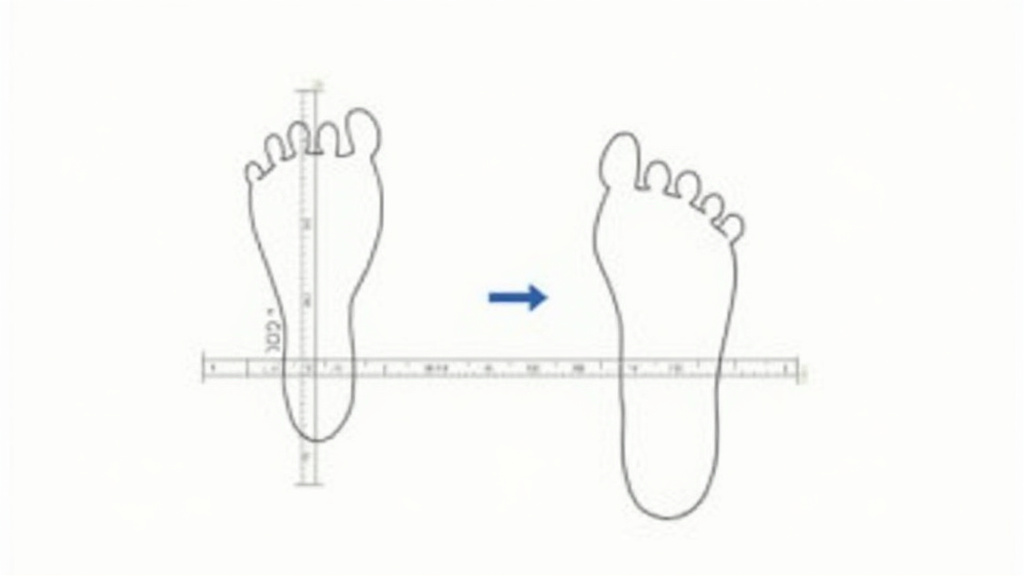
Throw away the ruler you’re holding against your foot while seated. That’s a static, unloaded measurement. Your foot spreads and elongates under your body weight. You need a loaded, end-of-day measurement with the right socks.
What You’ll Need
- A piece of A4 paper or larger.
- A pen or pencil.
- A ruler or measuring tape.
- The actual soccer socks you play in.
The 4-Step Tracing Method
- Prepare. Place the paper on a hard, flat floor. Wear your soccer socks. Do this in the evening when your feet are at their largest.
- Trace. Stand straight, distributing your weight evenly on the foot you’re measuring. Have someone trace the outline of your foot, holding the pen vertically. Do not twist your ankle to see.
- Measure. Find the two furthest points: the very back of your heel and the tip of your longest toe (not always the big toe). Measure that distance in centimeters (CM). This is your Japanese (JP) foot length.
- Repeat. Do this for both feet. Use the measurement from the larger foot.
This JP/CM number is your Rosetta Stone. A 26.0cm foot generally corresponds to a JP 260 size. Now, go to the brand’s official size chart. Find your CM length, and it will tell you the corresponding US, UK, or EU size for that specific model. This bypasses the entire “Does a US9 equal a UK8?” headache.
I traced my foot for years using a wonky phone app that always said 26.5cm. I wore JP 265 cleats and constantly dealt with a slight slip. A proper trace on paper with a metal ruler showed 26.8cm. Moving to a JP 270 was a revelation, the blisters behind my heels vanished. The tool matters.
From Measurement to Cleat Size
Your target cleat interior length is your foot length plus 0-5mm. When you look at a size chart, the “JP” or “CM” column is the internal length of the boot. If your foot is 26.0cm, look for a boot with an internal length of 26.0cm to 26.5cm.
| Your Foot Length (CM) | Target Cleat JP Size | Likely US Men’s Size (Nike Example) |
|---|---|---|
| 25.0 cm | JP 250 – JP 255 | US 7 – US 7.5 |
| 26.0 cm | JP 260 – JP 265 | US 8.5 – US 9 |
| 27.0 cm | JP 270 – JP 275 | US 10 – US 10.5 |
| 28.0 cm | JP 280 – JP 285 | US 11.5 – US 12 |
TL;DR: Your centimeter measurement is king. Find it, then use the brand’s chart, not your gut, to pick the size.
The Critical Role of Material and Cleat Type
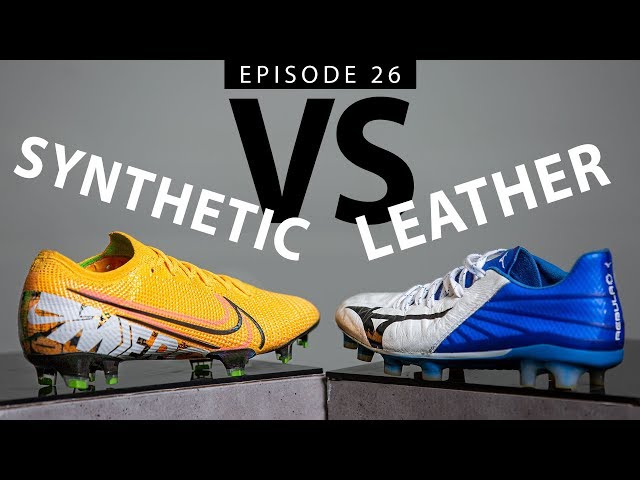
The boot’s construction changes the sizing equation. You don’t buy a leather boot and a synthetic boot the same way.
Leather cleats (Kangaroo or calfskin) will mold to your foot. A full-grain leather upper can stretch 3-5mm widthwise over 4-6 hours of play. They should feel tight everywhere at purchase, with maybe a slight pressure point on the pinky toe. That pressure point should disappear after two good training sessions. If they’re comfortable width-wise in the store, they’ll be sloppy by month’s end.
Synthetic cleats (like Nike’s Flyknit or Adidas’s Primeknit) are woven and have minimal stretch. What you feel in the shop is what you get, forever. The fit must be perfect from the first try-on. The upside is consistency; the downside is no forgiveness for a slightly wide foot.
The soleplate matters too. A Firm Ground (FG) cleat has a stiff, aggressive plate that doesn’t flex much. An Artificial Grass (AG) cleat often has a more forgiving, slightly roomier toe box to accommodate the different foot strike on synthetic turf. Indoor (IN) shoes fit closest to a regular athletic shoe, but the snug principle still applies. Always match the cleat types to your primary surface.
The Final Fitting Checklist (In-Store or at Home)

Before you commit, run through this list. It takes two minutes and saves you a return.
- Wear Game Socks. Never try on cleats with dress socks or no socks.
- Check the Ball Fit. Lace up tightly. The boot should be snug across the widest part of your foot (the ball). You shouldn’t be able to pinch excess material here.
- Test Heel Lockdown. Stand up. Try to lift your heel straight up. Any noticeable lift or slip is a fail. The heel counter should cup your bone.
- Assess Toe Space. Stand with weight even. Can you wiggle your toes? Yes. Can you slide your foot forward so your toes press the end? No. There should be just a whisper of space.
- Walk and Simulate. Don’t just stand. Walk, jog on the spot, and simulate a side-step. Listen for slips and feel for hot spots.
Common mistake: Prioritizing toe space over midfoot snugness, a roomy toe box with a loose midfoot is the most unstable, blister-inducing fit possible. The midfoot lock is non-negotiable.
If you’re ordering online from a place with a good return policy, order two adjacent sizes. Your usual size and a half-size down. Try both with this checklist. One will feel wrong. Keep the other.
Frequently Asked Questions
Should soccer cleats be tight?
Yes, but with precise definition. They should be tight across the ball of your foot and around your heel, with zero movement. They should not be tight in a way that causes sharp pain, pinches nerves, or curls your toes. The sensation is of a firm, uniform hug, not a squeeze.
How much room should be in the toe of a soccer cleat?
Between 0 and 5 millimeters, about the thickness of a pencil’s diameter. You can check this by pressing down on the toe box. Your toenail should just brush the inside of the boot when you stand straight.
Do soccer cleats stretch out?
Leather cleats stretch widthwise, up to 5mm. They do not stretch lengthwise. Synthetic cleats have negligible stretch. This is why understanding material stretch is crucial for your initial comfortable fit. Buy for the final fit, not the first.
What if one foot is bigger than the other?
Always fit the larger foot. You can use an insole or a thicker sock on the smaller foot to take up slight extra volume. It’s far easier to pad a small foot than to stretch a cleat for a big one.
How do I convert women’s shoe size to soccer cleat size?
For Nike (unisex sizing), subtract 1.5 from your US women’s size to get your Nike US men’s cleat size. For other brands, use your JP/CM foot length measurement against the brand’s chart, this neutralizes gender sizing confusion.
Can I wear the same cleats on turf and grass?
No. The stud configurations are designed for specific surfaces. Using Firm Ground (FG) cleats on artificial turf can be dangerous and damages the cleat. Use the right tool: AG cleats for artificial grass, turf shoes for short turf, and FG for natural grass.
Before You Go
Stop thinking about your sneaker size. Start thinking about your foot’s length in centimeters. That number, plus the 0-5mm rule, is your ticket out of the sizing guesswork. Remember the hierarchy: heel lockdown first, midfoot snugness second, toe space a distant third.
Brands will trick you. Nike will feel small, Adidas will feel wide, Puma will feel tight in the arch. Use their official JP size charts as your translator. And never buy a cleat that feels “roomy” with the promise it will fit later. It won’t. It’ll just ruin your feet and your touch.
Your cleats are your most important piece of equipment. A perfect fit feels strange in the living room and absolutely right on the pitch. That’s the feeling you’re hunting for.

I come from the “soccer heart” of Germany, the Ruhrpott. I have played, trained and followed soccer all my life and am a big fan of FC Schalke 04. I also enjoy following international soccer extensively.