Soccer Juggling Progression Steps: A 5-Level Plan for Mastery
Soccer juggling progression steps are a structured, multi-level training plan that builds from a single controlled touch to 100+ consecutive touches using multiple body parts. The core sequence is: Master the drop-and-catch, build a two-touch rhythm, eliminate the bounce for continuous ‘any-touch’ juggling, isolate your weak foot, then incorporate progressive patterns and other body parts like thighs and head.
Most players get stuck because they chase a high personal record without fixing the flawed single touch that causes every breakdown. They practice for 30 minutes, hit 11, then 8, then 14, random numbers from random technique. A real progression gives each touch a job.
This guide maps out a five-level ladder used by academy coaches. You will get the mechanics for backspin, the foot curl, and the dynamic balance for thighs. More importantly, you will get the “why” behind each step so you can diagnose your own mistakes and build a first touch that works under pressure.
Key Takeaways
- Juggling progression is not about your max count; it is about making every single touch identical, predictable, and controllable, which rewires your neuromuscular pathways for in-game first touch.
- The foundational technical non-negotiable is ankle lock with a curled foot striking the ball’s lower hemisphere; this creates the essential backspin that keeps the ball close.
- Dedicated weak-foot isolation is a mandatory level, not an optional extra; skipping it creates a permanent technical deficit that opponents will exploit.
- Dynamic balance, constant tiny hops and adjustments, is the secret to thigh juggling; standing still forces you to over-hit the ball to recover position.
- A structured progression with clear, repeatable drills (like the Coerver 6-level method) yields faster results than unstructured “juggling until you drop the ball” practice.
Why Juggling Progression Matters More Than Your Max Count
Chasing a high score teaches you to survive. Following a progression teaches you to control. The difference shows up in the 85th minute when a driven pass skips off a wet patch, your foot instinctively softens and kills the ball’s momentum because you have practiced receiving a thousand different micro-passes from your own juggling.
Common mistake: Practicing only until you break your personal record, this reinforces the flawed touch that caused the drop. You stop at failure, which is the exact moment your brain needs to correct the error. Practice ends on a mistake.
Juggling is a closed-loop feedback system. Each touch is a pass to yourself. If your touch is inconsistent, sometimes too high, sometimes too far forward, you are drilling inconsistency. A progression forces consistency first at a low difficulty, then layers on complexity. The primary benefit is not coordination. It is cognitive freeing. When ball control becomes autonomic, your conscious brain can focus on scanning the field, spotting a run, or deciding to switch play. That is the real game-changer.
TL;DR: Structure your practice around perfecting a specific type of touch at each level, not around reaching an arbitrary number. The number will follow the technique.
The Foundational Mechanics: Ankle Lock, Backspin, and Body Shape
Before you step onto the progression ladder, you need to own three physical sensations. Get these wrong and every level above will be shaky.
First, ankle lock. Your striking ankle must be firm, not floppy. Point your toe slightly upward and curl your foot so the laces form a flat, predictable surface. A loose ankle absorbs the ball’s energy and kills the pop, sending it straight down. A locked ankle acts like a trampoline, redirecting energy upward and backward.
Second, backspin. This is the mechanic that keeps the ball close. You create it by striking the bottom third of the ball with your curled, locked foot. The foot motion is a short, upward scoop, not a forward kick. A good touch makes the ball rotate backward toward you as it rises. No backspin means the ball floats away, forcing you to stretch for the next touch and breaking your rhythm.
Third, body shape. Knees are always slightly bent. You are on the balls of your feet, never flat-footed. Your torso leans slightly over the ball. This posture is agile, ready to make the tiny weight shifts, dynamic balance, required to track a slightly imperfect touch. Stand upright and the ball will play you.
The foot contacts the ball’s lower hemisphere with a locked ankle and curled laces. This impact geometry converts the downward force of the falling ball into upward and backward momentum, producing the controlled pop and essential backspin that defines a repeatable juggling touch.
These are not abstract tips. You can test them now. Drop the ball, try one touch with a floppy ankle. Watch it die. Then try with a stiff, curled foot. Feel the difference. That feeling is your new baseline.
The 5-Level Juggling Progression
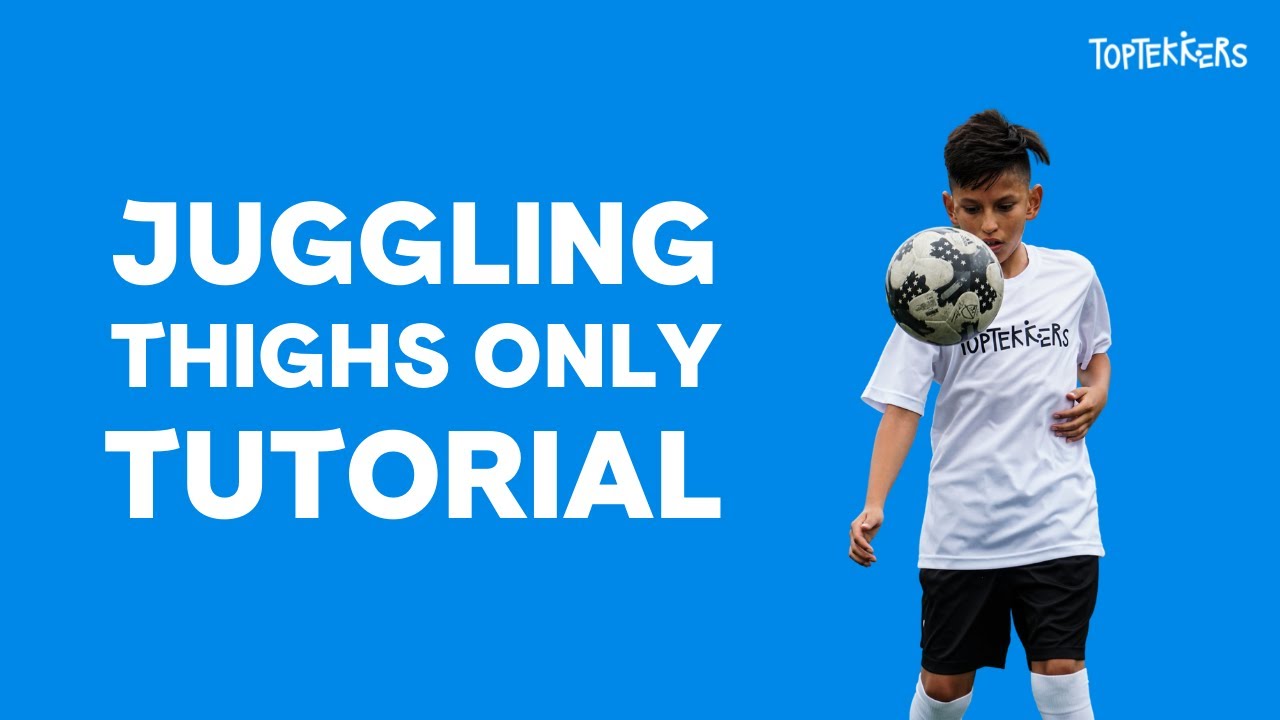
This framework adapts methods from Coerver Coaching and elite academy drills into a single climbable ladder. You do not move up until you can reliably execute the core task of your current level. “Reliably” means hitting the target touch count 8 out of 10 attempts.
Level 1: Drop, Bounce, and Catch
Goal: 10 perfect single touches in a row.
Forget consecutive juggles. Hold the ball at chest height, drop it, let it bounce once, then kick it back to your hands. The entire focus is on that one foot-to-ball connection. It must be waist-high, have backspin, and land softly in your hands. If it rockets over your shoulder or dribbles weakly to the ground, you failed. Reset.
This step shrinks the problem. The bounce gives you time to position your body and foot. It builds the muscle memory for the strike without the pressure of a falling ball. Do not rush it. A solid first touch control starts with this isolated repetition.
Level 2: Two-Touch Rhythm with a Bounce
Goal: 10 cycles of “drop, juggle, bounce, juggle, catch.”
Now you are linking two touches with a bounce as a metronome in between. The pattern is: drop (from hands), juggle with right foot, let it bounce, juggle with left foot, catch. The bounce remains your reset button. The challenge is making the second touch as controlled as the first, despite the ball coming off an unpredictable bounce.
This teaches rhythm and weight transfer. Your body must move slightly between touches. It also introduces the first, gentle pressure of a “next touch.” This is a foundational ball control exercise you can do anywhere.
Level 3: Continuous “Any Touch” Juggling
Goal: 25 consecutive touches using feet and thighs.
Eliminate the bounce. Start from your hands, drop the ball, and keep it aloft using any legal body part (feet, thighs). The objective is continuous motion. Do not worry about patterns yet. If the ball strays, use your thigh to soften it and bring it back to your feet.
This level is where dynamic balance becomes critical. You cannot stand like a statue. You will make micro-mistakes. The ball will drift a little left. Your job is to shuffle-step to get your body under it, using small, quick hops. This constant adjustment is the core of close ball control. It is also brutally honest, if your touches are wild, you will be running all over the place.
| Common Problem at Level 3 | Likely Cause | Immediate Fix |
|---|---|---|
| Ball constantly sails forward | Foot is kicking, not scooping; ankle is loose. | Focus on striking down and under the ball with a locked ankle. Practice 10 Level 1 reps to reset. |
| Ball spins sideways (sidespin) | Foot is making contact with the inside or outside, not the laces. | Look at the ball at the moment of contact. Ensure your foot is directly behind it. |
| Can’t recover with thighs | Standing too upright and rigid. | Bend knees, get on toes, and use a gentle thigh surface to “catch and drop” the ball, not slap it. |
Level 4: Weak Foot Isolation
Goal: 15 consecutive touches using only your weaker foot.
This is the separator. Start the ball from the ground with your strong foot, pop it up, and then complete all subsequent touches with your weak foot. If it drops, restart. This is frustrating and humbling. Your brain knows what to do, but your foot feels clumsy.
That clumsiness is the deficit you are fixing. The benefits of juggling for overall game intelligence are maximized here. By forcing your non-dominant side to work precisely, you build symmetrical neural pathways. In a game, this means you can receive a pass on your left foot without a catastrophic first touch that kills an attack. It is non-negotiable.
Level 5: Patterned Juggling and Body Mastery
Goal: 50+ touches following specific patterns and using head, chest, and shoulders.
Now you program complexity. Do not just juggle, assign a sequence.
1. Progressive Patterns: Right foot, left foot, right foot, left foot. Then right-right-left-left. Then right-left-left-right. The pattern is the boss.
2. Body Part Sequences: Foot, thigh, foot, other thigh, head, chest, foot. The Coerver method calls this “programmed juggling.”
This level is about cognitive load management. You are no longer just reacting to the ball; you are executing a pre-determined plan while maintaining control. It directly translates to dribbling decision-making under pressure, the ability to know your next two moves before you receive the ball.
I spent six months stuck at a 30-touch ceiling because I refused to dedicate a session to my left foot. My right foot could do 50, but my left would fail at 3. The moment I committed to a brutal two-week block of left-foot-only drills, my overall control evened out. My weak foot became a tool, not a liability, and my two-footed dribbling in small-sided games improved within a month.
TL;DR: Progress through these levels sequentially, mastering the core skill of each before moving on. The target numbers are milestones, not the objective. The objective is flawless technique at every stage.
Essential Drills for Breakthroughs at Each Level
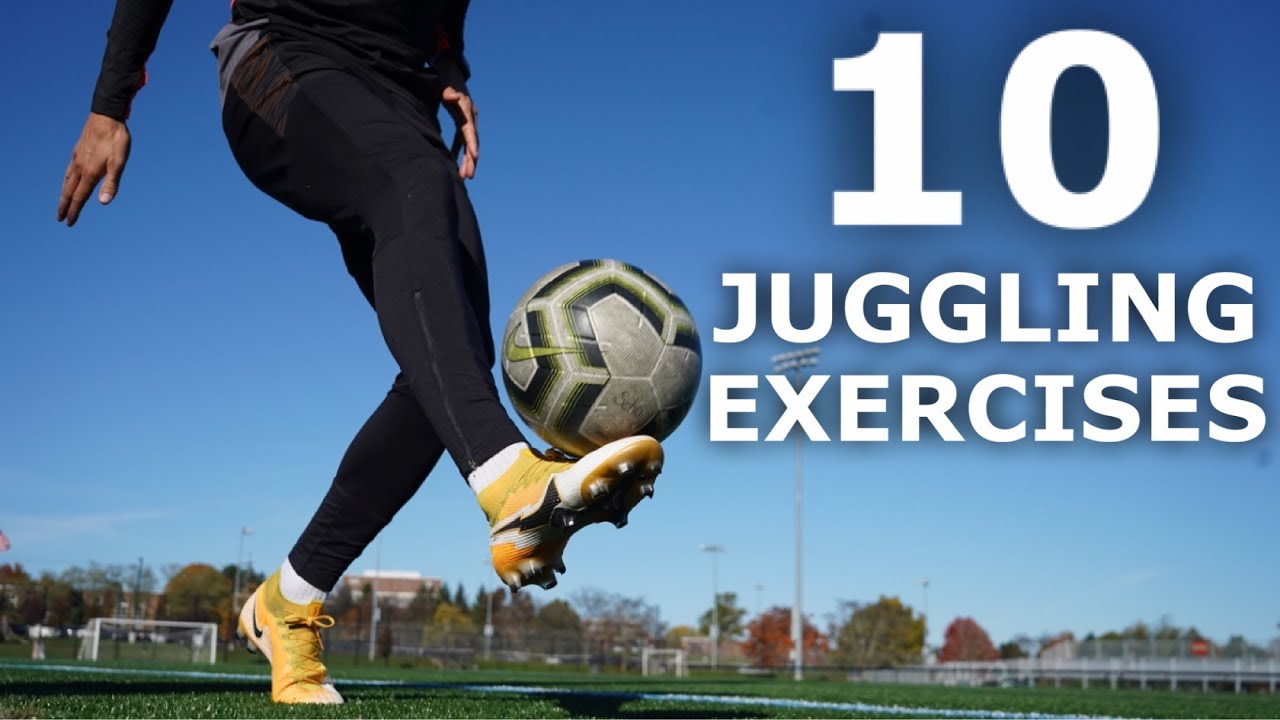
Progression gives you the map. These drills give you the vehicle. Integrate one or two into every practice session focused on your current level.
For Levels 1 & 2: The Seated and Wall-Assist Drills
If you struggle with the basic foot shape, sit on a chair or the ground. With your feet flat, drop the ball from your hands onto your curled laces. Just let it bounce off. This removes balance from the equation and lets you focus purely on the contact point. Do this 50 times. The sensation of the ball popping straight up from a stable platform is the feeling you want standing up.
Use a wall. Drop the ball, kick it against the wall on the bounce, let it rebound back to you, and catch it. The wall provides a consistent return pass, training your foot to prepare for a ball coming from a predictable trajectory, the first step toward handling unpredictable ones.
For Level 3: The “Four-Corner” Box Drill
Place four cones or markers in a small square around you (about 2 yards per side). Juggle continuously, but every 5th touch must deliberately direct the ball to hover over a different cone. You are not running to the cones; you are using the height and backspin of your touch to move the ball within the square.
This drill kills the habit of juggling in a static spot. It forces you to control not just the height, but the direction of your touch, which is the essence of precision dribbling. If the ball goes outside the square, start over.
For Level 4: The “Weak Foot from the Ground” Challenge
Do not start from your hands. Start with the ball dead on the ground. Use your weak foot to roll it back onto your laces and pop it up to begin juggling. This is harder. It simulates having to control a ground ball in play. Give yourself 10 attempts to get 5 consecutive weak-foot juggles starting from the ground. It builds strength and fine motor control in the weaker limb.
For Level 5: The “1-2-3-All” Pattern Drill
This is a structured bridge to full body mastery. The sequence is: 1 touch right foot, 1 touch left foot, 1 touch right thigh, 1 touch left thigh, 1 touch with head, then restart. Master that. Then expand: 2 touches per body part before moving on. This systematic approach, much like a progressive juggling practice, builds confidence with each new surface in a controlled, repeatable way.
Integrating Juggling into Real Game Contexts
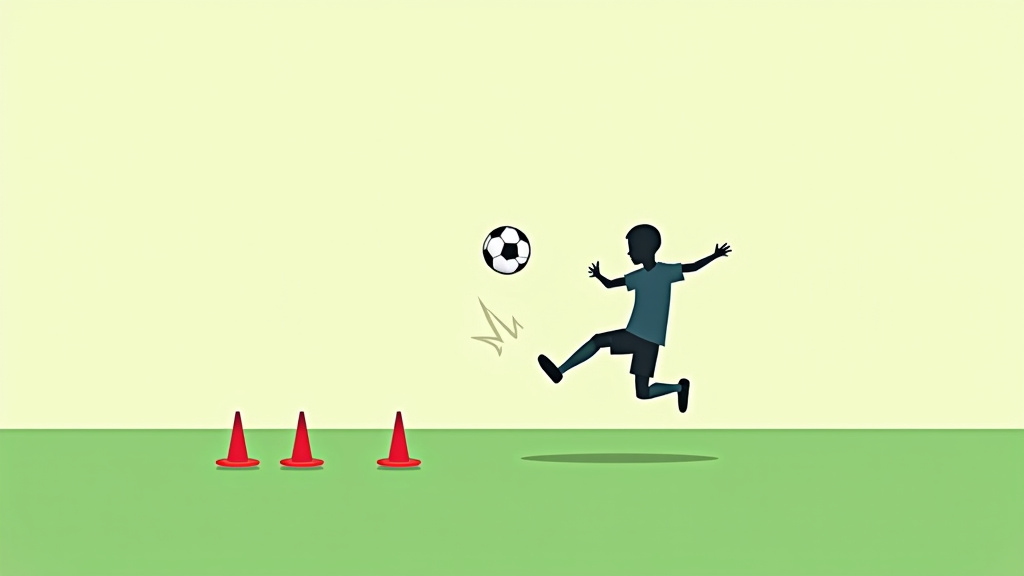
Juggling in a circle is a skill. Using that skill in a match is an art. Here is how to make the transition.
Juggle While Moving. This is the single most important integration. Walk forward in a straight line while juggling. Then jog. Then weave through cones. The moment you add locomotion, you replicate the game’s dynamic. Your touch must be softer to account for your forward momentum, and your dynamic balance adjustments become larger and more urgent.
Juggle, Then Act. Set up a target, a small goal, a wall, a cone. Juggle 5 times, then on the 6th touch, volley or half-volley the ball at the target. This links control to an end product (a shot or a pass). It trains you to manipulate the ball into a specific position for a specific next action, which is the entire point of ball mastery.
Pressure and Turn. Have a partner stand passively behind you. Juggle 3 times, then on a vocal command (“Turn!”), use your next touch to pop the ball over your head, spin, and bring it under control facing the other direction. This introduces the mental element of an external trigger and the technical skill of using a juggling touch to change your orientation, a classic move for escaping pressure.
Before you start: The most common injury from juggling is not leg strain, it is tripping over the ball while chasing a bad touch and rolling an ankle. Always practice in clear space. If the ball gets away, let it go and retrieve it. Do not lunge.
These contexts bridge the gap between sterile repetition and chaotic match play. They teach your brain that ball control is not an isolated trick, but a functional tool for solving problems on the pitch.
Frequently Asked Questions
What is the fastest way to improve my juggling?
The fastest way is to stop counting. Set a timer for 10 minutes and focus solely on the quality of a single touch type from your current progression level. For example, spend the entire session on weak-foot touches from the ground, ignoring all other touches. This deep, focused repetition builds neural pathways faster than scattered, goal-oriented practice.
I can juggle well with my feet but my thighs and head are terrible. Why?
Thigh and head juggling require different mechanics. For thighs, the surface is flat and you must “catch and drop” the ball, absorbing its momentum by slightly lowering your thigh upon contact. For headers, you must strike the ball with your forehead, not the top of your head, and use your neck muscles to direct it upwards, not forwards. Practice these surfaces in isolation, starting with drop-thigh-catch and drop-head-catch drills.
How does juggling progression help my first touch in a game?
Juggling progression trains your brain to predict the ball’s trajectory and your foot to execute a precise, softening touch from any angle or height. When a pass comes to you in a game, your brain has a vast library of similar touches from your juggling practice. This allows the control action to happen automatically, freeing your conscious mind to look up and decide your next pass or dribble. It is the foundation of ball control techniques.
My ball always spins sideways. How do I fix this?
Side spin means your foot is striking the ball on its side, not its back. Your body is likely not square to the ball’s path. Focus on your set-up: drop the ball from directly in front of your sternum. Watch it all the way down and ensure your kicking foot moves straight forward to meet it, not across your body. A mirror or video recording can reveal this alignment issue instantly.
Is there a recommended age to start this progression?
The progression is skill-based, not age-based. A young player with good fundamental juggling drills can advance quickly. The key is to match the complexity to the player’s coordination level. Levels 1 and 2 are excellent for all beginners. The advanced patterns of Level 5 require more developed cognitive planning and are typically suitable for committed players aged 10 and up.
How often should I practice juggling?
Frequency beats duration. Practicing for 10-15 minutes daily is far more effective than a single one-hour weekly session. The daily repetition reinforces muscle memory and accelerates progress through the levels. Keep a ball in a space where you will see it and be tempted to get a few touches in throughout the day.
The Bottom Line
Soccer juggling progression is a curriculum for your feet. It swaps the vanity of a high score for the utility of a perfect touch. Follow the five levels, drop-catch, two-touch rhythm, continuous juggling, weak-foot isolation, and patterned body mastery. Lock your ankle, create backspin, and stay on your toes. The numbers on your progression chart are less important than the feeling of the ball obeying your foot. That obedience, earned through structured practice, is what turns a training ground skill into a game-changing weapon. Start at Level 1, no matter your current max. Rebuild your touch with intention. The control you gain will not just raise your juggling count; it will raise your entire game.

I come from the “soccer heart” of Germany, the Ruhrpott. I have played, trained and followed soccer all my life and am a big fan of FC Schalke 04. I also enjoy following international soccer extensively.