How to Juggle a Soccer Ball for Beginners (5 Proven Steps)
To juggle a soccer ball for beginners, start by learning the soft touch, not power. Hold the ball, drop it onto your thigh, let it bounce, and catch it. Progress to striking it upward with your thigh, then your instep, while keeping your ankle locked and your touches low. Practice in short, daily sessions, always focusing on control over count.
Most beginners kick the ball too hard. They launch it over their head and spend more time chasing than learning. The frustration builds, and they quit before the skill clicks.
This guide breaks it down into a logical progression used by youth academies. You will learn the physical mechanics of a soft touch, a five-step drill sequence, and how to troubleshoot the three most common mistakes. This is not about flashy tricks. It is about building the foundational ball control that makes every other soccer skill easier.
Key Takeaways
- Juggling develops a soft touch, which is the foundation for controlling passes, dribbling in tight spaces, and striking the ball accurately.
- Always start seated or using a bounce to shorten the distance and slow down the action, making early success possible.
- Lock your ankle and strike the ball with the laces or flat part of your foot; using your toes causes unpredictable spins.
- Practice in short, daily sessions of 5-15 minutes. Consistency beats one long, frustrating practice per week.
- Master the thigh juggle before moving to your feet. Your thigh provides a larger, flatter surface that forgives imperfect technique.
Why Juggling is More Than a Party Trick
Juggling is not just for show. It is the most direct way to train your soft touch. A soft touch is the ability to absorb the ball’s energy and redirect it with minimal force. This is the opposite of kicking. In a match, you use a soft touch to settle a driven pass, to dribble through traffic, and to set yourself up for a shot. Without it, the ball is a bouncing, unpredictable adversary.
Juggling teaches proprioception – your brain’s awareness of your body parts in space without looking. The repetitive, low-impact strikes train your feet and thighs to make precise, calibrated adjustments to the ball’s trajectory, building the muscle memory for controlled first touches in game situations.
The best players make hard things look effortless because their touch is educated. Juggling is that education. It is a private conversation between you and the ball. Ignore the count at first. Listen to the sound of a clean strike. A solid thud from your laces is good. A slappy smack from your toes is a warning.
TL;DR: Juggling trains your soft touch, the non-negotiable foundation for controlling the ball during a pass, a dribble, or a shot setup.
The Gear and Mindset You Need to Start
You need a ball and a flat spot. That is it. A proper size 5 ball (or the correct size for your age) is best because it reacts predictably. Using a partially deflated ball or a different size makes learning harder, not easier. The weight and bounce are wrong.
For very young players, the standard advice is to use a balloon or foam ball. I disagree for anyone over six. You build skills for a soccer ball by using a soccer ball. Start with the real tool, but use the progressions in the next section to make it manageable.
Your mindset matters more than your shoes. You will not hit 100 juggles tomorrow. You might not hit 10. Set a goal for your first session: “Today, I will cleanly strike the ball upward from my thigh three times in a row.” That is a win. Record it. Tomorrow, aim for four.
This is a physical skill like learning to whistle or ride a bike. Your brain and body need time to wire together. The daily, focused effort is what builds the neural pathways. A fifteen-minute session every day for two weeks will produce more progress than a two-hour marathon on Saturday.
The 5-Step Juggling Progression (From Sitting to Standing)
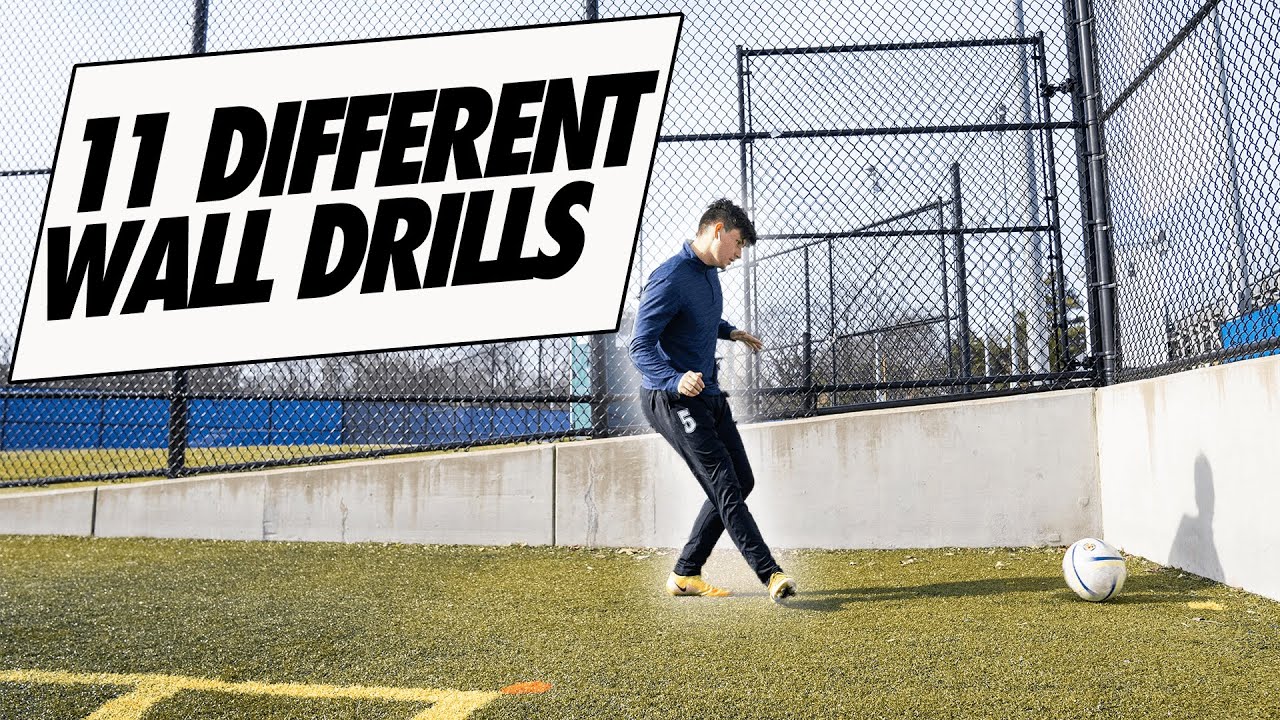
Follow this sequence. Do not skip steps. Each stage isolates a specific component of the skill before adding complexity.
Step 1: Seated Thigh Juggling
Sit on the ground with your legs bent and feet flat. Hold the ball with both hands at chest height. Drop the ball straight down onto the middle of your thigh. Let it bounce on the ground once, then catch it. Do this ten times.
Now, change one thing. As the ball drops onto your thigh, gently lift your leg to meet it, striking it back up into your hands. Do not kick. Think of your thigh as a platform that pops the ball upward. Your goal is a controlled pop to chest height. Do this twenty times, alternating thighs.
Why this works: The thigh is a large, forgiving surface. Sitting removes balance from the equation and lets you focus solely on the angle and timing of the strike. This builds the soft touch foundation.
Step 2: Seated Instep (Laces) Juggling
Stay seated. Hold the ball lower, around waist height. Drop the ball and, as it falls, kick it gently upward with the laces of your shoe. Lock your ankle so your foot is firm and your toes are pointed slightly down. Catch the ball. Repeat.
Common mistake: Letting your ankle go limp — the ball will skid off at a wild angle and you’ll chase it across the yard. A locked ankle provides a consistent, flat surface.
The motion comes from your knee, not your hip. It is a short, upward flick. If the ball spins sideways, you are hitting it with your toes or the inside/outside of your foot. Adjust to hit it with the flat bone across the top of your foot. Do three sets of ten per foot.
Step 3: Standing with a Bounce (The “One-Bounce Juggle”)
Now stand up. Adopt the ready position: knees slightly bent, weight on the balls of your feet, hips hinged forward a little. Drop the ball from waist height. Let it bounce once. As it rises from the bounce, tap it back up with your laces. Catch it.
This step integrates balance and timing. The bounce gives you a predictable, slower-moving target. Your only job is to meet it with a locked ankle. Practice until you can do ten one-bounce juggles in a row without the ball veering off.
Step 4: Connecting Two Touches
From the ready position, drop the ball. Let it bounce, tap it up with your right foot, let it drop and bounce again, then tap it up with your left foot. Catch it. The pattern is: bounce, right foot, bounce, left foot, catch.
This teaches you to recover and reposition after your first touch. The bounce is your reset button. It feels slow, but that is the point. Control before speed.
Step 5: Eliminating the Bounce
You are ready for continuous juggling. Drop the ball and try to tap it twice in a row before it hits the ground. Then try three times. Keep your touches low—between your waist and chest.
Do not chase a high number. Set a mini-goal: “I will get to three consecutive touches five times this session.” When you achieve that, aim for five touches. Count every attempt out loud. The number holds you accountable.
| Progression Stage | Primary Focus | Success Signal | Risk of Skipping |
|---|---|---|---|
| Seated Thigh | Soft touch feel | Consistent pop to hands | Develops a hard, slapping touch |
| Seated Instep | Ankle lock & surface | Ball rises with minimal spin | Ball spins wildly, impossible to control |
| Standing with Bounce | Timing & balance | 10 in a row without chasing | Poor rhythm, constant over-hitting |
| Two-Touch with Bounce | Foot transition | Clean alternating touches | Becomes one-footed, lacks balance |
| Continuous Juggling | Consistency & control | Hitting a target number (3,5,10) | Focus shifts to frantic chasing, not technique |
TL;DR: Start seated to learn the soft touch, add a bounce to learn timing, and only attempt continuous juggling after you can reliably connect two touches with a bounce in between.
Common Juggling Mistakes and How to Fix Them
You will make these errors. Everyone does. Recognizing and fixing them is how you improve.
The Ball Spins Sideways.
You are striking with your toes or the side of your foot. Your foot is a golf club, not a baseball bat. You want a clean, square contact. Focus on presenting the flat part of your laces to the ball. Look at your foot as you make contact for the first few tries. A small piece of tape on the sweet spot of your laces can give you a visual target.
The Ball Always Veers to One Side.
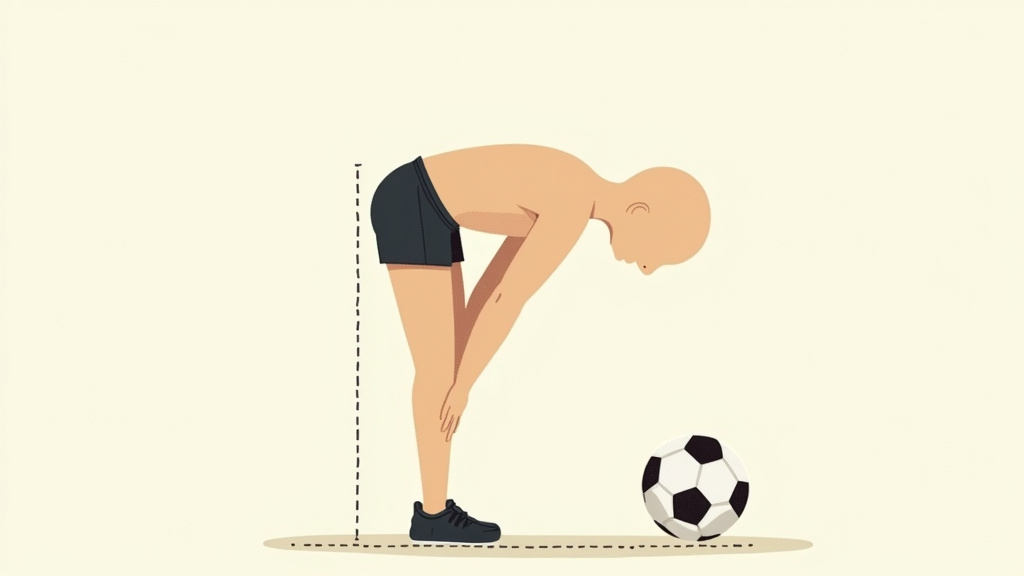
This usually means you are leaning back or standing too upright. Your center of mass is behind the ball, so your foot naturally pushes it away from you. Get into the ready position: bend your knees, hinge forward at the hips, and get your shoulders over the ball. This aligns your strike vertically.
You Keep Kicking the Ball Too High.
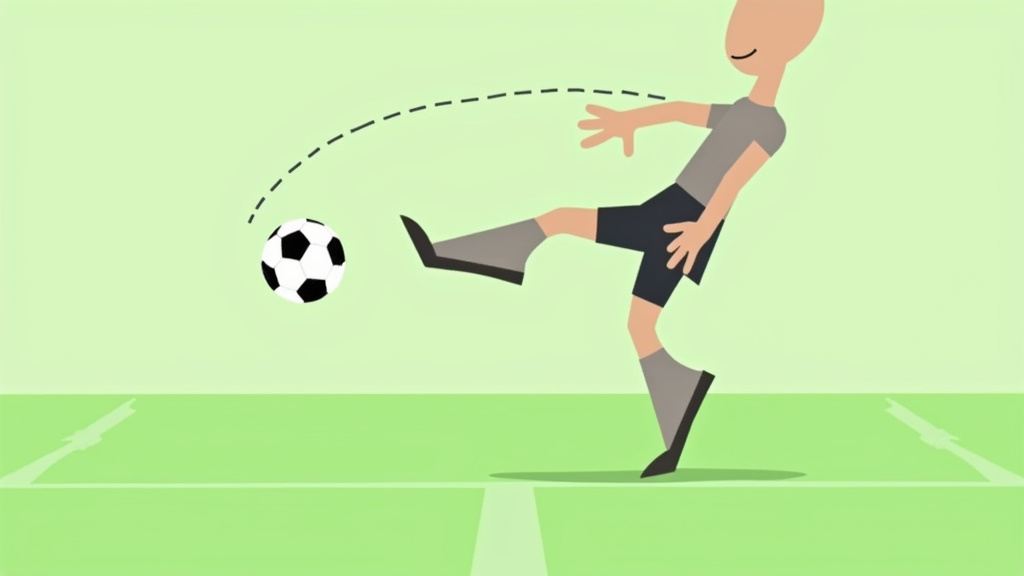
You are using your leg like a swing, generating power from your hip. The power for a juggle comes from a small, sharp contraction of your quadricep and a locked ankle. Think “pop” not “punt”. Practice seated instep juggles again, focusing on a pop that only reaches your hands.
I spent two weeks as a kid trying to power the ball to my forehead. My record was three. My coach made me sit down and juggle from my hands to my thigh and back for a full practice. The next day, standing up, I hit fifteen. The power was always the problem.
Drills to Move Beyond the Basics
Once you can consistently hit 10-15 juggles, these drills add challenge and translate the skill to game-like movements.
- The Kangaroo-Hop Pick-Up: This is how you start juggling from the ground without hands. Place the ball between your feet. Jump up slightly, pinching the ball between your ankles, and as you land, flick it forward and up with your instep. It turns a stationary ball into a juggling opportunity. Misses a soccer rebounder? This is your zero-equipment alternative.
- Juggling While Walking: Take a soft touch forward with your right foot, take a step, then a touch with your left. Keep the ball close. This integrates juggling with movement, a core component of advanced ball control tricks like the rainbow flick.
- Thigh-Foot-Thigh-Foot Pattern: Create a rhythm: right thigh, right foot, left thigh, left foot. This forces you to control the ball with different surfaces and improves overall coordination, a perfect complement to agility ladder drills for footwork.
- Juggling with a Wall: Use a wall as a training partner. Juggle once, kick the ball softly against the wall, control the rebound with a juggle, and repeat. It introduces unpredictability and sharpens your reaction time, similar to the benefits of passing and shooting practice with a partner.
A structured soccer workout plan that includes strength training will improve your stability for these drills. Likewise, paying attention to soccer player nutrition aids the recovery and focus needed for consistent practice.
Frequently Asked Questions
What is the fastest way to learn to juggle a soccer ball?
The fastest way is to practice the five-step progression in short, daily sessions. There is no shortcut. Consistency—five minutes every day—builds muscle memory faster than one hour on the weekend. Focus entirely on technique, not the count, for the first week.
Is it better to start with a smaller ball?
No. For soccer skill development, always use the correct size ball for your age (Size 3, 4, or 5). Smaller balls are less stable and teach different contact points. The standard ball’s weight and bounce are what you must learn to control.
How many juggles should a beginner aim for?
Aim for milestones: 1, 3, 5, 10, 15, 25. Do not look at 100. Your first goal is three clean, controlled juggles in a row. Celebrate that. Then work on five. The number is just a measure of your improving consistency.
Why does the ball keep hitting my shin?
You are letting the ball drop too low before you strike it. Meet the ball when it is around knee height. Letting it fall to your shin means your foot has to travel too far, too fast, and you lose control. Pop it early.
Can juggling improve my game?
Absolutely. It directly improves your first touch, which affects everything: receiving passes, dribbling under pressure, and setting up shots. A player with a soft touch has more time and makes better decisions. It is a fundamental skill, as essential as understanding soccer cleat types for proper traction.
Before You Go
Juggling is a test of patience. Your first touch will be clumsy. The ball will rocket away. That is the process. The goal is not to become a circus act. The goal is to train your foot and brain to work together, to develop that silent, confident touch that makes the ball an extension of your will.
Start today. Grab your ball, sit down, and follow the five steps. Do not judge the first session. Just complete it. Tomorrow, do it again. In two weeks, you will not recognize your own touch. That control is the real reward, long after the count of your juggles has faded from memory.

I come from the “soccer heart” of Germany, the Ruhrpott. I have played, trained and followed soccer all my life and am a big fan of FC Schalke 04. I also enjoy following international soccer extensively.