Speed Dribbling vs Close Control Soccer
This post contains affiliate links. As an Amazon Associate, we earn from qualifying purchases.
You’re sprinting down the wing with defenders closing in—do you push the ball ahead to exploit your speed or keep it glued to your feet to weave through traffic? This split-second decision determines whether you create a scoring chance or lose possession. Most players train both speed dribbling and close control techniques but fail to master when to deploy each, costing them critical advantages in matches. Understanding the tactical differences between speed dribbling vs close control soccer transforms you from a good player to a game-changer.
The distinction isn’t just about how fast you move with the ball—it’s about reading the game and selecting the right technique for each situation. Speed dribbling covers ground quickly while maintaining possession, while close control prioritizes security in tight spaces. Mastering both techniques and knowing precisely when to switch between them gives you a decisive edge over players who rely on just one approach. This guide reveals exactly how to implement each technique effectively based on real-game scenarios you’ll face every match.
Speed Dribbling Mechanics for Maximum Field Coverage
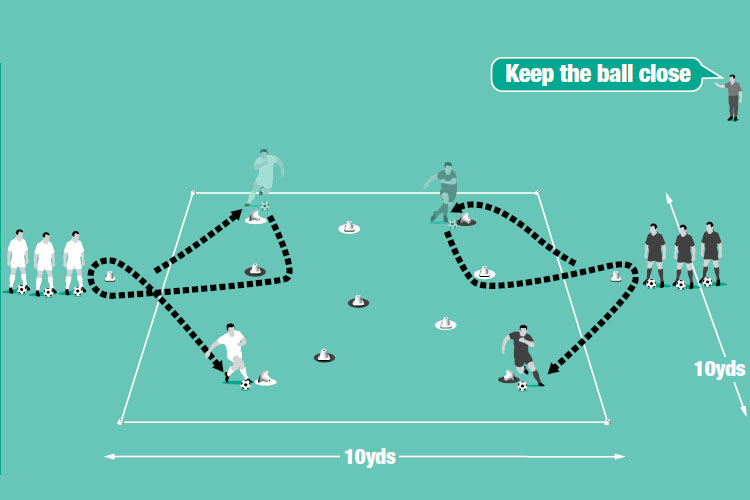
Speed dribbling requires precise body mechanics to maintain control while covering ground rapidly. Unlike regular sprinting, your technique must accommodate ball contact without breaking stride. The key is pushing the ball 1-3 yards ahead with each touch using your laces area, creating forward momentum while keeping it within immediate influence.
Proper Body Positioning for Speed Dribbling
Your posture makes or breaks effective speed dribbling. Lean forward at a 15-20 degree angle with hips low for explosive acceleration, but keep your head up to scan for defenders and passing options. Your eyes should alternate between the ball and field every 2-3 touches—any longer and you’ll miss critical information. Arms pump naturally like sprinting without the ball, providing balance and additional propulsion.
Critical mistake to avoid: Many players run with their heads down during speed dribbling, making them predictable and vulnerable to tackles. Practice peripheral vision drills where you identify coach signals while maintaining top speed with the ball. This builds the habit of scanning while moving at pace.
How to Perfect Your Touch Frequency
The optimal touch pattern varies based on distance covered and defensive pressure. During the first 5 yards, use shorter, quicker touches to build momentum. Between 5-15 yards, extend your stride while keeping the ball 2-3 yards ahead. For the final phase when approaching defenders, make one decisive touch past them before exploding away.
Pro tip: Time your touches between strides rather than disrupting your running rhythm. Your fastest speed dribbling occurs when ball contact happens during the natural swing phase of your running motion, not when you’re fully grounded.
Close Control Mastery in Tight Spaces
Close control keeps the ball within 1-2 feet using rapid, precise touches to maintain possession under pressure. This technique prioritizes ball security over forward movement, making it essential in crowded areas where one heavy touch spells disaster. Unlike speed dribbling, close control requires constant micro-adjustments to navigate tight spaces.
Foot Surfaces for Optimal Ball Security
True close control mastery means using all surfaces of your foot strategically:
– Inside foot for shielding and quick directional changes
– Outside foot to create angles and maintain possession
– Sole for stopping and restarting movement instantly
– Toe for micro-adjustments and deceptive feints
Rotate these surfaces based on defensive pressure. When a defender approaches from your left, use your right foot’s outside surface to push the ball right while shielding with your body. This keeps the ball away from pressure while maintaining control.
Navigating High-Pressure Situations
In high-pressure zones like central midfield, your stride pattern shifts dramatically. Take short, choppy steps (never more than 12 inches) with the ball never crossing your body midline. Maintain 360-degree awareness using peripheral vision—your body should automatically position between the ball and defender.
Drill this now: Set up five cones in a 3-yard square. Dribble continuously for 60 seconds without leaving the square or looking down. This builds the muscle memory needed for real-game situations where defenders swarm like bees.
Game Situations Demanding Speed Dribbling

Knowing when to unleash speed dribbling separates tactical players from reactive ones. The technique shines in specific scenarios where space and timing align perfectly.
Counter-Attacking Scenarios Where Speed Wins
When your team wins possession and space opens up, speed dribbling becomes your counter-attacking weapon. The green light? Look for defenders facing their own goal—that’s your signal to push the ball immediately. Top wingers exploit this by making one-touch passes to themselves into open space, then accelerating at 90%+ of maximum speed with the ball.
Situational checklist before committing:
– Space ahead exceeds 10 yards
– Defender is square or slightly behind
– Supporting teammates occupy central channels
– You’re faster than the nearest defender
When the Touchline Becomes Your Ally
Speed dribbling down the flanks creates natural protection—the sideline becomes your teammate. Use this to your advantage by pushing the ball along the line where only one defender can challenge you directly. The key is maintaining width to force defenders into one-on-one situations where your pace dominates.
Critical Moments Needing Close Control
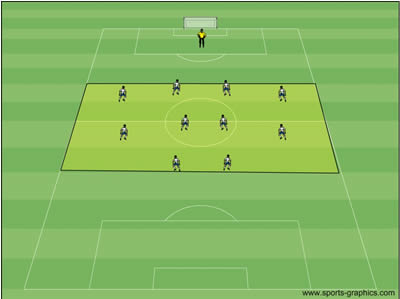
Certain game situations demand close control as your primary technique—ignoring these leads to unnecessary turnovers.
Surviving the Midfield Press
In central areas where defenders swarm, close control buys you time to find the killer pass. The ball becomes your shield—keep it close enough to use your body as protection while scanning for passing lanes. Elite midfielders use close control to draw multiple defenders before releasing the ball to unmarked teammates.
Pressure indicators requiring immediate switch to close control:
– Multiple defenders within 5 yards
– Limited forward passing options
– Need to draw fouls in dangerous areas
– Buying time for late runners
Build-Up Play Requiring Precision
During patient possession phases, close control allows teammates to make supporting runs. You’re not just keeping the ball—you’re orchestrating the next phase of attack. Train this by practicing tight-space dribbling while verbally identifying open passing options to build game-realistic decision-making.
Training Drills That Build Both Skills
Effective training addresses both techniques with position-specific focus. Generic dribbling drills waste valuable practice time.
Speed Dribbling Progression System
Start with foundation work: 5-yard straight-line dribbles at 50% speed focusing on touch weight consistency (3 sets of 10 repetitions daily). Progress to speed integration with resistance parachutes, then apply to game-realistic scenarios like 1v1 races from defensive positions. Top players time their 20-yard dribbles, aiming for under 4 seconds at match intensity.
Close Control Development Protocol
Build technical base with figure-8 patterns around 1-yard spaced cones, aiming for 100 touches without looking down. Advance to movement integration with tight grid dribbling (5×5 yards) requiring 360-degree turns every 3 seconds. Finally, apply pressure with 1v1 battles in 3×3 yard squares to simulate real-game pressure.
Position-Specific Applications You Must Know
Your position dictates the ideal speed dribbling vs close control soccer ratio—train accordingly.
Winger Speed Dribbling Tactics
Elite wingers use speed dribbling 70% of the time, reserving close control for end-line situations or cutting inside. Your training should focus on straight-line speed with the ball and explosive first steps. Practice pushing the ball wide to create separation before cutting inside for shots or crosses.
Midfielder Close Control Essentials
Central players need 60% close control for build-up play, 40% speed dribbling for breaking lines. Train both equally but emphasize close control in tight areas. Master the 360-degree turn to quickly change direction while maintaining possession under pressure.
Common Mistakes That Sabotage Your Dribbling
Even skilled players make preventable errors that undermine their dribbling effectiveness.
Speed Dribbling Errors and Quick Fixes
Heavy first touch syndrome: Pushing the ball too far ahead allows defenders to recover. Fix this by practicing touch weight at 50%, 75%, then 100% speed with cone gates marking optimal touch zones. Gradual progression builds muscle memory for perfect touch weight.
Head-down running: Missing passing options or defensive pressure. Correct this with peripheral vision training—dribble while identifying coach signals every 5 yards. This builds the habit of scanning while moving at pace.
Close Control Mistakes Top Players Make
Over-tight control: Keeping the ball too close limits movement options. Practice optimal 1-2 foot spacing through cone gates requiring specific touch placement. The ball should be close enough to protect but far enough to accelerate instantly.
Panic under pressure: Rushed decisions leading to turnovers. Build confidence with progressive pressure training—start with passive defenders and gradually increase intensity until you’re comfortable maintaining control against full pressure.
Mastering both speed dribbling and close control—and knowing precisely when to deploy each—creates unpredictable attackers who control the game’s flow. Train both techniques with position-specific focus, eliminate common errors through targeted drills, and most importantly, develop the game intelligence to select the right technique for every situation. Your ability to seamlessly switch between speed dribbling and close control will transform your effectiveness on the pitch, making you a constant threat regardless of defensive pressure. The best players don’t just execute skills—they choose the right tool for every moment.
I come from the “soccer heart” of Germany, the Ruhrpott. I have played, trained and followed soccer all my life and am a big fan of FC Schalke 04. I also enjoy following international soccer extensively.