Standing Tackle vs Sliding Tackle: Key Soccer Differences
The difference between a standing tackle and a sliding tackle is simple: a standing tackle keeps you on your feet, while a sliding tackle takes you to the ground. The standing tackle is your primary, controlled defensive tool. The sliding tackle is a high-risk, last-ditch maneuver you use when you have no other option.
Most players get this wrong by thinking a slide tackle looks cool and heroic. They use it five times a match instead of once. The result is a card, a foul in a dangerous area, or a blown recovery that leaves a gaping hole in the defense. You see it in Sunday league every week.
This guide breaks down the mechanics, the rules, and the brutal reality of when to use each. We will cover the core physical difference, the legal definitions that get players sent off, and the specific game situations where one choice wins the ball and the other loses the match.
Key Takeaways
- A standing tackle keeps you on your feet and in the play; a sliding tackle puts you on the ground and out of it.
- Referees judge sliding tackles on three escalating levels: careless (free kick), reckless (yellow card), and excessive force (red card). Winning the ball first does not automatically make it legal.
- Use a standing tackle 95% of the time. Reserve the sliding tackle for when an attacker is clear through on goal and you are the last defender.
- The term “standing tackle” is obsolete in rugby, since 1977, a tackle there legally requires bringing the ball-carrier to ground.
- Poor head position during a tackle causes 72% of concussions in rugby, a stark reminder that safe technique matters in all contact sports.
Standing Tackle vs Sliding Tackle: The Core Difference
The choice isn’t about style. It’s about physics and consequence. A standing tackle uses your body as a controlled barrier. A sliding tackle uses your body as a projectile.
With a standing tackle, you approach the attacker at an angle, knees bent, weight balanced. You wait for the ball to roll slightly away from their foot. Then you step in and poke or block it away with the inside of your foot. Your center of gravity stays low and over your feet. You win the ball and are instantly ready to pass, dribble, or shield.
A standing tackle is defined by the defender maintaining at least one foot planted on the ground throughout the challenge. The primary points of contact are the defender’s foot making controlled contact with the ball and their upper body using leverage to separate the attacker from possession, all while the defender remains upright and ready to continue play.
A sliding tackle commits your entire body weight forward along the ground. One leg extends to reach the ball, the other tucks to aid the slide and recovery. You are sacrificing your position and balance for extra reach. If you miss, you are sitting on the grass watching the play run past you. That is the trade. It is pure risk for potential reward.
TL;DR: Stand to stay in the play; slide only when you must sacrifice your position to stop a certain goal.
What Makes a Sliding Tackle Legal or Foul?
This is where players argue with referees every weekend. The rule is not “ball first, play on.” That is a myth. The actual FIFA Laws of the Game judge a tackle based on manner, not just point of contact.
A tackle is a foul if it is careless, reckless, or uses excessive force. Winning the ball first is irrelevant if the challenge meets any of those criteria. Think of it like a car accident. You can have the right of way but still be driving recklessly.
Let’s break down what referees look for, straight from the Wikipedia entry on the slide tackle.
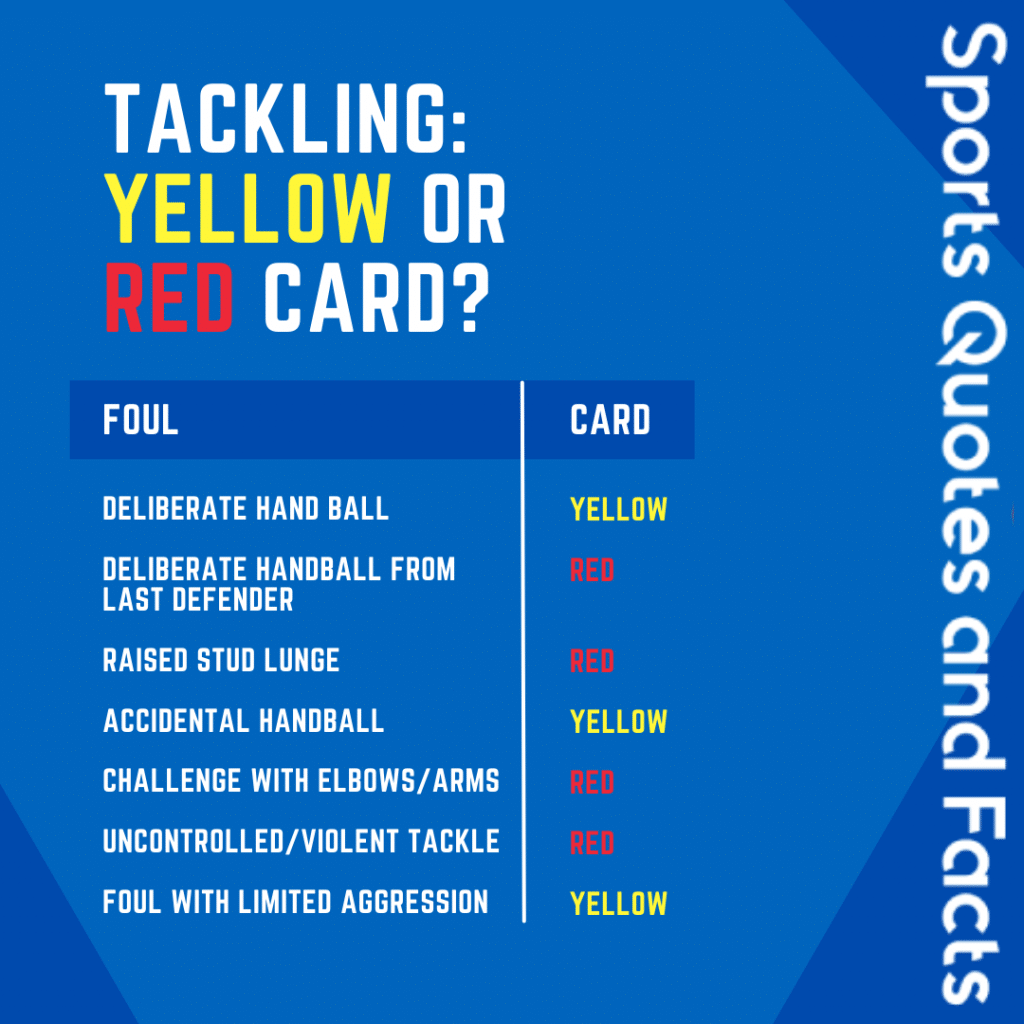
– Careless: A lack of attention or precaution. It’s a foul, just a direct free kick (or penalty). No card. This is the “oops, I mistimed it” tackle.
– Reckless: A complete disregard for danger to the opponent. This is a yellow card offense. The classic two-footed lunge, even if you get the ball, almost always falls here.
– Excessive Force: Far exceeds necessary force and endangers the opponent’s safety. This is a straight red card. Going in studs-up, over the ball, with speed qualifies.
The direction matters too. A tackle from behind is viewed with extreme suspicion because the attacker cannot protect themselves. Raised studs are a major red flag, they turn a foot into a weapon. The referee’s decision hinges on one question: did the defender’s action have a reasonable chance of injuring the opponent?
Common mistake: Believing “I got the ball!” absolves you, if your studs are up or you follow through with force into the player’s leg, you are getting carded. The referee sees the dangerous action, not just the first touch.
When to Use a Standing Tackle (And When Not To)
The standing tackle is your bread and butter. It is the foundation of defensive soccer tactics. You use it when you have support, when the attacker is not at full sprint, and when losing the challenge would not be catastrophic.
Perfect scenarios include channeling a winger toward the sideline, intercepting a pass in midfield, or engaging in a one-on-one duel where maintaining your shape is critical. The standing tackle lets you win the ball and immediately transition to attack. It is a proactive tool.
You do not use a standing tackle when you are the last defender and an attacker is through on goal with pace. Your success rate plummets. If you miss, they score. In that moment, a slide might be your only chance to get a foot in. But that is the exception, not the rule.
Mastering tackle timing principles is what separates good defenders from great ones. The greats. Paolo Maldini, Virgil van Dijk, rarely slid. Their game was built on anticipation and positioning, using the standing tackle to dispossess with such clean efficiency that it rarely looked like a tackle at all.
The High-Stakes Gamble of the Sliding Tackle
The slide tackle is not a technique. It is a gamble. You are betting your team’s defensive stability on one outstretched leg. Use it only when the cost of failure, a goal, outweighs the risk of you being out of the play.
Its best use case is the last-ditch effort. An attacker breaks past your backline, has a clean run at goal, and you are the only player between them and the keeper. A perfectly timed slide from the side or behind can poke the ball away. It is a heroic, game-saving play. It is also the only time it is worth the risk.
Outside of that, the slide tackle’s utility is limited. It can be effective to intercept a cross-field pass on a wet surface, where the slide adds reach. It can be used to clear a ball dangerously bouncing around your own penalty area. But in both cases, you are conceding your position. If you miss, you are gone.
The recovery is the hardest part. A failed slide leaves you on the ground. A successful one requires you to spring back up instantly, which demands defender strength training and core power that amateurs often lack. I have seen countless players make a great slide, win the ball, then take three seconds to get up. By then, the opponent has recycled possession.
| Aspect | Standing Tackle | Sliding Tackle |
|---|---|---|
| Primary Goal | Regain possession while staying in defensive shape | Stop an immediate scoring threat at all costs |
| Risk Level | Low | Very High |
| Recovery Speed | Instant | Slow (you are on the ground) |
| Best Used | Midfield, wide channels, with defensive cover | As last defender, penalty area, to prevent a clear chance |
| Common Outcome if Failed | Attacker retains possession, play continues | Attacker advances unimpeded, defender is out of the play |
| Referee Scrutiny | Low (unless from behind) | Very High |
What About Rugby? The “Standing Tackle” Confusion
If you have heard the term “standing tackle” in rugby, forget it. It is a historical relic. In modern Rugby Union, a tackle is legally defined as the ball-carrier being held and brought to ground. If you hold them up, it is not a tackle, it becomes a maul.
World Rugby removed the “standing tackle” from the Laws of the Game in 1977 because it was too difficult to referee consistently. The current law is binary: ground or no ground. This matters for player responsibilities. In a rugby tackle, the tackler must immediately release the ball-carrier and roll away. In a maul, different rules apply.
The rugby comparison highlights a key soccer principle. Soccer allows the standing tackle because going to ground is a choice, not a requirement. You can win the ball cleanly on your feet. Rugby requires the ground contact to trigger the tackle law and the subsequent ruck. It is a fundamental difference in how possession is contested.
Training Your Body for Both Tackles
Your body must be prepared for the physical demands of each tackle type. They stress different muscle groups and require different kinds of strength.
For the standing tackle, you need strong legs for stability and a powerful core to absorb contact and keep balance. Agility for defenders is non-negotiable. Ladder drills that improve foot speed and change-of-direction let you get into the correct angled position without overcommitting.
The sliding tackle demands explosive power in the hamstrings and glutes for the lunge, and serious quad and hip flexibility to avoid pulling a muscle as you extend. It also requires the kind of full-body toughness that comes from defensive strength training. You are hitting the ground, often hard. Your protective soccer gear, especially shin guards, is not optional.
I tore my right hamstring at 17 going for a slide tackle on a wet pitch in Gelsenkirchen. I got the ball, but my planted foot slipped as I extended. The pop was audible. I was out for eight weeks. Now I only slide on dry grass, and only if I have no other choice.
Footwear is part of the equation. The wrong soccer cleat types can make a slide more dangerous. Firm-ground cleats on a soft pitch will not release properly, causing your foot to catch and your knee to twist. You need the right stud configurations for the surface to let your foot slide through the grass, not dig in.
Common Mistakes and How to Fix Them
Most errors come from poor decision-making, not poor technique. You choose the wrong tool for the job.
Mistake 1: Sliding when you could stand. This is an ego problem. The slide looks dramatic. It feels heroic. But if you have time to set your feet for a standing challenge, you should. The fix is mental. Ask yourself before you commit: “Can I win this on my feet?” If yes, stay up.
Mistake 2: Leading with the studs. In a slide, your foot must be turned so the studs face the ground or away from the opponent. Leading with them up is asking for a red card. Practice the motion without the ball: approach, sink your weight, extend the leg with the ankle locked and toes pointed.
Mistake 3: Going in two-footed. This is an automatic red card at any competitive level. It shows a total disregard for safety. Always challenge with one foot. The other stays tucked to help you slide and recover.
Mistake 4: Poor head placement. This is a rugby-derived lesson with soccer relevance. In any tackle, keep your head up and to the side of the opponent. Burying your head in their chest blinds you and risks neck injury. A 2023 study in the European Journal of Sport Science on rugby tackle height found poor head position is a primary contributor to concussions. The principle transfers: see what you are hitting.
The best way to iron these out is repetitive, slow-motion drilling. Have a partner roll a ball slowly and practice the foot placement for a poke tackle (standing) and the extension for a slide. Speed comes after the form is automatic.
Frequently Asked Questions
What is the main rule for a sliding tackle?
The main rule is that winning the ball first does not make a sliding tackle legal. The challenge is judged on whether it was careless, reckless, or used excessive force. Studs-up challenges, two-footed lunges, or excessive follow-through into the opponent are fouls regardless of ball contact.
Can you get a red card for a sliding tackle even if you get the ball?
Yes. If the referee determines the tackle was made with excessive force or endangered the safety of the opponent, it is a straight red card. A two-footed lunge is almost always considered serious foul play and results in a sending-off.
Why do defenders mostly use standing tackles?
Defenders use standing tackles because they allow for immediate recovery and maintain defensive shape. After a standing tackle, the defender is still on their feet and can pass, dribble, or continue marking. A sliding tackle, even when successful, leaves the defender on the ground and temporarily out of the play.
Is a slide tackle illegal in youth soccer?
Many youth leagues, especially for players under age 14, prohibit slide tackling in their local rules due to the higher risk of injury. Always check the specific rules of your league or tournament. The emphasis is on safety and developing proper tackling fundamentals without the high-risk ground challenge.
Who are famous players known for their standing tackles?
Paolo Maldini and Virgil van Dijk are legendary for their use of perfectly timed standing tackles. They relied on positioning and anticipation, rarely needing to slide. N’Golo Kanté is famous for his relentless standing tackles in midfield, using his low center of gravity to win the ball cleanly.
What’s the difference between a tackle in soccer and rugby?
In soccer, a tackle is any legal attempt to dispossess an opponent, whether on your feet (standing) or on the ground (sliding). In rugby, a tackle is specifically defined as holding and bringing the ball-carrier to the ground. Simply holding them up is not a tackle, it becomes a maul.
The Bottom Line
Choose your feet. The standing tackle is your default, your control, your percentage play. The sliding tackle is your emergency brake, your calculated risk, your last line of defense.
Train for both. Condition your body for the stability of the stand and the explosive commitment of the slide. But deploy them with ruthless pragmatism. The game rewards the defender who wins the ball and stays in it. It punishes the defender who goes to ground and misses. Your decision in that split second defines your value on the pitch. Make it the right one.

I come from the “soccer heart” of Germany, the Ruhrpott. I have played, trained and followed soccer all my life and am a big fan of FC Schalke 04. I also enjoy following international soccer extensively.