Soccer Cleat Studs: What FG, AG, SG, TF, and IC Cleats Do
Different soccer cleat studs are engineered for specific surfaces to provide optimal traction, protect your joints from injury, and prevent premature wear on your boots. The main types are Firm Ground (FG), Artificial Ground (AG), Soft Ground (SG), Turf (TF), and Indoor Court (IC/IN). Picking the wrong one, like using FG studs on artificial grass, is the fastest way to get hurt and ruin a good pair of cleats.
Most players grab the cool-looking boots. They see a pro wearing them on TV and assume they’ll work anywhere. The problem isn’t the boot’s color or brand. It’s the black plastic or rubber nubs on the bottom that nobody looks at twice. You’re about to learn why those studs are the only part of the cleat that actually matters for your safety.
This guide breaks down each stud type, the exact surfaces they’re for, and the physical consequences of getting it wrong. We’ll cover the science of traction, the injury data, and how to read a soleplate like a mechanic reads a tire.
Key Takeaways
- Surface is king. Your primary playing surface, not brand, price, or color, dictates your stud type. FG for firm grass, AG for modern turf, TF for hard turf, SG for mud, IC for courts.
- FG on turf is an injury trap. Using Firm Ground cleats on artificial grass creates excessive “stick and twist” traction, a proven mechanism for ACL and ankle injuries. It also voids most warranties.
- Stud shape changes your movement. Conical studs allow smoother pivoting and rotation, reducing joint stress. Bladed studs offer aggressive forward and lateral grip for explosive cuts but can catch.
- “Multi-Ground” is a compromise. MG cleats work acceptably on both firm grass and artificial turf but are not optimal for either. Serious players on mixed schedules often need two dedicated pairs.
- Fit cannot be an afterthought. A proper soccer cleat fits like a second skin with under 5mm of toe room. A loose fit in the correct stud type is still a bad cleat.
The Six Stud Types You Need to Know
Forget the alphabet soup. Each two-letter abbreviation is a direct order from the manufacturer about where the boot should and should not touch the ground. This isn’t marketing. It’s a safety and performance specification stamped into the plastic.
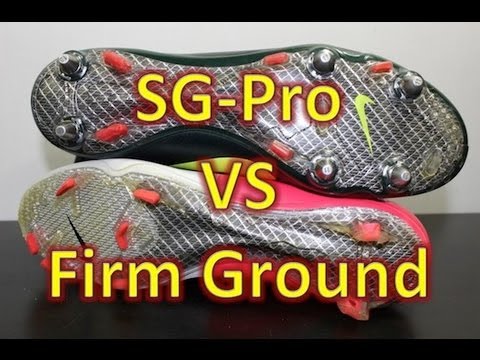
Firm Ground (FG) cleats feature 10 to 14 permanently molded plastic studs, typically between 12mm and 15mm long. The studs are designed to penetrate the soil of a well-maintained natural grass pitch, providing a stable platform for pushing off and cutting without sinking excessively. Conical and bladed are the two primary stud shapes within this category.
The system exists because a wet, muddy pitch in November behaves nothing like a dry, hard one in August or a plastic carpet with rubber crumbs. Traction isn’t just about not slipping. It’s about the boot’s ability to release from the surface when you need to pivot or change direction. A cleat that grips too much is just as dangerous as one that grips too little.
TL;DR: Match FG to firm grass, AG to artificial turf, SG to mud, TF to hard turf, and IC to indoor courts. The letters tell you where the boot works.
Firm Ground (FG): The Default That Isn’t Universal
Open any box of mainstream cleats, and you’ll likely find FG. They are the baseline, with 10-14 molded plastic studs in conical, bladed, or hybrid shapes. They work on a specific fantasy: a perfectly manicured, slightly damp natural grass pitch.
On that surface, the studs sink just deep enough into the soil to anchor your foot. You get propulsion for sprints and stability for turns. The problem starts when the reality doesn’t match the fantasy. On a sun-baked, hard pitch, those same studs can’t penetrate. They skate across the surface, offering the traction of a dress shoe. Conversely, in thick mud, they sink too deep, turning your feet into anchors.
Common mistake: Using FG cleats on artificial turf, the longer studs catch in the plastic fibers and rubber infill, fixing your foot in place while your body twists. This “stick and twist” mechanism is a direct cause of non-contact knee injuries, visible within a single season of play.
I learned this the blunt way in my late teens. Our club upgraded its training ground to a new 3G artificial pitch. I kept using my trusted Adidas Predator FG boots. Three weeks in, during a sharp cut, my left foot planted solid. I felt the pop in my knee before I hit the ground. A grade 2 MCL sprain, eight weeks out. The club physio’s first question was, “What boots are you wearing?” He saw the long FG studs and just shook his head. I bought AG boots the next day.
Artificial Ground (AG): The Modern Necessity
Artificial Ground cleats are the direct response to the proliferation of third-generation (3G) artificial turf. This isn’t the old, thin carpet over concrete. Modern turf has long plastic grass blades and a deep layer of rubber or sand infill. FG studs are too long and too few for this environment.
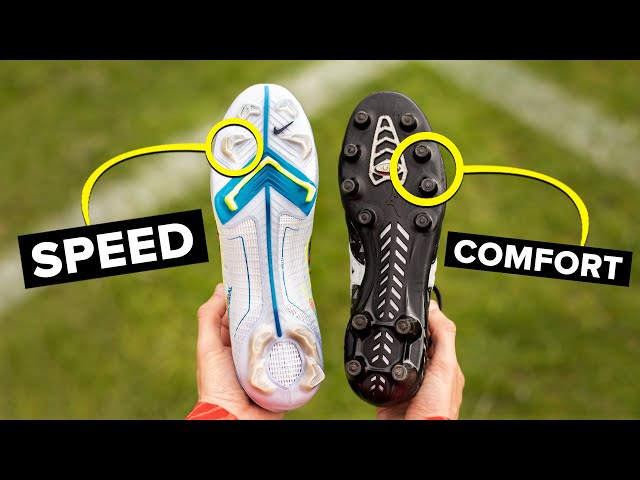
AG cleats solve this with a carpet of studs, often 20 or more shorter, conical rubber nubs. The design philosophy shifts from penetration to distribution. Instead of a few long studs digging in, many short studs press down across a wider area. This provides the necessary grip for acceleration but crucially allows for easier release when you rotate your foot. It reduces the peak rotational forces on your knee and ankle joints.
The rubber compound is also key. It’s more forgiving and abrasion-resistant than hard plastic, which matters because artificial turf is brutally abrasive. A plastic FG stud will wear down to a nub on turf within a few months. The AG stud configuration uses materials meant to last on that specific, punishing surface.
| Aspect | Firm Ground (FG) | Artificial Ground (AG) |
|---|---|---|
| Stud Count | 10–14 | 20+ |
| Stud Length | Longer (12–15mm) | Shorter (8–10mm) |
| Primary Material | Hard Plastic | Rubber or Soft Plastic |
| Best Surface | Firm Natural Grass | Modern 3G Artificial Turf |
| Key Risk | Slipping on hard ground, sinking in mud | Excessive wear if used on hard ground |
Soft Ground (SG): For the Mud and Muck
When the pitch turns into a soggy, slippery mess, you need leverage. That’s the only job of Soft Ground cleats. They typically have just 6-8 studs, but they are longer and more aggressive, often made of metal (aluminum or steel) or reinforced hard plastic. The critical feature is that they are screw-in studs.
You can swap them out for different lengths or replace worn ones. On a genuinely soft, waterlogged pitch, these long studs punch deep into the soil to find a stable layer beneath the mud. They give you the purchase to push off when everyone else is spinning their wheels. The trade-off is immediate discomfort and high pressure on a small area of your foot if you use them on a firm surface.
I won’t recommend SG cleats for anyone who doesn’t play in consistently wet conditions. The metal studs are unforgiving. I’ve seen players develop painful bone bruises on the balls of their feet after a single match on a harder-than-expected pitch with SG boots. Keep them in your bag for true mudders only.
Turf (TF) and Indoor (IC/IN): The Low-Profile Specialists
These categories are for surfaces with no give. Turf shoes are for hard, compacted artificial surfaces, gravel-based pitches, or short-pile turf. They have a dense pattern of dozens of tiny rubber studs, almost like a hiking boot tread. They provide grip through sheer surface area and flexibility, not penetration.
Indoor Court shoes are for futsal and gym floors. They have a completely flat, non-marking rubber sole. There are no studs. The goal is maximum contact with the smooth surface for quick, gliding movements and rapid changes of direction. Using anything with studs on these surfaces is a recipe for slipping and damaging the court.
The quick checklist:
- TF: Lots of tiny rubber studs. For hard, dry artificial surfaces or asphalt.
- IC/IN: Flat rubber sole. For indoor courts, gym floors, futsal.
- Using TF shoes on a lush 3G pitch? You’ll slip.
- Using IC shoes on grass? You’ll have zero traction.
The choice between turf soccer cleats and AG cleats often confuses players. It comes down to surface pile and infill. No infill, hard base? Go TF. Deep rubber infill, long blades? Go AG.
Conical vs. Bladed: The Pivot vs. Grip Trade-Off
Within categories like FG and AG, you’ll face another choice: stud shape. This isn’t cosmetic. It changes how your foot interacts with the ground on a mechanical level.
Conical studs are round or rounded. They allow your foot to rotate more freely within the ground. When you pivot, the stud rolls slightly in its socket. This reduces rotational resistance and is generally easier on your knees and ankles. The feel is more fluid and forgiving, especially on artificial surfaces.
Bladed studs have flat, knife-like edges. They are designed to bite. They provide exceptional traction for linear acceleration, deceleration, and sharp lateral cuts. The downside is that they can resist rotation. In a sudden directional change, if the blade doesn’t release cleanly, that resistance transfers torque straight up your leg.
Most players don’t need to overthink this. If you’re a winger or striker relying on explosive changes of pace, bladed might feel more responsive. If you’re a midfielder constantly pivoting and turning, or if you have a history of knee issues, conical is the smarter, safer bet. The nuances of stud shape differences matter more at higher levels of play.
The One Mistake That Gets People Hurt

Using FG cleats on artificial turf isn’t just suboptimal. It’s biomechanically dangerous. The PMC study on soccer boot traction quantified this. It found that traditional FG outsoles generate significantly higher rotational traction on artificial turf than on natural grass. Your foot gets stuck.
Here’s the mechanism: The long FG studs sink into the rubber infill and weave between the plastic grass blades. They grip like hooks. When your body rotates during a cut or a tackle, your fixed foot becomes a pivot point. The torque has to go somewhere, it travels up through your ankle and knee, straining or tearing ligaments. The ACL is particularly vulnerable. This risk is why clubs at all professional levels mandate AG boots for training on synthetic pitches.
Beyond injury, you’re destroying your boots. The abrasive turf will shred the plastic studs and the soleplate material. Most manufacturers explicitly state that using FG cleats on artificial turf voids the warranty. They know the boots aren’t built for it.
Your surface decision tree:
- Is it natural grass? Is it soft and wet? → SG Cleats.
- Is it natural grass? Is it firm? → FG Cleats.
- Is it modern artificial turf (3G with infill)? → AG Cleats.
- Is it old, hard turf or a dirt/gravel mix? → TF Shoes.
- Is it an indoor wooden or synthetic court? → IC/IN Shoes.
How Studs Impact Your Game (Beyond Not Slipping)
Traction influences specific soccer movements in ways you can feel.
- Acceleration: Bladed studs or a high stud count at the forefoot give a solid platform to push off from. You feel connected to the ground.
- Deceleration & Cutting: This is where grip must be balanced with release. Too much traction, and you can’t slow or change direction smoothly. Your joints absorb the shock.
- Pivoting: The enemy of the pivot is a stud that won’t let go. Conical studs excel here, allowing your foot to roll through the turn.
- Shooting & Passing: A stable base is critical. You need enough grip to plant your standing foot firmly without it sliding as you strike the ball.
Your position can inform your choice within the correct category. A defender making last-ditch tackles might prioritize the absolute lateral stability of bladed FG studs on grass. A creative midfielder who spins away from pressure might seek the pivot-friendly nature of conical AG studs on turf. But these are fine-tuning adjustments. The foundational rule never changes: match the category to the surface first.
Maintenance: Making Your Studs Last
The right studs won’t stay right if you neglect them. Dirt and mud packed into the soleplate add weight and can harden, affecting flexibility. Grass and rubber pellets jammed between AG studs reduce their effectiveness.
After every match, especially on wet or artificial surfaces, take five minutes.
1. Knock the boots together to dislodge loose debris.
2. Use a stiff-bristled brush (an old toothbrush works) and water to scrub the soleplate clean, focusing on the stud bases.
3. Let them air-dry naturally, away from direct heat. Never put them on a radiator.
For SG cleats with metal studs, check the studs for tightness before every game. A loose metal stud can strip the threading in the soleplate, ruining it. Also, inspect all cleats for worn-down studs. Once the studs are visibly shorter or unevenly worn, their performance and safety drop off. That’s your signal to start shopping.
| Problem | Likely Cause | Fix & Consequence |
|---|---|---|
| Excessive heel or forefoot wear | Playing on abrasive surfaces (turf) with the wrong cleat type. | Switch to correct cleat type (e.g., AG for turf). Continued use will wear through the soleplate. |
| Cracked or broken stud | Impact on hard ground (FG on turf), cold temperatures making plastic brittle. | For FG, often not repairable—time for new cleats. Using them with broken studs alters traction and can cause injury. |
| Screw-in studs won’t tighten | Threads in soleplate are stripped. | Soleplate is likely ruined. Need to replace cleats. Caused by over-tightening or cross-threading studs. |
| Sole separating from upper | General age, glue failure, or excessive flexing. | Can sometimes be re-glued by a cobbler, but is a primary sign for replacing soccer cleats. |
A simple routine of cleaning soccer cleats can easily add months to their lifespan. Letting mud dry and harden is what kills them.
Frequently Asked Questions
Can I use FG cleats on artificial turf if it’s just for one game?
No. The injury risk isn’t cumulative; it’s acute. A single sharp cut with the wrong traction can be enough to cause a ligament sprain or tear. You’re also accelerating wear on both the cleats and the turf surface. It’s never worth it.
What are Multi-Ground (MG) cleats, and are they any good?
MG cleats are a hybrid, typically featuring a higher count of shorter, less aggressive studs than traditional FG. They are designed as a compromise for players who frequently switch between decent natural grass and artificial turf. They work acceptably on both but excel at neither. For a dedicated surface, always choose the dedicated cleat.
How do I know if my cleats fit properly?
Soccer cleats should fit snugly, not painfully tight, with less than 5mm (about the width of your thumbnail) of space at your longest toe when standing. Your heel should be locked in with minimal lift. There should be no dead space or bunching of material. A proper cleat fit selection is as important as the stud choice. A poorly fitting boot of the right type is still a bad boot.
Do studs make a difference for a beginner?
Absolutely. Beginners are often less coordinated and more prone to awkward movements. Using cleats with excessive traction (like FG on turf) increases their risk of a knee or ankle twist from a simple misstep. Starting with the correct, safer option is crucial.
Can I replace worn studs on my cleats?
Only if you have Soft Ground (SG) cleats with screw-in studs. The studs are replaceable. On Firm Ground (FG), Artificial Ground (AG), and Turf (TF) cleats, the studs are molded as part of the soleplate. When they wear down, the entire boot needs replacing.
Are there different studs for different positions?
The primary driver is surface, not position. However, within the correct category, you can fine-tune. Strikers wanting explosive starts might lean toward bladed FG studs. Midfielders who pivot might prefer conical AG studs. But a defender must wear AG boots on turf, regardless of preferred stud shape. Surface always comes first.
The Bottom Line
Your cleat’s job is to connect you safely to the ground. The studs are the only part that does that job. Ignoring the FG, AG, SG, TF, or IC label is like ignoring the weather report before a long drive.
Match the letters on the soleplate to the surface under your feet. Keep FG for grass, AG for modern turf, and have the right tool for mud or indoor courts. That match is what gives you traction without betrayal. It’s what lets you trust your footing when you push into a sprint or plant for a turn.
Look at the bottom of your boots. Know what you’re standing on. Everything else, the flashy colorway, the signature athlete, the cleat upper materials, is secondary. Choose right, and the ground becomes an ally. Choose wrong, and it’s waiting to break something.

I come from the “soccer heart” of Germany, the Ruhrpott. I have played, trained and followed soccer all my life and am a big fan of FC Schalke 04. I also enjoy following international soccer extensively.