Center Circle in Soccer: Purpose and Rules Explained
You’ve seen it countless times—the white circle painted at the exact center of every soccer field. But what is center circle used for in soccer beyond the opening kick-off? This seemingly simple marking quietly governs critical aspects of the game that most fans never notice. From ensuring fair restarts to enabling tactical masterstrokes, the center circle serves as soccer’s invisible referee, maintaining order while creating strategic opportunities that decide matches at every level.
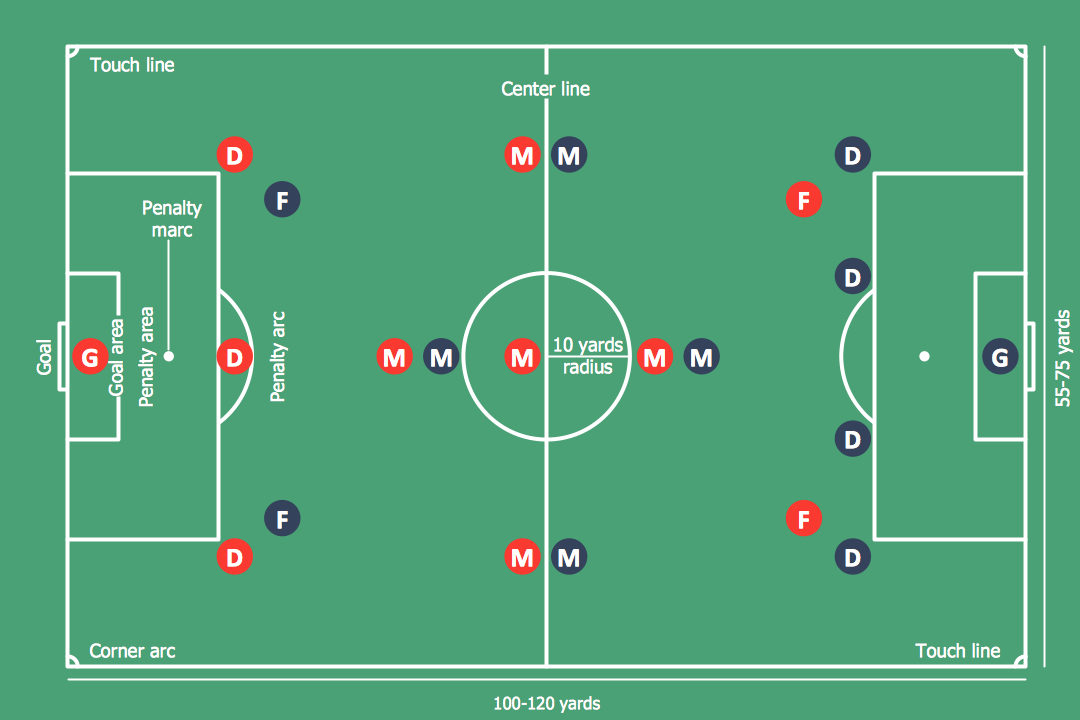
Every professional pitch features this 9.15-meter radius circle surrounding the center spot where the ball begins each half. While it disappears from view during open play, this marking transforms into a crucial boundary during restarts—dictating player positioning, preventing immediate pressure, and giving attacking teams the space they need to build play. Understanding these hidden rules gives you an edge whether you’re coaching youth soccer or analyzing Premier League tactics.
Kick-Off Restart Procedures You Need to Know
Starting Each Half With Proper Protocol
The center circle’s most visible role begins before the opening whistle blows. The ball sits stationary on the center spot as teams prepare for kick-off, ensuring every match starts from the same standardized location. After goals, the conceding team returns to this exact spot for the restart, creating a psychological reset moment that can shift momentum. This simple rule prevents teams from gaining unfair advantages by moving the ball closer to goal after scoring.
When the referee signals for play to begin, the kicking team must keep all players in their own half until the ball moves forward. This requirement, combined with the circle’s precise dimensions, creates predictable restart scenarios that teams exploit through choreographed routines. Top clubs like Manchester City and Bayern Munich spend hours perfecting these set plays, knowing that a successful kick-off can lead directly to scoring opportunities.
Extra Time and Post-Regulation Scenarios
When matches extend beyond regulation time, the center circle becomes crucial again. Extra time periods restart from the center spot, maintaining consistency throughout the competition. While penalty shootouts don’t use the circle directly, it serves as the visual anchor for determining the exact center of the pitch where sudden death scenarios unfold. The circle’s presence ensures officials can quickly verify proper positioning even during high-pressure moments when every inch matters.
During tournament play, referees use the center circle to manage complex restart situations. If a goal occurs right before halftime, the teams switch directions but still restart from the center spot—never from where the goal was scored. This standardized approach prevents confusion and maintains fairness across thousands of matches played worldwide each week.
Player Positioning Rules That Prevent Illegal Restarts
Opposition Distance Requirements Explained
During any kick-off, the center circle transforms into a restricted zone with ironclad rules. All opposing players must remain outside this 9.15-meter boundary until the ball moves forward. This requirement, specified in Law 8 of the IFAB Laws of the Game, prevents defenders from immediately pressuring the restart. The circle’s radius equals exactly 10 yards—the minimum distance required to give the attacking team space to establish possession.
Smart referees use the circle as an instant visual reference to enforce these rules. Without this clear marking, determining proper player distances would require constant measurement. The white line provides immediate judgment calls—players either stand inside or outside the boundary, eliminating ambiguity during crucial restart moments. Persistent violations can result in yellow cards for unsporting behavior, making this seemingly minor rule a potential game-changer.
Team Formation Flexibility Within the Circle
Unlike opponents, the kicking team enjoys strategic positioning freedom within the circle. One or more players can stand inside the boundary, creating numerical advantages for short kick-off routines. However, all players must remain in their own half until the ball moves forward—a rule that prevents sneaky tactical positioning designed to surprise opponents.
This flexibility enables creative restart strategies that confuse defenses. Some teams position multiple players inside the circle to draw opponents closer, then quickly play the ball to an unmarked player on the edge. Others use one-touch passes within the circle to bypass initial pressure. These tactics work because the rules specifically allow players to stand inside the circle while requiring opponents to stay outside.
Ball Movement Standards for Valid Kick-Offs
The ball must clearly move forward into the opponent’s half to be considered in play. This simple requirement, combined with the circle’s positioning, creates predictable restart scenarios that teams exploit through choreographed routines. If the ball doesn’t move forward, the kick-off is retaken—no matter how skillfully executed.
Smart coaches design set plays that use the circle’s geometry to their advantage. Some have players stand just outside the circle to receive quick passes, while others use deceptive one-touch passes within the circle to draw opponents in before playing the ball long. These strategies succeed because they operate within the precise boundaries defined by the center circle’s dimensions.
Referee Management Benefits You Never Notice

Visual Boundary Enforcement in Real Time
Referees rely on the center circle as an immediate visual reference for enforcing restart rules. During high-pressure matches, officials can instantly determine if opponents encroached within the 9.15-meter boundary. Video assistant referees use the same markings to verify proper restart positioning during controversial moments, leading to retaken kick-offs when necessary.
This visual aid streamlines decision-making in critical situations. Without the circle’s precise markings, referees would need to estimate distances during chaotic restarts—a nearly impossible task when players move quickly. The circle’s presence ensures consistent enforcement across all levels of play, from youth leagues to World Cup finals.
Pre-Match Protocol Space Requirements
Before matches begin, the center circle hosts the coin toss and captain meetings. This designated space creates a neutral zone where officials can communicate with team leaders without interference. The circle’s prominence ensures all players can observe these pre-match proceedings from appropriate distances, preventing disputes about who heard the referee’s instructions.
Coaches and substitutes must remain outside the circle during all kick-offs—a rule often violated during emotional moments when technical staff inadvertently step into restricted areas while celebrating goals. Violations of this technical area restriction can lead to cautions, though referees typically issue warnings before showing cards for first-time offenses.
Tactical Significance Beyond Basic Rules
Formation Reference Point for Defensive Organization
Smart teams use the center circle as a positioning anchor during defensive transitions. The 9.15-meter radius provides a natural pressing trigger—some coaches instruct players to engage opponents aggressively once they cross this boundary. This geometric approach creates consistent defensive behaviors that don’t rely on individual judgment calls, making the entire team press as a unit.
Top clubs like Liverpool under Jürgen Klopp have perfected this strategy, using the circle as their “red line” for initiating high-press tactics. When opponents receive the ball outside the circle, defenders maintain their shape; once the ball crosses inside, the entire team swarms forward in coordinated fashion. This system works because the circle provides a consistent visual reference that players internalize through training.
Counter-Attack Launching Point After Defensive Wins
Following successful defensive actions, the center circle marks the ideal starting point for quick counter-attacks. Teams that win possession near midfield can immediately attack through the central channel, using the circle’s position to orient their break. This tactical application explains why many goals originate from transitions beginning near the center circle.
Professional teams practice these scenarios extensively in training. They develop specific passing angles and movement patterns that exploit the space between the center circle and the opponent’s penalty area—the most dangerous zone for launching attacks. Understanding this geometry gives coaches a strategic advantage when designing set pieces and transition plays.
Technical Specifications Every Soccer Fan Should Know
Universal Standards Across All Professional Fields
Every professional soccer pitch worldwide uses identical center circle specifications. The 9.15-meter radius never changes, whether you’re playing at Wembley Stadium or a regional training facility. This consistency ensures players experience identical restart conditions regardless of venue, crucial for developing muscle memory in professional routines.
The circle forms part of the integrated field marking system, using the same white paint and line width as penalty areas and touchlines. Professional groundskeepers apply weather-resistant materials that maintain visibility through rain, snow, and extreme temperatures. The center spot receives particular attention, as even slight deviations can affect restart accuracy during critical moments.
Youth and Indoor Adaptations for Different Playing Levels
While professional standards remain fixed, youth soccer adapts the center circle for age-appropriate play. Young children compete on fields with 6-7 meter radius circles, maintaining proportional distances without overwhelming small players. Indoor futsal courts feature 3-meter radius circles, preserving the restart concept within tighter spaces.
These modifications ensure young players learn proper kick-off techniques without facing unrealistic challenges. As players develop, they gradually transition to the standard 9.15-meter circle, building familiarity with professional rules before reaching competitive levels. This progression system helps maintain fair play while accommodating different skill levels.
Beyond Match Applications: Hidden Uses You Never Noticed
Training Drill Integration for Skill Development
Professional teams incorporate the center circle into daily training routines. Possession exercises use the circle’s boundaries to create confined spaces that improve close control. Rondo drills often center on the circle, with players maintaining possession while opponents press from outside the boundary—mirroring match scenarios where teams must play through central pressure.
Many clubs use the circle’s perimeter for standardized fitness tests. Players complete beep tests running around the circumference, covering exactly 57.5 meters per lap. This consistent measurement enables accurate performance tracking across different facilities and training periods, giving coaches objective data to optimize player conditioning.
Ceremonial Significance in Soccer Culture
Trophy presentations and team photos traditionally center on the circle, creating iconic images that emphasize soccer’s geometric beauty. Championship celebrations see players gather around the center spot, acknowledging the pitch’s heart where every match journey begins and ends. This symbolic connection reinforces the circle’s importance beyond its technical functions.
Next time you watch a soccer match, pay attention to how this simple ring influences positioning, restarts, and strategic decisions throughout ninety minutes of play. The center circle represents soccer’s commitment to fairness and standardization while enabling tactical creativity within structured boundaries—proving that sometimes the most important elements are the ones you barely notice.
I come from the “soccer heart” of Germany, the Ruhrpott. I have played, trained and followed soccer all my life and am a big fan of FC Schalke 04. I also enjoy following international soccer extensively.