Understanding the Soccer Penalty Kick: Rules and Strategy
A penalty kick in soccer is a direct free kick taken from the penalty spot, 12 yards (11 meters) from the goal. It is awarded when the defending team commits a direct free-kick offense inside its own penalty area. The kick pits one attacker against the goalkeeper, with all other players outside the area until the ball is played.
Most people think the drama is just about the shot. They miss the three silent rules that decide the kick before the player even starts their run. Get one wrong, and a certain goal gets wiped off the board.
This guide breaks down the exact laws, the common mistakes that trigger retakes, and the brutal psychology that separates a cool finisher from a choked chance. We will cover the spot, the players, the offenses, and how a shootout changes everything.
Key Takeaways
- The penalty spot is exactly 12 yards (11 meters) from the goal line, centered between the posts. The penalty arc marks the 10-yard (9.15m) exclusion zone for other players.
- The goalkeeper must have at least part of one foot on or behind the goal line when the ball is struck. Moving off the line early forces a retake if the kick is missed.
- Feinting to kick the ball after completing the run-up is a bookable offense resulting in an indirect free kick. Feinting during the run-up is legal.
- In a penalty shootout, any player on the field at the end of extra time is eligible to take a kick, not just those substituted in.
- The kicker cannot touch the ball twice without another player touching it first. A rebound off the post or bar back to the kicker results in an indirect free kick.
The 12-Yard Spot and the Penalty Arc
Placement is non-negotiable. The ball must be on the penalty mark, a white spot 12 yards (11 meters) from the midpoint between the goalposts. This distance is a sacred number in the sport, a balance between opportunity for the attacker and a chance for the keeper.
The penalty arc, or “the D,” painted at the edge of the penalty area, is not where the kick is taken from. It exists solely to mark the 10-yard (9.15 meter) exclusion radius. Every player except the kicker and goalkeeper must be outside the penalty area and behind this arc until the ball is in play.
Forget this, and you invite chaos. If an attacker encroaches and scores, the goal is disallowed and the kick is retaken. If a defender encroaches and the kick is missed or saved, it is also retaken. The assistant referee’s primary job here is to watch these lines.
TL;DR: The ball goes on the 12-yard spot. Everyone else stays outside the penalty area and behind the 10-yard arc until it’s kicked.
When Is a Penalty Kick Awarded?
The trigger is specific. A referee points to the spot only when a defending player commits a direct free-kick offense inside their own penalty area. The most common are tripping, pushing, holding, and deliberate handball. The foul must be against an opponent and involve contact or deliberate action.
The Video Assistant Referee (VAR) has made this call more precise, but also more debated. Officials now review potential contact in slow motion, judging whether it was sufficient to penalty kick offenses. It has eliminated some clear misses but introduced frame-by-frame scrutiny of natural collisions.
Common mistake: Assuming any contact in the box is a penalty — incidental shoulder-to-shoulder challenges or playing the ball before lightly touching the opponent are often deemed fair. Awarding a penalty kick requires a clear, punishable foul.
Player Positioning: The Kicker vs. The Keeper
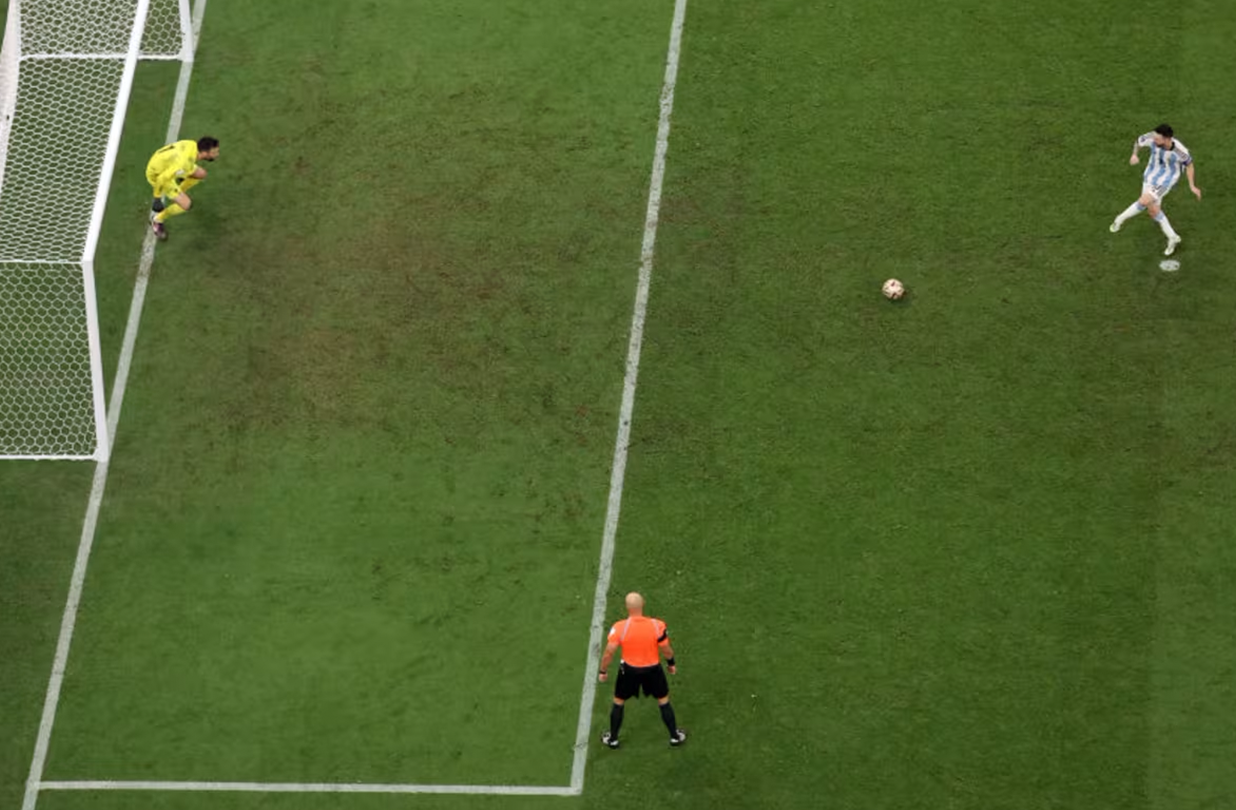
The setup is a tense isolation. The goalkeeper must be on the goal line, facing the kicker, between the posts. The critical detail is foot placement. When the ball is struck, at least part of one of the keeper’s feet must be touching the line, in line with it, or behind it. They can move laterally, jump, or sway, but they cannot step forward off the line before the kick.
The kicker must be clearly identified to the referee. Their run-up can include jumps, stutter-steps, or even a circular approach. The proper penalty technique involves a consistent, controlled approach to maintain balance and placement. The ball must be kicked forward; a pass to the side is legal if the ball moves forward.
| Role | Must Do | Cannot Do | Consequence of Offense |
|---|---|---|---|
| Kicker | Kick ball forward from the spot | Feint to kick at ball after run-up; touch ball twice | Caution + Indirect Free Kick |
| Goalkeeper | Stay on goal line until ball kicked | Unfairly distract kicker; touch goalposts | Warning, then Caution + Retake if kick missed |
| Other Players | Stay outside area & behind arc | Encroach before ball in play | Retake (if offender’s team benefits) |
The Run-Up and the Kick Itself
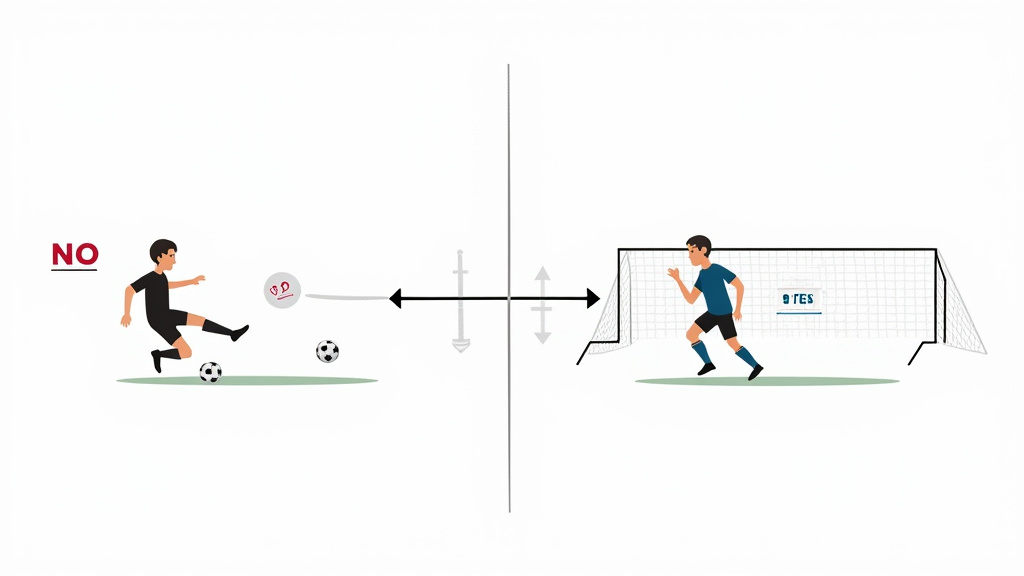
The referee’s whistle releases the kicker. From that moment, the ball must be kicked forward. Backheeling is permitted if the ball moves toward goal. The kick is completed when the ball stops moving, goes out of play, or the referee stops play.
The penalty kick rules are strict on second touches. If the ball rebounds from the post or crossbar back to the kicker without the goalkeeper touching it, the kicker cannot play it. Doing so yields an indirect free kick for the defending team. If the keeper makes a save and the ball comes back, the kicker is free to shoot.
I once saw a youth cup final decided because a player celebrated too early. He scored, ran to the corner, then ran back and tapped the still-rolling ball into the net. The referee disallowed the goal and booked him for a second touch. His team lost in extra time. The ball is live until the whistle.
Infractions and Sanctions: What Causes a Retake?
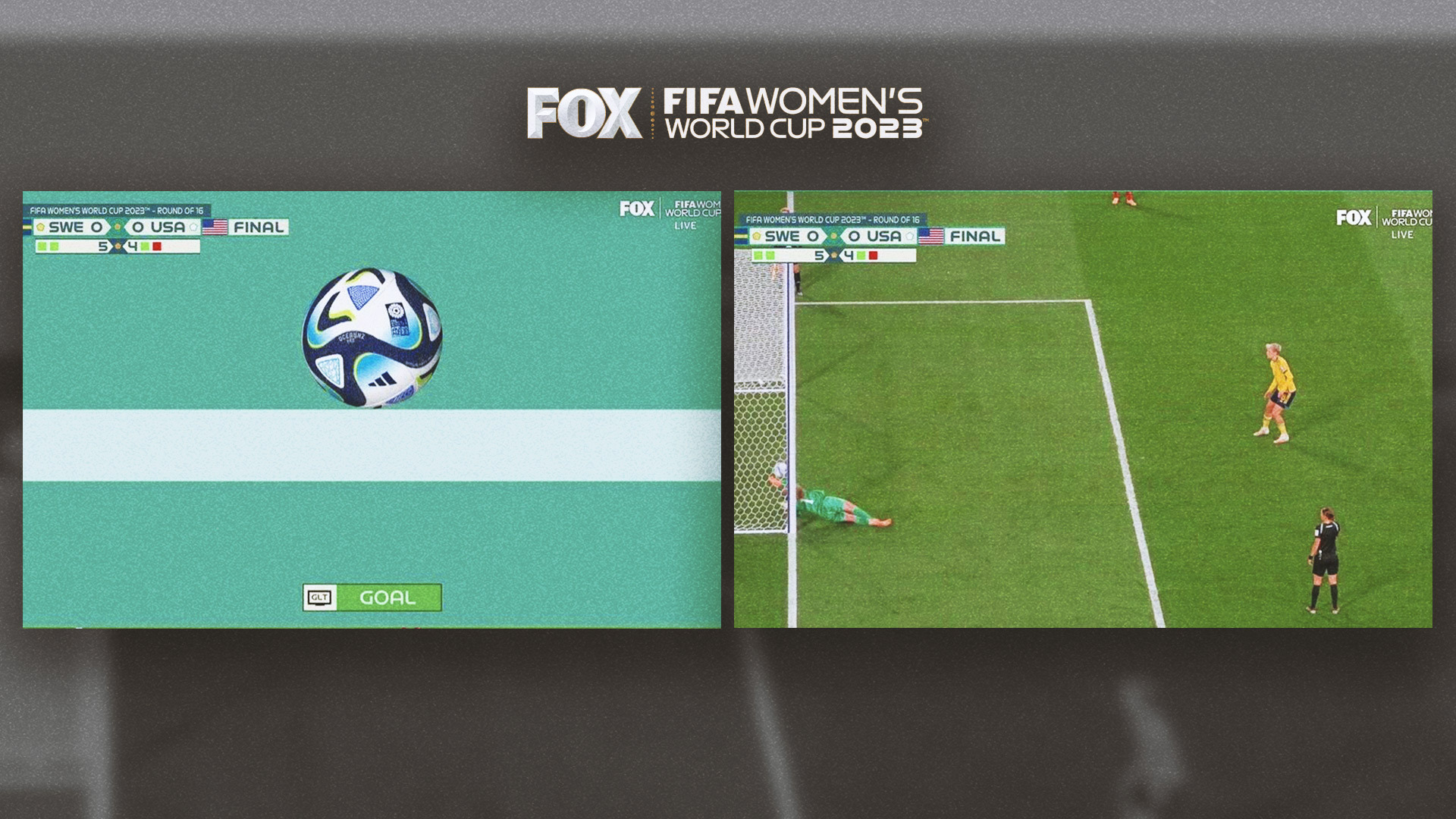
The laws have a detailed flowchart for offenses. It boils down to who broke the rule and what was the outcome.
- Goalkeeper offends (steps early) & goal is scored: Goal stands.
- Goalkeeper offends & kick is missed/saved: Kick is retaken, keeper is cautioned.
- Kicker offends (illegal feint) & goal is scored: Goal disallowed, kicker cautioned, indirect free kick awarded.
- Teammate encroaches & goal is scored: Goal disallowed, kick retaken.
- Opponent encroaches & goal is scored: Goal stands.
- Opponent encroaches & kick is missed/saved: Kick retaken.
The assistant referee at the goal line is specifically watching for goalkeeper movement rules and encroachment. Their raised flag signals an offense to the referee.
Penalty Shootouts: A Different Beast
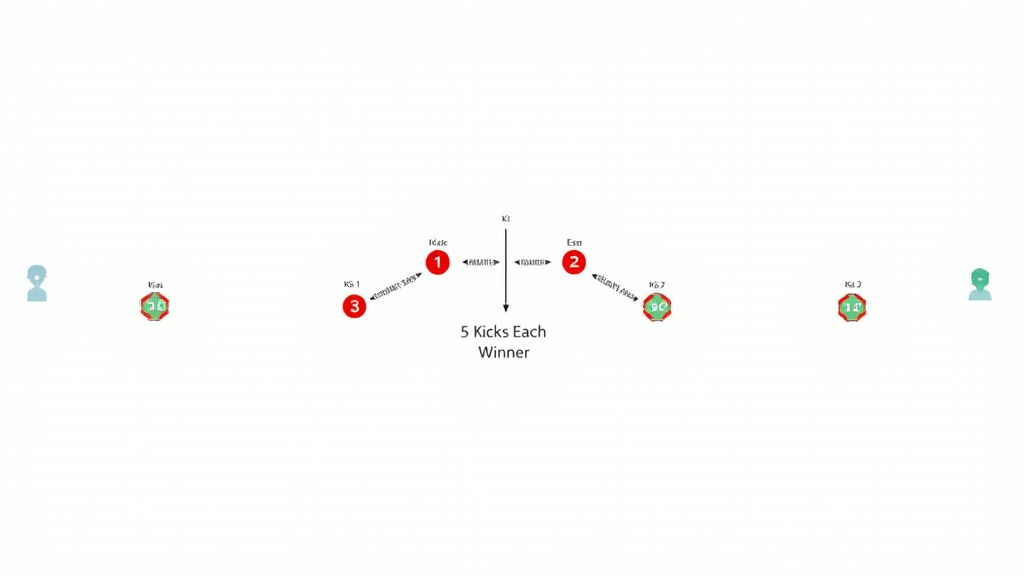
Shootouts are a separate ritual used to decide knockout matches tied after extra time. The core laws of the game penalty kick apply, but with key differences. The team winning a coin toss chooses to kick first or second. All players on the field at the end of extra time are eligible and must take a kick before any player can take a second.
Teams take five kicks each, alternating. If still tied, it goes to sudden death. The pressure is exponential. The psychology shifts from in-game opportunity to pure, isolated judgment.
TL;DR: Shootouts use the same basic kick rules but with a fixed order, no follow-up on rebounds, and every eligible player must kick.
The Psychology of the Penalty
The technical rules are clear. The mental game is not. For the kicker, it’s about routine and blocking out noise. For the goalkeeper, it’s about presence, buying time, and picking a cue. Data shows goalkeepers dive about 90% of the time, so a well-placed shot down the middle has a high success rate—if the kicker can stomach the risk of an easy save if the keeper stands.
Teams now employ dedicated penalty coaches and use data on opponent keepers’ dive tendencies. Yet, in the moment, it’s still one person, one ball, and 12 yards.
Frequently Asked Questions
Can a penalty kick be passed?
Yes. The law only states the ball must be kicked forward. A pass to a teammate who is outside the penalty area and behind the ball is legal. That teammate can then shoot, but they are often quickly closed down.
What happens if the ball hits the post and goes in?
The goal is awarded. The ball is in play from the moment it is kicked, so a goal is scored if the whole ball crosses the line, regardless of how it gets there.
What is the offside rule during a penalty kick?
There is no offside offense during the taking of a penalty kick. The offside law details are suspended from the moment the kick is taken until another player touches the ball.
Can a substitute take a penalty in a shootout?
No. Only the players who are on the field of play at the end of extra time are eligible to participate in the shootout. This includes the goalkeeper.
What’s the difference between a saved penalty and a missed penalty?
saved penalty kick is one where the goalkeeper legally prevents the ball from entering the goal. The ball remains in play. A missed penalty is one where the kicker sends the ball wide or over the bar without the goalkeeper touching it, resulting in a goal kick.
The Bottom Line
A penalty kick is a rule-bound drama of precision and nerve. It starts with a foul 12 yards out and lives or dies by the millimeter—of foot placement, of encroachment, of ball placement. Understand the spot, respect the arc, and know the consequences of every movement. The best penalty-takers practice the technique until it’s automatic, because when the whistle blows, there’s no room for doubt. Just the keeper, the ball, and the net.

I come from the “soccer heart” of Germany, the Ruhrpott. I have played, trained and followed soccer all my life and am a big fan of FC Schalke 04. I also enjoy following international soccer extensively.