Inverted Winger in Soccer: Role and Impact
This post contains affiliate links. As an Amazon Associate, we earn from qualifying purchases.
Imagine a right-footed player starting on the left wing, then cutting sharply inside toward the center of the field rather than staying wide to deliver crosses. This seemingly simple positional choice has revolutionized modern soccer tactics and created one of the most dangerous attacking weapons in the game today. If you’ve ever wondered what is inverted winger in soccer and why top clubs deploy this role so effectively, you’re about to discover how this tactical innovation has reshaped the beautiful game.
The inverted winger represents a fundamental shift from traditional wing play. Instead of hugging the touchline to whip in crosses with their dominant foot, these players operate on the opposite flank from their stronger foot, creating diagonal cutting movements that generate direct goal-scoring opportunities. This tactical evolution emerged prominently in the early 2010s as teams sought new ways to break down increasingly organized defenses that congested central areas. Understanding what is inverted winger in soccer reveals how modern tactics have adapted to create space where none existed before.
Inverted Winger vs Traditional Winger

Traditional wingers stay wide on their dominant-foot side, using the touchline as an extra defender while delivering crosses into the box. Think of classic players like David Beckham who patrolled the right flank to bend in pinpoint deliveries with their right foot. The inverted winger completely reverses this approach—a right-footed player operates on the left wing, while left-footed players thrive on the right side, cutting inside onto their stronger foot.
This tactical reversal creates immediate advantages that traditional wingers cannot match. When an inverted winger receives the ball wide, defenders anticipate a cross. Instead, the attacker cuts diagonally toward goal, forcing defenders into impossible decisions: follow the winger inside and leave space for overlapping full-backs, or stay wide and allow a dangerous central run. The defender’s hesitation creates the split-second opening that modern attackers exploit for shots and key passes.
Key Movement Patterns That Define the Role
- Diagonal inside runs that pull defenders out of position toward the penalty box
- Quick one-two combinations with central midfielders to penetrate defensive lines
- Sudden acceleration bursts past flat-footed full-backs during cutting movements
- Body feints that sell the cross before executing the inside cut
Essential Skills for Modern Inverted Wingers
Playing as an inverted winger demands a specialized skill set that transforms wide players into central threats. These attackers must master both technical precision and tactical intelligence to maximize their impact in tight central spaces where traditional wingers rarely venture.
Technical Requirements You Can’t Skip
While favoring one foot for finishing, inverted wingers need competent weak-foot control for quick combinations in tight spaces. Exceptional close ball manipulation becomes essential when operating in congested central areas. Players must also develop the ability to shoot accurately while moving across their body—a skill requiring countless hours of practice to perfect. Precise diagonal passing range completes the technical profile, allowing these attackers to thread through-balls between defensive lines.
Physical Attributes That Make the Difference
Explosive acceleration in the first 5-10 meters separates good inverted wingers from elite ones. A low center of gravity enables the quick direction changes needed for effective diagonal cuts. High endurance maintains pressing intensity throughout matches, while core strength helps withstand physical challenges during those dangerous inside runs. Without these physical traits, even technically gifted players struggle to execute the inverted winger role effectively against top-level competition.
Tactical Impact on Modern Formations
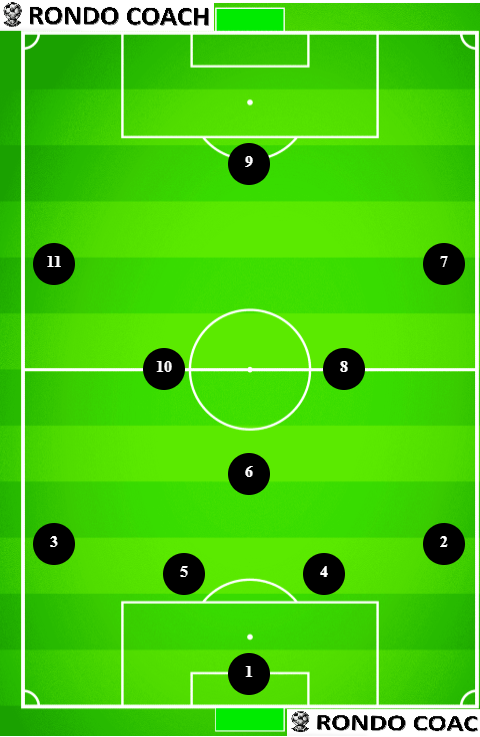
Inverted wingers have fundamentally reshaped how managers construct their attacking systems. Their central drift creates numerical advantages while opening passing lanes that traditional wingers simply cannot access, forcing teams to rethink their entire tactical approach.
4-3-3 System Effects
In a 4-3-3, inverted wingers operate as the wide forwards in the front three, with full-backs providing the primary width. This creates natural triangles between the winger, full-back, and central midfielder in the half-space. The diagonal cutting movement pulls defensive blocks out of shape, creating space for overlapping full-backs to deliver crosses—a role reversal where the winger becomes the scorer while the full-back becomes the traditional crosser.
Three-At-The-Back Variations
When deployed in 3-4-3 or 3-5-2 systems, inverted wingers function as inside forwards rather than traditional wingers, with wing-backs providing all width. This allows wingers to maintain extremely central starting positions while still threatening from wide areas. The tactical flexibility creates devastating overloads in central attacking zones, as both wingers can cut inside simultaneously to support the central striker.
4-2-3-1 Adaptations
In 4-2-3-1 formations, inverted wingers play slightly deeper than in 4-3-3 systems, often beginning movements from the midfield line. This creates different running lanes as they arrive late into dangerous areas—similar to classic number 10s but from wider starting positions. The deeper starting point allows for more complex combination play with the attacking midfielder and central strikers.
Training Drills for Aspiring Inverted Wingers
Developing the specialized skills required for inverted wingers demands targeted training that emphasizes diagonal movement patterns and central combination play. Youth coaches now focus on these elements from age 12 upward, recognizing the growing importance of this role in modern soccer.
Core Training Exercises
- Diagonal cutting drills: Repetitive movements from touchline to penalty box with ball
- First-time shooting: Striking across the body while maintaining accuracy at speed
- Small-sided games: 3v3 or 4v4 formats encouraging central combination play in tight spaces
- Pressing patterns: Learning when to press center-backs versus tracking full-backs
Professional Session Focus
Elite training sessions emphasize timing coordination between diagonal runs and full-back overlaps. Decision-making drills help players choose between shooting, passing, or continuing dribbles in split seconds. Defensive transition positioning ensures inverted wingers contribute to counter-pressing immediately after losing possession. Spatial awareness exercises teach when to drift wide versus staying central based on defensive positioning.
Famous Inverted Wingers Throughout History
While the systematic use of inverted wingers emerged in the early 2010s, individual players have employed these principles for decades. The role’s evolution reflects tactical progression across different eras, with certain players perfecting the art of cutting inside from the “wrong” flank.
Pioneering Examples
Arjen Robben perfected the inverted winger role at Bayern Munich, terrifying defenses with his left-footed cutting inside from the right wing. His signature move—collecting the ball wide, feinting to cross, then cutting onto his left foot—became nearly impossible to defend despite its predictability. Lionel Messi’s evolution from traditional right-winger to central inverted role redefined the position entirely, creating a hybrid that combined winger creativity with striker finishing.
Modern Masters You See Weekly
- Mohamed Salah: Left-footed right winger who scores 20+ goals annually through diagonal cutting movements
- Riyad Mahrez: Master of close control and sudden direction changes in central areas
- Marcus Rashford: Right-footed left winger using explosive pace to create direct goal-scoring chances
- Bukayo Saka: Left-footed right winger combining traditional wing play with inverted movements
Counter-Strategies Against Inverted Wingers
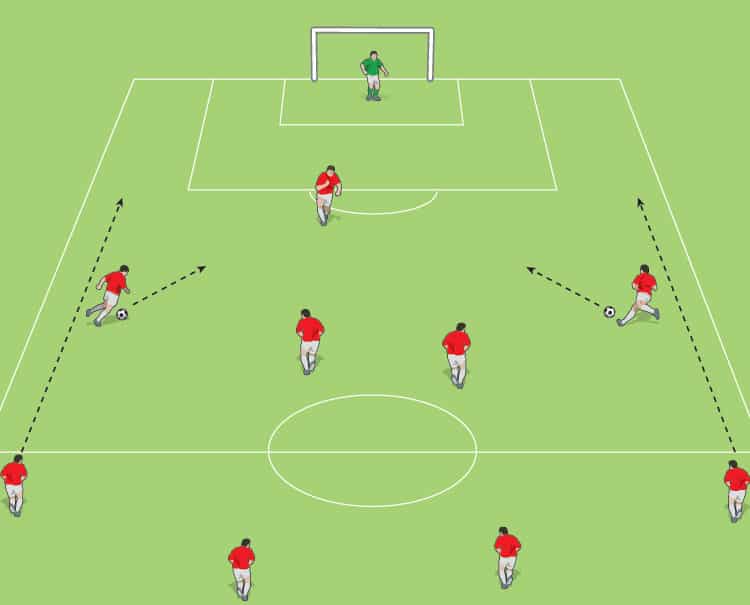
Smart opponents have developed specific tactics to neutralize inverted wingers’ threat. These defensive adjustments require precise coordination between full-backs, center-backs, and midfielders to prevent those dangerous diagonal runs.
Defensive Communication Systems That Work
Successful teams implement clear communication protocols where full-backs pass responsibility to center-backs when the winger cuts inside. Midfield screening prevents central combinations with attacking midfielders, while specific defensive angles force play wide rather than inside. Double-teaming in wide areas prevents the initial cuts inside, though this risks leaving space elsewhere.
Exploiting the Vacated Space Left Behind
Opponents attack the space left by inverted wingers through quick switches to the weak-side full-back in space. Direct balls behind the winger’s starting position catch high lines off guard. Overloading the vacated wide areas with overlapping runs creates crossing opportunities from traditional winger positions. Well-timed counter-attacks into channels become especially dangerous when inverted wingers press high up the field.
Evolution Into False Winger and Hybrid Roles
Modern tactical evolution has produced even more complex variations of the inverted winger concept. Some players now combine multiple responsibilities, creating unpredictable movement patterns that confuse defensive assignments and maximize attacking options.
False Winger Characteristics Changing the Game
Some systems now deploy “false wingers” who begin in central positions before drifting wide. These players create different running angles for defensive disruption and enable more complex pressing schemes. The fluid positional interchanges allow false wingers to combine seamlessly with strikers and attacking midfielders, making their movements nearly impossible to track.
Hybrid Role Combinations You’ll See More Of
Contemporary attackers increasingly blend inverted winger responsibilities with traditional crossing abilities, allowing players like Mohamed Salah to deliver quality crosses when needed. Some combine inverted winger play with false 9 dropping movements to create overloads, while others merge the role with second striker instincts for late runs beyond the main striker. The most advanced attackers even incorporate central attacking midfielder positioning into their inverted winger responsibilities.
Future of the Inverted Winger Role
As defensive systems continue evolving to counter these threats, inverted wingers themselves must adapt. The role’s future likely involves even greater tactical flexibility and positional interchange as teams seek new advantages in increasingly sophisticated tactical battles.
Emerging Trends Shaping the Next Generation
Starting positions are becoming more central to reduce the distance to goal, while defensive responsibilities are increasing with higher pressing intensity from advanced positions. Fluid positional interchanges are becoming standard rather than exceptions, and youth development now focuses on training both-footed players from earlier ages. Understanding what is inverted winger in soccer today reveals a role that continues evolving but remains fundamental to modern attacking play.
The inverted winger has transformed from tactical curiosity to strategic necessity. By cutting inside onto their stronger foot, these players create goal-scoring opportunities that simply didn’t exist in traditional systems. Whether you’re analyzing matches, developing as a player, or coaching youth teams, mastering the inverted winger concept unlocks new dimensions of soccer understanding. The role continues evolving, but its core principle remains constant: sometimes the shortest path to goal isn’t straight down the line—it’s cutting inside from the opposite side.
I come from the “soccer heart” of Germany, the Ruhrpott. I have played, trained and followed soccer all my life and am a big fan of FC Schalke 04. I also enjoy following international soccer extensively.