Guide to the Wing-Back Role in Soccer: The Hybrid Position
The wing-back role in soccer is a hybrid position that operates as both a defender and a primary attacker on the flanks. It is defined by its deployment in formations with three central defenders, like the 3-5-2 or 5-3-2, where the player provides the team’s sole width. Success demands elite stamina, technical passing and crossing ability, and the tactical intelligence to know when to attack and when to recover.
Most people see a player bombing down the sideline and think “attacking full-back.” That’s the first mistake. The wing-back isn’t just a full-back who goes forward sometimes. It’s a different species of player, born from a specific tactical system that demands they be the team’s entire wide presence. Get this wrong, and you leave a highway-sized gap behind you or render your team’s attack toothless.
This guide breaks down the wing-back’s DNA, the formations that create it, the physical monsters who play it, and the tactical evolutions, like the inverted wing-back, that are redefining it again. You’ll learn why it’s the most complete and punishing role on the pitch.
Key Takeaways
- The wing-back exists only in three-center-back systems (e.g., 3-5-2, 5-3-2); a full-back plays in a back four (e.g., 4-4-2). The formation dictates the role.
- Elite stamina is non-negotiable. Top wing-backs cover 11-13 kilometers per match, with a high percentage of that distance as high-intensity sprints.
- Their primary job is to provide total width, stretching the opposition defensively and becoming the main crossing outlet offensively. They are not support acts.
- Technical quality in crossing, one-touch passing, and one-versus-one defending is paramount. A weak cross or a missed tackle here costs a goal.
- Modern evolutions like Pep Guardiola’s “inverted wing-back” see the player drift centrally to overload midfield, requiring even greater tactical IQ.
The Wing-Back’s DNA: More Than Just a Name
Forget the “back” in the name. It’s a misdirection. A wing-back is a winger who can defend, or a defender who can attack, depending on the phase of play. The position’s entire identity is hybrid. Where a traditional winger might shirk defensive duty and a traditional full-back might offer conservative overlap, the wing-back has no safety net.
The role was born from necessity. Coaches wanted to field three center-backs for defensive solidity but didn’t want to sacrifice attacking width. The solution? Push the two wide defenders so high that they become de facto wingers in possession. The trade-off is a brutal physical demand. In a standard 4-4-2, the wide midfielder shares the flank workload. In a 3-5-2, the wing-back owns the flank, every single meter of it.
A wing-back in a modern 3-5-2 system is responsible for providing the team’s entire attacking width on their flank while simultaneously being the primary defender against the opposition’s winger. They operate in the channel between the halfway line and the opponent’s penalty area, requiring continuous high-intensity movement for 90 minutes.
TL;DR: A wing-back is a system-specific hybrid player who is the first attacker and the last defender on their flank, with no room for specialization.
Wing-Back vs. Full-Back: The Critical Distinction
This is where most casual analysis falls apart. Calling Reece James a full-back is technically true on the team sheet, but it misses the tactical reality. The difference is structural, not semantic.
A full-back plays in a back four. Their primary reference point is their center-back partner and the wide midfielder ahead of them. Their attacking runs are usually supportive overlaps; the winger is the main threat. Defensively, they form a flat line with three others. A wing-back plays in a back three or five. Their reference point is the right-sided center-back and the central midfielder. There is often no traditional winger ahead of them, they are the winger. Defensively, they drop to form a back five, but their starting position is 20 yards further upfield.
| Aspect | Wing-Back | Full-Back |
|---|---|---|
| Formation Home | 3-5-2, 5-3-2, 3-4-3 | 4-4-2, 4-3-3, 4-2-3-1 |
| Primary Attacking Role | Main source of width and crosses | Supportive overlap for winger |
| Defensive Starting Point | Higher up the pitch, near midfield | Deeper, in line with center-backs |
| Coverage Responsibility | Entire flank, alone | Shared with wide midfielder |
| Physical Demand | Extreme (highest on pitch) | High, but often less total high-intensity distance |
Common mistake: Training a full-back to play wing-back by just telling them to “attack more.” Without the specific conditioning for solitary flank domination and the tactical understanding of a three-back system, they’ll be exhausted by halftime and positionally lost.
The distinction matters when analyzing a team’s setup. If you see a player constantly in the final third with no wide partner, you’re likely looking at a wing-back within a 3-5-2 formation. If they make occasional runs but generally hold a deeper line, it’s a full-back in a system like the 4-4-2 formation. This foundational choice shapes everything about a team’s soccer tactics guide.
The Formations That Create a Wing-Back
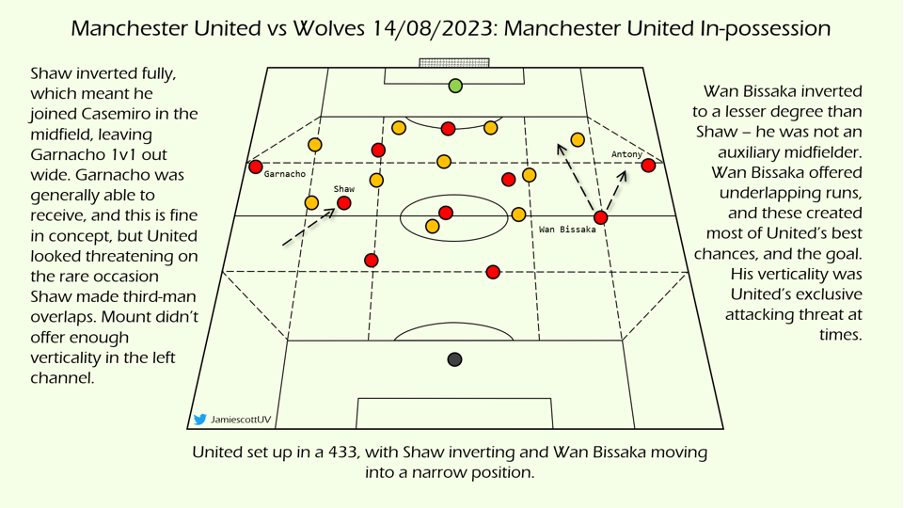
The wing-back is a product of its environment. You cannot understand the player without understanding the tactical machine they serve. Three formations are the primary hosts.
The 3-5-2: The Classic Laboratory
This is the purest expression. Three center-backs, two wing-backs, three central midfielders, two strikers. The wing-backs are the only wide players. Their movement dictates the team’s shape. When they attack, the formation becomes a 3-3-4. When they defend, it becomes a 5-3-2. Their success is the system’s success. Antonio Conte’s Chelsea title win with Victor Moses and Marcos Alonso is the textbook example.
The 5-3-2 / 5-2-3: The Defensive Shell
Often used by teams expecting pressure, this defensive formation with wing-backs starts with a back five. The wing-backs have a longer distance to travel to join the attack, making their sprits even more critical. They provide an outlet for long switches of play and must possess the quality to deliver a cross after a 60-yard run. It’s a brutal test of endurance.
The 3-4-3: The Attacking Gambit
Here, the wing-backs operate with wingers ahead of them. This seems contradictory, but it creates overwhelming width and numerical overloads. The wing-back’s role becomes more about combination play and underlapping runs, as seen in Thomas Tuchel’s Chelsea using Ben Chilwell and Reece James. It requires exquisite timing to avoid crowding the same space as the winger.
Choosing between these 11v11 soccer formations is a coach’s first major decision when building a team around wing-backs. Each demands a slightly different profile from the player.
The Non-Negotiable Attributes: What Makes a Wing-Back
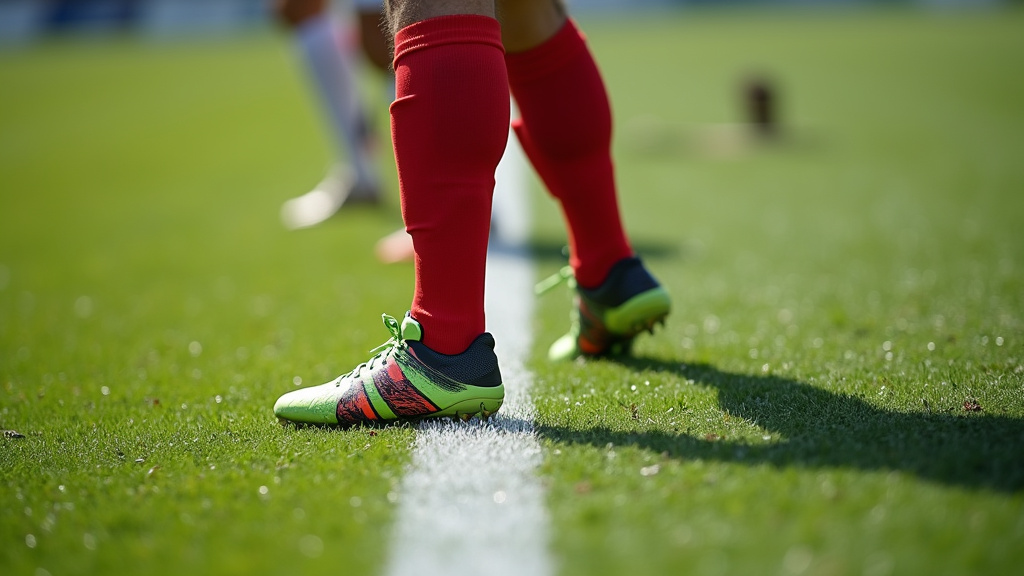
You can’t hide a weak player here. The position exposes every flaw. Here are the attributes that separate a good player from a system-defining wing-back.
- Elite Aerobic Capacity and Speed. This isn’t about jogging. It’s about repeating 30-meter sprints, over 100 times a game, with minimal recovery. GPS data from top leagues shows wing-backs consistently at the top of total distance and high-speed running charts. If your engine blows, the system collapses.
- Technical Proficiency Under Pressure. The ability to deliver a first-time, bending cross with your weak foot while a defender closes you down is a prerequisite. So is receiving a driven pass from your center-back with your back to the touchline and instantly finding a central midfielder.
- Tactical Intelligence (The “When”). Knowing when to go is easy. Knowing when not to go is the skill. If your central midfielders have just been bypassed, your job is to hold and form the back five, not continue an attacking run. This read of the game is coached, but it’s also instinctual.
- One-Versus-One Defensive Competence. You will be isolated against the opposition’s quickest, most skillful winger. You must be comfortable defending large spaces behind you, forcing them wide, and timing your tackle perfectly. A missed tackle here is a goal conceded.
- Mental Resilience. You will make 50 attacking runs and receive the ball 5 times. You will sprint 80 yards to cover a counter-attack only to see your team lose possession immediately. The role is a grind. The best, like Bayern Munich’s Alphonso Davies, treat every sprint like their first.
I once watched a talented young full-back at a regional academy get tried at wing-back in a 3-5-2. He was technically brilliant. By the 60th minute, his passing accuracy dropped 40 percent. He was simply empty. They moved him back to a back four the next week. The wing-back role isn’t an upgrade; it’s a different sport.
The Modern Evolution: The Inverted Wing-Back
Just when we thought we understood the role, Pep Guardiola broke it again. The “inverted wing-back” is perhaps the most significant tactical tweak of the last five years.
Instead of staying wide, players like Joao Cancelo at Manchester City would drift infield into central midfield areas when their team had possession. This does several things:
* Creates a numerical overload in the center, aiding possession.
* Allows the central defenders to spread wider, creating a back three in build-up.
* Frees up the attacking midfielders and wingers to push higher and narrower.
It turns the wing-back from a pure wideman into a central playmaker from deep. The requirement? Even better passing range, spatial awareness, and comfort in congested central areas. It’s a move that redefines the very concept of width and demands a player with the skills of a midfielder and the engine of a defender. This kind of innovation is why studying the football tactics books of pioneering coaches is essential for any serious student of the game.
TL;DR: The inverted wing-back trades traditional width for central control, requiring midfield playmaking skills and revolutionizing how teams build attacks from the back.
How a Wing-Back Changes Everyone Else’s Job
A great wing-back doesn’t just excel individually; they warp the entire team’s structure. Their presence has ripple effects.
- For the Center-Backs: The outside center-backs must be comfortable covering the wide channel when the wing-back is caught upfield. They also become the primary passing outlet to launch the wing-back on runs. Their diagonal pass is a key weapon.
- For the Central Midfielders: They must constantly scan to provide cover. If the right wing-back attacks, the right-sided central midfielder often holds to protect the space. They also look for switch-of-play passes to the opposite wing-back, stretching the game.
- For the Wingers (in a 3-4-3): Their relationship is a delicate dance. They must interchange, with one going wide and one cutting inside to avoid both occupying the same space. Constant communication is key.
- For the Striker(s): They must attack the box with precise timing, knowing the cross is coming from a specific, advanced wide area. They learn to anticipate the driven, low cross that is a wing-back staple.
This interconnectedness is why simply plugging a fast player into the role fails. The entire team must be drilled in the movements and responsibilities, a process that begins with a deep understanding of advanced tactical principles.
Training to Become a Wing-Back: A Sample Session
You can’t just run laps. The training must be position-specific, replicating the unique chaos of the role. Here’s a snapshot of a focused session.
Part 1: The Repeated Sprint Cross (15 mins)
- Set up a cone 30 yards from the touchline, and a goal/cone target in the penalty area.
- Start at the cone. Sprint to the touchline, receive a pass from a coach/feeder.
- Take one touch and deliver a cross to the target.
- Immediately sprint back to the starting cone. That’s one rep. Rest 45 seconds. Repeat 8-10 times.
- Skip this: Your crosses become loopy and inaccurate under fatigue, rendering every attacking run useless.
Part 2: Defensive Transition Rondo (20 mins)
- Play 5v2 in a 20×20 yard grid. The two defenders are wing-backs.
- If the possession team completes 10 passes, they play a long ball to a target player outside the grid. The wing-backs must immediately transition, sprint out of the grid, and close down the target player before a shot.
- This drills the mental and physical switch from compact defending to explosive recovery.
Part 3: Small-Sided Tactical Game (30 mins)
- Play 7v7 on a wide, short pitch (60×40 yards).
- One team must play in a 3-5-2 shape, the other in a 4-3-3.
- Freeze play frequently to correct the wing-back’s positioning relative to the outside center-back and central midfielder.
- The constraint forces the right decisions under fatigue.
This holistic approach, technical, physical, tactical, is what forges a true wing-back. It’s the difference between a player who plays the position and one who defines it for their team. For a young player trying to find your ideal position, understanding this level of specific demand is crucial.
Frequently Asked Questions
Can a full-back play as a wing-back?
Sometimes, but it’s a conversion, not a direct swap. The full-back must rewire their tactical brain for a three-back system and undergo specific conditioning for the higher, more isolated sprint workload. Many fail the stamina test.
Who are the best wing-backs in the world right now?
Reece James (Chelsea) and Alphonso Davies (Bayern Munich) are the modern benchmarks. James combines brute strength with a delivery like a central midfielder. Davies uses freakish acceleration to recover defensively and devastate offensively. Historically, the Wikipedia entry on the wing-back position highlights pioneers like Brazil’s Cafu.
Why don’t all teams use wing-backs?
The system requires three specialist center-backs and players with a very specific, rare physical profile. It also can leave teams vulnerable to quick switches of play if the wing-backs are caught high. Many coaches prefer the stability of a back four.
What’s the difference between a wing-back and a wide midfielder in a 4-4-2?
wide midfielder in a 4-4-2 shares defensive duties but is primarily an attacker. A wing-back is the defensive structure for their flank and the attacking structure. The wide midfielder has a full-back behind them; the wing-back has no one.
Is the wing-back a new position?
No. The term gained prominence in the 1990s with systems like Italy’s catenaccio evolution, but the concept of attacking full-backs is old. What’s new is the systematic, physical, and technical demands placed on the role in modern high-pressing, possession-based football.
How do you stop a good wing-back?
Pin them defensively by positioning your own winger high and wide, forcing them to stay home. When attacking, target the space behind them with quick counters and switches of play. Exhaust them by making them constantly turn and sprint.
The Bottom Line
The wing-back is soccer’s ultimate hybrid. It’s a position born from tactical ingenuity that demands a physical and technical freak. They are not glamorous strikers or playmaking midfielders, but the engines of modern systems like the 3-5-2. Their success dictates their team’s shape, width, and defensive solidity.
Understanding this role is key to understanding modern soccer. It explains why a manager like Antonio Conte is so system-dependent, why a player like Alphonso Davies is so valuable, and why the evolution towards “inverted” duties is happening. The next time you watch a match, don’t just watch the ball. Watch the lonely figure on the flank, sprinting into space for the 90th time. That’s the wing-back. The most complete, and punishing, job on the field. For anyone looking to build a team or a soccer coaching career, mastering the use of this position is a fundamental step.

I come from the “soccer heart” of Germany, the Ruhrpott. I have played, trained and followed soccer all my life and am a big fan of FC Schalke 04. I also enjoy following international soccer extensively.