Key Traits of a Great Box-to-Box Midfielder
This post contains affiliate links. As an Amazon Associate, we earn from qualifying purchases.
You’re watching a crucial match when your team wins possession deep in their own half. Before you can blink, your midfielder has surged forward, intercepted an opposition pass, driven 60 yards upfield, and arrived late in the box to slam home the winning goal. This isn’t just hard work—it’s the signature impact of an elite box-to-box midfielder. But what makes good box to box midfielder truly exceptional while others merely run themselves into exhaustion?
The difference lies in a precise combination of physical, technical, tactical, and mental attributes that transform relentless running into game-changing impact. Modern football demands more than just stamina—today’s top midfielders must deliver pinpoint passes after covering 12 kilometers, win tackles at critical moments, and arrive in the box with perfect timing. This guide reveals exactly what separates the truly elite box-to-box midfielders from the merely energetic.
Physical Demands That Separate Elite Box-to-Box Midfielders
Endurance Requirements Beyond Simple Stamina
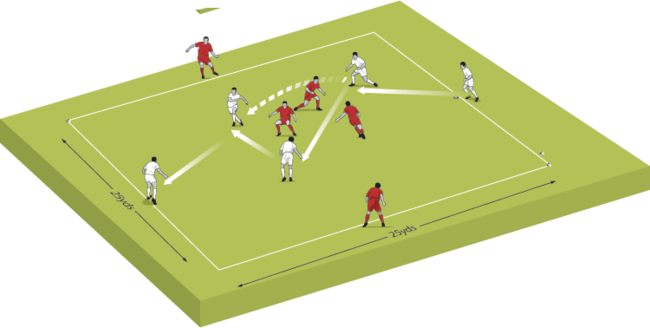
Elite box-to-box midfielders don’t just run—they perform high-intensity actions every 2-3 minutes for 90+ minutes. You’re covering 11-13 kilometers per match with 800-1200 meters at maximum intensity. Your heart rate stays at 85-90% of maximum while still delivering technically precise passes.
This isn’t casual jogging—it’s repeated 60-80 yard sprints from defensive third to attacking third. Top performers complete 50-70 sprints per match with less than 5% performance drop-off between efforts. Training must include 4×4 minute intervals at 90-95% maximum heart rate to build the specific endurance required.
Speed and Strength That Win Physical Battles
Your 30-meter sprint time must be under 4.0 seconds with acceleration from 0-20 meters in 2.8-3.2 seconds. But more crucially, you need the strength to shield possession: 1RM squat ratios of 2.0-2.5× bodyweight let you withstand 60-70kg challenges while maintaining balance.
Core strength exceeding 3-minute plank holds keeps you stable when receiving contact. Optimal height (175-185cm) and weight (70-78kg) balance aerial ability with low center of gravity for quick direction changes—essential when you’re executing 180-degree turns in under 0.8 seconds while maintaining ball control.
Technical Skills That Define Elite Box-to-Box Performance
Passing Range That Controls Game Tempo
Your short passing must hit 90%+ completion rates under pressure for passes under 20 yards. But the real separator? Long diagonal switches with 70-75% completion from 50-70 yards. Elite box-to-box midfielders deliver 15-20 progressive passes per 90 minutes, 60% of which break opposition lines.
During build-up, you must receive facing forward 70% of the time while maintaining 85%+ completion rates. This requires mastering pace variation—40-60% maximum ball speed for short passes, 80-90% for long switches—so you can instantly accelerate play when space opens up.
Ball Control Under Maximum Pressure
Your first touch must stay within 2 yards under no pressure, expanding to 3-4 yards when challenged. You need 90% success rate cushioning 40+ yard aerial balls while maintaining field vision—critical when receiving under pressure after a long clearance.
Trap and turn movements executed in under 2 seconds separate good from great. Elite performers maintain 85% ground pass reception, 80% knee-height, 75% chest-height, and 70% head-height success rates—ensuring technical reliability at every height under match conditions.
Tactical Intelligence: The Invisible Quality of Great Box-to-Box Midfielders
Positioning That Creates Five-Zone Dominance
Elite box-to-box midfielders master five distinct positional zones: defensive third screening, middle third half-spaces, and attacking third penalty box arrivals. You’re constantly scanning every 2-3 seconds—shoulder checking and using peripheral vision to anticipate play 2-3 seconds before ball reception.
During defensive phases, your screening position sits 8-12 yards in front of center-backs, cutting off passing lanes to forwards. In build-up, you create passing angles every 5-10 yards. This spatial awareness lets you transition from defensive action to offensive involvement within 3-5 seconds—winning the ball and immediately progressing play.
Transition Mastery That Wins Matches
The magic happens in transitions. You must recognize possession loss within 1-2 seconds and apply immediate pressure within 2-3 seconds. Elite midfielders delay opposition progression for 3-5 crucial seconds through intelligent counter-pressing positioning.
Your decision-making speed hits 0.5-1.0 seconds for pass selection during transitions. This lets you complete 2-3 quick transition passes within 5-8 seconds while accelerating play 40-50% faster than build-up speed—turning defense into attack before opponents can reorganize.
Mental Attributes That Sustain Box-to-Box Excellence for 90 Minutes
Decision-Making Under Maximum Fatigue
Processing speed separates elite performers: 0.3-0.5 seconds for simple decisions, 1.0-1.5 seconds for complex tactical choices. You must balance 60-40% safe-to-risky pass selection based on match state—even when your lungs are burning in the 85th minute.
Tempo control becomes critical—knowing when to accelerate counter-attacks or decelerate to maintain possession. Elite midfielders incorporate scoreline, time remaining, and tactical instructions into split-second decisions, maintaining 85-90% baseline performance under Champions League pressure.
Leadership Through Relentless Work Rate
Vocal organization happens every 15-20 seconds during defensive phases, guiding teammates’ positioning. True leadership manifests through work rate standards 10-15% above team average—covering 150-200 accelerations and decelerations per match.
This consistency comes from emotional regulation that maintains performance even when exhausted. Elite box-to-box midfielders recognize and adjust 2-3 tactical errors per match through constant self-correction, adapting to opposition tendencies within minutes.
Statistical Benchmarks: Measuring Box-to-Box Midfielder Impact
Offensive Production That Justifies the Role
Elite box-to-box midfielders deliver 0.15-0.25 xG and 0.20-0.35 xA per 90 minutes from midfield positions. They create 3-4 shot-creating actions while completing 8-12 progressive passes and covering 150-250 yards through progressive carries.
Late arrivals in the box generate 4-6 shooting opportunities per match with 25-35% conversion from 20-30 yards. Key passes (1.5-2.5 per match) and wall pass combinations (70-75% success rate in final third) demonstrate their offensive impact beyond just running.
Defensive Contributions That Win Possession
You’ll see 2.5-4.0 tackles per 90 minutes with 65-75% success rate, plus 1.5-2.5 interceptions and 8-12 ball recoveries. Aerial duel success rates of 55-65% complement 15-20 pressures per match (25-30% success rate).
Elite midfielders execute 70% standing tackles and 30% sliding challenges based on situation awareness. They anticipate passing lanes 0.5-1.0 seconds before execution, recognizing pressing triggers like backward passes and loose touches instantly.
Training Protocols to Develop Elite Box-to-Box Abilities
Position-Specific Physical Development
Your training must include 6×40m repeated sprints with 20-second recovery to mimic match demands. Combine this with 3-4 weekly strength sessions focusing on compound movements and 2 plyometric sessions emphasizing reactive strength.
Small-sided games (4v4 to 6v6) maintain 90-95% maximum heart rate while incorporating technical work under fatigue—exactly what you’ll face during match transitions. This specificity builds the unique endurance required to perform technical actions when exhausted.
Technical Repetition Under Match Conditions
Daily technical work must include 200-300 passes varying distance and pressure, plus 100-150 first touches under different conditions. Shooting practice requires 50-80 shots from match-realistic positions, emphasizing both feet (70% weaker foot accuracy).
Dribbling circuits of 20-30 repetitions covering 20-30 yards build the ball progression skills needed for 150-250 progressive yards per match. Tactical pattern rehearsal (15-20 repetitions) ensures your movement becomes instinctive during high-pressure moments.
Modern Evolution: What Today’s Box-to-Box Midfielders Must Adapt To
Multi-System Tactical Flexibility
Contemporary box-to-box midfielders must function across 3-5 tactical systems—from 4-3-3 single pivot to 3-5-2 central midfield. You’ll adjust pressing heights from mid-block to high press, modify defensive angles based on center-back characteristics, and vary positional rotations with full-back positioning.
This requires tactical instruction absorption implementing new concepts within 2-3 training sessions. Elite performers study 3-5 key opponents weekly, adjusting positioning based on opposition tendencies while covering 3-4 different midfield roles as required.
Data-Driven Performance Optimization
Top midfielders use GPS tracking monitoring 15-20 key performance indicators daily. Heart rate variability tracking optimizes recovery, while sleep monitoring targets 8-10 hours for maximum regeneration. Nutrition periodization adjusts carbohydrate intake (3-5g/kg body weight) based on training load.
Video analysis provides 2-3 angle feedback within 30 minutes post-training, while virtual reality sessions (15-20 minutes weekly) sharpen decision-making. Performance dashboards reviewing 10-15 key metrics daily turn raw data into actionable improvements.
Key Takeaway: Elite box-to-box midfielders combine marathon-runner endurance with sprinter explosiveness, world-class technical ability with tactical genius, and relentless work rate with intelligent decision-making. Master these elements—precision passing after 12km covered, tactical positioning across five zones, and split-second decisions under maximum fatigue—and you’ll control games from first whistle to last. What makes good box to box midfielder isn’t just running everywhere—it’s running everywhere with purpose, precision, and game-changing impact.

I come from the “soccer heart” of Germany, the Ruhrpott. I have played, trained and followed soccer all my life and am a big fan of FC Schalke 04. I also enjoy following international soccer extensively.