Soccer Body Workout Plan: Training for Elite Soccer Players
To build a soccer body, your workout plan must match your training phase: off-season for foundational strength (6-12 reps), pre-season for explosive power (plyometrics, Olympic lifts), and in-season for maintenance (1-2 sessions weekly). Prioritize compound lifts, unilateral work, and hamstring strength, then tailor volume and intensity to your position’s demands.
Most players get this wrong by training the same way all year. They lift heavy in-season and burn out, or they skip the gym in the off-season and show up to pre-season weak. The result is predictable: slow progress, nagging injuries, and a body that looks athletic but doesn’t perform like one on the pitch.
This guide maps the four critical phases of a soccer year to the exact lifts, sets, and recovery protocols used by academy and professional players. We’ll cover how a center-back’s squat differs from a winger’s, why your hamstrings are probably your weakest link, and how to structure a 45-minute session that actually makes you faster.
Key Takeaways
- Your training must follow a periodized plan: off-season for muscle and strength, pre-season for power and speed, in-season for maintenance, and active recovery after the season ends.
- Never skip unilateral leg work. Single-leg squats and lunges fix the muscle imbalances that cause groin strains and ACL tears in soccer players.
- Hamstring strength is non-negotiable. Weak hamstrings relative to quads are the single biggest predictor of a pulled muscle or worse. Progress from leg curls to Nordic curls.
- Train movements, not just muscles. A midfielder needs horizontal pushing (bench) for shielding and horizontal pulling (rows) for grappling, not just big legs.
- Recovery is a scheduled workout. If you don’t plan your sleep, nutrition, and soft-tissue work with the same diligence as your gym session, you are leaving performance and injury resistance on the table.
The 4 Phases of a Soccer Workout Plan
Forget training hard all the time. That’s how you break down by October. A professional approach uses periodization, changing your focus with the calendar to peak for competition. There are four distinct phases, and missing one ruins the next.
Phase 1: Off-Season (6-8 weeks). This is your foundation phase. The goal is hypertrophy and correcting imbalances from a long season. You’re in the gym 3-4 times per week with moderate weights (70-80% of your one-rep max) for higher reps (6-12). Volume is your friend. It’s also the time to address that tight left hip or weak right glute you’ve been ignoring. This phase builds the raw material, muscle and connective tissue strength, that the next phase turns into explosive power.
Phase 2: Pre-Season (4-6 weeks). Now you convert strength into soccer-specific power. Reduce pure lifting volume and introduce explosive movements. Your workouts blend heavy compound lifts (3-5 reps at 85%+ 1RM) with plyometrics like box jumps and medicine ball throws. This is where you bridge the gap between the gym and the pitch. Conditioning ramps up sharply here, often integrating sport-specific agility ladder drills into circuit training.
A structured 12-week program from a collegiate strength coach shows a clear transition: weeks 1-4 focus on foundational strength (squats, deadlifts), weeks 5-8 introduce power cleans and jump squats, and weeks 9-12 integrate conditioning circuits with sport-specific change-of-direction drills.
Phase 3: In-Season (Competition Period). The goal is maintenance, not improvement. You lift 1-2 times per week, focusing on high intensity and low volume to preserve neural pathways and strength without causing fatigue that hurts match performance. A typical in-season session is short, maybe 45 minutes, with compound lifts at 70-85% of your 1RM for just 2-3 sets. This is not the time to test your max squat.
Phase 4: Active Recovery (2-3 weeks post-season). You do not stop moving. Complete rest leads to stiffness and significant strength loss. Instead, engage in low-impact cross-training, swimming, cycling, hiking, and focus on mobility. This mental and physical break is critical before restarting Phase 1.
TL;DR: Lift for muscle in the off-season, for power in pre-season, and just enough to maintain in-season. Trying to build during competition will break you.
The Foundational Lifts You Cannot Skip
Your program needs a backbone of multi-joint, compound movements. These exercises train your body to work as a coordinated unit, translating directly to sprinting, jumping, and winning duels. Isolated leg extensions have their place, but they come later.
Start with the back squat. It builds quad, glute, and core strength essential for jumping and holding off challenges. A common mistake is going too deep too fast with poor ankle mobility, which rounds the lower back. Work on ankle dorsiflexion first.
The deadlift is your posterior chain king. It targets the glutes, hamstrings, and lower back, the engine for sprinting and the armor for your spine. Most soccer players are quad-dominant; the deadlift balances that. If conventional deadlifts bother your back, switch to trap-bar or Romanian deadlifts (RDLs).
Upper body work is not for show. The bench press and weighted pull-ups build the pushing and pulling strength needed for shielding the ball and winning aerial battles. Cole Palmer’s released upper-body routine underscores this: basic pushes, pulls, and rotation.
Common mistake: Skipping unilateral work, this guarantees the dominant-leg muscle imbalance that causes overuse injuries in the hip and groin on the weaker side within 6-8 weeks of intense training.
You must include unilateral exercises. Bulgarian split squats, rear-foot-elevated split squats, and single-leg RDLs force each leg to work independently. They reveal weaknesses your strong leg hides in a bilateral squat. They also improve stability in single-leg landing, a frequent soccer movement.
Here is a sample off-season foundational day:
| Exercise | Sets x Reps | Primary Focus | Regression if Needed |
|---|---|---|---|
| Back Squat | 4 x 8 | Quad/Glute Strength | Goblet Squat |
| Romanian Deadlift | 3 x 10 | Hamstring/Glute Development | Dumbbell RDL |
| Bench Press | 3 x 8 | Horizontal Push Strength | Dumbbell Bench Press |
| Bent-Over Barbell Row | 3 x 10 | Horizontal Pull Strength | Chest-Supported Row |
| Bulgarian Split Squat | 3 x 10 (each leg) | Unilateral Strength & Balance | Stationary Lunges |
Why Your Hamstrings and Core Are Your Secret Weapons

YouTube analyses of pro player routines show an obsession with core and hamstring work. They’re right. These muscle groups are the difference between a powerful, resilient athlete and one who is perpetually injured.
Your core is not just your abs. It’s a complex cylinder of muscles that resists movement. Soccer is a game of resisting force, staying upright in a tackle, maintaining balance on a cut, transferring power from legs to shot.
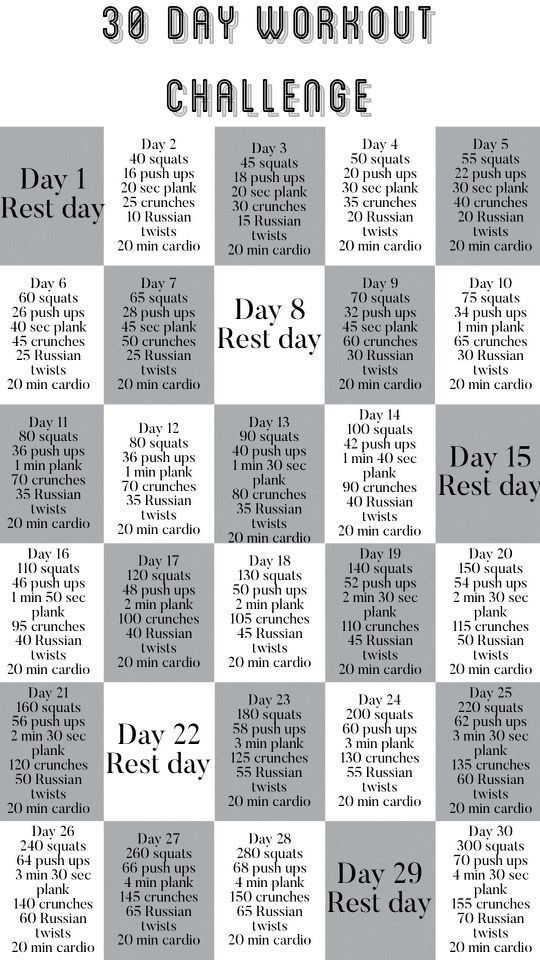
Pro footballers spam anti-extension, anti-rotation, and anti-lateral flexion exercises. The core is the limiting factor when generating force standing up. Great core strength decreases injury risk, wins duels, and unlocks power.
Train your core for stability, not for flexion. Crunches are low-value. High-value exercises include:
* Dead Bug: Trains anti-extension. Prevents your lower back from arching under load.
* Pallof Press: Trains anti-rotation. Teaches your core to resist twisting forces.
* Side Plank: Trains anti-lateral flexion. Crucial for stabilizing during side-to-side cuts.
Your hamstrings are your braking system. They contract eccentrically to slow your leg during a sprint stride and stabilize the knee during cutting. Weak hamstrings relative to powerful quads are a recipe for a strain or an ACL injury.
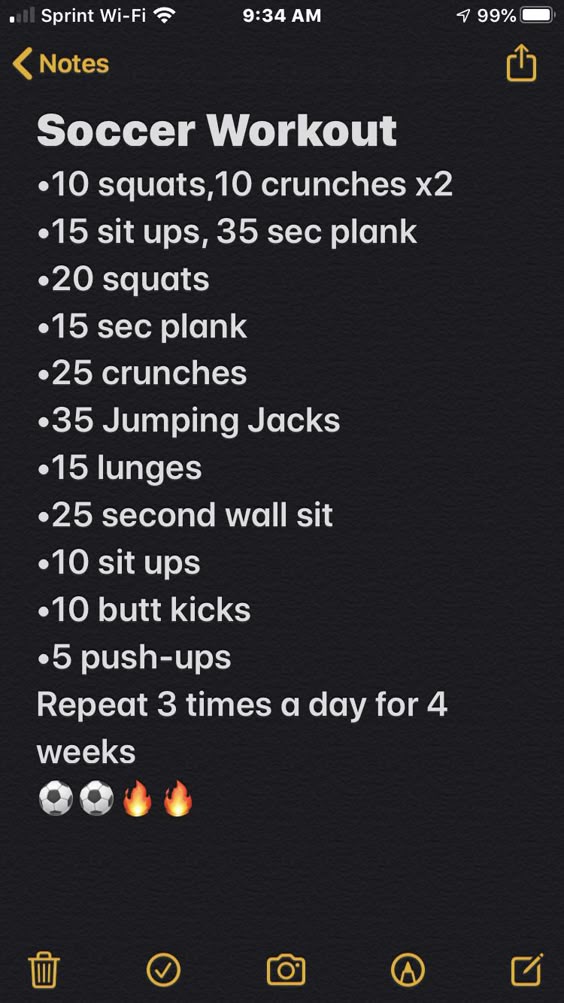
The progression is clear. Start with lying leg curls to learn the contraction. Move to Romanian deadlifts for strength through a longer range of motion. The gold standard is the Nordic curl. It’s brutally hard because it trains the hamstring’s primary soccer job: eccentric deceleration. If you can’t do a full Nordic, start with a band-assisted version or a slider leg curl.
TL;DR: A strong core transfers power and prevents collapse in contact. Strong hamstrings prevent the most common soft-tissue injuries in the sport. Neglect them at your own peril.
Position-Specific Strength Priorities

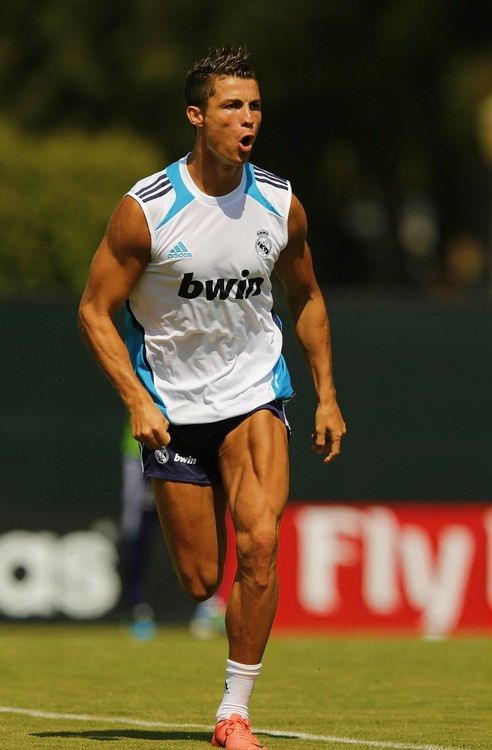
A one-size-fits-all plan wastes time. Your position on the pitch dictates your physical priorities. A center-back and a winger have different jobs, and their training should reflect that.
Forwards / Wingers: Explosive Power and Acceleration.
Your gym work mimics your game: short, violent efforts. Prioritize exercises that develop fast-twitch muscle fiber recruitment.
* Power Focus: Olympic lift variations (clean pulls, push presses), jump squats, and sled pushes.
* Why: These movements teach rapid force production. The transfer to exploding past a defender or onto a through ball is direct. Your shooting power and accuracy also stems from this explosive base.
* Sample Emphasis: After your main squat, perform 4 sets of 3 box jumps, resting 90 seconds between sets. Quality over quantity.

Center-Backs / Defensive Midfielders: Absolute Strength and Stability.
You are the team’s bulwark. Your training builds the strength to win headers and hold position, and the stability to absorb contact.
* Strength Focus: Heavy squats and deadlifts (3-5 rep range), weighted carries (farmers walks, suitcase carries), and isometric holds.
* Why: Maximal strength is crucial for aerial duels and holding off forwards. Stabilizing under heavy load trains the joints and connective tissue for the unpredictable impacts of defending.
* Sample Emphasis: Finish a heavy squat session with 3 sets of a 30-second plank. Add a 25-pound plate to your back.
Midfielders / Full-Backs: Strength-Endurance and Multi-Directional Agility.
You cover the most distance run in a match. Your body must produce force repeatedly and in all directions.
* Work Capacity Focus: Circuit training that blends strength and conditioning. Think sandbag cleans into shuttle runs. Incorporate lateral movement drills like lateral lunges and slideboard work.
* Why: You need the muscular endurance to make a tackle in the 88th minute and the agility to change direction instantly. Your training should be the most metabolically demanding.
* Sample Emphasis: A circuit of 5 dumbbell thrusters, 10 pull-ups, and a 100-meter sprint, repeated 5 times with 2 minutes rest.
Integrating Recovery and Nutrition
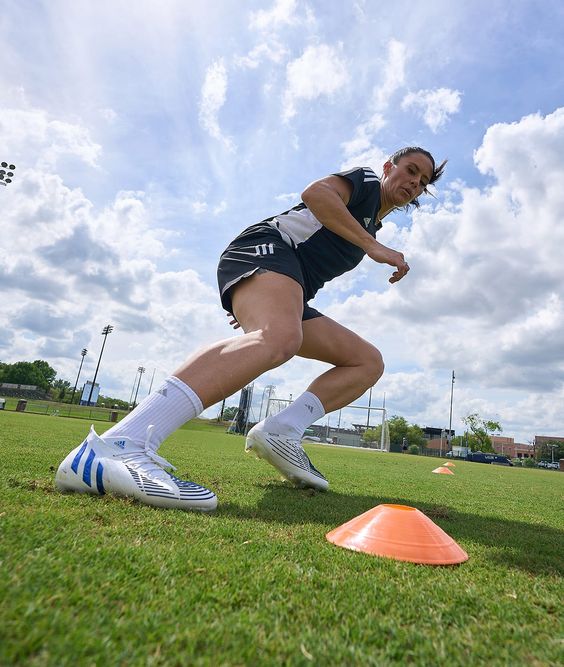
Training breaks muscle down. Recovery builds it back stronger. If you don’t schedule recovery with the same intent as your workout, you are not training, you are just exercising until you get hurt.
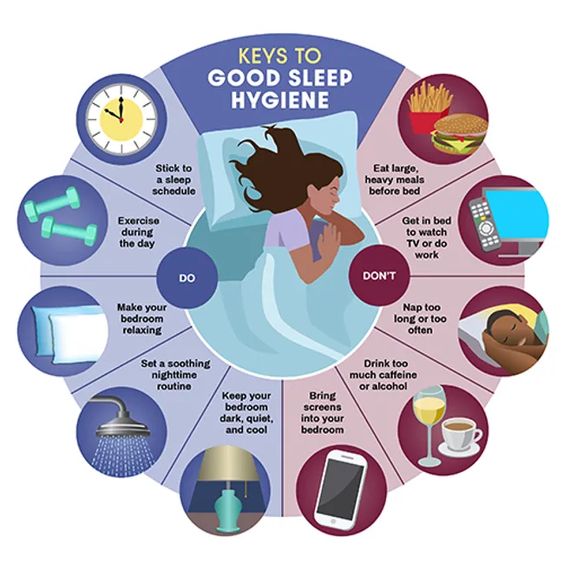
Sleep is your most potent recovery tool. Aim for 7-9 hours per night. Growth hormone, which repairs tissue, is primarily released during deep sleep. One study on academy players showed that extending sleep to 10 hours per night significantly improved sprint times and shooting accuracy.
Nutrition provides the building blocks. Your soccer player nutrition plan should focus on whole foods. Consume protein (chicken, fish, eggs, lentils) within 45 minutes post-workout to kickstart muscle synthesis. Carbohydrates (rice, potatoes, oats) replenish the glycogen stores you burn during high-intensity training and matches. Don’t fear healthy fats (avocado, nuts, olive oil); they support hormone function.
Active recovery is not sitting on the couch. It’s a 20-minute bike ride, a swim, or a dynamic mobility session. It increases blood flow to sore muscles without adding stress. Foam rolling and using a massage gun on your quads, IT bands, and calves can work out knots and improve tissue quality.
Before you start: Dehydration reduces strength output by 2% for every 1% of body weight lost in sweat. Drink water consistently throughout the day, not just during training. Ignoring this leads to premature fatigue and cramping.
Your gear can aid recovery. Wearing compression shorts post-training may improve blood flow and reduce perceived muscle soreness. For players with a history of instability, proactive use of ankle support braces during heavy lifting or plyometrics is a smart preventive measure.
Finally, organize your life to support recovery. Keep your football gear bag packed with clean training clothes washed with a proper uniform cleaning detergent to prevent skin irritation. The mental load of disorganization is a subtle stressor.
Frequently Asked Questions
How many days a week should a soccer player lift weights?
It depends entirely on the phase. In the off-season, 3-4 days. In pre-season, 2-3 days with a focus on quality. During the in-season, 1-2 maintenance sessions per week is standard. Never lift the day before a match.
Should soccer players do high reps or low reps?
You need both, at different times. The off-season uses moderate reps (6-12) for muscle growth and work capacity. The pre-season uses lower reps (3-5) with heavier weight to build maximal strength and power. The in-season uses moderate loads (70-85% 1RM) for low volume to maintain.
What is the most important exercise for soccer players?
There is no single exercise, but the most neglected priority is hamstring strength. The Nordic curl, or its regressions, is arguably the most important supplemental exercise for injury prevention. For overall athletic development, the back squat and deadlift are foundational.
How do you balance gym workouts with soccer practice?
Schedule your heaviest lifting on the day after your hardest practice or match, when your body is already in a recovery phase. Do your speed and power work (plyometrics, sprints) on the same day as a technical, low-intensity practice. Always prioritize the pitch over the gym.
Can you get too bulky for soccer?
Yes, if you train and eat like a bodybuilder. Soccer training emphasizes relative strength (strength per pound of bodyweight) and power. You want dense, functional muscle, not mass for its own sake. This is achieved through compound lifts, explosive work, and a diet focused on performance, not excessive calories.
The Bottom Line
Building a soccer body isn’t about random workouts. It’s a year-long project with four distinct chapters: build a foundation, convert it to power, maintain through the grind, and actively recover. The players who last are the ones who understand that the 45 minutes in the gym are only part of the story.
The other part happens when you’re not training. It’s the extra hour of sleep, the post-training protein shake, the ten minutes spent rolling out your legs, and the discipline to put the heavy weights away during the season. Your soccer rebounder training for touch is skill work, but the power behind the pass comes from the deadlifts and split squats you did months ago.
Start by identifying your current phase. Pick the three compound lifts you’ll build your program around. Then, without fail, add hamstring and core stability work. Do that consistently across a full annual cycle, and the difference won’t just be in the mirror. You’ll feel it in the 75th minute, when you’re still the strongest player on the ball.
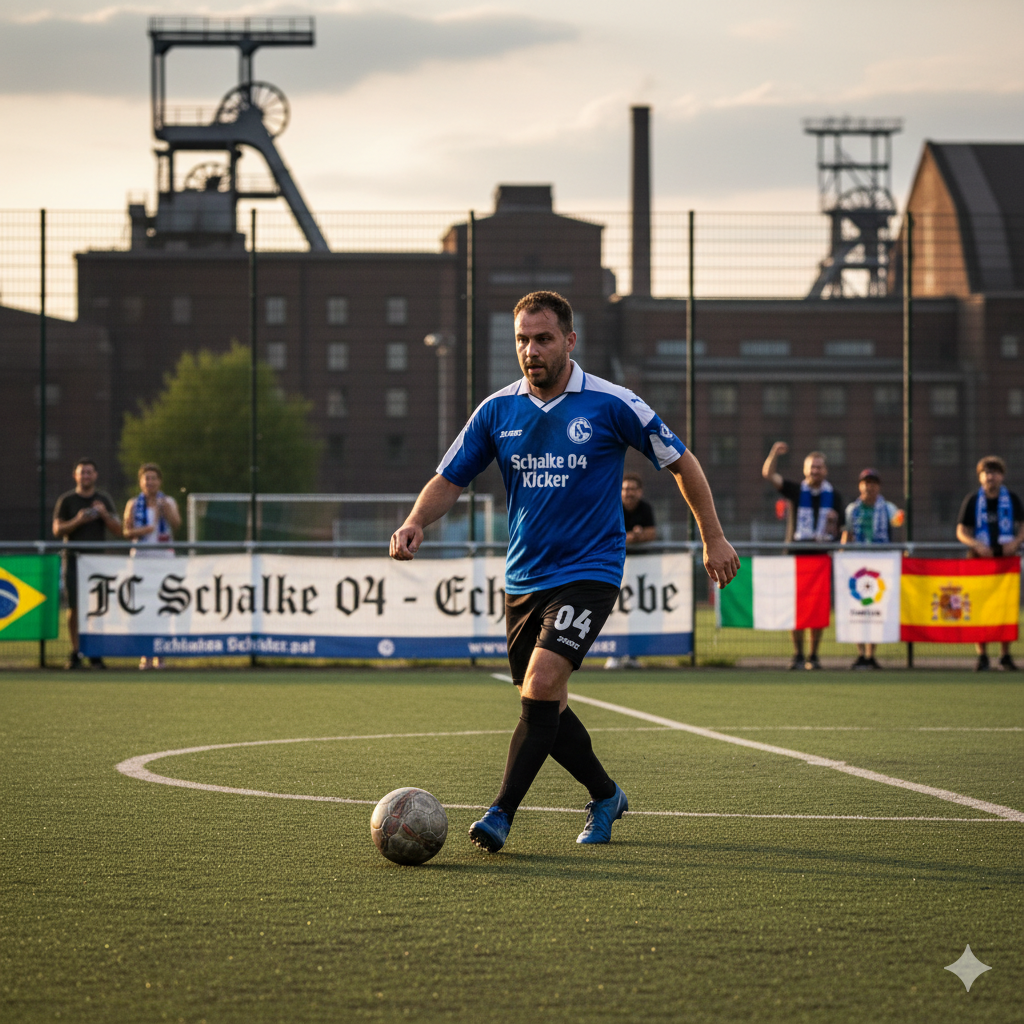
I come from the “soccer heart” of Germany, the Ruhrpott. I have played, trained and followed soccer all my life and am a big fan of FC Schalke 04. I also enjoy following international soccer extensively.