Who Invented Soccer and Where It Originated
This post contains affiliate links. As an Amazon Associate, we earn from qualifying purchases.
You’ve probably kicked a soccer ball at some point in your life, but do you know exactly who invented soccer and where this global phenomenon began? While ancient civilizations played foot-based ball games for centuries, the modern sport we recognize today was officially created in a London tavern on October 26, 1863. This pivotal moment transformed chaotic village games into a standardized sport that would eventually captivate billions worldwide. Discover the surprising truth about soccer’s origins—why China’s ancient military drills, Greek athletic competitions, and Aztec rituals weren’t “soccer” as we know it, and how England’s rule-makers established the definitive framework for the world’s most popular sport.
Ancient Soccer Ancestors Across Civilizations

China’s Cuju: Military Training That Shaped Soccer’s Foundation
Centuries before modern soccer existed, Chinese soldiers were perfecting their foot skills through Cuju (pronounced “coo-chu”). Dating back to the Han Dynasty around 206 BCE, this military training exercise required soldiers to kick a leather ball stuffed with feathers through a small opening suspended between bamboo poles. The Chinese military recognized Cuju’s value for developing coordination, strategic thinking, and physical endurance—qualities essential for battlefield success. FIFA officially acknowledges Cuju as soccer’s earliest documented ancestor, though it lacked standardized rules and competitive structure. When you watch modern players execute precise through-balls, you’re witnessing the evolutionary legacy of these ancient Chinese drills.
Critical differences from modern soccer:
– Single goal opening instead of a full net
– Ball filled with organic materials rather than air
– Primarily individual skill demonstration
– No team competition structure
Greek Episkyros and Roman Harpastum: Early Ball Game Evolution
While China developed kicking-focused games, ancient Greeks created Episkyros around 800 BCE using an inflated pig bladder as the ball. This high-energy contest allowed players to use both feet and hands to drive the ball across opponent boundaries. Greek playwright Antiphanes documented these matches, highlighting their strategic complexity. The Romans later adapted Episkyros into Harpastum, featuring a smaller, harder ball that encouraged more physical contact. These games spread throughout the Roman Empire, potentially influencing later European ball traditions. The next time you see a soccer player use their chest to control a ball, remember they’re continuing a tradition that began with Greek athletes over 2,800 years ago.
Mesoamerican Ritual Games: Soccer’s Dramatic American Cousins
In the jungles of Central America, Aztec and Mayan civilizations developed Tlachtli (or Ullamaliztli) around 1400 BCE—centuries before European contact. Using solid rubber balls unique to the Americas, this ritualistic game combined elements of soccer, basketball, and volleyball. Players struck the ball with hips and thighs to pass it through stone rings mounted high on temple walls. Unlike modern soccer’s penalty shootouts, Tlachtli’s losing team sometimes faced human sacrifice—a stark reminder of how dramatically the sport has evolved from its ritualistic origins. While culturally significant, these games lacked the standardized rules that would eventually define soccer as a global sport.
England’s Football Chaos Before Standardization
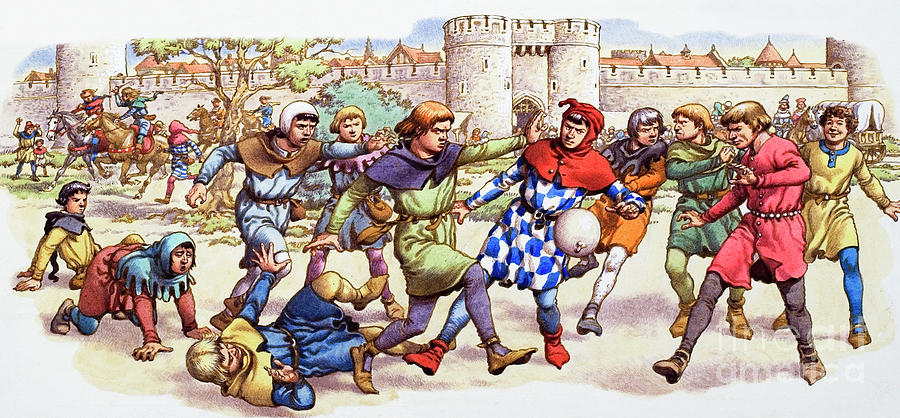
Medieval Folk Football: The Unruly Ancestor
Between 1066 and 1500 CE, medieval England witnessed the emergence of folk football—a chaotic, often violent spectacle that bears little resemblance to today’s organized matches. Villages would field hundreds of players who battled across the countryside, attempting to move an animal-bladder ball toward churches or town gates. These matches frequently resulted in property damage and injuries severe enough to prompt multiple royal bans from English monarchs. The next time you complain about a referee’s controversial call, consider that early “games” had no officials, no boundaries, and no mercy—just raw competition that often turned deadly.
Renaissance Calcio: Soccer’s First Organized Form
Florence, Italy introduced the first organized version of soccer during the 1400s with Calcio Fiorentino. Aristocrats formed 27-player teams competing on rectangular fields with goals at each end. Though Calcio combined soccer, rugby, and wrestling elements, it established crucial organizational principles: structured teams, defined playing areas, and scheduled matches. This sophisticated game became so popular that even Pope Clement VII played in a Calcio match before his papacy. While Calcio never evolved into modern soccer, its organizational framework directly influenced later standardization efforts in England.
The Definitive Moment: Soccer’s Official Birth
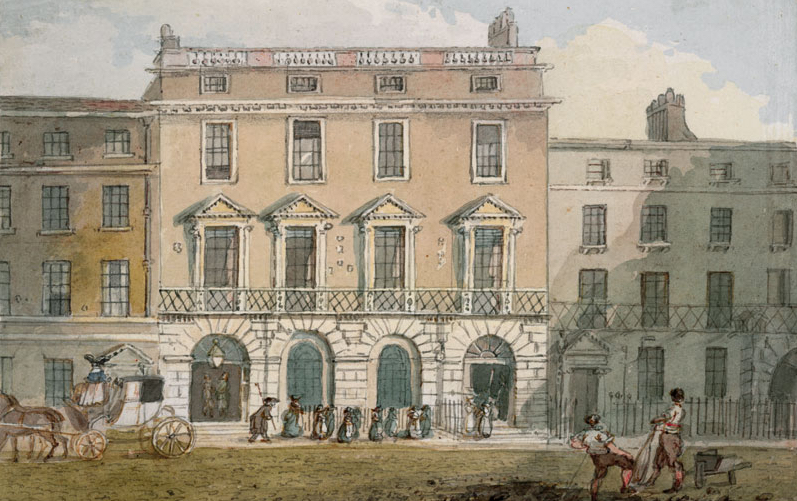
Freemasons’ Tavern: Where Soccer Was Born
On October 26, 1863, eleven London clubs and schools gathered at the Freemasons’ Tavern on Great Queen Street to change sports history forever. This meeting established The Football Association—soccer’s first governing body—and created the standardized rules that transformed regional variations into a unified global sport. The location itself—a working-class London tavern—symbolizes soccer’s egalitarian origins as a social activity rather than elite pastime. When you attend a modern stadium match, you’re participating in a tradition that began with these pioneering clubs debating rules over pints in a London pub.
Founding clubs that created modern soccer:
– Barnes Football Club
– Civil Service Football Club
– Crusaders Football Club
– Original Crystal Palace (founded 1861)
– Blackheath Football Club
– War Office Club
Ebenezer Cobb Morley: Soccer’s Rule-Making Architect
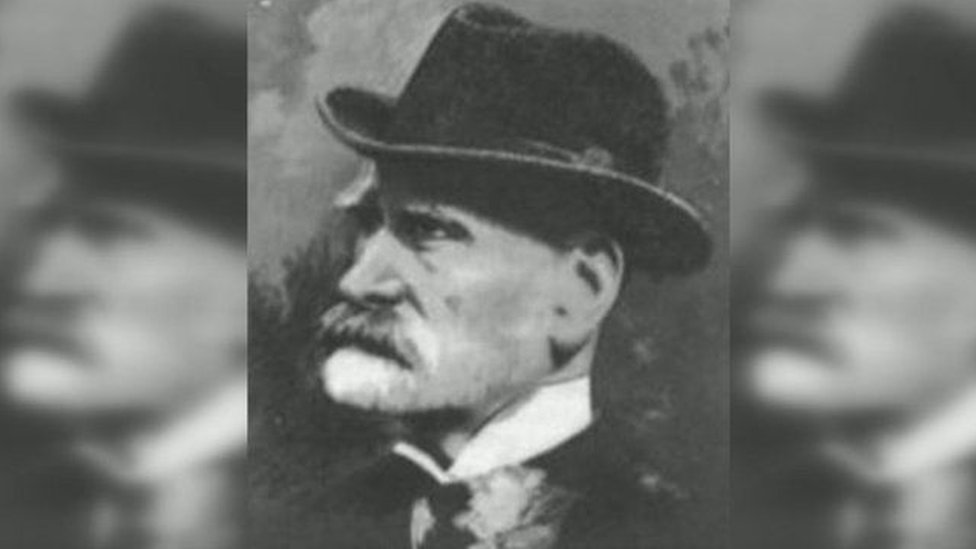
Ebenezer Cobb Morley (1831-1924), a Hull-born solicitor practicing in London, emerged as soccer’s primary architect. As the FA’s first secretary, Morley drafted the original 13 Laws of the Game, published in Bell’s Life newspaper on December 8, 1863. His legal expertise proved crucial in creating enforceable, standardized rules that distinguished soccer from rugby. Morley’s most revolutionary decisions included banning players from carrying the ball and establishing throw-ins for out-of-bounds plays—fundamental elements that still define soccer today. Without Morley’s systematic approach, soccer might have remained just another regional variation of football.
Morley’s game-changing rules:
– No hands allowed (creating soccer’s fundamental distinction from rugby)
– Throw-ins when ball crosses touchline
– Corner kicks for defensive errors near goal
– Standardized ball specifications (27-inch circumference)
Why “Soccer” vs. “Football” Terminology Confuses Everyone
Oxford Slang’s Unexpected Legacy
The term “soccer” originated in 1889 England through Oxford University’s “-er” slang tradition. Students shortened “association football” to “assoc football,” then “assoccer,” finally becoming “soccer.” This upper-class distinction helped differentiate soccer from “rugger” (rugby football). Ironically, while England invented both terms, Americans adopted “soccer” to distinguish it from American football, while Britain kept “football” as the primary term. The next time you hear fans arguing about terminology, remember they’re debating linguistic history that began with Oxford students over 130 years ago.
Global Naming Confusion Explained
Regional terminology differences:
– United States/Canada: “Soccer” (to distinguish from gridiron football)
– United Kingdom: “Football” (the original term)
– Australia: Context-dependent usage of both terms
– FIFA: Officially “football,” but recognizes “soccer” in English-speaking countries
This linguistic divide causes constant confusion, but understanding its origins helps clarify why the sport has two names. When you use “soccer” in England, you’re actually using a term invented there to distinguish between football codes—a delicious historical irony.
The True Answer to Who Invented Soccer and Where
Modern soccer wasn’t invented by a single person but through England’s organizational genius at the Freemasons’ Tavern on October 26, 1863. While ancient civilizations played ball games with their feet for millennia, only England provided the crucial framework of standardized rules and governing structure that transformed regional variations into the globally unified sport we know today. Ebenezer Cobb Morley stands as soccer’s primary architect through his authorship of the 13 Laws of the Game, but credit also belongs to the collective effort of those eleven founding clubs.
The definitive answer to “who invented soccer and where” reveals a fascinating truth: soccer’s invention wasn’t about creating something entirely new, but about standardizing existing practices into a coherent sport. England’s contribution was organizational rather than inventive—the crucial difference between chaotic folk games and the structured global phenomenon that now captivates billions.
Final Note: When discussing soccer’s origins, always distinguish between ancient ball games (which existed worldwide) and modern soccer (which began in England in 1863). This prevents confusion between recreational foot games and the codified sport governed by standardized rules. The next time you watch a World Cup match, remember you’re witnessing the legacy of that historic London meeting where a group of clubs transformed football chaos into the beautiful game.

I come from the “soccer heart” of Germany, the Ruhrpott. I have played, trained and followed soccer all my life and am a big fan of FC Schalke 04. I also enjoy following international soccer extensively.