The Reason Soccer Fans Sing: Psychology, History of Chants
Soccer fans sing during matches to forge a powerful collective identity, actively support their team, and intimidate opponents. This communal ritual, rooted in centuries-old traditions of group singing, transforms individual spectators into a unified force that can sway the emotion of a game and create a profound sense of belonging.
Most people watching from home hear the noise as just background atmosphere. They miss the intricate language being spoken. The chants are a conversation – with the players, with the rival fans, and most importantly, with each other. This isn’t passive watching. It’s active, coordinated participation.
This guide breaks down the history, psychology, and raw power behind the songs. We’ll look at why a Rodgers and Hammerstein show tune became a global football anthem, how singing literally changes brain chemistry, and why the best atmospheres feel less like a sports event and more like a primal gathering.
Key Takeaways
- Singing is a non-negotiable identity marker. It instantly defines who you support and creates a tangible “us versus them” boundary in the stadium.
- The energy flow between fans and players is a real, reciprocal loop. Chants can lift a struggling team, and a moment of brilliance on the pitch will ignite the stands.
- Synchronized singing and movement triggers a “muscle bonding” effect, releasing neurochemicals that fuse individual identities into a collective one, explaining the emotional high.
- Modern chanting culture was revolutionized in the 1960s, particularly by Liverpool fans on the Kop, who began adapting pop songs, a practice that spread worldwide.
- While some chants are aggressive, many serve as emotional regulation tools, alchemizing nervous energy or frustration into a unified, cathartic release.
The Core Reasons Fans Sing: Identity, Support, and Intimidation
The roar isn’t random. It serves three distinct, powerful functions that operate simultaneously every matchday. Missing one means you only hear two-thirds of the conversation happening in the stands.
First and foremost, singing is about identity. In a crowd of sixty thousand, you are no longer just a person. You are part of an organism. The songs you know, the melodies you shout, are your membership card. This is why derby matches are so acoustically fierce. Each set of fans is sonically fencing their territory, asserting their presence through decibels and lyrical tradition. It’s a tribal declaration.
Common mistake: Thinking all chants are about the opposition. The vast majority are inward-facing – celebrating your own club’s history, players, or community. This is the glue.
Second, chants are direct support. Think of them as vocal fuel. A team pushing for a late winner feeds off a rising crescendo. The players hear it. Studies on home advantage often point to crowd influence as a tangible factor. It’s not magic. It’s a feedback loop of encouragement and demand. A quiet stadium after a conceded goal feels heavy. A loud one that responds with a defiant old song can lift shoulders on the pitch. You can see the physical reaction.
Third, there’s the intimidation and rivalry function. This is the external weapon. Chants here target the opposition’s mistakes, their history, or their fans. The best ones use sharp wit or historical references only insiders fully grasp. At its worst, it crosses lines. At its most effective, it gets inside players’ heads. A goalkeeper taking goal kicks in front of a baying, singing stand for 45 minutes is under a different kind of pressure.
TL;DR: Fans sing to say “this is who we are,” to push their team forward, and to get under the skin of the opponent. All three goals are achieved through a shared vocal playbook.
The Psychological Engine: Why Singing Together Feels So Powerful
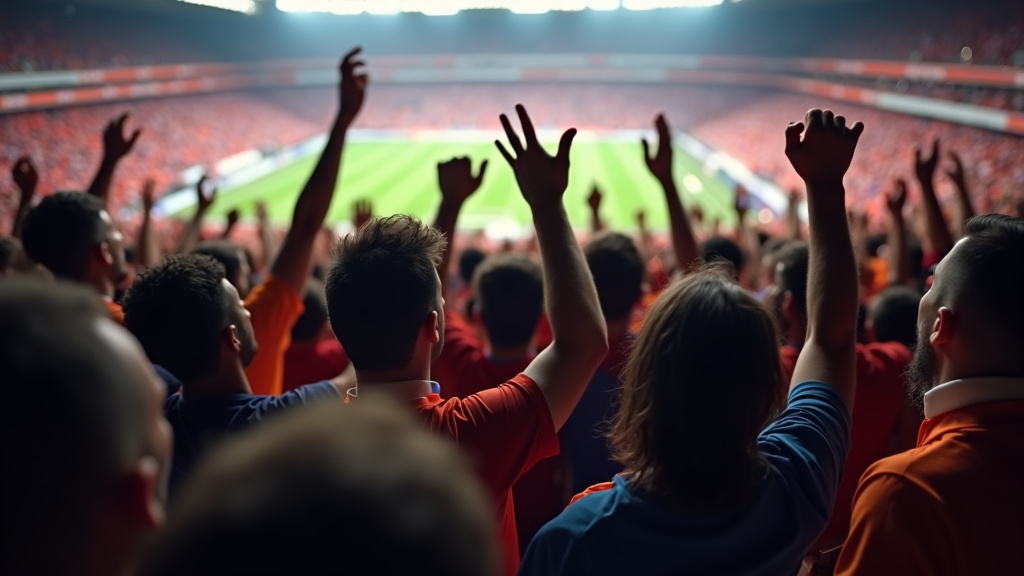
The feeling isn’t just emotional. It’s biological. When you stand shoulder-to-shoulder, swaying in sync and shouting the same words, your brain and body undergo a subtle change. Scientists call this “muscle bonding” or “identity fusion.”
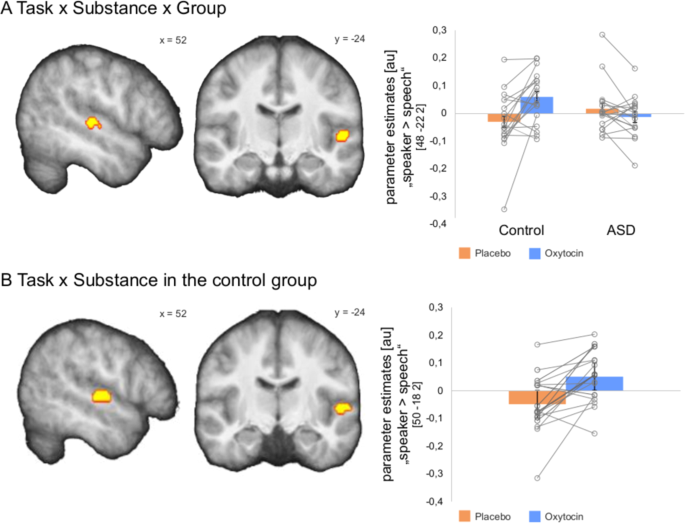
The act of synchronized movement and vocalization releases endorphins and oxytocin. These neurochemicals promote bonding and elevate mood. They blur the line between self and group. This is why you might hug a stranger after a last-minute winner. For those 90 minutes, the collective identity overrides the individual one. An academic Frontiers study on fan rituals frames the stadium as a “modern ritual space,” where this choreography of belonging serves as a powerful tool for collective emotion regulation.
The stadium becomes a pressure cooker for emotion. Singing is the release valve. It takes the raw, nervous energy of 50,000 people and channels it into a single, manageable rhythm. Without it, that energy would diffuse into anxiety or anger.
This explains the almost spiritual tone some fans use. Frank Monaghan, an expert cited by Goal.com, compared it to a congregation singing hymns. The structure is similar: call and response, familiar texts, a shared purpose that feels bigger than any one person. It’s active participation, not passive consumption. You are in the chorus line of the drama.
The evolutionary psychologist Steven Mithen argues this taps into something ancient. Communal singing predates complex language as a tool for social bonding and coordination. In a way, a football crowd is tapping into a deep, primal instinct to use synchronized sound to define the tribe and face a shared challenge. The challenge just happens to be 90 minutes against the local rivals.
The Historical Echo: From Hymns to the Kop
To think this started with modern football is to miss a thousand years of history. The roots of collective fan singing stretch back to the 16th century and the Protestant Reformation. Martin Luther, the German theologian, championed congregational hymn singing in the vernacular. His goal was to make worship a participatory, communal experience for the people, not a spectacle performed for them by priests. He unleashed, as music scholar John Butt notes, a “fire” of collective voice.
That fire found new secular cathedrals: the football grounds. Early matchday sounds in the late 1800s were often brass bands playing popular tunes of the day. The singing was there, but tamer. The real revolution came in the 1960s, spearheaded in England. Liverpool’s famous Spion Kop stand, a vast, steep terrace, became an acoustic crucible. Fans there began creatively adapting the pop songs of the era, changing lyrics to fit their players and their plight.
This was a seismic shift. Fans were no longer just singing existing songs about football; they were creating football’s own folk music by repurposing the soundtrack of their daily lives. This practice of lyrical adaptation became the global blueprint for soccer chants. The Wikipedia entry on football chants documents this evolution, showing how the repertoire moved from simple cheers to the complex, song-based culture we know today.
| Era | Primary Sound | Fan Role | Example |
|---|---|---|---|
| Late 1800s – 1950s | Brass bands, simple cheers | Passive audience | “Play up, lads!” |
| 1960s – 1970s | Adapted pop/rock songs | Active co-creators | Liverpool fans adapting “You’ll Never Walk Alone” |
| 1980s – Present | Mixed: classic adaptations, new riffs, call-and-response | Curators & innovators | “Seven Nation Army” riff, personalized player songs |
This history is vital. It shows today’s chant traditions aren’t spontaneous combustion. They are a living folklore, passed down and modified through generations. Each club has its own sonic fingerprint, a key part of its unique supporters’ traditions.
Anatomy of an Anthem: The Case of “You’ll Never Walk Alone”
No song better illustrates the journey from external source to internal heartbeat than “You’ll Never Walk Alone.” It’s the ultimate case study. Originally from the 1945 Rodgers and Hammerstein musical Carousel, it was a hit for Liverpool band Gerry and the Pacemakers in 1963. Fans at Anfield, always keen to adopt a local song, started singing it.
But it transcended a mere pop cover. The lyrics – “Walk on, walk on, with hope in your heart” – resonated with the collective struggle and resilience inherent in supporting a team. It became a promise of solidarity between fans and club. Then, after the Hillsborough disaster in 1989, where 97 Liverpool fans lost their lives, the song took on a sacred, memorial dimension. It became a bridge to the lost, a vow to remember, and a source of communal solace.
I’ve stood in the Schalke 04 end at the Veltins-Arena when things were going badly. The whole stadium starts groaning. Then one stand begins our old, slow anthem “Blau und Weiss, wie lieb ich Dich” (Blue and White, how I love you). It’s not a roar. It’s a stubborn, grinding hum. And it works. It doesn’t always change the score, but it changes the feeling in the pit of your stomach from despair to defiance. That’s the power of a true anthem.
Its adoption by clubs like Celtic, Borussia Dortmund, and Feyenoord shows its universal appeal. The song provides a template: a simple, soaring melody with lyrics of solidarity that can be claimed by any community facing a struggle. It demonstrates how a famous supporter song can evolve far beyond its origin to become the emotional core of a global fan culture.
The Modern Matchday: Rituals, Tifos, and Global Culture

Singing is the soundtrack, but it’s part of a larger sensory package. The modern supporter section is a choreographed display. The singing is synchronized with scarf-waving, flag-flipping, and jumping. This isn’t chaos. It’s planned, often by the organized supporter groups known as ultras.
These groups are the architects of the atmosphere. They organize the large tifo displays that unfurl before kickoff, they lead the chants via megaphones, and they set the visual and auditory tone. Understanding the ultras subculture is key to understanding the modern intensity of fan singing. It’s a culture distinct from the violence-associated hooliganism, focused instead on visual and vocal support – a crucial fan culture distinction.
The rituals extend to personal showing team spirit. Wearing the colors, knowing the songs, participating in the pre-match march to the stadium – these are all acts of commitment that prime the individual for the collective experience. In a massive UEFA Champions League night, these elements combine: the iconic anthem, the coordinated tifo, the deafening roar. It’s the peak expression of this globalized culture.
Different countries have their own flavors. Italian ultras are famed for their relentless, drum-led chanting. South American crowds often have a more samba-influenced, carnival rhythm. Turkish and Greek atmospheres are famously ferocious and continuous. This variety adds to the rich tapestry of unique supporter traditions worldwide, even as the core practice of singing unites them all.
Frequently Asked Questions
Do players really hear and respond to specific chants?
Absolutely. Players consistently mention it in interviews. A new player getting his own song is a rite of passage. A struggling player hearing his name chanted in support can be a lifeline. Conversely, they hear the groans and the frustrated sighs. The crowd is a constant, audible barometer of performance.
How do new chants start and spread?
It often starts with a small group in a pub or on a fan forum. A clever lyric is paired with a simple, catchy tune – often a well-known pop song. It gets tested in a away section or a vocal home stand. If it catches on, it spreads through repetition over weeks. Social media now accelerates this, with videos of new chants going viral among a club’s fanbase.
Is the singing culture the same in women’s football?
The culture is growing rapidly and shares the same core functions: identity, support, and camaraderie. The atmosphere is often celebrated as more inclusive and family-friendly, but the passion is identical. Many supporter groups for women’s teams actively create their own chants and tifos, building a distinct tradition alongside the men’s game.
Why do some fan groups use drums and megaphones?
Drums provide a constant, unifying rhythm that helps large crowds stay in sync, especially for longer, more complex chants. Megaphones are used by capos (leaders) to direct the crowd, start new songs, and ensure the entire section is following the same call-and-response pattern. This is standard in the ultras culture across Europe and South America.
What’s the line between passionate chanting and offensive abuse?
This is the ongoing tension. Passionate rivalry is ingrained, but chants that target individuals with discriminatory abuse based on race, sexuality, or tragedy cross a clear line. Clubs, leagues, and fan groups themselves are increasingly self-policing to promote a culture that is fierce but not hateful. The best chants are remembered for their wit and loyalty, not their vitriol.
The Bottom Line
The singing is not decoration. It is the essence of the live football experience. It transforms a sporting contest into a communal drama where the crowd is a lead character. It’s a technology for building identity, regulating emotion, and exerting influence that is centuries old yet feels utterly immediate.
Next time you hear the roar, listen closer. You’re hearing history, psychology, and raw human connection played out in real-time. It’s the sound of a thousand individual voices choosing, for 90 minutes, to become one. That choice is what separates watching a game from being part of one. Whether in a local professional league structure or a continental prestigious competition, that sound is the sport’s true heartbeat.

I come from the “soccer heart” of Germany, the Ruhrpott. I have played, trained and followed soccer all my life and am a big fan of FC Schalke 04. I also enjoy following international soccer extensively.