Why Do Wingers Cut Inside? The Soccer Tactics Explained
Wingers cut inside to transform from wide providers into central goal threats. This diagonal run creates a better shooting angle, forces defenders into difficult choices, and opens space for overlapping teammates. The tactical move generates numerical overloads in dangerous areas, fundamentally warping the defensive structure of the opposing team.
Wingers cut inside in soccer to shift from a wide crossing position to a central shooting position, transforming from providers into direct goal threats and creating numerical overloads in the most dangerous areas of the pitch. This diagonal run forces the defending full-back into a lose-lose decision and opens space for overlapping teammates. The modern game demands this hybrid role.
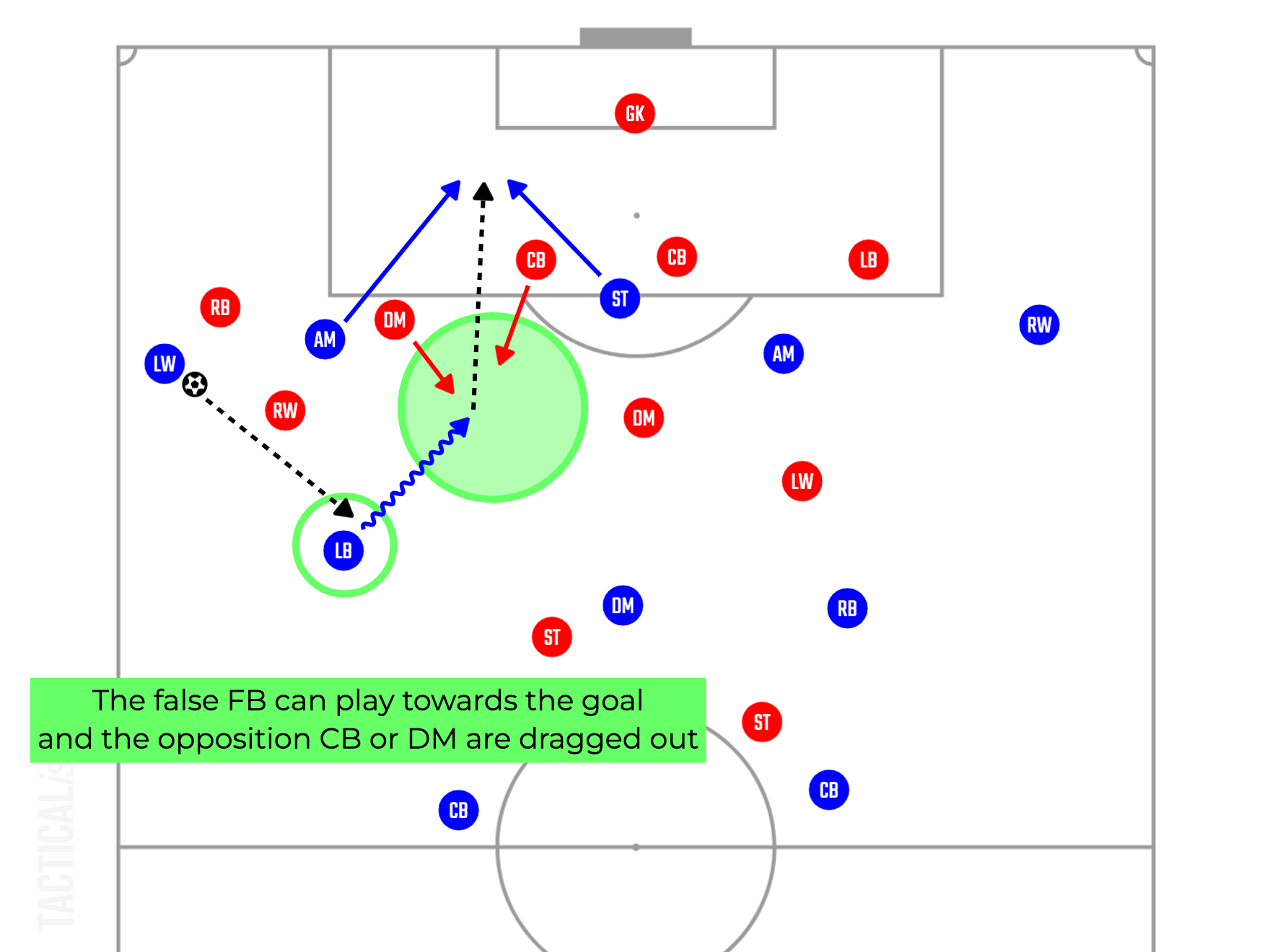
Most explanations stop at “better shooting angle.” That misses the real chess match. The move isn’t about individual flair; it’s a systemic trigger that warps the entire defensive structure. When a winger like Mohamed Salah drives infield, he’s not just looking for a curler. He’s pulling a center-back out, he’s dragging a defensive midfielder wide, and he’s telling his own full-back to sprint into the void he just created.
This guide breaks down the tactical engine behind the cut inside, how defenses try to stop it, and why this single movement defines modern attacking football.
Key Takeaways
- Cutting inside turns a winger from a crosser into a scorer, with a direct line to shoot with their stronger foot.
- The movement creates a central overload, allowing the winger to combine with strikers and attacking midfielders in tight spaces.
- It forces the opposing full-back to choose between following the winger inside and leaving the flank exposed, or staying wide and allowing a shot.
- This tactic is the defining feature of the “inverted winger,” a role perfected by players like Arjen Robben and now standard at the elite level.
- Defenses counter by using defensive midfielders to cover the “half-space” and instructing full-backs to show the winger outside onto their weaker foot.
The Core Tactical Advantage: Shooting Angle and Goal Threat
A winger parked on the touchline has one primary option: cross. The goal is a narrow target from that angle, and the cross relies on someone else to finish. The moment he cuts inside, everything changes.
He now faces the goal. His stronger foot, a right-footer on the left wing, a left-footer on the right, is lined up for a shot. The geometry shifts from a sideways pass to a direct strike. This is why Arjen Robben’s signature move, starting wide on the right before darting left onto his lethal left foot, became so predictable yet so unstoppable. Defenders knew it was coming. Stopping it was a different matter.
The shift from provider to scorer is quantifiable. Teams using inverted wingers consistently see a higher percentage of their total goals come from those wide positions compared to systems relying on traditional crossers. It reallocates threat.
But the shot is just the final product. The run itself is the weapon. As the winger drives infield, he occupies the channel between the full-back and the center-back, the “half-space.” This zone is a defensive coordinator’s nightmare. Who picks him up? If the full-back follows, the wing is empty. If the center-back steps out, the central channel opens. That moment of indecision is where games are won.
TL;DR: Cutting inside gives the winger a direct route to shoot with their stronger foot, turning them from a chance creator into the primary chance taker.
How Defenses Counter the Inside Move (And How Attackers Adapt)
Defensive systems evolved directly in response to the inverted winger. The days of a full-back simply racing a winger to the byline are gone. Now, it’s a coordinated trap.
The first line of defense is the full-back’s positioning. Coaches now drill them to “show inside” or “show outside.” Against a left-footed winger on the right, like Mohamed Salah, the right-back will often angle his body to force Salah onto his weaker right foot, away from the center. It’s a calculated risk. It concedes the crossing opportunity from the winger’s weak foot, betting the cross will be less dangerous than a cut-and-shoot.
The second layer is the defensive midfielder. Their modern role isn’t just to shield the back four; it’s to patrol those half-spaces. When a winger cuts inside, a player like Chelsea’s N’Golo Kanté or Manchester City’s Rodri is tasked with stepping into that lane, cutting off the passing option or blocking the shot. This requires an understanding of advanced soccer tactics that syncs the entire midfield block.
| Defensive Tactic | Goal | Attacker’s Counter |
|---|---|---|
| Full-back shows inside | Force winger onto weaker foot, away from goal. | Early cross with weak foot, or quick one-two with overlapping full-back. |
| Defensive midfielder covers | Plug the half-space, block central passing lanes. | Drop shoulder, change pace, or play a first-time pass before the cover arrives. |
| Center-back steps out aggressively | Meet the winger early, prevent the shot. | Slip pass to striker making a run behind the stepped-out defender. |
| Compact low block | Deny space centrally, funnel play back outside. | Quick combination play in tight spaces, or recycle possession to switch play. |
The cat-and-mouse game is continuous. A winger who only cuts inside becomes predictable. The best, like Son Heung-min, mix their play. They’ll drive inside three times, pulling the defender in, then suddenly explode outside on the fourth and whip a cross. This unpredictability is what breaks modern tactical systems designed for rigidity.
Common mistake: A full-back blindly following a winger inside, the overlapping runner goes unmarked, and a simple pass creates a 1v1 with the goalkeeper. It happens within two touches.
The Evolution From Classic Winger to Inside Forward
The winger’s job description has been rewritten. Go back 30 years, and the prototype was a player like Manchester United’s Ryan Giggs in his early years, blistering pace, hug the touchline, beat his man, deliver a cross. The cross was the end product. The traditional wing play of the classic 4-4-2 formation relied on this.
That started to die with the rise of the 4-3-3 and the emphasis on controlling central midfield. Coaches needed their wide attackers to contribute to the central overload, not just stay wide. Enter the inverted winger, and later, the inside forward.
An inverted winger starts wide but always looks to come inside. An inside forward, like Bayern Munich’s Thomas Müller or Liverpool’s Diogo Jota, often starts in a more central position and drifts into channels. The distinction is subtle but real. The inverted winger’s starting point is the flank; the inside forward’s starting point is between the lines. Both end up in the same dangerous half-space.
This shift demanded a new type of athlete. Wingers now need:
* Close control in congested central areas, not just open-field speed.
* Ambidexterity, or at least a competent weak foot, to pass and shoot when forced wide.
* Tactical intelligence to know when to cut, when to hold width, and when to combine.
The physical demands changed too. The old-school winger’s soccer workout plan focused on pure linear speed and endurance. The modern wide player needs explosive change-of-direction, core strength to shield the ball under pressure from central defenders, and the anaerobic capacity for repeated high-intensity bursts. Their agility drills now mirror those of an attacking midfielder.
Creating Overloads and Space for Teammates
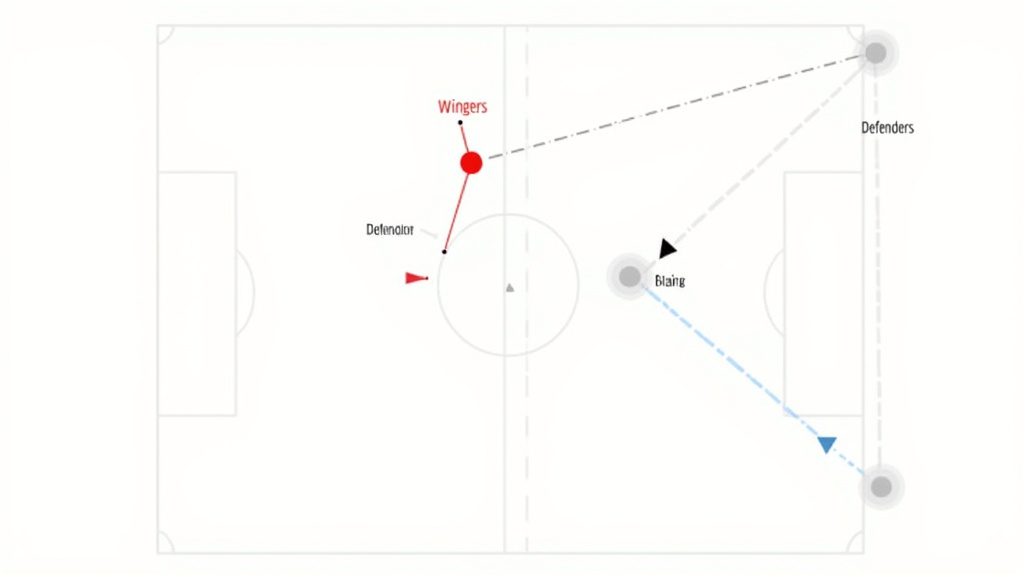
The individual brilliance of a winger cutting inside and scoring is the highlight reel moment. The quieter, more important win is the space it creates for others. This is the systemic effect.
When a winger drives inside, he attracts at least one defender, often two. This leaves his full-back in acres of space on the flank. Liverpool’s Trent Alexander-Arnold’s assist numbers exploded once Salah’s inside runs became the focal point. The right-back would receive the ball in space, with time to pick a cross. The winger’s movement is the decoy.
Furthermore, that central run pulls a center-back out of position. This opens a lane for the striker to dart into. It also creates room for the number 8 or number 10 midfielder to arrive late into the box unchecked. The entire attack becomes fluid and interconnected, a principle central to any soccer tactics guide.
I coached a youth team where our left-winger would only ever go outside. Our striker was marked out of every cross. We spent a week drilling the cut inside. Suddenly, the opposing right-back was stuck, our left-back was free, and our striker started scoring. The change wasn’t in personnel. It was in one movement.
This is why the most effective 11v11 soccer formations today, like the 4-2-3-1 or 3-4-3, are built around this dynamic. They aren’t just putting players in positions; they are choreographing these movements of attraction and creation.
Drills to Develop the Cut Inside Move
You can’t just tell a player to cut inside. The move requires specific technique: a sharp drop of the shoulder, a change of pace, and the ability to protect the ball while moving diagonally against traffic. These drills build that.
1. The Cone Slalom & Finish
Set up a line of five cones in a straight line about 5 yards apart, starting on the wing and angling toward the edge of the penalty area. The player starts at the first cone with a ball, dribbles to the second, performs a cut inside (using the inside or outside foot) to change direction toward the “goal,” then dribbles through the remaining cones before taking a shot. This trains the change of direction at speed and finishing under a slight fatigue.
2. 1v1 to 2v1 Overload
Play starts with a winger 1v1 against a defender on the flank. As the winger receives the ball and commits the defender, a midfielder makes a supporting run from a central position. The winger’s objective is to cut inside, draw the defender, and then slip a pass to the midfielder for a shot. This drill teaches the decision-making component: when to take on the defender and when to use the overload you’ve created.
3. Weak-Foot Cross & Strong-Foot Shot Combo
This addresses the defensive tactic of “showing outside.” Place two mannequins or poles: one as a defender showing inside, another 15 yards ahead as a second defender. The winger must first beat the first defender by going outside onto their weak foot and delivering a cross to a target. Immediately after, they receive a new ball and must cut inside the second defender to shoot with their strong foot. It builds the dual-threat capability.
These drills, combined with dedicated shooting drills focused on curling shots from the half-space, turn the theoretical move into muscle memory. It also highlights whether a player has the winger attributes for this specific role.
Frequently Asked Questions
What’s the difference between an inverted winger and an inside forward?
An inverted winger is a wide player who cuts inside onto their stronger foot. An inside forward is a more central attacker who operates between the lines and drifts into wide areas. The inverted winger’s home is the flank; the inside forward’s home is the channel between defender and midfielder. Players like Mohamed Salah are inverted wingers. Players like Philippe Coutinho, in his Liverpool days, were inside forwards.
Do you need to be fast to cut inside effectively?
Speed helps, but agility and low-center-of-gravity balance are more critical. The move is about a quick change of direction in a tight space, not a 50-yard sprint. Players like Bernardo Silva aren’t the fastest, but their close control and agility make them devastating when they drive inside.
Why don’t all wingers cut inside?
Some systems still value traditional width. A team with a towering target striker might want early crosses from a true winger. Also, some players are simply more effective as classic wingers, their skill set is crossing, not intricate central play. The best formations for wingers depend on the players available.
Which foot should a winger use?
The modern preference is for a left-footer on the right wing and a right-footer on the left, the “inverted” setup. This naturally facilitates the cut inside. However, a right-footed right winger (a “traditional” winger) can still cut inside onto their left foot, though the shot might be less powerful. It depends on the player’s comfort and the team’s tactical plan.
What boots are best for wingers who cut inside?
You need a boot that allows for sharp cuts and quick accelerations. Look for a soccer cleat with a snug fit, a thin upper for better touch, and a stud configuration suited for firm ground (FG) or artificial grass (AG), depending on your pitch. The studs on the inside edge of the boot are crucial for those planting cuts.
Before You Go
The cut inside is more than a cool move. It’s the signature of modern attacking football, a single action that warps defenses and creates chances out of nothing. It turned specialists like Arjen Robben into legends and systems like Jürgen Klopp’s Liverpool into title winners.
Mastering it requires more than just practice on the field. It requires watching players like Salah or Son, not just when they score, but in the moments before, how they check their shoulder, how they time their run, how they use their body to shield the ball. Then, you take that understanding to the training ground. Work on that weak-foot cross so defenders can’t cheat. Build the strength to hold off a center-back. The move looks simple from the stands. From the pitch, it’s a calculated gamble that changes games.

I come from the “soccer heart” of Germany, the Ruhrpott. I have played, trained and followed soccer all my life and am a big fan of FC Schalke 04. I also enjoy following international soccer extensively.