Soccer’s Wing Back vs Full Back: Critical Role Differences
The difference between a wing-back and a full-back in soccer comes down to four things: defensive formation, primary tactical role, attacking responsibility, and the defensive cover behind them. A wing-back operates in a back-three system (like a 3-5-2) as a primary wide attacker, with three center-backs covering their advanced runs. A full-back plays in a back-four (like a 4-4-2) with a balanced defensive-first mandate, supporting but not leading the attack.
Most people get this wrong by looking only at the player’s name on the team sheet. They see “right-back” and picture a defender. The modern game doesn’t work that way. The label is less important than the system around the player and the specific job the manager has given them.
This guide breaks down the four critical differences, shows you exactly which formations demand which role, and explains the physical and technical profiles that separate the world’s best in each position.
Key Takeaways
- The formation dictates the role. You can’t have a true wing-back without a back three, and you rarely see a traditional full-back in a back five.
- A wing-back’s primary job is to attack. A full-back’s primary job is to defend. The attacking contribution is a bonus, not the core requirement.
- The defensive cover behind the player changes everything. Three center-backs allow for wing-back gambles; two center-backs demand full-back discipline.
- Physical demands are extreme for both, but in different ways. Wing-backs need marathon stamina for constant touchline sprints. Full-backs need explosive repeatability for quick overlaps and recoveries.
- The modern “inverted full-back” blurs these lines, turning a full-back into a central midfielder in possession, a hybrid role that requires elite technical skill.
Formation First, Role Second: How the System Dictates the Job
You don’t choose to be a wing-back. The formation chooses for you. This is the foundational rule most amateur analyses miss. The number of central defenders on the team sheet locks the wide player into a specific set of responsibilities before the first whistle blows.
In a back-four system, the 4-4-2, 4-3-3, or 4-2-3-1, the wide defenders are full-backs. Their defensive starting position is a flat line with the two center-backs. This structure creates a clear, zonal defensive block. The full-back’s first thought is defensive shape: tuck in, stay connected, and be ready to engage the opposition winger. Their attacking runs are conditional, almost always starting from a deep, secure position. This is the bedrock of a classic defensive structure.
A wing-back is a tactical function of a three-centre-back formation, acting as the sole wide player on their flank. They provide attacking width in a 3-5-2 or 3-4-3, while their defensive duty is to drop and form a back five, a transition that demands exceptional spatial awareness and endurance.
Switch to a back three. Systems like the 3-5-2, 3-4-3, or 5-3-2 automatically create wing-back roles. Here, the three central defenders cover the width of the penalty area. The wide players start higher, often aligned with the central midfielders. Their first thought is to stretch the play, provide an outlet, and attack the space behind the opposition’s full-back. The defensive cover of three center-backs provides the safety net for these aggressive, forward-starting positions. For a deep dive into how these systems function, our soccer tactics guide breaks down the principles.
TL;DR: Count the center-backs. Three means wing-backs. Four means full-backs. The system writes the job description.
The Four Pillars of Difference: A Side-by-Side Breakdown
The distinction goes deeper than formation. It’s embedded in the core responsibilities. The following table contrasts the two roles across the four most critical dimensions.
| Dimension | Full-Back | Wing-Back |
|---|---|---|
| Primary Mentality | Defend first. Secure the flank, then support. | Attack first. Stretch the play and create width, then recover. |
| Defensive Starting Point | In line with the center-backs, forming a flat back four. | 10-15 yards further forward, often level with midfield, in a back five shape. |
| Attacking Role | Supportive. Makes overlapping runs after the winger engages. | Primary. Is the main wide attacker; must dribble, cross, and create without a winger ahead. |
| Defensive Cover | Two center-backs. High risk if caught forward; gaps are direct paths to goal. | Three center-backs. The back three can shuffle to cover the flank, allowing for more offensive risk-taking. |
This framework explains why a player like Reece James for Chelsea can look like a wing-back in one game and a full-back in another, the system and specific match instructions change these pillars.
The Physical Demand: Two Types of Engine
Both roles require elite fitness, but the nature of the workload differs. It’s the difference between a marathon and a series of hundred-meter dashes.
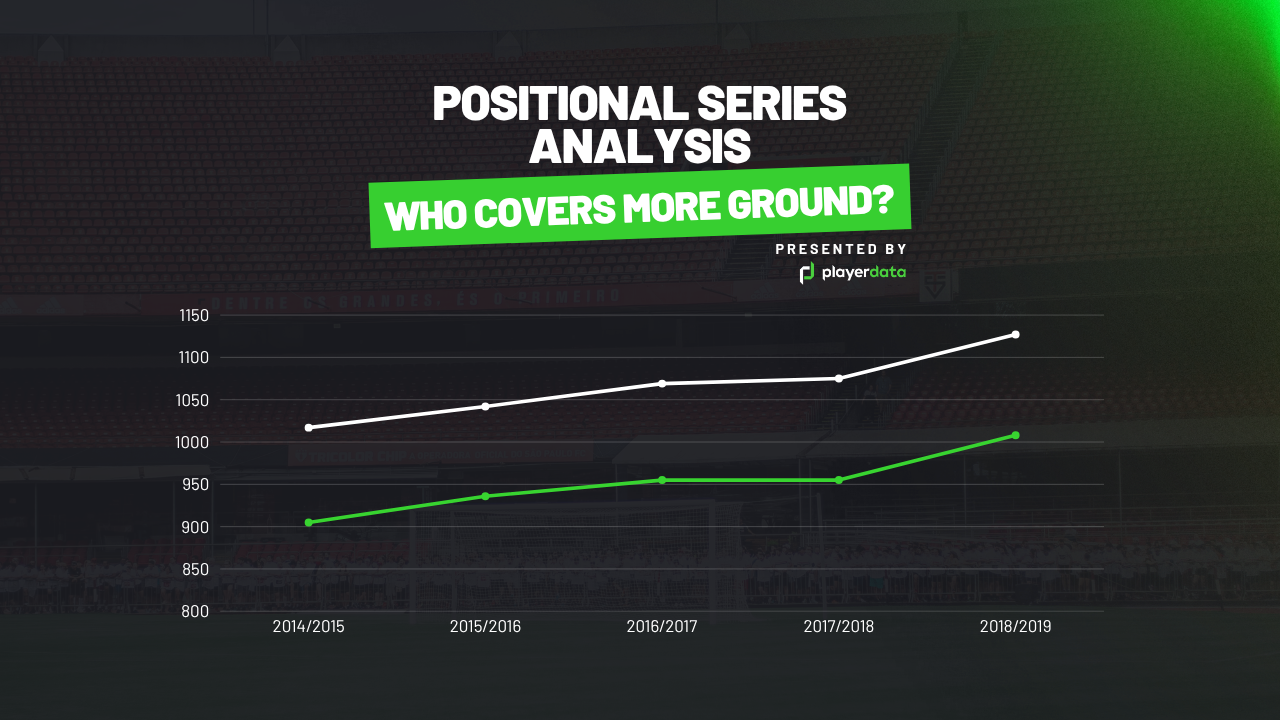
Wing-backs are marathoners. In a 3-5-2, they are the only source of width on their side. That means constant, grueling, touchline-to-touchline running for 90 minutes. Players like Bayern Munich’s Alphonso Davies or Inter Milan’s Federico Dimarco regularly top distance charts, covering 7 to 8 miles per game. The demand is for sustained, high-speed endurance. Their physical demands are the highest on the pitch, a fact borne out by match data.
Full-backs are repeat sprinters. In a 4-3-3, they often have a winger in front of them. Their job is to make explosive overlapping runs to support, then sprint back to recover their defensive position. It’s a stop-start, high-intensity repeat pattern. The physical toll is about acceleration, deceleration, and rapid recovery for the next burst. Burnout happens when they’re asked to do wing-back distances in a full-back system, a common tactical error.
Common mistake: Deploying a player with a full-back’s explosive profile in a wing-back system, they’ll be physically cooked by the 60th minute, leaving a massive, exploitable gap on the flank.
The Modern Metamorphosis: Inverted Full-Backs and Hybrid Roles
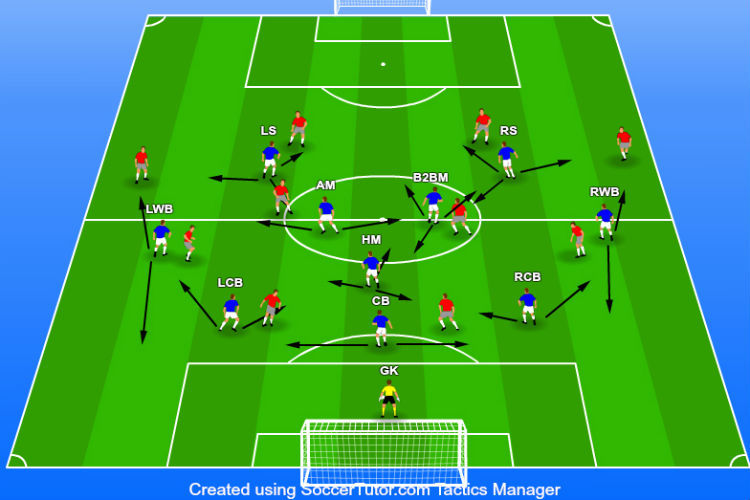
The clean distinction has blurred in the last decade. Tactical innovators, notably Pep Guardiola, have rewritten the full-back playbook. The “inverted full-back” is now a staple of elite teams, creating a third category that borrows from both traditional roles.
An inverted full-back, think João Cancelo at Manchester City or Trent Alexander-Arnold when he drifts into midfield, starts in a traditional back-four position. However, when their team has possession, they move infield into central midfield areas. This isn’t a supporting overlap; it’s a positional change.
Why do this? It creates a numerical overload in midfield (turning a 3-man midfield into a 4-man one), aids in ball retention under pressure, and provides a new passing lane to break lines. The defensive risk is managed by a holding midfielder dropping into the back line temporarily. This role demands the technical passing range of a central midfielder and the defensive awareness of a full-back. It’s a hybrid that makes the old labels feel outdated.
The Wing-Back’s Own Evolution: The “Inverted” Wing-Back
Even the wing-back role is evolving. Look at Bayer Leverkusen’s system under Xabi Alonso. Players like Alejandro Grimaldo, nominally a left wing-back in a 3-4-3, frequently drift inside into central half-spaces, acting as a playmaker. This “inverted wing-back” creates a different kind of overload, pulling opposition markers out of position and allowing the wide center-back to push forward. It requires a player with the engine of a wing-back and the technical vision of a number 10.
This evolution shows that the modern wing-back formation is as much about creating central superiority as it is about pure width.
Player Profiles: Who Fits Where?
Not every defender can play both roles. The skill sets, while overlapping, have distinct emphases. Choosing the wrong player for the system is a guaranteed tactical leak.
The Prototypical Full-Back
- Defensive Fundamentals: Non-negotiable. Strong 1v1 tackling, disciplined positional sense, and the concentration to track runners into the box. They must be comfortable in a flat back four defense.
- Attacking Contribution: Valued but secondary. A good cross after an overlap, solid short-passing combinations with the winger. Pace is crucial for recovery runs.
- Mental Attribute: Patience and decision-making. Knowing when to stay and when to go is everything.
- Modern Example: Kyle Walker (Manchester City). Pace to burn, incredible recovery tackles, and the discipline to hold a defensive line.
The Prototypical Wing-Back
- Engine and Speed: The paramount attribute. They must have the stamina to cover the entire flank repeatedly and the speed to beat their marker in open space.
- Attacking Prowess: Primary requirement. Excellent dribbling, consistent and accurate crossing (often while moving at high speed), and the confidence to take on defenders as the main threat.
- Defensive Attribute: Recovery defending and spatial awareness. They need to understand when to drop and how to slow an attack, even if tackling isn’t their primary strength.
- Modern Example: Achraf Hakimi (Paris Saint-Germain). A relentless attacking force whose speed and crossing define his team’s right side, perfectly suited to a five-man defensive line.
I learned this profile lesson the hard way watching my own club. We once tried a technically gifted but slower full-back in a pre-season 3-5-2 experiment. He was isolated on the break every time, his lack of recovery speed exposed without the safety of a covering center-back next to him. We switched back to a 4-4-2 by halftime. The system must fit the player’s physical reality.
Choosing the Right System for Your Team
This isn’t an abstract debate. The choice between using full-backs or wing-backs is a fundamental tactical decision with cascading effects on your entire team’s structure. Your personnel dictates the answer.
When to Build Around Wing-Backs:
- You have tireless, attack-minded wide players. If your best “defenders” on the flanks are really wingers who can track back, a 3-5-2 unlocks them.
- You have three reliable center-backs. This is the absolute prerequisite. They must be comfortable defending wide areas and communicating constantly.
- You want to dominate possession and width. Systems like the 3-4-3 formation use wing-backs to pin back opposition full-backs, creating space for inside forwards.
- You need to compress the midfield. The wing-backs provide the width, allowing your central midfielders and forwards to play closer together, creating combination overloads.
When to Stick with Traditional Full-Backs:
- Your wide defenders are defensively minded first. Play to their strength. A solid 4-4-2 or 4-2-3-1 provides them with clear, protective structure.
- You have only two reliable center-backs. Do not force a back three. The defensive instability will cost you more goals than the attacking benefits provide.
- You face teams with explosive wingers. A flat back four gives your full-back direct, consistent support against speedsters. It’s simpler and more robust.
- Your team is built for quick transitions. Full-backs in a four can spring forward on the counter, but their starting position means they’re less likely to be caught out when you lose the ball.
Ultimately, reviewing a comprehensive 11v11 soccer formations analysis can help visualize how these choices impact the entire team’s shape and philosophy.
Frequently Asked Questions
Can a full-back play as a wing-back?
Yes, but only if they have the specific athletic profile, namely, elite endurance. Many modern full-backs have the attacking skills, but the physical demand of the wing-back role is a different category. A player like Liverpool’s Trent Alexander-Arnold has the passing but has often been questioned in a back-three system due to the sheer defensive running required.
What’s the most physically demanding position in soccer?
Wing-back is consistently at the top. Data from top leagues shows wing-backs, followed by central midfielders, cover the greatest total distance and perform the most high-intensity sprints per match. It’s a unique combination of volume and intensity.
Why don’t all teams use wing-backs for more attacking power?
Because it requires a very specific and rare personnel setup: three competent center-backs and two incredibly fit, technically sound wide players. Most teams lack this. Also, it can leave you vulnerable to quick switches of play if the wing-backs are caught high. The risk/reward balance doesn’t suit every team’s philosophy or player pool.
How do I know if I’m a full-back or a wing-back as a player?
Be brutally honest about your attributes. Are you a confident, relentless runner who loves to cross? Look at the player attributes for defense in a wing-back profile. Are you a disciplined tackler who prefers defensive security and making timed runs? The full-back path is yours. Your choice of football cleats for defenders might even differ, with wing-backs often prioritizing lightweight speed models.
What is an “inverted full-back”?
An inverted full-back is a player who starts as a traditional full-back in a back four but moves into central midfield positions when their team has the ball. This tactical twist, pioneered by coaches like Pep Guardiola, creates extra numbers in midfield to control possession. It requires outstanding passing and tactical intelligence.
The Bottom Line
Forget the names on the back. Focus on the numbers at the back. The difference between a wing-back and a full-back is engineered by the formation, which then demands a specific physical and technical profile from the player. Wing-backs are system-specific attackers born from a back three. Full-backs are defensive pillars of a back four, whose attacking game is a bonus.
The modern game is complicating this with hybrids like the inverted full-back, but the core principle holds: the structure dictates the role. Choose your system based on the players you have, not the players you wish you had. A tactician forcing a 3-5-2 without the personnel is just painting a target on their own flanks. Understand these differences, and you’ll not only read the game better, you’ll know exactly why a team is winning or losing the battle on the wings.

I come from the “soccer heart” of Germany, the Ruhrpott. I have played, trained and followed soccer all my life and am a big fan of FC Schalke 04. I also enjoy following international soccer extensively.