World Cup Group C Preview: Brazil, Morocco, Scotland, Haiti
The 2026 World Cup Group C preview centers on four teams: Brazil, Morocco, Scotland, and Haiti. Brazil are overwhelming favorites, with Morocco and Scotland locked in a tight battle for second place. Haiti are the clear underdogs but capable of a surprise. The group’s matches will be played across five stadiums in the United States from June 13 to June 24, 2026.
Most previews stop at the favorites and underdogs. They miss the real story. This group is a 28-year reunion and a tactical chess match between four distinct footballing philosophies. The pressure isn’t just on Brazil to win, but on Scotland to prove they belong and on Morocco to confirm their 2022 run was no fluke. Haiti? They’re playing with house money, and that makes them dangerous.
Let’s break down the schedule, the odds, the key players, and the tactical battles that will define one of the most intriguing groups of the 2026 tournament.
Key Takeaways
- Brazil is the class of the group, but their qualifying form and defensive questions under Carlo Ancelotti leave them vulnerable to a shock result, especially against a tactically mature Morocco.
- Morocco is the favorite for second place, but Scotland’s physical Premier League core and set-piece prowess pose a massive threat in what will be a direct, high-stakes clash at Gillette Stadium.
- Third place could still advance. With the expanded 48-team format, the eight best third-placed teams progress. Four points almost guarantees advancement; three points with a positive goal difference might be enough.
- Haiti is not just making up the numbers. Their qualification over traditional CONCACAF powers was no accident. A compact 4-2-3-1 and rapid counters could see them snatch a draw or even a win, likely against Scotland or a complacent Morocco.
- The opening match is crucial. Brazil vs. Morocco in MetLife Stadium sets the tone. A Moroccan upset throws the group into chaos; a Brazil statement win demoralizes everyone else.
The Complete Match Schedule
Mark your calendar. The order of matches creates a specific narrative. Brazil and Morocco, the two top seeds, face off immediately. Scotland and Haiti get a simultaneous shot at early points.
The Group C schedule for the 2026 World Cup is as follows (all times local):
| Date | Match | Venue | City |
|---|---|---|---|
| June 13, 2026 | Brazil vs. Morocco | MetLife Stadium | East Rutherford, NJ |
| June 13, 2026 | Haiti vs. Scotland | Gillette Stadium | Foxborough, MA |
| June 19, 2026 | Scotland vs. Morocco | Gillette Stadium | Foxborough, MA |
| June 19, 2026 | Brazil vs. Haiti | Lincoln Financial Field | Philadelphia, PA |
| June 24, 2026 | Scotland vs. Brazil | Hard Rock Stadium | Miami, FL |
| June 24, 2026 | Morocco vs. Haiti | Mercedes-Benz Stadium | Atlanta, GA |
The group stage spans 11 days, with each team playing three matches. The staggered kick-offs on the final day mean the Scotland vs. Brazil result could directly influence Morocco’s approach against Haiti later that evening.
The venue selection matters. Boston’s Gillette Stadium will have a massive Scottish and Haitian diaspora presence, turning it into a fortress for those matches. Miami’s heat and humidity for Scotland vs. Brazil is a hidden advantage for the Seleção. Atlanta’s indoor climate at Mercedes-Benz Stadium negates any weather factor for the final match.
TL;DR: Matches run June 13-24 across five US stadiums. The Brazil-Morocco opener and the Scotland-Morocco clash in Boston are the pivotal fixtures.
Team-by-Team Deep Dive
This isn’t just about names on a page. It’s about current form, nagging injuries, and managerial philosophies clashing on the biggest stage.
Brazil: The Overwhelming Favorite (With Questions)
The five-time champions are the obvious pick. The talent sheet is ridiculous: Vinícius Júnior, Rodrygo, Gabriel Martinelli. They have world-class center-backs in Marquinhos and Gabriel Magalhães. Yet, the vibe around Brazil has been off since their 2022 quarterfinal exit to Croatia.
Carlo Ancelotti’s hiring is a historic break from tradition. His challenge is to build a cohesive unit, not just a collection of stars. The bigger issue is the lack of a natural creative midfielder since Neymar’s decline and the absence of modern, attacking full-backs. Danilo and Guilherme Arana are solid defenders, but they don’t provide the overlapping width that defined Brazilian teams for decades.
Common mistake: Assuming Brazil will cruise because of their stars. Their CONMEBOL qualifying campaign was mediocre. They looked disjointed, vulnerable on the counter, and lacked a clear plan B. If Morocco presses their makeshift midfield in the opener, an upset is possible.
Their path is clear: win the group. Anything less is a national disaster. The pressure is immense, and this generation has yet to prove it can handle it.
Morocco: The Confident Contender
Do not call them a Cinderella story anymore. Morocco’s run to the 2022 semi-finals was built on a rock-solid 4-3-3, elite defending, and lightning counters. They haven’t regressed; they’ve solidified. Achraf Hakimi and Noussair Mazraoui are arguably the best full-back pairing in the tournament. Sofyan Amrabat anchors the midfield.
Manager Walid Regragui has perfected a system that frustrates superior opponents and punishes mistakes. Their perfect qualifying record sends a message: they expect to advance. The core of the 2022 squad remains, now with two more years of top-level experience. For a deeper look at the strategic foundations teams like Morocco use, our soccer tactics guide breaks down the principles behind such disciplined setups.
Their match against Scotland is the group’s true decider. Morocco’s technical quality should prevail, but they cannot afford to be bullied.
Scotland: The Physical Wildcard
Back for the first time since 1998, Scotland is not here for a vacation. Steve Clarke has built a tough, organized side around a core of Premier League and Serie A veterans. Andy Robertson’s leadership, John McGinn’s engine, and Scott McTominay’s late runs into the box are their weapons.
They play a direct, physical 4-2-3-1. They will press, they will fight for every second ball, and they will be lethal from set-pieces. Their weakness is a lack of a prolific, clinical striker at this level. They create chances but can struggle to finish them against elite defenses.
I watched Scotland grind out a result against Spain in qualifying. The atmosphere at Hampden was a weapon. In Boston, against Morocco, they’ll try to replicate that: turn the game into a scrap, win the aerial duels, and feed off the crowd. It might just work.
Their tournament hinges on beating Haiti convincingly and taking at least a point from Morocco. A draw against Brazil in Miami would be a historic bonus.
Haiti: The Disciplined Underdog
Write them off at your peril. Haiti qualified ahead of CONCACAF stalwarts by being incredibly hard to break down. Manager Jean-Jacques Pierre employs a compact 4-2-3-1 that absorbs pressure and explodes forward through pacy wingers like Wilson Isidor and the midfield drive of Jean-Ricner Bellegarde (now at Aston Villa).
They lack the individual star power of the other three, but they have something more valuable in a group stage: a clear, unified identity and zero pressure. For them, every match is a bonus. That freedom can lead to fearless football. A look at the youngest professional debuts shows that young, hungry teams like Haiti often play with a fearlessness that surprises established sides.
Their target is clear: steal a point from someone. A draw against Scotland or a fatigued Morocco in Atlanta is absolutely within reach. If they do, they could scramble the third-place math entirely.
The Tactical Themes That Will Decide It
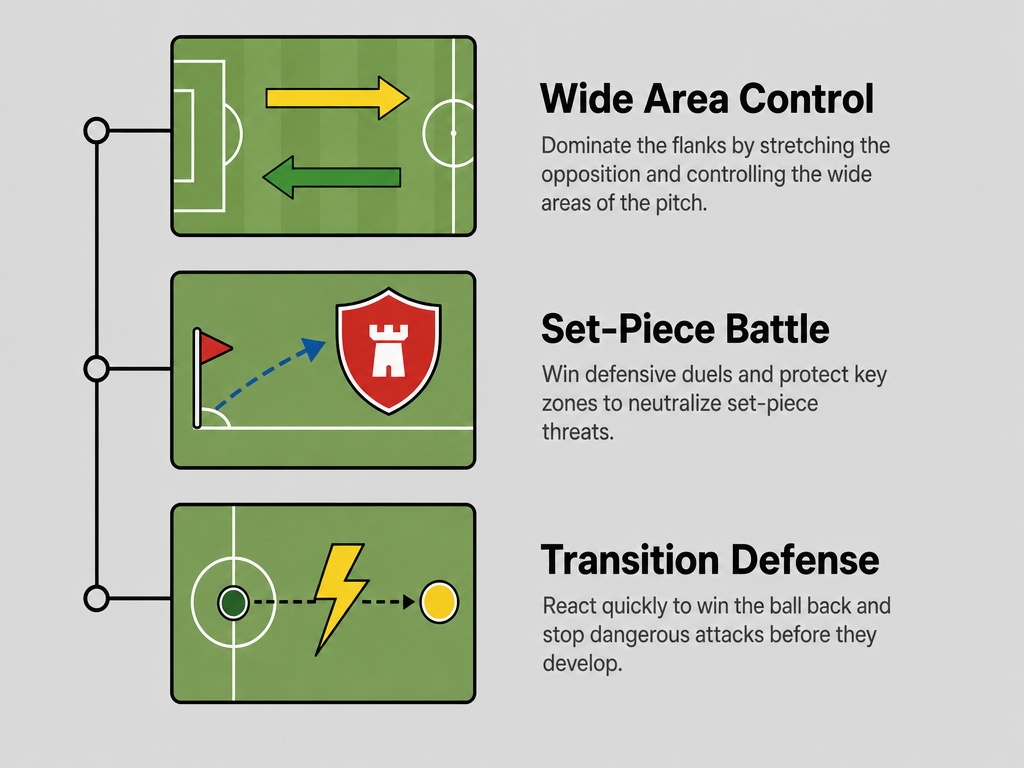
Beyond individual talent, three recurring battles will play out in every match.
- Wide Area Control: Brazil and Morocco will try to dominate the flanks. Brazil uses wingers, Morocco uses full-backs. The team that wins these duels controls the game’s tempo and supply lines.
- The Set-Piece Battle: Scotland’s primary goal threat comes from dead balls. Brazil and Morocco must be flawless in defensive marking on corners and free-kicks. One lapse could cost three points.
- Transition Defense: Haiti’s entire strategy is based on forcing turnovers and countering at speed. Brazil’s sometimes-casual midfield and Scotland’s advanced full-backs must be wary. The moment you overcommit against Haiti, you’re in danger.
The clash of styles is stark. Brazil’s samba football vs. Morocco’s defensive block vs. Scotland’s physicality vs. Haiti’s reactive counters. It’s a purist’s dream.
Odds, Predictions, and the Third-Place Pathway

Photo: Jamie Smed / Wikimedia Commons / CC BY 2.0

The bookmakers’ view is unambiguous. Brazil is a -400 to -550 favorite to win the group. Morocco is second favorite at around +450. Scotland sits at +700 to +1200. Haiti is the ultimate longshot at +6600 or higher.
My prediction table looks like this:
| Team | Predicted Finish | Key to Success | Risk of Failure |
|---|---|---|---|
| Brazil | 1st | Vinícius & Rodrygo firing; Ancelotti’s midfield balance | Defensive errors; over-reliance on individual magic |
| Morocco | 2nd | Hakimi/Mazraoui providing width; defensive discipline | Struggling to break down Scotland’s low block |
| Scotland | 3rd | Winning the physical battle vs. Morocco; set-piece goals | Failing to convert chances; striker drought continues |
| Haiti | 4th | Stealing a point in an early match; disciplined shape | Being overrun by superior technical quality |
Now, the critical twist: third place might be enough. The 2026 format advances the eight best third-placed teams from all twelve groups. Historically, four points almost always sees a third-placed team advance. Three points with a decent goal difference can be enough.
This changes everything for Scotland. Even if they lose to Brazil and draw with Morocco, a win against Haiti gives them four points and a strong chance to move on. It also means Haiti, with a win and a draw, could theoretically make history. Every goal matters.
Common mistake: Focusing only on first and second. In this group, the fight for third place—and the goal difference that comes with it—will be as tense as the fight for first. Scotland’s final match against Brazil could see them desperately defending a one-goal deficit instead of chasing a win.
Historical Echoes and Fan Culture

There’s a eerie symmetry here. Brazil, Morocco, and Scotland were paired together in the 1998 World Cup. Brazil won the group, Scotland finished third and went out, Morocco came last. Scotland hasn’t been back since. That history hangs over this reunion.
The fan experience will be unique. The US venues will see a incredible mix: the samba beats of Brazil, the passionate whistles of Morocco, the deafening roar of Scotland’s “Tartan Army,” and the vibrant, hopeful support of the Haitian diaspora. Gillette Stadium in Boston, in particular, will be a cauldron for the Scotland-Morocco match. This atmosphere can sway referees, energize players, and turn a tactical match into an emotional war of attrition.
Frequently Asked Questions
Who are the teams in World Cup 2026 Group C?
Group C consists of Brazil, Morocco, Scotland, and Haiti. This is a confirmed reunion of three teams (Brazil, Morocco, Scotland) from the 1998 World Cup group stage.
What is the schedule for Group C?
Matches run from June 13 to June 24, 2026. The opener is Brazil vs. Morocco at MetLife Stadium. Haiti vs. Scotland follows the same day in Boston. The second matchday features Scotland vs. Morocco and Brazil vs. Haiti. The final day has Scotland vs. Brazil in Miami and Morocco vs. Haiti in Atlanta.
Who is favored to win Group C?
Brazil are heavy, heavy favorites with odds around -500. Their depth of attacking talent makes them the clear pick to finish top, despite recent inconsistent form.
Can third place in Group C advance?
Yes. Due to the expanded 48-team format in 2026, the eight best third-placed teams from all groups advance to the Round of 32. This means a team like Scotland, even if they finish third, has a very realistic chance of progressing, especially if they accumulate four points.
What is Haiti’s chance of pulling an upset?
While they are massive underdogs, Haiti’s chance is not zero. They are well-organized defensively and possess speed on the counter-attack. Their best opportunity for a point or three likely comes against Scotland in the opener or against a potentially already-qualified Morocco on the final day.
Before You Go
Group C is a narrative goldmine. It has the glittering favorite facing a legitimacy test, the recent semi-finalist aiming to prove it wasn’t a fluke, the returning underdog playing with national pride, and the ultimate outsider with nothing to lose. The matches in the Northeast US will be spectacles of sound and color.
Brazil should win the group. Bet on it. The real tournament begins with the knife-fight for second and the careful calculus of third. Morocco’s experience gives them the edge, but Scotland will leave everything on the pitch in Boston. Haiti will be a frustrating, tricky opponent for everyone. Remember, in this new format, the final whistle on June 24th might not be the end for the team in third place. Watch the goal difference column. It could be the stat that sends a nation into the knockout rounds.
I come from the “soccer heart” of Germany, the Ruhrpott. I have played, trained and followed soccer all my life and am a big fan of FC Schalke 04. I also enjoy following international soccer extensively.