Sponsors and Partners of the World Cup: The Complete Guide
World Cup sponsors and partners are organized into a three-tier pyramid system: FIFA Partners (top-tier), FIFA World Cup Sponsors (tournament-specific), and Official Supporters/Suppliers (regional). A new Host City Supporters program also allows local companies in each host city to fund operations.
World Cup 2026 sponsors and partners are organized into a three-tier pyramid: FIFA Partners (top-tier global rights), FIFA World Cup 2026 Sponsors (tournament-specific global rights), and Official Tournament Supporters/Suppliers (regional or category-specific rights). A new Host City Supporters program also allows up to 10 local companies per host city to fund local operations.
People get this wrong because they see a list of brands and assume every name has the same global reach and investment level. The tier structure dictates everything, from where a logo appears to how much a brand paid. This guide maps the entire commercial landscape, from the $100 million-plus FIFA Partners down to the local mechanics shop sponsoring Atlanta’s fan festival.
Key Takeaways
- FIFA’s 16 top-tier global partnership slots are completely sold out, locking in seven FIFA Partners and nine tournament-specific sponsors for 2026.
- The second-tier FIFA World Cup 2026 Sponsors typically invest between $65 million and $95 million for global rights across the 104-match tournament.
- A new Host City Supporters program lets each of the 16 host cities sign up to 10 local sponsors to offset hosting costs, creating a grassroots commercial layer.
- Sponsor activation splits into three channels: global broadcast and digital rights, stadium and event branding, and local fan festival presence.
- Over 80% of likely tournament followers view sponsors more positively after the event, with Coca-Cola leading global recognition at 46%.
The Three-Tier Sponsorship Model Explained
FIFA doesn’t sell a single sponsorship package. They sell access.
The model is a pyramid. At the top, a handful of giants pay for rights to every FIFA event for years. In the middle, a larger group pays specifically for the 2026 tournament. At the base, regional players and local businesses buy category-specific or city-specific visibility. This tiering maximizes revenue by creating something for every budget and ambition.
FIFA Partners hold exclusive global rights across all FIFA tournaments, including the World Cup, Women’s World Cup, and youth competitions. Their contracts are multi-year, often spanning two or three World Cup cycles, and represent the highest financial commitment in the sponsorship portfolio, estimated well above $100 million per cycle.
The seven current FIFA Partners are Aramco, Adidas, Coca-Cola, Hyundai-Kia, Visa, Qatar Airways, and Lenovo. Missing from that list is a surprise. Budweiser, a longtime partner, is absent. AB InBev, its parent company, now sits in the second tier as a FIFA World Cup 2026 Sponsor. That’s a strategic downgrade. It signals a shift from blanket FIFA affiliation to a focused, massive-event play.
The second tier is where the 2026 money is concentrated. These nine sponsors. AB InBev, Bank of America, Frito-Lay, Hisense, McDonald’s, Mengniu Dairy, Unilever (via Dove Men+Care), Verizon, and DoorDash, paid between $65 million and $95 million each. Their deal is global but tournament-specific. They get their logos across all 16 host cities, on broadcast feeds worldwide, and in digital content.
Bank of America is FIFA’s first-ever global banking sponsor. DoorDash is the first Official Restaurant Reservations Platform Supporter at any FIFA event. These category-firsts matter. They show FIFA is carving out new commercial niches beyond the traditional sportswear, beverage, and auto sectors.
TL;DR: Sponsorship tiers dictate investment, rights, and visibility. FIFA Partners are all-event giants; World Cup 2026 Sponsors are tournament-specific global players; Supporters are regional or local.
FIFA Partners: The All-Access Giants
These seven companies are embedded in FIFA’s machinery. Their logos appear on every FIFA trophy, in every tournament’s official branding, and across all media rights packages.
Adidas supplies the match balls and outfits referees. Coca-Cola runs the hydration stations. Visa handles the payment systems for ticketing and merchandise. Qatar Airways flies the delegations. Lenovo provides the IT infrastructure. Aramco’s role is broader, encompassing sustainability initiatives and event logistics. Hyundai-Kia supplies the official vehicle fleet.
Their investment isn’t just about 2026. It’s about aligning with FIFA as a permanent sports governing body. The contracts are negotiated years in advance and are rarely disrupted. When a partner like Budweiser moves down a tier, it’s a commercial earthquake.
Common mistake: Assuming all “FIFA sponsors” have the same level of access, the Partners get priority placement on every visual asset, from the tournament logo to the trophy presentation, while second-tier sponsors appear only in event-specific contexts.
FIFA World Cup 2026 Sponsors: The Tournament Players
This tier is the growth engine. The expanded 48-team, 104-match format created more inventory, more ad slots, more branding surfaces, more fan touchpoints. That justified the $65–$95 million price tag.
The activation strategy here is event-centric. AB InBev will dominate the beverage sales in stadiums and fan zones. McDonald’s will have presence in venue food courts. Verizon will boost broadcast quality and connectivity. Hisense will supply screens and displays. Unilever’s Dove Men+Care will run hygiene campaigns.
DoorDash’s inclusion is a signal. FIFA is chasing the younger, digital-native fan who orders food via app. The “Official Restaurant Reservations Platform Supporter” title is a new category invented for this tournament. It’s a bet on lifestyle integration over pure sports viewing.
Here’s how the second-tier sponsors break down by category and likely activation focus:
| Sponsor | Category | Primary Activation Channel |
|---|---|---|
| AB InBev | Beverages | Stadium & fan zone beverage sales |
| Bank of America | Banking & Finance | Payment systems, financial services |
| Frito-Lay | Snack Foods | Retail, convenience, fan zone snacking |
| Hisense | Consumer Electronics | Stadium displays, broadcast tech |
| McDonald’s | Quick Service Restaurant | Venue food courts, family promotions |
| Mengniu Dairy | Dairy/Food | Product placement, health campaigns |
| Unilever (Dove) | Personal Care | Hygiene messaging, fan experience |
| Verizon | Telecommunications | Network infrastructure, connectivity |
| DoorDash | On-Demand Delivery | App integrations, food ordering |
Fanatics, though listed as an Official Tournament Supporter, operates a centralized retail operation across all three host nations. It’s a hybrid, a supplier with a massive, tournament-wide footprint. Their deal is about merchandise, not branding.
How Sponsors Will Activate in 2026
Activation is where the money turns into visibility. For 2026, it splits into three lanes: global broadcast, stadium presence, and local fan festivals.
The global broadcast lane is the most expensive. Sponsors paying $95 million expect their logo in every pre-match segment, on every digital highlight reel, and in every official tournament app. Coca-Cola and Adidas have owned this space for decades. Verizon will upgrade it with 5G connectivity and enhanced broadcast feeds.
The stadium lane is about physical branding. Signage on perimeter boards, branding on hydration stations, product placement in concession stands. AB InBev and McDonald’s will be unavoidable inside the venues. Hisense screens will show replays.
The local fan festival lane is the new frontier. Each host city will run a free, public fan zone with music, food, and football activities. This is where the Host City Supporters program kicks in.
I watched the 2022 World Cup fan zone in Doha. Coca-Cola’s branding was everywhere, the cups, the tents, the music stage. But the local Qatari sponsors were invisible. The 2026 model fixes that by giving cities their own commercial layer.
Local sponsors like NAPA Auto Parts in Atlanta or Purina in Kansas City will have a presence at their city’s fan festival. They can use city-specific marks. They can run local promotions. This isn’t global visibility, but it’s hyper-local engagement that funds the city’s hosting costs. A city can designate up to 10 such supporters.
TL;DR: Sponsors activate through global broadcast, stadium branding, and local fan festivals. The new Host City Supporters program funds city-level events through local business deals.
The Host City Supporters Program: Local Money, Local Visibility
This is FIFA’s first attempt at decentralizing sponsorship revenue. Each host city, from Vancouver to Monterrey, can sign up to 10 local companies as “Host City Supporters”. These deals are separate from the global tiers.
The money raised goes directly to the city’s organizing committee. It covers local operational costs: security, transportation, venue preparation, fan festival logistics. For a city like Atlanta, that means NAPA Auto Parts can sponsor local shuttle buses. For Dallas, Coca-Cola Southwest Beverages can run branded hydration stations at the fan zone.
The program has a ceiling and a floor. The ceiling is ten sponsors per city. The floor is zero, if a city can’t attract local businesses, they foot the bill themselves. Cities with strong corporate bases (New York, Los Angeles, Dallas) will max out their slots. Cities with smaller economies (Edmonton, Kansas City) might struggle.
Common mistake: Thinking local supporter deals are “small”, a Host City Supporter package can still cost a company several million dollars, but the visibility is confined to one city’s events, not the global broadcast.
The risk for a local sponsor is mismatched scale. A regional bank in Vancouver gets its logo on local buses and fan zone banners. It doesn’t get its logo on the World Cup trophy. The reward is community goodwill and a direct association with the city’s moment in the spotlight.
For fans, this means fan festivals will feel more local. You’ll see Atlanta-based brands in Atlanta, Mexican brands in Monterrey, Canadian brands in Vancouver. It’s a deliberate shift from the monolithic, global-brand feel of past tournaments.
What Sponsorship Means for Fans and the Tournament
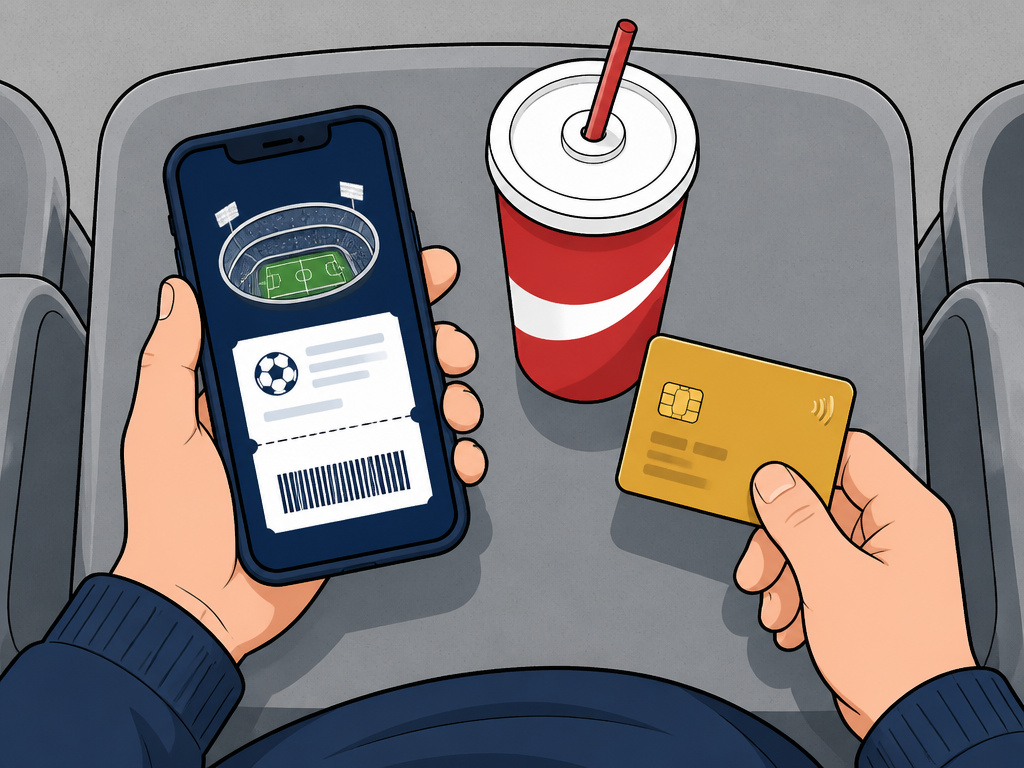
Sponsorship money builds the event. It pays for the stadium upgrades, the security, the broadcast technology, the free fan festivals. Without the $65–$95 million from each second-tier sponsor, the 104-match schedule would be a financial strain on host cities.
For fans, sponsorship dictates the experience. The beverage you drink at the stadium is AB InBev’s. The payment system you use for tickets is Visa’s. The network you rely on for mobile coverage is Verizon’s. The merchandise you buy is from Fanatics. The food you order via app might be through DoorDash.
Research from YouGov indicates over 80% of likely World Cup 2026 followers view tournament sponsors more positively after the event. That’s the halo effect. Coca-Cola leads global sponsor recognition at 46%, followed by Adidas at 42% and Qatar Airways at 31%. Younger fans, aged 18–34, are the most receptive to sponsor messaging.
The expanded format creates more sponsor touchpoints. Forty-eight teams mean more matches, more training sessions, more media days. Sixteen host cities mean more venues, more fan zones, more local media coverage. That’s why FIFA could sell all 16 top-tier global partnership slots. The inventory exploded.
Sponsorship isn’t just logos on boards. It’s the infrastructure that makes a 48-team tournament across three countries logistically possible. The 2026 commercial program is projected to be the most successful in FIFA’s history for a standalone sporting event because the scale justifies the price.
TL;DR: Sponsor investment builds the tournament’s physical and digital infrastructure. Fans experience the event through sponsor-provided services, and data shows sponsor perception improves significantly post-event.
The Financial Scale and Record-Breaking Projections
FIFA’s commercial program for 2026 is tracking to break records. The previous benchmark was the 2014 Brazil World Cup, which generated about $1.6 billion in sponsorship and licensing revenue. The 2026 program is projected to surpass that by a significant margin.
The math is simple: more inventory equals higher prices. Sixteen host cities spread across the United States, Canada, and Mexico offer sponsors a combined market of over 500 million people. The 104-match schedule offers more broadcast slots, more highlight packages, more digital content moments.
A second-tier sponsorship slot costing between $65 million and $95 million in 2026 would have cost around $50–$70 million for 2018. The premium is the scale.
Here’s a breakdown of the revenue streams and their growth drivers:
| Revenue Stream | 2018 Russia World Cup | 2026 North America World Cup | Growth Driver |
|---|---|---|---|
| Top-Tier FIFA Partners | ~$120–$150M per partner | ~$100M+ per partner (sold out) | Multi-cycle contracts, global rights |
| Tournament-Specific Sponsors | ~$50–$70M per sponsor | ~$65–$95M per sponsor | Expanded format (48 teams, 104 matches) |
| Regional Supporters | Limited, region-specific deals | Expanded via Host City Supporters | 16 host cities, local fan festivals |
| Merchandising | Centralized, single licensee | Fanatics centralized across 3 nations | Unified retail operation |
The Host City Supporters program adds a new revenue layer. If each city signs ten supporters at an average of $2 million per deal, that’s $320 million in additional, decentralized funding. That money stays local, funding city-specific operations.
The risk for sponsors is dilution. With more sponsors across more tiers, individual brand visibility can get crowded. A fan in Dallas might see Coca-Cola (FIFA Partner), AB InBev (tournament sponsor), and Coca-Cola Southwest Beverages (Host City Supporter) all in the same fan zone. Message clutter is a real concern.
Frequently Asked Questions
Who are the main sponsors for the 2026 World Cup?
The main sponsors are split into three tiers. The top-tier FIFA Partners are Aramco, Adidas, Coca-Cola, Hyundai-Kia, Visa, Qatar Airways, and Lenovo. The second-tier FIFA World Cup 2026 Sponsors include AB InBev, Bank of America, Frito-Lay, Hisense, McDonald’s, Mengniu Dairy, Unilever (Dove Men+Care), Verizon, and DoorDash. Official Tournament Supporters and Suppliers, along with Host City Supporters, form the third tier.
How much does it cost to sponsor the World Cup 2026?
Cost depends entirely on the tier. FIFA Partner deals are multi-year and estimated well above $100 million per cycle. A FIFA World Cup 2026 Sponsor slot costs between $65 million and $95 million for tournament-specific global rights. Official Tournament Supporter deals vary by category and region, while Host City Supporter packages can range from a few million to tens of millions depending on the city.
What is the Host City Supporters program?
It’s a new initiative allowing each of the 16 host cities to sign up to 10 local companies as sponsors. These supporters fund local operational costs like security, transportation, and fan festivals. Their branding appears only in their designated city, not globally. Examples include NAPA Auto Parts in Atlanta and Coca-Cola Southwest Beverages in Dallas.
Why is Budweiser not a FIFA Partner for 2026?
Budweiser, a longtime FIFA Partner, is now represented by its parent company AB InBev in the second tier as a FIFA World Cup 2026 Sponsor. This shift reflects a strategic decision to focus investment on the specific 2026 tournament rather than a multi-year, all-event partnership. It also aligns with AB InBev’s broader portfolio strategy beyond beer.
How do sponsors benefit from the expanded 48-team format?
The 48-team format creates 104 matches instead of 64. That means more broadcast inventory, more stadium events, more media days, and more fan touchpoints across 16 host cities. Sponsors get more opportunities to display logos, run activations, and engage with fans, justifying higher investment levels.
The Bottom Line
The World Cup 2026 sponsorship landscape is a three-tiered pyramid built on unprecedented scale. The seven FIFA Partners own the top. The nine tournament-specific sponsors fill the middle with $65–$95 million commitments. A new layer of local Host City Supporters funds grassroots operations.
For fans, this means a tournament built by sponsor money, from the Verizon 5G network in the stadium to the AB InBev beer in your hand to the NAPA Auto Parts shuttle bus in Atlanta. The commercial engine is more complex and decentralized than ever.
The record-breaking projections are real. More teams, more matches, more cities equals more inventory, and FIFA sold every top-tier slot. The gamble is on visibility dilution. With more brands in more tiers, the fight for fan attention gets louder.
Sponsorship isn’t just advertising. It’s the financial backbone that lets 48 teams play across three countries. Watch the logos. They tell you who paid for the show.

I come from the “soccer heart” of Germany, the Ruhrpott. I have played, trained and followed soccer all my life and am a big fan of FC Schalke 04. I also enjoy following international soccer extensively.