World Cup vs Differences: 48 Teams, 104 Games, New Format
The 2026 FIFA World Cup expands to 48 teams, creating 12 groups of four. The top two teams from each group advance, plus the eight best third-place finishers, feeding a new Round of 32 knockout stage. This adds 40 extra matches and stretches the tournament to 39 days across 16 host cities in the USA, Canada, and Mexico.
Most comparisons stop at “more teams, more games.” They miss the mechanics. The new format isn’t just bigger, it rewrites the math of qualification, the travel logistics for every squad, and the broadcast schedule for viewers. The eight third-place qualifiers introduce a safety net that changes how managers approach the group stage. You can’t just coast.
This guide breaks down the five structural shifts between 2026 and 2022: the format, the schedule, the host logistics, the broadcast split, and the ticket pricing model. We’ll look at what each change means for teams, fans, and the tournament’s rhythm.
Key Takeaways
- The 2026 tournament introduces a Round of 32, adding an extra knockout round before the traditional Round of 16. This is the single biggest structural change.
- Eight third-place teams now advance from the group stage. This creates a tactical buffer, finishing third in a tough group might still get you through.
- The event spans 39 days across 16 cities in three countries. Team travel and fan itineraries become a major logistical factor, unlike the centralized 2022 event in Qatar.
- In the United States, Telemundo will broadcast 92 matches and Universo 12. All 104 games stream live on Peacock.
- FIFA will use dynamic pricing for tickets, a first for the World Cup. Prices adjust based on demand, not fixed categories.
What’s the biggest change between 2026 and 2022?
It’s the Round of 32. The 2022 World Cup in Qatar followed the classic 32-team format: eight groups of four, top two advance to a 16-team knockout bracket. Clean. Simple. The 2026 expansion to 48 teams forced a redesign.
The 2026 FIFA World Cup format places 48 national teams into 12 groups of four. Each team plays three group-stage matches. The top two finishers from each group (24 teams) automatically advance to the knockout stage. The eight best third-place teams across all 12 groups also qualify, creating a 32-team knockout bracket. This new Round of 32 precedes the Round of 16, quarterfinals, semifinals, and final.
That third-place rule is the tactical twist. In 2022, third place meant elimination. In 2026, it might mean survival. A team that draws two tough matches but wins its third could still progress if its points tally ranks high enough among all third-placed teams. Managers now have a margin for error. It rewards consistency over a single spectacular win.
The math works like this. With 12 groups, there are 12 third-place finishers. Ranking them by points (then goal difference, then goals scored) yields the top eight. This system was tested in other FIFA tournaments like the Women’s World Cup. It prevents the dead-rubber final group matches where both teams already know their fate.
TL;DR: The new Round of 32, fed by eight third-place qualifiers, is the core structural shift. It adds an extra knockout round and changes group-stage tactics.
The 2026 Schedule: More Days, More Miles
The 2022 World Cup ran from November 20 to December 18, 28 days compacted into Qatar’s eight stadiums. Travel between venues was minimal. The 2026 edition starts June 11 and ends July 19. That’s 39 days.
Host cities stretch from Vancouver to Miami, Monterrey to Boston. A team based in Los Angeles for its group matches could fly to Dallas for the Round of 32, then to Atlanta for the quarterfinals. The distance from Vancouver to Miami is roughly 2,700 miles. For European or African squads, that’s multiple long-haul flights across a continent.
Fans face the same calculus. Following a single team through the knockout stages could mean booking flights and hotels in three different countries over three weeks. The cost isn’t just tickets. It’s transcontinental logistics.
| 2022 World Cup (Qatar) | 2026 World Cup (North America) |
|---|---|
| Duration: 28 days | Duration: 39 days |
| Host Cities: 8 | Host Cities: 16 |
| Countries: 1 | Countries: 3 |
| Travel Scale: Centralized, short distances | Travel Scale: Continental, requiring long-haul flights |
The opening match is set for Mexico City on June 11. The final will be at MetLife Stadium in New Jersey on July 19. That final venue choice alone signals a shift, the 2022 final was in Lusail Iconic Stadium, a purpose-built arena in a compact host nation. MetLife is an existing NFL stadium adapted for soccer, reflecting the tournament’s scale.
Common mistake: Assuming the 2026 schedule is just a longer version of 2022. The geographic spread means recovery time between matches isn’t just about fitness, it’s about jet lag and climate adaptation. A team playing in Seattle’s mild summer then flying to Houston’s humidity faces two different battles.
How does the 48-team format change qualification?

Photo: Wikidasher / Wikimedia Commons / CC BY-SA 4.0

It opens doors. The 2022 tournament had 32 slots: 13 for Europe, 5 for Africa, 4.5 for Asia, etc. The 2026 expansion adds 16 new spots, redistributed by FIFA’s allocation. More nations from Africa, Asia, and CONCACAF get a shot.
This isn’t just about more games. It’s about debutants. Nations like Uzbekistan, Jordan, Cape Verde, or Curaçao, teams that have never qualified, now have a realistic path. Their inclusion changes the group-stage dynamics. A powerhouse facing a debutant in Group A might expect a straightforward win, but those debutants often play with a desperation that unsettles favorites.
The expanded format also alters the balance of power within continental federations. With more slots available, the fight for second or third place in regional qualifying becomes fiercer. The margin between qualifying and missing out shrinks.
TL;DR: 16 extra qualification slots mean more debutant nations and fiercer regional qualifying battles, changing the group-stage mix.
Broadcasting the 104-Game Marathon
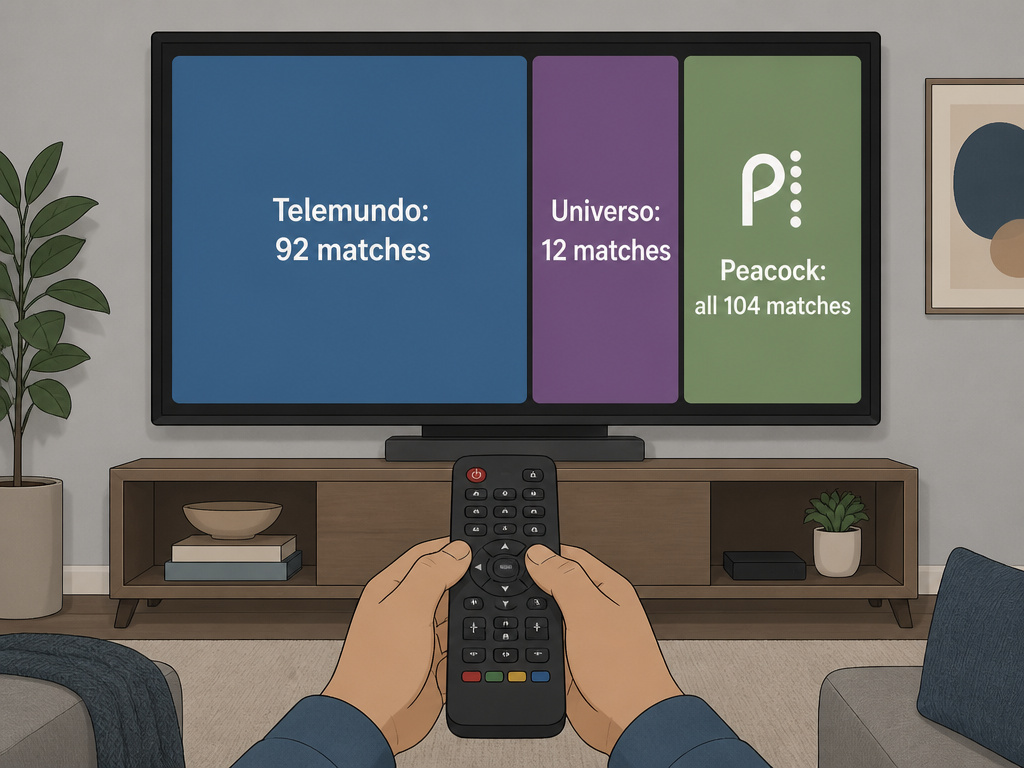
In 2022, U.S. viewers watched every match on Fox or Telemundo, with streaming on Fox Sports app. The 104-match 2026 slate requires a split.
All 104 games will stream live on Peacock. Telemundo gets 92 matches for its linear broadcast. Universo, often overlooked, picks up the remaining 12. This division isn’t random. Telemundo carries the premium matches, group-stage headliners, knockout rounds, the final. Universo gets the early group-stage games and lower-profile fixtures.
If you’re a Spanish-language viewer without streaming, you need to check which channel has your match. Miss that, and you might tune into Universo expecting a quarterfinal only to find a replay.
I relied on Fox Sports for every Qatar match. For 2026, I’ll have Peacock open on my laptop, Telemundo on the TV, and a browser tab for the Universo schedule. It’s a three-screen operation for a single tournament. Found that out trying to catch a simultaneous group-stage match last summer, the broadcast split meant one game was exclusive to streaming.
The sheer volume of matches also pressures broadcast crews. With 40 extra games, production teams will rotate across more venues, calling on larger pools of commentators and analysts. The consistency of voice you heard throughout Qatar 2022 might fracture across 16 different locations.
| Broadcast Platform | 2022 World Cup | 2026 World Cup |
|---|---|---|
| Primary U.S. Broadcaster (English) | Fox | Fox (expected, not yet confirmed) |
| Primary U.S. Broadcaster (Spanish) | Telemundo (all matches) | Telemundo (92 matches) |
| Secondary U.S. Broadcaster (Spanish) | None | Universo (12 matches) |
| Streaming Service | Fox Sports app | Peacock (all 104 matches) |
Ticket Access and the Dynamic Pricing Experiment
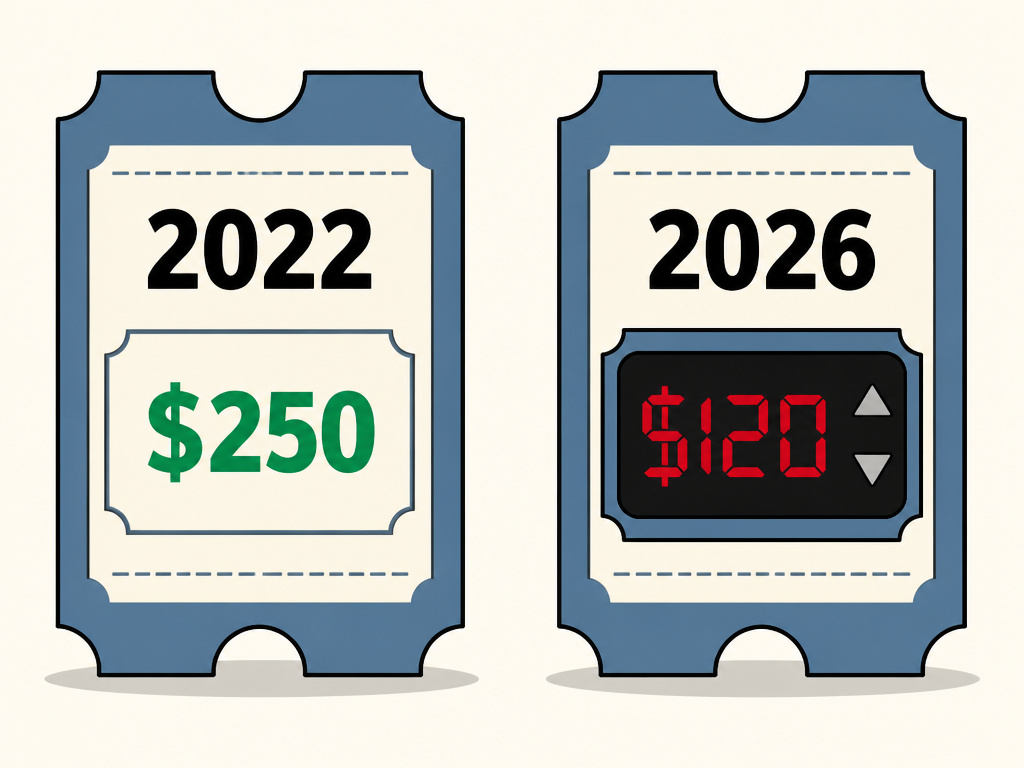
FIFA’s ticket sales for 2022 used fixed price categories. You paid a set amount for a group-stage match, a quarterfinal, the final. The 2026 World Cup introduces dynamic pricing, a first for this tournament.
Prices adjust based on demand. A group-stage match between two popular nations might cost more than a knockout game between less glamorous teams. This mirrors systems used in major league sports and the 2025 FIFA Club World Cup.
Initial ticket prices for 2026 have been announced, ranging from around $60 for early group games to over $6,730 for the final. Those are starting points. The dynamic engine will push popular matches higher.
Common mistake: Buying tickets as soon as they’re released, thinking prices are fixed. Under dynamic pricing, waiting for a less-demanded match category could save hundreds. Conversely, delaying for a high-profile fixture could see prices climb.
Hospitality packages, which bundle premium seats with amenities, went on sale in April 2025 via FIFA’s official ticket partner. These are insulated from the dynamic model to some degree, they’re priced as packages.
For fans, this means a new strategy. You don’t just budget for a ticket category. You budget for demand. Following a specific team through the group stage could become prohibitively expensive if that team’s matches are in high-demand cities.
The Host City Spread: Three Nations, 16 Venues
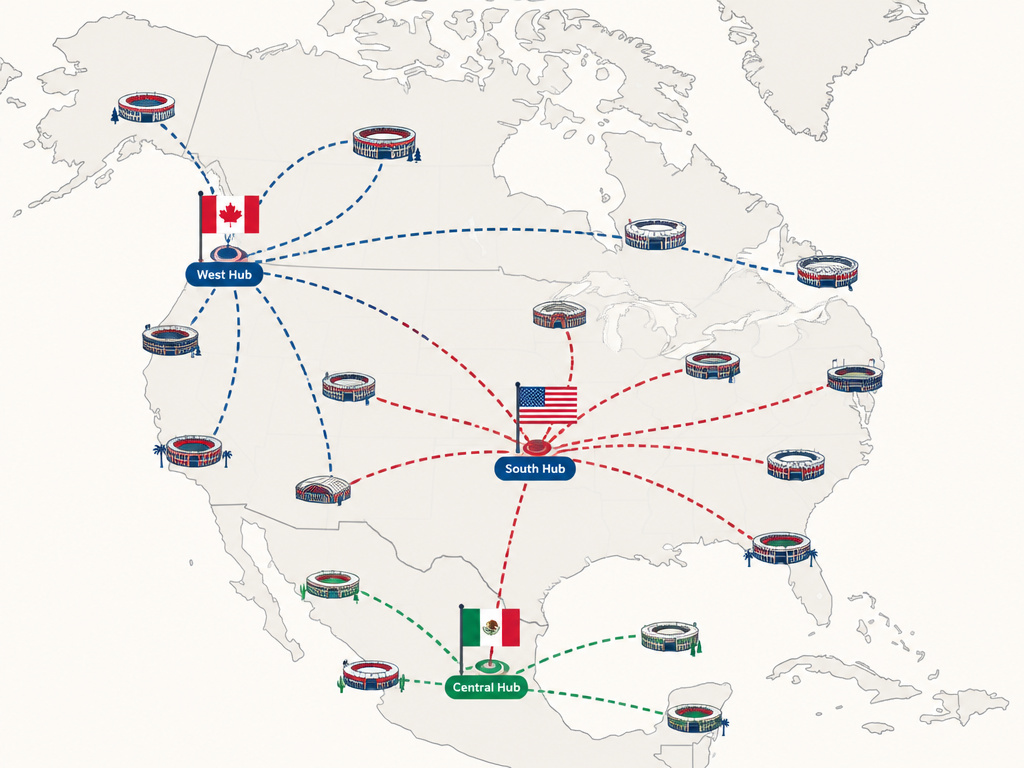
Qatar 2022 was a centralized event. Eight stadiums, all within a short drive or metro ride. The 2026 model is continental.
Eleven U.S. cities, three Mexican cities, and two Canadian cities will host matches. The distances are vast. From Seattle to Miami is a five-hour flight. From Edmonton to Monterrey is another four hours.
This spread advantages teams with deep travel planning. Squads that schedule training camps in regional hubs, say, Dallas for the South, Los Angeles for the West, can reduce mid-tournament travel time. It disadvantages teams that bounce from coast to coast between rounds.
Fans making a pilgrimage face a similar puzzle. The cost of following a team isn’t just tickets. It’s flights, hotels, and ground transport across three countries. A fan who picks a base city like Chicago might catch multiple matches there, but if their team advances to a knockout match in Vancouver, they’re buying a last-minute cross-border flight.
The three host nations. USA, Canada, Mexico, automatically qualify. That’s a fixed variable. But their preparation differs. U.S. venues are mostly existing NFL or MLS stadiums with temporary adaptations. Mexico’s stadiums, like the iconic Azteca, are soccer-specific. Canadian venues are hybrid. This creates uneven pitch conditions, crowd capacities, and atmosphere.
What does the expansion mean for the game’s pace?
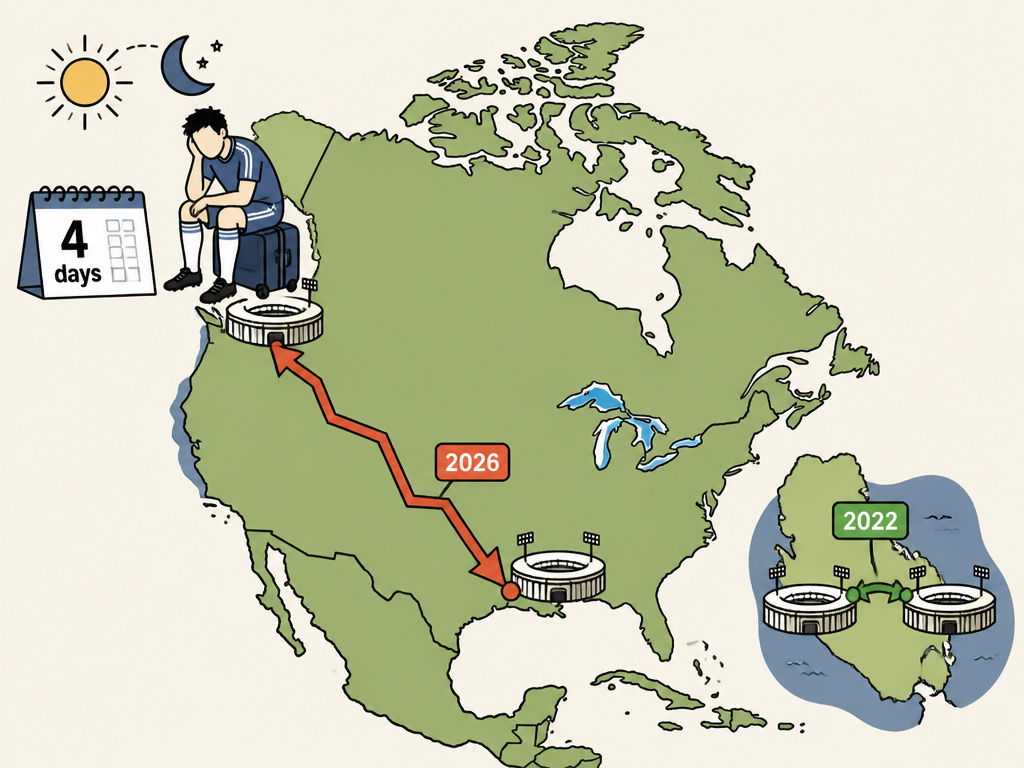
More teams mean more matches, but also more fatigue. The 2022 tournament had a tight 28-day schedule with minimal travel. Players could recover physically between games. The 2026 schedule stretches that recovery window across longer distances and more time zones.
A team playing its third group-stage match in Houston, then flying to Seattle for a Round of 32 game four days later, isn’t just dealing with match fatigue. It’s dealing with jet lag, climate shift, and disrupted sleep patterns. This will test squad depth and medical teams more than any previous World Cup.
The expanded format also increases the chance of injury accumulation. With 40 extra matches in the tournament, the total number of player minutes rises. More minutes mean more wear. Managers might rotate starters earlier in the group stage to preserve them for the longer knockout path.
Tactically, the eight third-place qualifiers encourage a more conservative approach in the group stage. A team can aim for three draws, finish third, and still advance if its points tally is high enough. This could slow the pace of early games, with teams prioritizing point accumulation over risky attacking play.
I’ve watched teams like Iran or Costa Rica play for a draw in the group stage, knowing third place meant elimination. In 2026, that same cautious approach might be a calculated route to the Round of 32. It changes how managers read the first three games.
Frequently Asked Questions
Will the 2026 World Cup have more penalty shootouts?
Probably. With 40 extra matches and a new Round of 32, there are more knockout games where a draw leads to extra time and penalties. The 2022 tournament had 4 penalty shootouts. The 2026 format could easily double that.
Are the 2026 matches longer?
No. Match duration remains two 45-minute halves with extra time if needed. The total tournament is longer, 39 days versus 28, but individual game length is unchanged.
Does the expansion make the tournament less competitive?
It makes the group stage more forgiving for third-place teams, but the knockout rounds remain brutally competitive. The Round of 32 adds an extra elimination hurdle before the Round of 16. The overall quality might dip slightly with more debutants, but the knockout intensity stays high.
How does the 2026 format affect historical comparisons?
Comparing tournaments becomes harder. A team that wins the 2026 World Cup will have played potentially 8 matches (3 group, 5 knockout) instead of 7 (3 group, 4 knockout). The “easiest path” argument disappears. The champion’s endurance across more games and more travel becomes a new metric.
Can I still buy 2026 tickets?
Yes. FIFA’s ticket portal is live, with dynamic pricing in effect. Hospitality packages are also available through official partners. Prices fluctuate based on match demand and category.
Before You Go
The 2026 World Cup isn’t just a bigger version of 2022. It’s a different tournament. The Round of 32 reshapes the knockout phase. The eight third-place qualifiers rewrite group-stage tactics. The 16-city spread across three countries turns travel into a core competitive factor.
For fans, dynamic pricing changes how you budget. The broadcast split between Telemundo and Universo changes how you watch. For teams, the expanded format changes who qualifies and how they survive.
Ignore the simple “more teams, more games” line. The mechanics underneath, the travel logistics, the tactical safety net, the pricing model, are what define this new era. Plan for them.
I come from the “soccer heart” of Germany, the Ruhrpott. I have played, trained and followed soccer all my life and am a big fan of FC Schalke 04. I also enjoy following international soccer extensively.