Argentina World Cup History & Record: 3 Titles, 3 Finals Lost
Argentina’s World Cup history and record is defined by three victories (1978, 1986, 2022), three runner-up finishes (1930, 1990, 2014), and 18 total appearances in 22 tournaments. Their overall record stands at 47 wins, 17 draws, and 24 losses from 88 matches, with 152 goals scored and 101 conceded.
Most summaries stop at the trophy count. They list the years, maybe mention Maradona and Messi, and call it a day. What they miss is the texture, the political shadow over the first win, the tactical evolution across four decades, and the specific heartbreaks that make the triumphs resonate. This record isn’t just a stat sheet; it’s a narrative of a football-obsessed nation’s relationship with the world’s biggest stage.
This guide breaks down every title, every final loss, the key matches everyone forgets, and the managers and players who built one of international football’s most compelling legacies.
Key Takeaways
- Argentina’s three World Cup wins were each architecturally distinct: a host’s pragmatic 1978, Maradona’s individual masterpiece in 1986, and Messi’s legacy-capping team effort in 2022.
- They have finished second three times, losing the inaugural 1930 final to Uruguay and modern classics to West Germany in 1990 and Germany in 2014.
- The team has missed only four World Cups (1938, 1950, 1954, 1970), a testament to consistent CONMEBOL strength, but political withdrawals played a role in the early absences.
- Beyond the finals, pivotal and controversial matches, like the 6-0 win over Peru in 1978, are crucial to understanding their tournament journeys.
- The current era under coach Lionel Scaloni represents a peak, having delivered the 2021 Copa América, the 2022 Finalissima, and the 2022 World Cup in rapid succession.
Argentina’s World Cup Record at a Glance
The numbers tell a story of consistent contention. In 88 World Cup matches played, Argentina has won 47, drawn 17, and lost 24. They’ve scored 152 goals and conceded 101. That gives them a win rate of 53.4%, a strong figure that places them among the tournament’s elite historical performers.
Argentina’s participation rate of 18 out of 22 World Cups is among the highest for any national team, reflecting their status as a perennial South American qualifier and football powerhouse since the tournament’s inception.
Their path hasn’t been uninterrupted. They missed the 1938, 1950, and 1954 tournaments due to political decisions and withdrawals related to World War II aftermath and disputes with other South American federations. The 1970 absence was purely sporting, they failed to qualify. Every other edition has featured the blue and white stripes. This long-term presence is a key part of their identity, as detailed in the comprehensive Wikipedia history of Argentina’s national team.
| Tournament Outcome | Years | Key Figure / Opponent |
|---|---|---|
| Champion | 1978, 1986, 2022 | Mario Kempes, Diego Maradona, Lionel Messi |
| Runner-Up | 1930, 1990, 2014 | Lost to Uruguay, West Germany, Germany |
| Third Place | – | – |
| Fourth Place | – | – |
TL;DR: Argentina’s record is one of high-level consistency with 18 appearances, a positive win-loss ratio, and a clustering of success around three iconic generations.
The Road to Glory: Three World Cup Victories Dissected
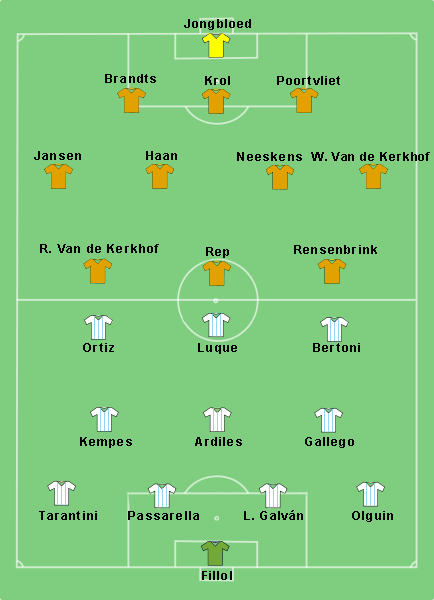
Photo: Sportingn / Wikimedia Commons / Public domain
Each of Argentina’s three triumphs has a unique fingerprint. They weren’t won the same way. The first was a host nation’s calculated mission. The second was a symphony for one genius soloist. The third was the culmination of a team built to support its aging maestro.

The 1978 Title: A Host Nation’s Pragmatic Triumph
Coach César Luis Menotti’s philosophy was clear. He favored technique and attacking play, but the pressure of hosting a World Cup, especially during a military dictatorship, demanded pragmatism. The tournament format itself helped. After the first group stage, the second round was another group, not straight knockouts. This allowed for maneuvering.
Argentina’s crucial match was the infamous 6-0 victory over Peru in the second group stage. The result, which allowed Argentina to advance to the final on goal difference over Brazil, has fueled rumors of match-fixing for decades. Whether it was fixed or simply a Peruvian collapse under intense pressure in a hostile stadium remains one of football’s great controversies. The atmosphere was tangible, a mix of nationalistic fervor and palpable tension.
The final against the Netherlands was a release. Mario Kempes, the tournament’s top scorer, broke the deadlock in extra time before adding a second. The 3-1 win was less about flamboyance and more about resilience. It was a victory built on defensive solidity and seizing critical moments, a template that would influence the nation’s approach for years. Kempes’s performance cemented him among Argentina’s famous Argentine players.
The 1986 Masterclass: The Maradona World Cup
This was not a team victory in the collective sense. It was Diego Maradona’s tournament, and the other 21 men on the pitch were supporting actors. The quarter-final against England in Mexico City encapsulated it. The “Hand of God” goal was the street-smart cheat. The “Goal of the Century” that followed, a 60-meter dribble past five Englishmen, was divine genius. Two sides of the same flawed footballing god, delivered within four minutes.
Maradona scored five goals and provided five assists in the tournament. He was unplayable. The final against West Germany was tense. Argentina led 2-0, conceded two late goals, and then Maradona slipped the perfect pass for Jorge Burruchaga to score the 86th-minute winner. The 3-2 victory was his masterpiece. The team’s tactics under Carlos Bilardo were essentially: give the ball to Diego and get out of his way. It worked because Maradona was the best player on the planet by a distance, a status confirmed by any review of Argentina’s greatest football legends.
The 2022 Victory: Messi’s Legacy and Collective Resilience
For years, the narrative was that Lionel Messi couldn’t replicate his club greatness with Argentina. The 2014 final loss and Copa América near-misses reinforced it. Coach Lionel Scaloni, a relative unknown, dismantled that narrative by building a true team. He moved away from reliance on aging stars and crafted a balanced, hard-working unit with a clear soccer tactics guide built on compact defending and rapid transitions.
Messi was the undisputed leader and focal point, but he was no longer carrying dead weight. He had a relentless midfield behind him in Rodrigo De Paul and Leandro Paredes, and explosive young talent around him like Julián Álvarez. The final against France was an all-time classic. Argentina led 2-0, conceded a Kylian Mbappé quick double, led again in extra time through Messi, and conceded another Mbappé penalty. They won 4-2 in a shootout. Messi scored seven goals, won the Golden Ball, and finally had his World Cup. This victory closed his Lionel Messi’s career international chapter perfectly, transforming his legacy from a club phenom to a complete national hero.
The Agony of the Runner-Up Finishes

Photo: Franco el estudiante / Wikimedia Commons / CC BY-SA 4.0
Losing a final leaves a deeper scar than an early exit. Argentina has felt that three times. Each loss shaped the national psyche and set the stage for future redemption.

The first was the inaugural 1930 final in Montevideo, a 4-2 loss to neighbors and rivals Uruguay. The context was everything, the birth of the World Cup, a rivalry already boiling from Olympic finals, and a defeat on their doorstep. It created an early complex.
The 1990 final in Rome was a grim, defensive affair. Maradona, now injured and past his peak, dragged a limited Argentina to the final. They lost 1-0 to a West German penalty. The image of Maradona in tears is iconic. It was the end of an era, a gritty but ultimately failed defense of their title.
The 2014 final in Rio de Janeiro was pure heartbreak. A Messi-led Argentina faced Germany. Gonzalo Higuaín missed a clear chance in the first half. Messi had a one-on-one saved in the second. It was a tight, tense game decided by Mario Götze’s sublime extra-time volley. The 1-0 loss cemented the “Messi can’t do it for Argentina” narrative for another eight years, making the 2022 victory all the sweeter. That match, like many modern finals, was shaped by the potential for World Cup extra time rules to decide the champion.
Notable Players, Managers, and Evolution of Style
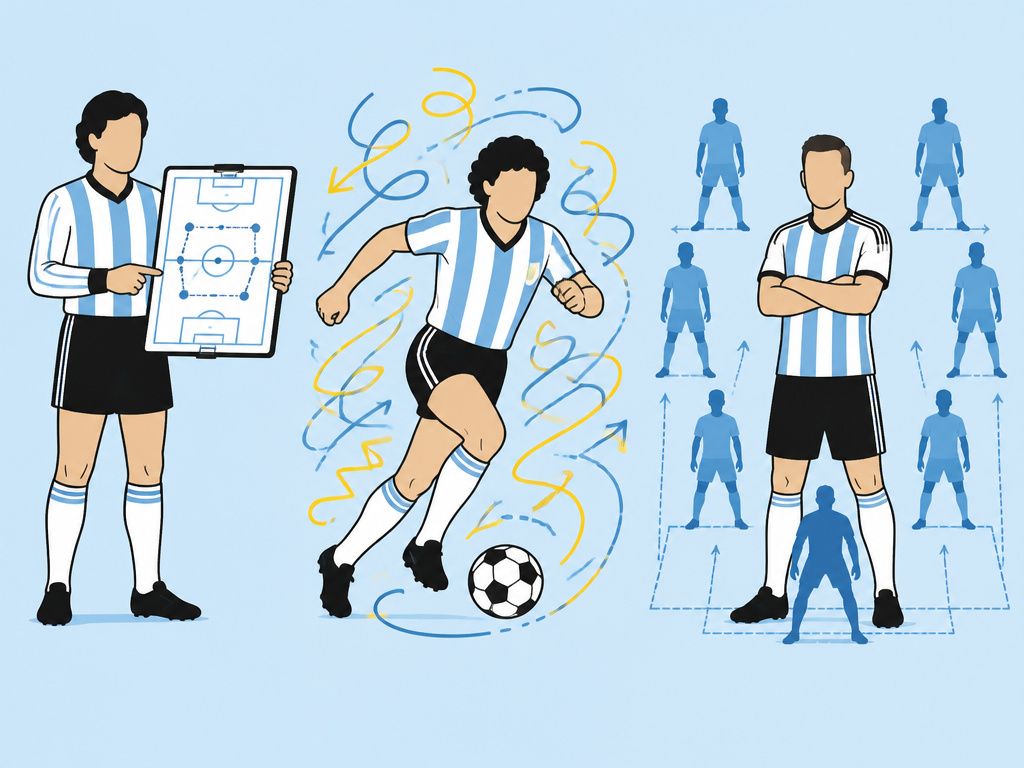
The Argentine narrative is carried by its people. The managers defined the eras: Menotti the philosopher, Bilardo the pragmatic “El Narigón,” and Scaloni the modern unifier. Their approaches shifted from the technical 1978 side, to the chaotic, Maradona-dependent 1986 team, to the structured, pressing unit of 2022.
The players extend far beyond the two icons. Kempes was the powerhouse forward of 1978. Daniel Passarella was the tough, goalscoring captain. In later years, players like Gabriel Batistuta provided a lethal striking force, while Juan Román Riquelme offered a different kind of creative genius. The modern squad is a blend of world-class experience (Messi, Ángel Di María) and a new generation of intense, tactical players who excel without the ball.
This evolution reflects global football trends. The days of relying on a single crack to win a World Cup are largely over, as the 2022 victory demonstrated. Modern success requires the complete integration of star talent within a cohesive tactical system, a principle evident in any advanced football strategic formations analysis.
| Player | World Cup(s) | Key Contribution | Legacy |
|---|---|---|---|
| Diego Maradona | 1982, 1986, 1990, 1994 | 1986 Champion, 8 goals, 8 assists | The soul of Argentine football, defined the ’86 win. |
| Lionel Messi | 2006, 2010, 2014, 2018, 2022 | 2022 Champion, 13 goals, 8 assists, most caps (26) | Closed the GOAT debate, ended 36-year drought. |
| Mario Kempes | 1974, 1978, 1982 | 1978 Champion, Top Scorer (6 goals) | The decisive force in the first title. |
| Daniel Passarella | 1978, 1982, 1986 (injured) | 1978 & 1986 Champion, defensive leader | Only Argentine to win two World Cups (as player). |
Beyond the Finals: Crucial Matches and Statistics
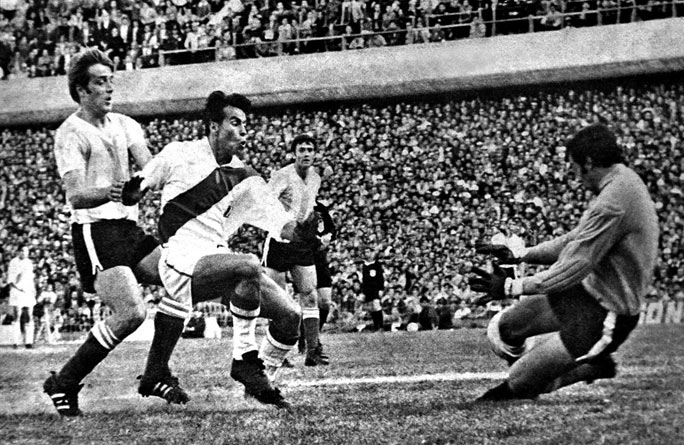
Photo: Unknown authorUnknown author / Wikimedia Commons / Public domain
History isn’t only made in finals. Argentina’s journey is dotted with pivotal matches that decided their fate. The 2-1 win over England in 1986 is the obvious one, but others carry weight.

The 1-0 victory over Brazil in the 1990 round of 16, courtesy of a Claudio Caniggia goal from a Maradona through ball, is legendary. The 6-1 demolition of Serbia & Montenegro in 2006, featuring a 25-pass team goal finished by Esteban Cambiasso, is a forgotten masterpiece. The 3-0 win over Croatia in the 2022 semi-final was a tactical demolition by Scaloni’s side, showcasing their peak performance.
Statistically, Messi holds the records for most appearances (26) and most matches as captain (19). The team’s biggest win is 6-0 (vs. Peru, 1978; vs. Serbia & Montenegro, 2006). Their heaviest defeat is a 6-1 loss to Czechoslovakia in 1958. For a full breakdown of every match, the Argentina at the FIFA World Cup page is the definitive statistical resource.
Common mistake: Focusing only on Argentina’s finals, their tournament story is often decided in tense, tactical knockout games like the 1990 win over Brazil or the 2014 semi-final victory against the Netherlands, which are just as defining.
Their consistency in producing top talent is also reflected in broader football records. Argentine players frequently appear on lists of the players with most assists and among the world’s fastest footballers, contributing to a dynamic playing style.
Frequently Asked Questions
How many World Cups has Argentina won?
Argentina has won the FIFA World Cup three times: in 1978 (as hosts), 1986 (led by Diego Maradona), and 2022 (led by Lionel Messi).
In which years was Argentina runner-up?
They finished as runners-up three times: in the inaugural 1930 tournament, again in 1990, and most recently in 2014.
Has Argentina missed any World Cup tournaments?
Yes, they have missed four editions: 1938, 1950, 1954 (due to political withdrawals), and 1970 (where they failed to qualify).
Who is Argentina’s all-time top scorer in the World Cup?
Lionel Messi is Argentina’s all-time top scorer in the World Cup with 13 goals, followed by Gabriel Batistuta with 10.
What is Argentina’s overall win-loss record in the World Cup?
In 88 total matches, Argentina’s record is 47 wins, 17 draws, and 24 losses, with a goal difference of +51 (152 scored, 101 conceded).
The Bottom Line
Argentina’s World Cup history is a rich tapestry of brilliant individualism, collective resilience, and enduring heartbreak. It’s a record defined by the twin peaks of Maradona and Messi, but firmly supported by generations of talented players and visionary coaches. Their three titles were each earned in a distinct footballing era, proving their ability to adapt and conquer across different styles of play. From the politically charged triumph of 1978 to the legacy-defining victory in 2022, Argentina has cemented its place not just as a frequent contender, but as a central character in the ongoing story of the World Cup itself. The record books show three stars. The memories contain a century’s worth of drama.

I come from the “soccer heart” of Germany, the Ruhrpott. I have played, trained and followed soccer all my life and am a big fan of FC Schalke 04. I also enjoy following international soccer extensively.