Zonal Marking vs Man Marking in Soccer
Your center-back just got pulled out of position as the opposing striker drifts wide. Do you stick to your assigned player like glue or hold your ground in your defensive zone? This split-second decision between zonal marking vs man marking in soccer could determine whether your team concedes or maintains a clean sheet. These fundamentally different defensive approaches create distinct tactical identities that shape how teams defend, transition, and ultimately win matches.
From the gritty man-to-man battles of 1970s European football to today’s sophisticated hybrid systems, the choice between these marking philosophies affects everything from your team’s pressing intensity to counter-attacking potential. Understanding when to deploy each system—and how to execute them properly—separates tactical novices from coaching masters. In this guide, you’ll discover exactly how both systems work, their hidden strengths and weaknesses, and which approach might unlock your team’s defensive potential.
Why Individual Man Marking Still Wins Championships
How Man-to-Man Marking Creates Personal Defensive Battles
Man-to-man marking assigns each defender a specific opponent to shadow relentlessly across the pitch. When your assigned striker drops deep, you follow. When they sprint into wide areas, you track. This creates intense one-on-one confrontations where individual defensive prowess often decides matches. Your primary responsibility isn’t maintaining position—it’s denying your specific opponent space and time on the ball, regardless of where that takes you.
The physical toll becomes immediate as you constantly adjust to your opponent’s movement patterns. Unlike zonal systems where you recover position after challenges, man marking requires sustained concentration for 90 minutes. One moment of inattention—when your striker makes that sudden diagonal run behind your backline—can prove catastrophic. Top man-markers develop almost psychic anticipation, reading opponents’ body language to intercept runs before they develop.
Historical Matchups That Defined Man Marking Excellence

The catenaccio system perfected by Italian giants Inter Milan and AC Milan showcased man marking at its most effective. Their defensive line of four dedicated man-markers, supported by a free-roaming sweeper, frustrated attackers worldwide. The legendary Berti Vogts’ performance against Johan Cruyff in the 1974 World Cup final exemplifies this approach—Vogts stuck to Cruyff like a shadow, neutralizing the Dutch maestro through relentless tracking.
Claudio Gentile’s masterclass against Diego Maradona and Zico during Italy’s 1982 World Cup victory demonstrated man marking’s psychological dimension. By physically and mentally overwhelming both stars through constant pressure, Gentile proved how effective individual marking could be against even the world’s best. These defensive artists earned the nickname “stopper” for their ability to single-handedly shut down opposing attacks.
Modern Champions League Examples That Prove Man Marking’s Value
Despite declining in overall popularity, man marking still delivers decisive results in specific tactical matchups. When Chelsea faced Barcelona in the 2009 Champions League semi-finals, José Bosingwa spent 180 minutes glued to Lionel Messi, disrupting the young Argentine’s rhythm through constant physical presence. Though controversial, the tactic worked—Barcelona failed to score across both legs.
Similarly, PSV Eindhoven’s Park Ji-sung executed a textbook man-marking assignment against AC Milan’s Andrea Pirlo in the 2005 Champions League semi-finals. By denying Pirlo his signature deep-lying playmaker position, Park forced Milan into predictable attacking patterns that PSV easily disrupted. These high-stakes examples prove man marking remains a valid tactical weapon when deployed against specific threats.
Zonal Marking: The Modern Defensive Framework That Dominates Elite Soccer
How Zone Coverage Creates Collective Defensive Stability
Zonal marking operates on a fundamentally different principle—you guard specific pitch areas rather than individual opponents. When an attacker enters your zone, you become responsible. When they move to another zone, that responsibility transfers seamlessly to your teammate. This creates a flexible defensive net that maintains shape regardless of opponent movement.
Visualize your defensive third divided into seven distinct zones. As attackers penetrate, defenders shift laterally while maintaining proper spacing—like a coordinated dance where each player knows exactly when to engage and when to cover. This positional discipline prevents the chaotic chasing that often plagues man-marking systems, especially during complex attacking sequences.
Critical Transition Advantages That Fuel Counterattacks
The most underrated benefit of zonal marking emerges during possession changes. Because defenders maintain positional discipline rather than chasing runners, they’re already optimally positioned to launch counterattacks the moment the ball is won. This eliminates the recovery time required in man-marking systems where defenders often find themselves out of position after challenges.
When Manchester City regains possession under Pep Guardiola’s zonal system, notice how quickly they progress the ball—defenders aren’t scrambling to recover position but are already structured to initiate attacks. This seamless transition from defense to offense creates numerical advantages before opponents can reorganize, explaining why zonal marking dominates at the highest levels of modern soccer.
Communication Protocols That Prevent Defensive Gaps
Successful zonal marking demands constant verbal coordination. Defenders must alert each other when opponents enter zones (“Man on my left!”), coordinate shifts during diagonal balls (“I’ve got the near post!”), and maintain awareness of unmarked runners. This communication becomes especially critical during set pieces, where most teams temporarily abandon pure zonal marking for more direct coverage.
During corner kicks, elite zonal teams use specific terminology to ensure coverage: “Front post covered,” “Near man on,” “Far post clear.” This precise communication prevents the confusion that often leads to goals in zonal marking systems. Teams that master this verbal coordination transform their defense into a single, cohesive unit rather than a collection of individuals.
Hybrid Systems: The Best of Both Worlds in Modern Tactical Play
3-5-2 Formation’s Revolutionary Defensive Transformation
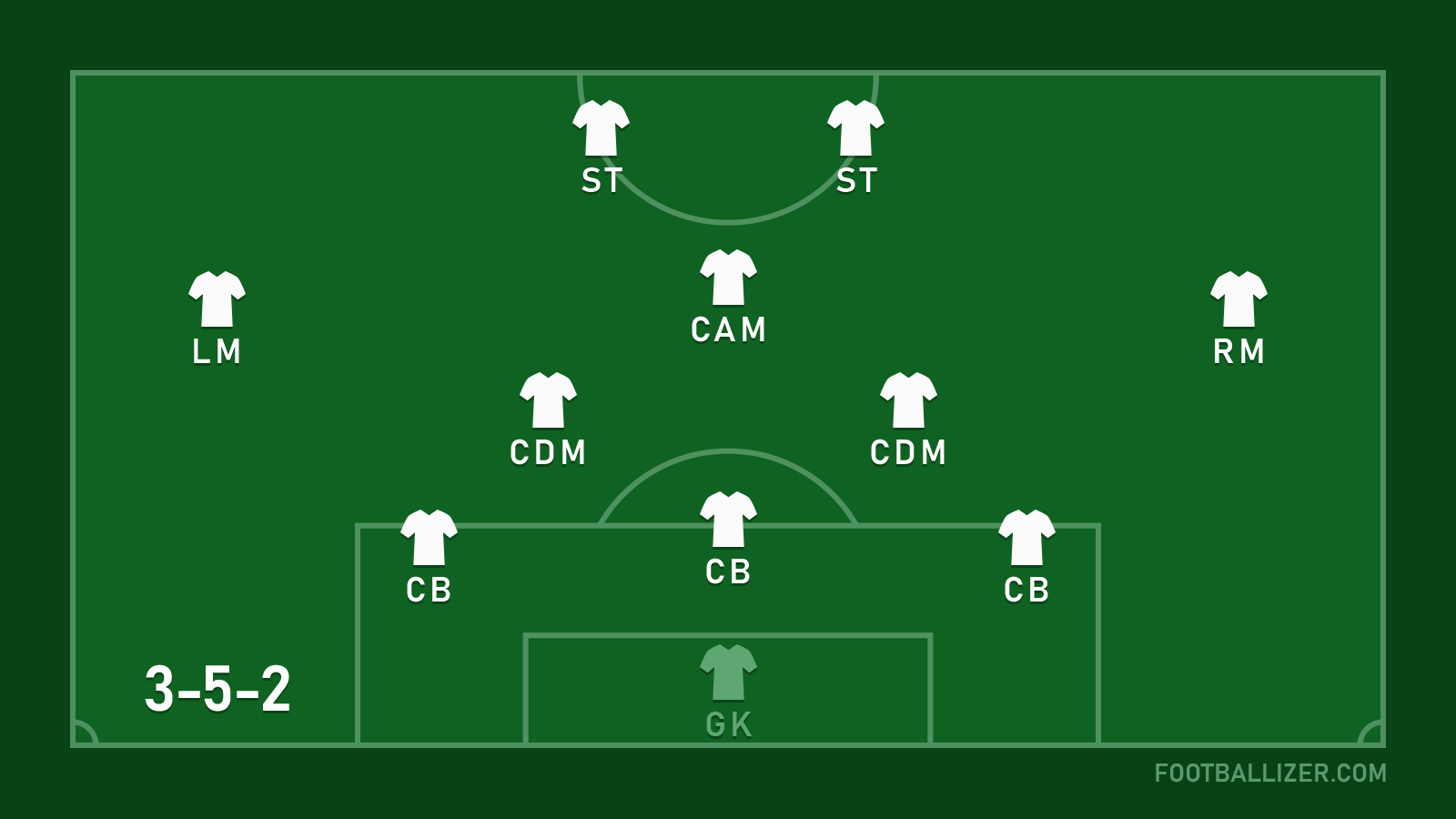
The 3-5-2 formation demonstrates how modern soccer blends both marking philosophies into a single system. Defensively, it morphs into a 5-3-2 structure where:
- Two stoppers employ man-marking principles against opposing strikers
- One sweeper operates with zonal coverage behind them
- Wingbacks mark their touchline zones while tracking overlapping runners
This hybrid approach provides the man-marking advantage of neutralizing specific threats while maintaining the positional stability of zonal coverage. Teams like Antonio Conte’s Chelsea and Diego Simeone’s Atlético Madrid have weaponized this system to win major trophies through tactical flexibility.
Situational Switching Based on Match Dynamics
Elite coaches now switch between systems based on real-time match developments. You might see zonal marking during open play transition to man-marking during critical set pieces, or vice versa. When protecting a narrow lead late in matches, some teams shift from their usual zonal system to man marking to eliminate dangerous runners.
Liverpool under Jürgen Klopp exemplifies this tactical fluidity—they primarily use zonal marking but seamlessly incorporate man-marking triggers when facing specific threats. This adaptability prevents opponents from exploiting predictable patterns, making your defense exponentially harder to break down.
Choosing Your Defensive Identity: A Practical Decision Framework
Team-Specific Factors That Determine Marking Success
Your personnel should dictate your marking system, not tactical dogma. Select man marking when:
- Your defenders excel in physical duels and possess strong anticipation skills
- Opponents rely heavily on one creative playmaker you can neutralize
- Your team has superior athleticism to sustain 90 minutes of intense tracking
- Set-piece vulnerability demands more direct coverage
Choose zonal marking when:
- Players demonstrate strong tactical understanding and spatial awareness
- Quick counterattacking transitions are central to your philosophy
- Collective defending suits your personnel better than individual battles
- Maintaining compact defensive shape is crucial against possession-heavy teams
Game State Considerations That Demand Tactical Flexibility
How you mark should evolve with the match situation. When protecting a narrow lead late in games, many coaches shift to man marking to eliminate dangerous runners. Conversely, when chasing a game, zonal marking’s positional stability better supports your attacking transitions.
Top managers like Pep Guardiola and José Mourinho make halftime adjustments based on opponent tendencies—switching between systems to exploit emerging weaknesses. This tactical flexibility represents the future of defensive organization, where rigid adherence to one system gives way to intelligent adaptation.
Final Note
The zonal marking vs man marking in soccer debate isn’t about declaring one system superior—it’s about selecting the right tool for your specific tactical challenges. While zonal marking dominates modern professional soccer with its positional discipline and transition advantages, man marking remains a potent weapon against specific threats. The most successful teams master both approaches, deploying them strategically rather than dogmatically. Whether you’re coaching youth soccer or managing a professional side, understanding these systems’ nuances will transform your defensive organization from reactive to proactive. Your players’ success depends not on which system you choose, but how intelligently you implement it against each unique opponent.
I come from the “soccer heart” of Germany, the Ruhrpott. I have played, trained and followed soccer all my life and am a big fan of FC Schalke 04. I also enjoy following international soccer extensively.