What is Zonal Marking in Soccer? A Tactical Breakdown
Zonal marking in soccer is a defensive system where players are responsible for a specific area, or ‘zone,’ of the pitch. They mark any opponent who enters that space, with responsibility passing to a teammate if the attacker leaves the zone. The system prioritizes controlling space and maintaining a compact team shape over tracking individual players.
Most people picture defense as a defender glued to a striker. That image is man-marking, and it’s mostly outdated. The modern game is about space. Zonal marking won because it defends space first, which is what goals are scored in.
This guide breaks down the principles, the required player intelligence, and the hybrid systems elite teams actually use. You will learn why pure zonal marking is rare, how to spot it, and the one training drill that fixes most zonal breakdowns.
Key Takeaways
- Zonal marking defends space, not players, requiring high collective spatial awareness and communication.
- The system’s greatest strength, maintaining shape, is also its main vulnerability against quick switches of play and set-piece overloads.
- Modern elite teams almost never use pure zonal marking; they employ a hybrid, with zonal principles governing the defensive block and situational man-marking for specific threats.
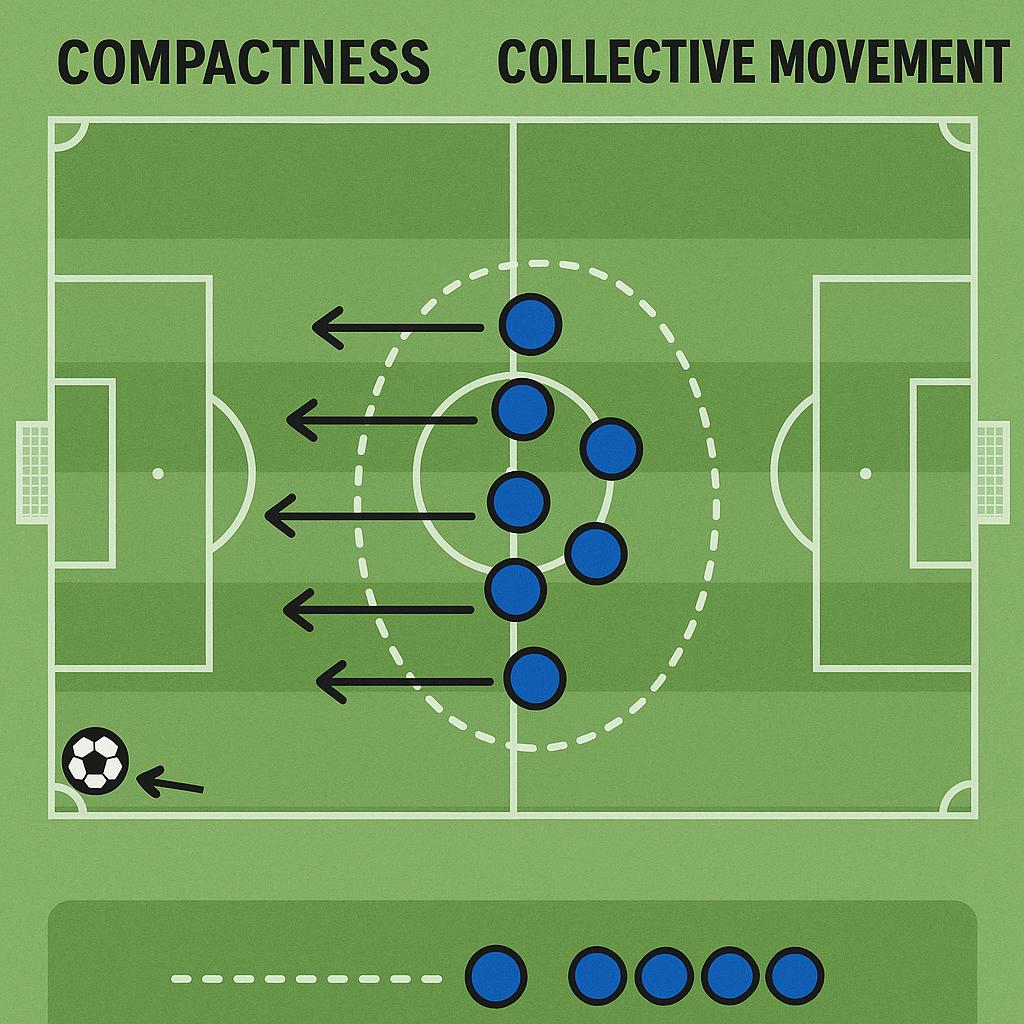
- A successful zonal defense depends on a 15–20 meter compact block, where the distance between the forward and defensive lines is tightly controlled.
- The goalkeeper is the chief organizer, constantly directing the line’s depth and alerting defenders to blind-side runners they cannot see.
The Core Principles of Zonal Marking
Forget the shirt number you are supposed to follow. Your reference points are your teammates’ shoulders and the lines of the pitch. Zonal marking reorients a defender’s entire focus from a person to a polygon of grass. The primary objective is to deny penetration into dangerous zones, especially the central corridor 25 yards from goal.
A zonal marking system requires defenders to prioritize the control of designated pitch areas over tracking specific opponents, with responsibilities transferring between players based on attacker movement. This demands synchronized lateral and vertical shifts from the entire defensive unit to preserve structural integrity.
The magic number is 15 meters. This is the ideal vertical compactness between your first defender (often a striker initiating a press) and your last defender. At this distance, the unit can shift as one connected block. If the gap stretches beyond 20 meters, passing lanes open between the lines. Your defensive shape looks like a stretched rubber band, ready to snap.
TL;DR: Defend space, not players, by keeping the entire team unit within a 15-meter deep block that moves in sync with the ball.
The Non-Negotiables: Compactness and Communication
Two things break a zonal system every single time. The first is a lack of horizontal compactness, too much space between center-back and full-back. The second is silent defenders.
Compactness is a physical rule. Communication is a psychological one. You must hear a constant stream of cues: “Left shoulder!”, “Squeeze!”, “Drop!”, “Switch!”. The center-back pairing operates a shared mental map. If one steps up to intercept, the other must cover the space behind automatically. This isn’t coached in the moment. It’s drilled until the movement is a reflex.
The system fails spectacularly without it. I have watched youth teams try to implement a zonal defensive formation structure because it looked organized on paper. Without the communication drill, attackers would drift between two confused defenders, each waiting for the other to engage. The ball went in the net. Every time.
Zonal vs. Man-Marking: A Head-to-Head Comparison
The debate is framed as a binary choice, but that is a coaching seminar myth. The real question is which principle dominates your defensive soccer tactics guide. Man-marking’s reference point is an opponent. Zonal marking’s reference point is your team’s shape.
Man-marking excels at eliminating a specific, dangerous individual. It is personal, aggressive, and simple to understand. Zonal marking controls territory, conserves player energy, and provides a built-in structure for launching attacks. The modern game’s speed and positional interchange have made strict man-marking a liability against top teams.
| Aspect | Zonal Marking | Man-Marking |
|---|---|---|
| Primary Focus | Defending space and zones | Tracking a specific opponent |
| Team Shape | Naturally compact, easier to maintain | Often stretched and disjointed |
| Energy Expenditure | Lower, as movement is coordinated | Very high, following opponents everywhere |
| Vulnerability | Quick switches of play, set-piece overloads | Decoy runs, clever positional rotations |
| Transition to Attack | Players are already in structured positions | Players can be pulled out of position |
TL;DR: Zonal marking is about controlling the pitch; man-marking is about nullifying a player. Almost all top teams now use a hybrid, with zonal structure as the default and man-marking applied to specific threats.
Why Hybrid Systems Dominate Modern Football
Common mistake: Implementing a pure zonal system at a corner kick, static defenders watch moving attackers pick their spots, and a free header finds the net.
Look at any elite side. Their default defensive organization is zonal. They shift as a 4-4-2 or 4-3-3 block. However, within that block, specific instructions apply. A defensive midfielder might be tasked with picking up an opposing number 10 who drops deep. A full-back might be told to track the winger’s inside run, even if it briefly takes him out of the zonal chain. This is the hybrid reality.
It is why the classic libero role from catenaccio is extinct. The free defender sweeping behind man-markers does not fit a zonal scheme where space is already accounted for. The modern equivalent is the defensive midfielder who plugs gaps in the zonal block.
The Player Profile: Who Thrives in a Zonal System?
Not every defender can do it. The required skill set is cerebral. You need anticipation over aggression, spatial IQ over speed. A player who relies on last-ditch tackles is a liability in a zonal scheme; his heroics are usually covering for a positional mistake he made five seconds earlier.
The ideal zonal defender possesses three qualities:
1. Proactive Reading of the Game: He sees the pass before it is played. He recognizes the trigger for a wing overload and shifts early.
2. Calm Communication Under Pressure: His voice stays level when the opponent is 30 yards out. He instructs, he doesn’t panic.
3. Discipline to Hold the Line: He trusts the system. He does not get dragged out of position by a striker making a meaningless run to the corner flag.
This is the opposite of the old-school, hard-tackling center-half. Coaches spend years developing this profile. The Wikipedia entry on soccer marking details the historical shift, but the training ground is where the change happens.
The Goalkeeper’s Command Role

In a man-marking system, the goalkeeper is often a reactive shot-stopper. In a zonal system, he is the director. He has the only view of the entire chessboard. His primary job is to manage the line’s depth, yelling “Step up!” or “Hold!”, and to identify runners attacking the blind side of his defenders.
A silent goalkeeper in a zonal setup is a concession. He is letting his defenders play with partial information. The best ones, like Manuel Neuer or Alisson, act as a sweepers and loudspeakers, constantly compressing the space behind the defense and organizing the zonal structure before an attack even develops.
Training Zonal Marking: From Cones to Complexity
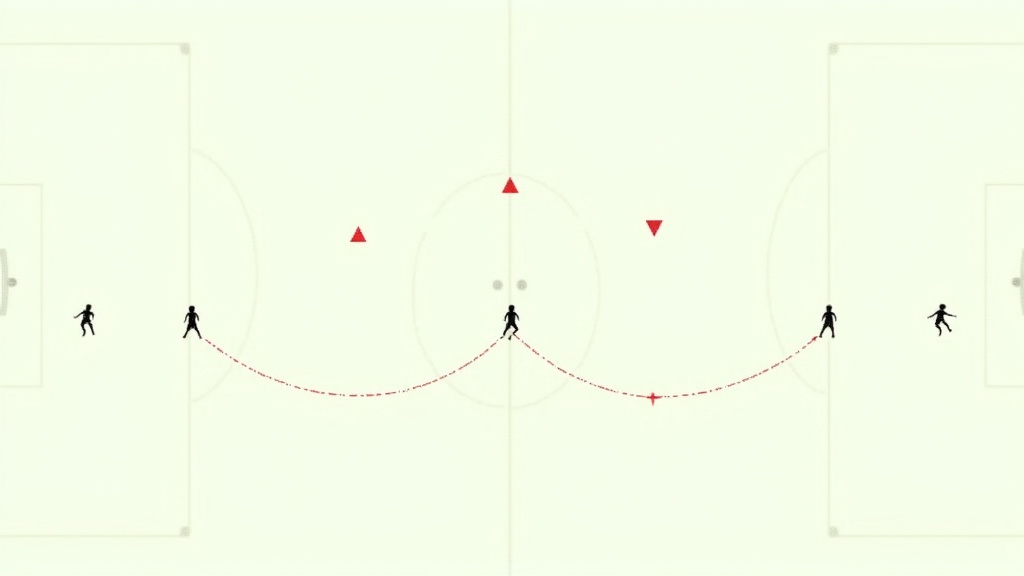
You start with static shapes. Use cones to create a grid of zones on your defensive half. Players move within their zone, passing attackers between them. The next progression introduces a rope or elastic band connecting the back four, forcing them to move in unison to keep it taut. This physically teaches compactness.
The advanced drill is the shadow game. Eleven outfield players defend against no opposition, simply shifting as a unit based on coach-driven ball movement. This builds the muscle memory of synchronized shifting. Then you add attackers, first passively, then actively trying to break the block. The final stage is incorporating pressing tactics triggers, so the zonal block knows when to collectively step up and win the ball.
I once tried to implement a high zonal press with a semi-pro team without the shadow-game progression. We were a disconnected mess for weeks. Attackers played through us like we were training cones. We went back to the rope drill for two full sessions. The improvement in our defensive coordination was immediate and obvious.
The Evolution and Modern Application
Zonal marking is not new. Arrigo Sacchi’s legendary AC Milan side of the late 1980s is the textbook example. They played with an offside trap and a zonal block so compact it suffocated opponents. The system has evolved to counter modern attacking fluidity. Now, we see zonal organizing players within a high press comparison or a deep low defensive block.
Most professional teams today, especially those using a 4-4-2 or a 5-3-2, default to a zonal structure. The Cambridge Dictionary zonal marking definition captures the static concept, but the live application is dynamic. It is the foundational layer upon which all other defensive strategies are built.
Frequently Asked Questions
What is the biggest disadvantage of zonal marking?
The biggest disadvantage is vulnerability to well-rehearsed set pieces and quick switches of play. Static defenders in zones can be overloaded by coordinated attacking runs, and if the defensive block shifts too far to one side, a diagonal ball to the weak side can create a dangerous isolation.
Do any top teams use pure zonal marking?
Virtually none. Every elite team uses a hybrid system. The base structure is zonal, with players responsible for spaces. However, specific players will be given man-marking tasks against exceptional threats, like tracking a shadow striker or sticking with a target forward at a corner.
Is zonal marking harder to learn than man-marking?
Yes, it has a steeper learning curve. Man-marking is intuitive: follow your man. Zonal marking requires players to understand spatial relationships, collective movement, and to develop trust in their teammates. It takes more consistent coaching and repetition to implement effectively.
Why is communication so critical in a zonal system?
Because defenders are focused on zones and the ball, not individual attackers. Without constant verbal cues about runner positions, cover, and when to shift, gaps will appear between zones. Silent zonal defense is a broken zonal defense.
Can you use zonal marking in a high press?
Absolutely. In fact, they are highly complementary. A high press is often organized on zonal principles, with players pressing triggers based on the ball’s location in specific zones of the pitch. The entire team moves up the field in a compact zonal block to suffocate the opponent.
The Bottom Line
Zonal marking is the intelligent, economical foundation of modern soccer defense. It is not about being passive. It is about controlling the geometry of the game, forcing attackers into less dangerous areas, and turning defense into attack with structure. The system demands smart, communicative players and relentless drilling on collective movement.
Do not get caught in the false debate of zonal versus man. The winning formula, visible every weekend in the Bundesliga and Premier League, is a zonal framework with selective man assignments. Master the principles of space, compactness, and communication first. Everything else, including knowing when to break your own tactical principles of play for a crucial man-marking job, builds from that solid base.

I come from the “soccer heart” of Germany, the Ruhrpott. I have played, trained and followed soccer all my life and am a big fan of FC Schalke 04. I also enjoy following international soccer extensively.