Where Is the World Cup in USA? Stadiums, Cities, and More
The 2026 FIFA World Cup in the USA spans 11 host cities from Seattle to Miami, hosting over 60 matches including the final at MetLife Stadium in New Jersey on July 19, 2026. It is part of a tri-nation North American tournament with Canada and Mexico, featuring a new 48-team format.
Most guides list the cities and move on. They miss the sheer physical reality of following a team across a country wider than the Atlantic. The distance from Los Angeles to New York is farther than London to Moscow. Your travel plan is as important as your match ticket.
This guide maps every U.S. host stadium, explains the critical knockout stage schedule, and delivers the blunt logistics you need to navigate a World Cup on a continental scale.
Key Takeaways
- The United States will host 60+ matches, including every game from the quarterfinals through the final, making it the tournament’s dominant stage.
- Book inter-city travel and accommodation immediately after the match schedule is released. The 250th U.S. anniversary in 2026 will create unprecedented demand.
- Know the stadiums by their common names (MetLife, SoFi) as well as FIFA’s generic labels (“New York New Jersey Stadium”) to avoid confusion.
- The geographic spread is immense. Following a team through the group stage likely requires cross-country flights, not train hops.
- Check passport validity and U.S. visa requirements a full year in advance. Processing delays are the number one reason fans miss tournaments.
The 11 U.S. Host Cities and Their Stadiums
Forget a neat cluster of venues. The 2026 World Cup uses America’s vast infrastructure, placing stadiums in four distinct regions. This regional spread is intentional for team base camps and fan travel, but it demands a map.
The tournament’s 11 U.S. venues were selected from a pool of over 40 candidates, with final choices based on stadium capacity, hotel inventory, transportation links, and a commitment to sustainable operations. Each city signed a host city agreement with stringent FIFA requirements.
The first thing you’ll notice is the naming. FIFA strips commercial branding for the tournament. You’re buying a ticket to “Los Angeles Stadium,” not SoFi Stadium. Locals and taxi drivers won’t use the FIFA name. Memorize both.
| FIFA Venue Name | Common Name & Location | Capacity | Key Match |
|---|---|---|---|
| New York New Jersey Stadium | MetLife Stadium, East Rutherford, NJ | ~82,500 | Final, July 19 |
| Los Angeles Stadium | SoFi Stadium, Inglewood, CA | ~70,000 | U.S. Opening Match |
| Dallas Stadium | AT&T Stadium, Arlington, TX | ~80,000 | Semifinal |
| Atlanta Stadium | Mercedes-Benz Stadium, Atlanta, GA | ~71,000 | Semifinal |
| Miami Stadium | Hard Rock Stadium, Miami Gardens, FL | ~64,767 | Third-Place Match |
| San Francisco Bay Area Stadium | Levi’s Stadium, Santa Clara, CA | ~68,500 | Group & Round of 32 |
| Seattle Stadium | Lumen Field, Seattle, WA | ~68,740 | Group & Round of 32 |
| Houston Stadium | NRG Stadium, Houston, TX | ~72,220 | Group & Round of 32 |
| Kansas City Stadium | Arrowhead Stadium, Kansas City, MO | ~76,416 | Group & Round of 32 |
| Philadelphia Stadium | Lincoln Financial Field, Philadelphia, PA | ~69,796 | Group & Round of 32 |
| Boston Stadium | Gillette Stadium, Foxborough, MA | ~65,878 | Group & Round of 32 |
TL;DR: You have 11 stadiums in four time zones. The final is in New Jersey, the U.S. opens in Los Angeles, and the semifinals are in Dallas and Atlanta. Know the real stadium names.
Tournament Structure and the U.S. Match Schedule
The 2026 edition explodes in size to 48 teams. The group stage features 16 triplets, with the top two from each group and the eight best third-place teams advancing to a 32-team knockout round. Complexity aside, the U.S. gets the lion’s share of the decisive games.
The U.S. will host approximately 60 of the 104 total matches. More critically, it hosts every single match from the quarterfinals onward. Once the field narrows to eight teams, the entire tournament moves onto American soil. This includes both semifinals, the third-place match in Miami, and the final in New Jersey.
The U.S. Men’s National Team (USMNT) is guaranteed to play its opening match at SoFi Stadium in Los Angeles. Its third group stage game is also slated for Los Angeles. This clustering is a gift for American fans but a nightmare for opponents trying to plan travel.
Common mistake: Assuming the final is in New York City — it’s at MetLife Stadium in East Rutherford, New Jersey. The transit and hotel landscape is different. Planning for Manhattan without checking New Jersey transit links adds hours and stress on match day.
The match schedule on the official State Department FIFA World Cup 2026 page confirms the U.S. as the anchor host. This central role influences everything from security planning to the visa advice they provide for incoming fans. It also means U.S. law enforcement and federal agencies will have a highly visible presence, a factor that has sparked pre-emptive discussions about fan rights and stadium security screening protocols.
Planning Your Trip: It’s a Continental Event
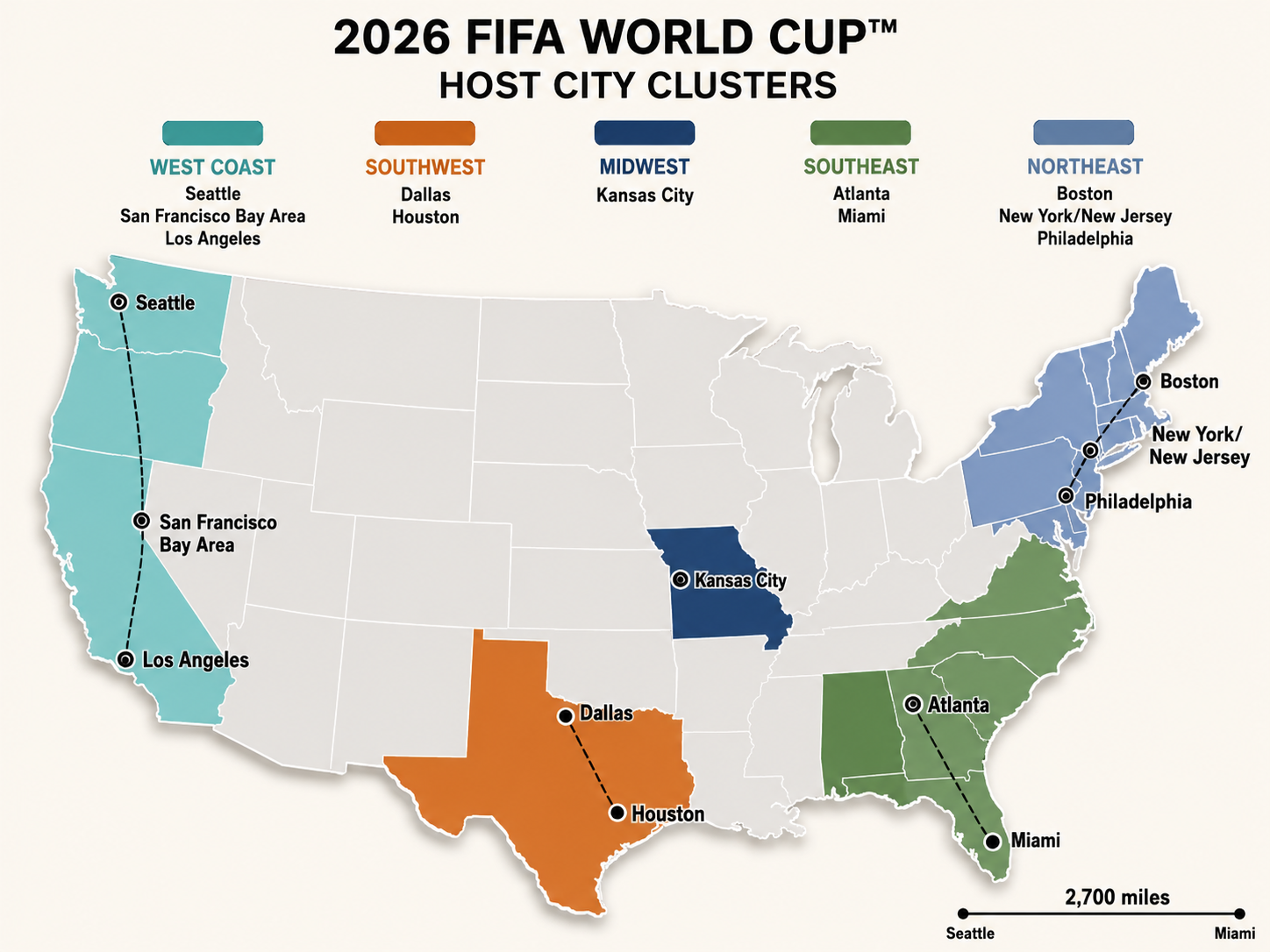
This isn’t a European championship where you take a train between host cities. The distance from Seattle to Miami is over 2,700 miles. Following a team through the group stage could easily require three cross-country flights in ten days. Your budget must account for this.
Start with geography. The host cities form loose clusters:
* West Coast: Seattle, San Francisco Bay Area, Los Angeles
* Southwest: Dallas, Houston
* Midwest: Kansas City
* Southeast: Atlanta, Miami
* Northeast: Boston, New York/New Jersey, Philadelphia
Flights within a cluster are manageable. Traveling between clusters is a major flight. When the match schedule drops, plot your team’s path immediately. Then book flights. Prices will double within weeks.
Accommodation is the next choke point. Major cities like New York and Los Angeles are used to big events, but smaller markets like Kansas City and Atlanta will see hotel inventory evaporate. Consider suburbs with direct rail links to the stadiums. Book refundable rates.
I followed Germany during the 2014 World Cup in Brazil. We had flights between cities booked six months out. A friend waited for the official schedule confirmation. He spent triple on last-minute flights and ended up in a hostel an hour from the stadium. The lesson is brutal: in a continental host nation, early logistics are non-negotiable.
Transportation on the ground varies wildly. Cities like New York, Philadelphia, and San Francisco have robust public transit to their stadiums. Others, like Dallas (Arlington) and Boston (Foxborough), require car rentals or organized shuttle buses. Research each city’s specific plan.
Tickets, Visa, and Practical Fan Info
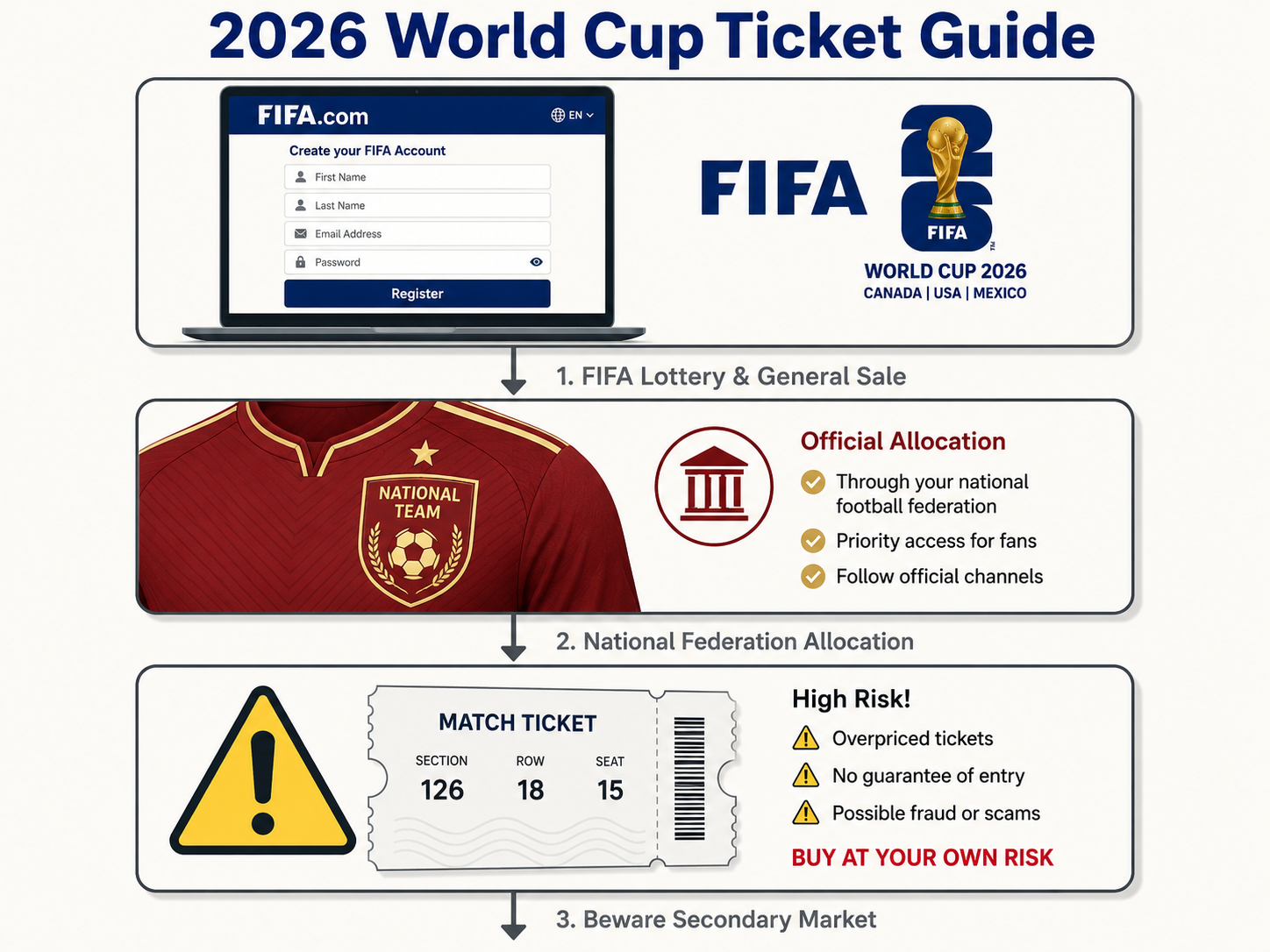
Ticket sales will run through FIFA’s usual phased process: a random-selection lottery, followed by team-specific allocations, then a first-come-first-served general sale. Prices for the 2026 tournament are projected to be high, reflecting the expanded format and premium U.S. venues.
- Register on FIFA.com. This is your only direct channel for the lottery and general sales. Do it now.
- Follow your national federation. They receive an allocation of tickets for their supporters. This is often the best route for fans traveling to support a specific team.
- Bewyond of the secondary market. Fraud is rampant. Use only FIFA-authorized resale platforms.
For international fans, the U.S. visa process is your biggest hurdle. Apply for a B-2 tourist visa as early as your country’s embassy allows—at least 6-8 months before the tournament. You will need to show proof of match tickets, accommodation, and sufficient funds. The U.S. government World Cup 2026 guide is the definitive source for current requirements.
U.S. and Canadian citizens traveling to matches in Mexico, and vice-versa, need a valid passport. It does not need to be a special fan passport, but it must be valid for your dates of travel.
Beyond the Matches: Culture and Fan Experience
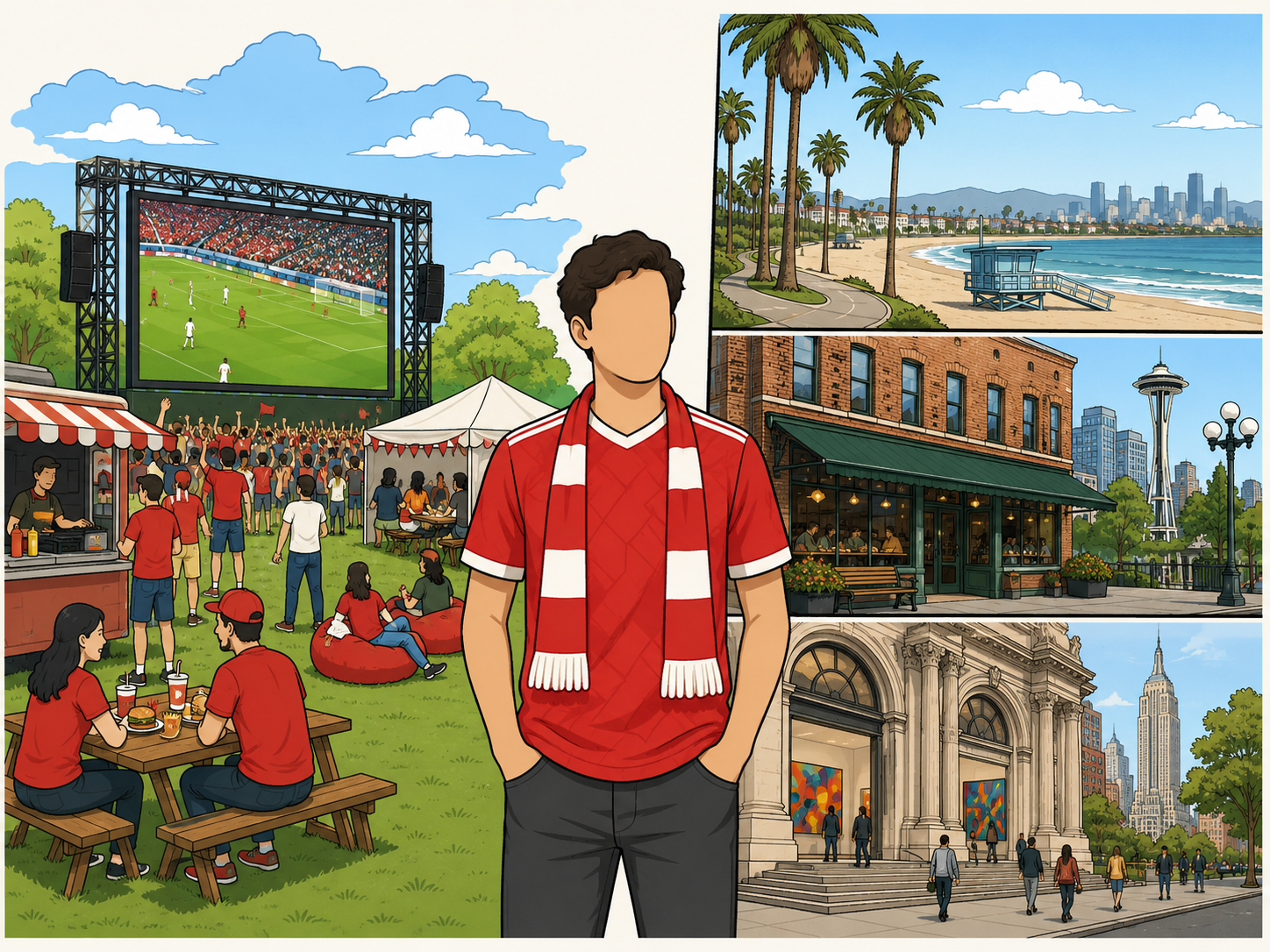
The World Cup is a month-long festival. Each host city will have designated Fan Fest areas—large, free-entry zones with giant screens, food, and entertainment. These are often the best place to watch non-ticketed matches and soak up the atmosphere.
But don’t just live in the fan zone. Each city offers a distinct cultural backdrop:
* Los Angeles & San Francisco: Beach culture, Hollywood, and Silicon Valley tech hubs.
* Seattle & Boston: Historic ports, vibrant coffee and tech scenes, iconic seafood.
* New York & Philadelphia: Immersive arts, history, and unparalleled food diversity.
* Atlanta & Houston: Southern hospitality, major commercial hubs, legendary barbecue and music scenes.
* Miami: Latin American fusion, art deco, and beachfront nightlife.
* Kansas City & Dallas: The American heartland, with sprawling suburbs and a focus on American football culture alongside the soccer.
Accessibility standards in U.S. stadiums are generally high, with mandated wheelchair seating and companion spots. Contact the stadium’s guest services department well in advance to secure appropriate tickets and discuss specific needs.
The 2026 tournament also coincides with the United States’ 250th anniversary. Expect a layer of national celebration and patriotism that will color the entire event, for better or worse. This will impact everything from security posture to the general mood in public spaces.
Frequently Asked Questions
Which city is hosting the World Cup 2026 final?
The final will be played on July 19, 2026, at MetLife Stadium in East Rutherford, New Jersey. FIFA lists it as “New York New Jersey Stadium.”
How many matches will the USA host?
The United States is scheduled to host 60 or more of the 104 total matches, including all games from the quarterfinal stage through the final.
When do 2026 World Cup tickets go on sale?
FIFA has not announced the official ticket sale dates. The process typically begins about a year before the tournament, with an initial lottery phase. Register on FIFA.com for updates.
Do I need a visa to attend the World Cup in the USA?
Most international travelers will need a B-2 tourist visa. Requirements vary by country. All fans should check the U.S. Department of State website for official guidance and apply many months in advance.
The Bottom Line
The 2026 World Cup in the USA is a logistical beast disguised as a football tournament. The stadiums are world-class, the match schedule is U.S.-heavy, and the fan experience will be diverse. But the sheer distance between venues makes early, meticulous planning the price of admission. Secure your travel documents first, map your potential cities second, and be ready to book the instant the match schedule is locked. This isn’t just about watching football. It’s about conquering a continent to see it.

I come from the “soccer heart” of Germany, the Ruhrpott. I have played, trained and followed soccer all my life and am a big fan of FC Schalke 04. I also enjoy following international soccer extensively.