Grass vs Turf: The High-Tech Pitch Science for World Cup
The 2026 FIFA World Cup will use engineered natural grass pitches across all 16 stadiums. FIFA mandated this over artificial turf and invested over $5 million in research to develop specific grass blends, a sod-on-plastic transport system, and hybrid turfgrass reinforcement for consistency, durability, and player safety.
Most people assume a World Cup pitch is just grass grown in the stadium. The reality is a cross-continent logistics operation involving refrigerated trucks, plastic fibers woven into the soil, and stadium roofs fitted with artificial sunlights. It’s not a garden. It’s a precision engineering project.
This guide breaks down the science behind the surfaces: the exact grass types chosen for each climate, the $5 million research program, the hybrid systems that prevent divots, and why FIFA insists on natural grass despite the colossal effort.
Key Takeaways
- FIFA banned artificial turf for World Cup 2026, investing $5 million to engineer natural grass pitches for all 16 stadiums across three countries.
- Cooler climate and domed stadiums use a proprietary blend of 84% Kentucky bluegrass and 16% perennial ryegrass, grown on plastic sheets for transport.
- Hybrid turfgrass systems stitch green plastic fibers into the natural grass to stabilize the surface, meeting strict FIFA performance tests for ball bounce and rotational resistance.
- Domed stadiums like NRG Stadium in Houston require massive LED grow light arrays because the grass gets no natural sunlight.
- The primary goal is surface consistency – ensuring the ball reacts the same way in Toronto as it does in Miami, preventing injuries and maintaining fast play.
FIFA’s $5 Million Grass Mandate
The tournament’s first rule: no artificial turf. FIFA’s playing surface regulations require natural grass for all World Cup matches. For 2026, that meant converting NFL stadiums with permanent synthetic fields and ensuring domed venues could support living turf. The organization funded an eight-year research program, detailed in a BBC Future article on World Cup grass, to solve the problem.
The research targeted three variables: climate, stadium architecture, and schedule. A pitch in Seattle faces different rain and temperature patterns than one in Dallas. A dome in Atlanta blocks all sunlight. And 104 matches over a month demand a surface that recovers quickly. The solution wasn’t one grass type. It was a system.
The specific 84% Kentucky bluegrass and 16% perennial ryegrass blend produced stronger sod than pure Kentucky bluegrass alone four months after seeding. This mixture is used for cooler climates and domed stadiums, while warm venues like Miami use Bermuda grass.
TL;DR: FIFA spent $5 million over eight years to develop climate-specific grass blends and installation systems because World Cup regulations forbid artificial turf.
The Grass Blends: Climate-Specific Engineering
You don’t just plant grass. You match it to the environment. FIFA’s researchers tested dozens of cultivars to find the right mix for each host city’s microclimate.
For the warm, humid venues like Miami and the MetLife Stadium in New Jersey, they selected Bermuda grass. It thrives in heat, recovers from wear quickly, and provides a firm surface. For the cooler northern cities and the domed stadiums – Houston’s NRG Stadium, Dallas’s AT&T Stadium, Atlanta’s Mercedes-Benz Stadium – they engineered a cool-season blend.
That blend is 84% Kentucky bluegrass and 16% perennial ryegrass. The ryegrass adds tensile strength to the sod mat. Pure Kentucky bluegrass sod can tear during installation or under player cleats. The ryegrass fibers bind it, creating a carpet that handles the stress of being rolled, transported, and played on immediately. This is a direct result from the turfgrass science project highlighted by MSU expert on turfgrass consistency.
| Stadium Climate Type | Primary Grass Blend | Key Strength | Installation Challenge |
|---|---|---|---|
| Warm/Humid (e.g., Miami) | Bermuda grass | Heat tolerance, rapid recovery | Maintaining firmness without over-watering |
| Cool/Domed (e.g., Houston) | 84% Kentucky bluegrass, 16% perennial ryegrass | Sod strength, wear recovery | Providing artificial light in domes |
| Transitional (e.g., Boston) | Kentucky bluegrass dominant mix | Early spring green-up, durability | Managing temperature swings between matches |
Choosing the wrong blend has a concrete consequence. In a dome, Bermuda grass would fail without intense light and heat. In a cool open-air stadium, the bluegrass/ryegrass mix would struggle with summer heat spikes. They picked each blend for the stadium’s known stress points.
The Hybrid Turfgrass System Explained
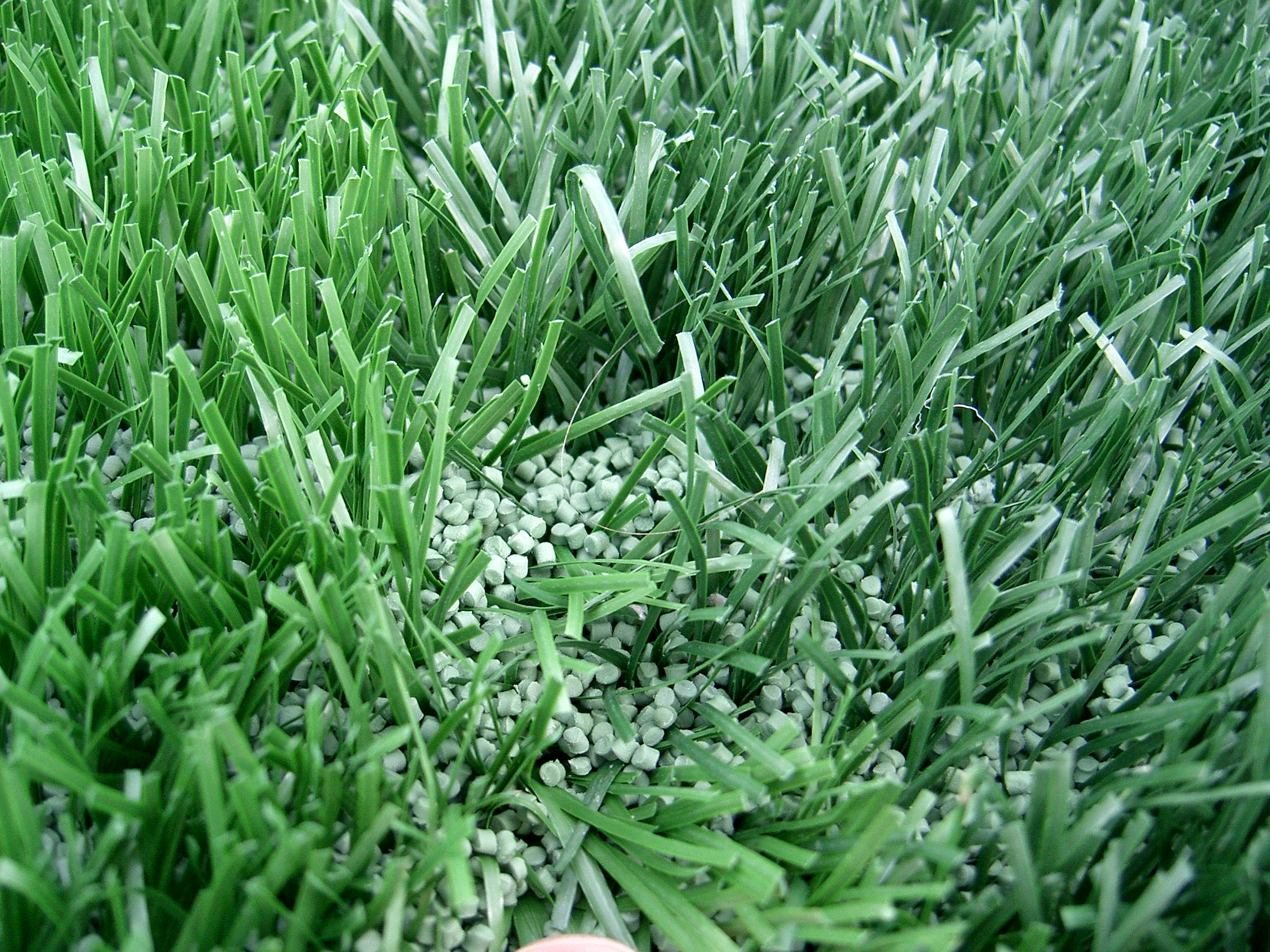
Photo: Drguttorm / Wikimedia Commons / CC BY 2.5

Natural grass alone isn’t durable enough for 104 professional matches. The solution is a hybrid system: plastic fibers integrated into the living turf. These fibers are green, thin, and spaced about an inch apart.
Two methods exist. The first lays a carpet of plastic fibers during the grass growth phase. The roots wrap around the fibers as they develop, anchoring the plant. The second method stitches fibers into already-installed sod using a specialized machine with needles. Both methods serve the same goal: stabilization.
The fibers prevent divots. On a pure natural grass pitch, a player’s cleat can rip up a chunk of sod, especially on a wet surface. The plastic network holds the soil and root mass together, reducing tear-out. They also improve surface firmness, which affects ball roll and player traction – critical metrics in FIFA’s performance tests.
All tested carpet systems for hybrid turf met FIFA’s surface performance tests for ball bounce, rotational resistance, and surface hardness. The plastic fibers are colored to match the grass and are virtually invisible from the stands.
Why does firmness matter? A soft pitch slows the ball, kills passing speed, and increases injury risk. Players slip if the surface gives way underfoot. The hybrid system creates a consistent, firm bed across all 16 venues. It’s the reason a pass in Toronto feels the same as a pass in Los Angeles.
This engineering directly supports the high physical demands of the tournament. A predictable surface lets players commit to tackles and sprints without worrying about the ground.
The Logistics: Moving Mountains of Sod
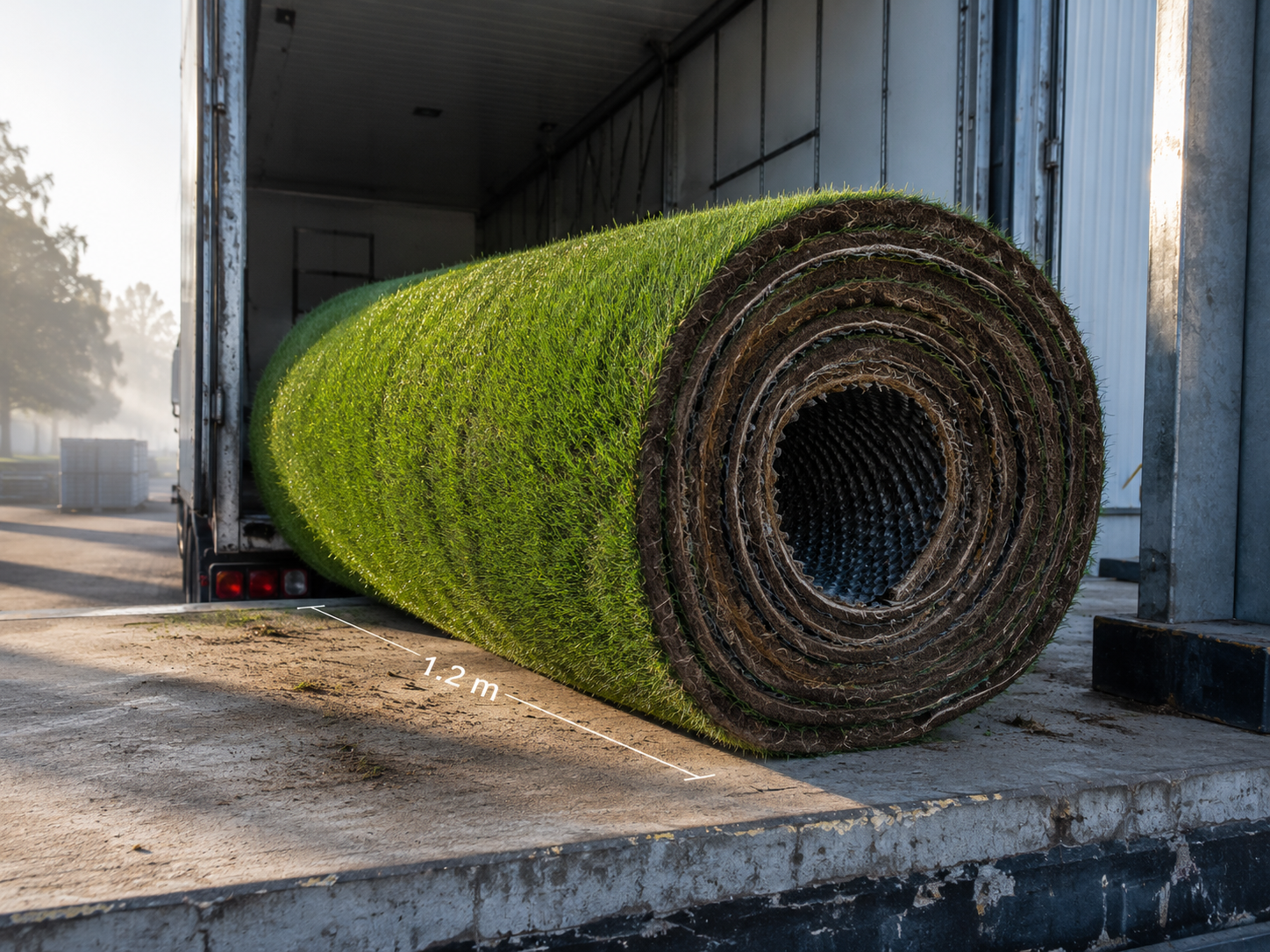
The grass isn’t grown in the stadiums. It’s grown on farms, then transported. Most stadiums use the sod-on-plastic method. The grass is cultivated on large plastic sheets over a sand rootzone. When ready, it’s cut into rolls.
Each roll is 1.2 meters wide (about 4 feet), 30 to 50 feet long, and weighs between 1,800 and 2,000 pounds. They are loaded onto refrigerated trucks and driven cross-country. Sod from Colorado supplies Atlanta and Houston. The refrigeration maintains root health during the trip.
The installation is a rapid, military-style operation. Crews roll the sod into the stadium, connect it to the pre-built subsurface systems, and the pitch is playable almost immediately. The plastic sheet preserves the entire root system – no tearing, no shock. The process for Houston’s NRG Stadium is documented in a Houston Public Media World Cup grass report.
Common mistake: Transporting sod without refrigeration – the root mass heats up, the grasses go dormant, and the installed pitch takes weeks to recover, missing the tournament’s tight schedule.
The subsurface itself is layered. FIFA standards specify a sand rootzone (12 inches for permanent turf, 6-10 inches for temporary), a gravel or plastic drainage layer, and a vacuum/ventilation system. This isn’t just dirt. It’s a built environment with pipes for aeration and water removal. The entire package is temporary for many NFL stadiums, removed after the World Cup to revert to artificial turf.
Domed Stadiums and Artificial Sunlight
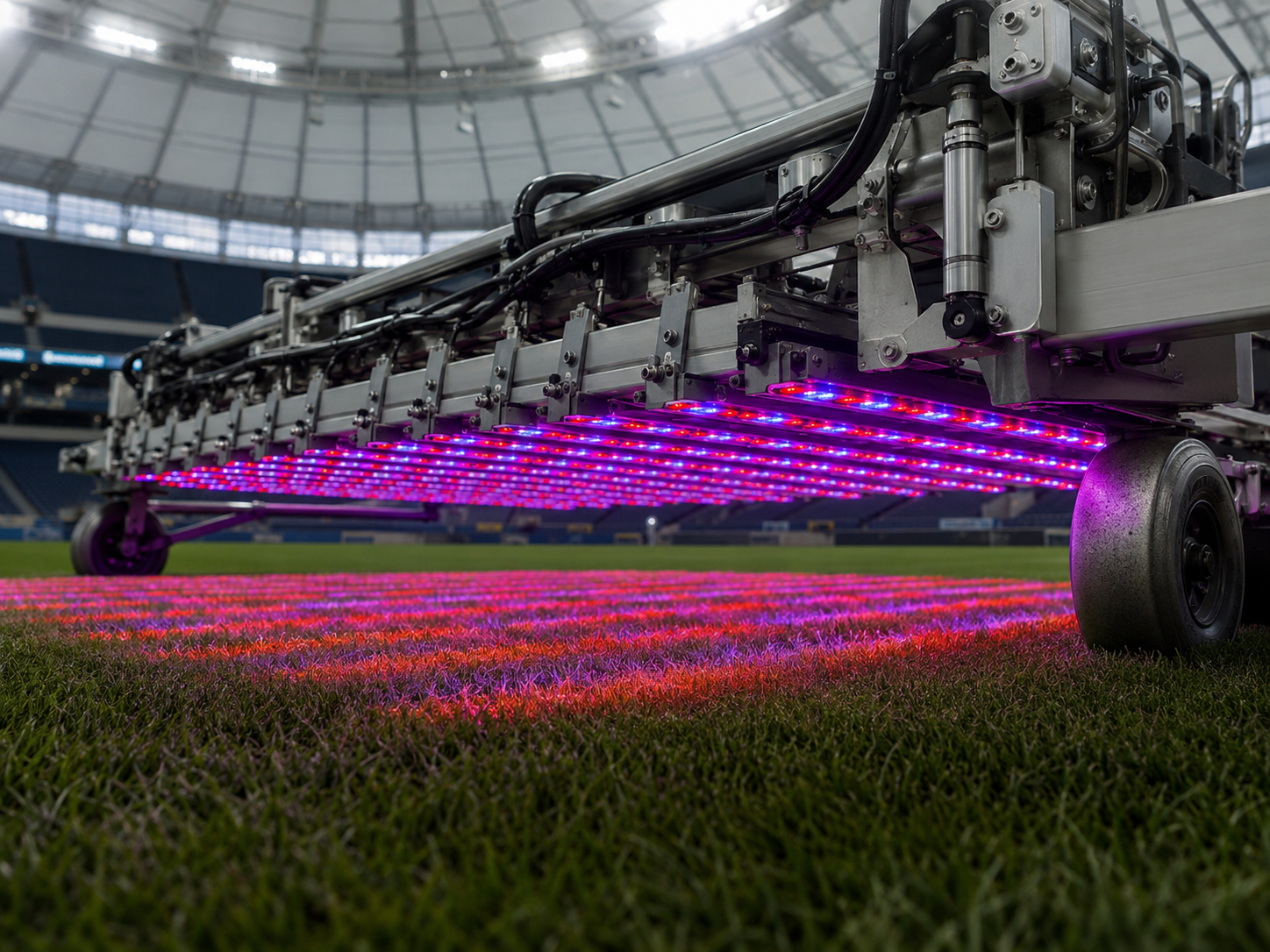
A dome blocks sunlight. Grass dies without light. The solution for venues like Dallas, Atlanta, and Houston is massive arrays of LED grow lights.
These lights are mounted on movable gantries that can be positioned over the pitch. They emit the specific wavelengths grasses need for photosynthesis. The stadium’s HVAC system also regulates temperature, creating an artificial summer inside the dome. The lights run for hours each day, especially between matches when the grass needs to recover.
The energy cost is significant. But without it, the bluegrass/ryegrass blend would yellow and weaken within days. The lights are non-negotiable. They turn a domed stadium into a viable greenhouse for championship-level turf.
This technological layer affects player fitness and recovery too. A consistent, healthy surface reduces leg fatigue and impact injuries over a tournament’s grueling schedule.
| Domed Stadium Challenge | Technological Solution | Performance Goal |
|---|---|---|
| Zero natural sunlight | High-output LED grow light arrays | Maintain photosynthesis for grass health |
| Controlled air circulation | Integrated HVAC system | Regulate temperature and humidity |
| Limited rootzone depth | Permavoid plastic drainage modules | Ensure drainage without excess soil weight |
TL;DR: Domed World Cup stadiums require artificial LED grow lights and climate control because the grass receives no natural sunlight, a $5 million research problem solved by FIFA’s engineers.
Why Natural Grass Over Artificial Turf?
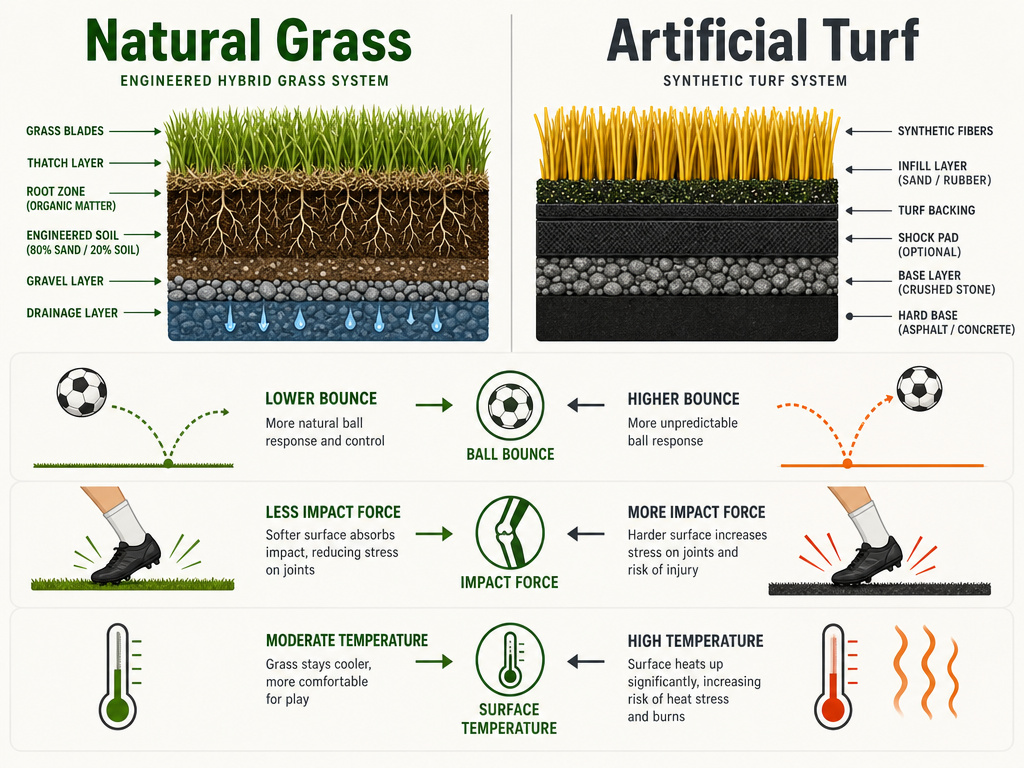
FIFA’s insistence on natural grass isn’t tradition. It’s physics. Natural grass interacts with the ball and player differently than synthetic turf.
On artificial turf, the ball bounce is higher and more predictable, but the surface is harder. Player impact forces increase, raising the risk of joint and concussion injuries. The surface also heats up dramatically in sun, affecting performance. Natural grass, especially the engineered hybrid systems, offers a softer, cooler, more dynamic surface that elite players prefer.
The grass length itself is a tuned variable. FIFA targets a blade height of around 5 millimeters. This cuts down friction for fast ball movement, essential for the quick passing game modern soccer demands. A longer grass slows the ball; a shorter grass might not provide enough cushion.
This preference for natural surfaces influences long-term player longevity. Reducing cumulative impact on joints can extend a professional career. Tournament organizers also know that fans and broadcasters perceive natural grass as the authentic championship surface.
Common mistake: Assuming artificial turf is more durable for a tournament – while it withstands wear, it alters ball physics and increases injury rates, which FIFA’s medical committees explicitly flagged for World Cup-level play.
The choice also forces host cities to upgrade. NFL stadiums with permanent synthetic fields must install temporary natural grass systems, a complex but worthwhile investment for the global spectacle.
The 7-Step World Cup Pitch Installation Process
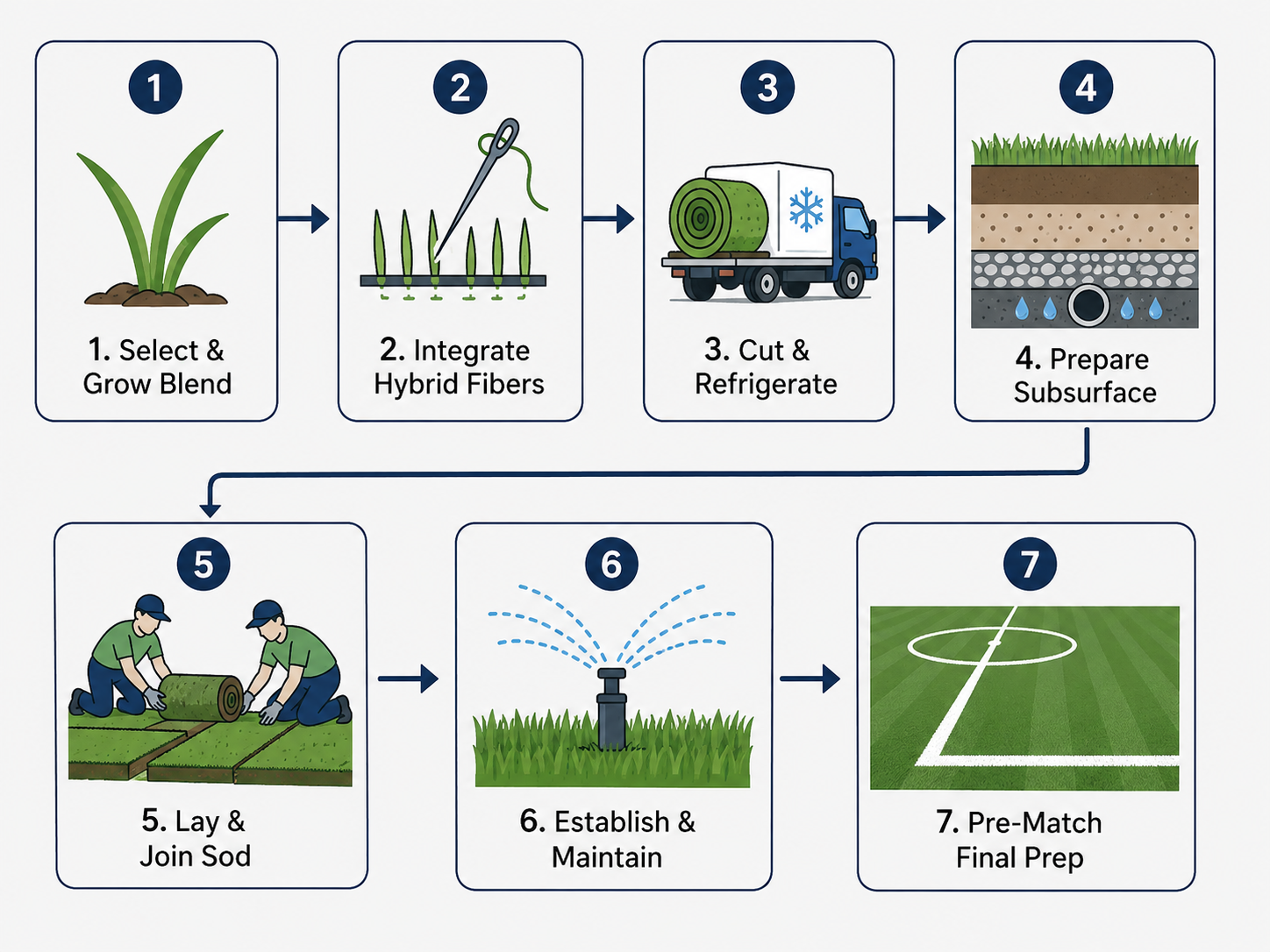
The installation is a sequence. Missing a step risks the entire surface.
- Select and grow the blend. Match the grass type to the stadium’s climate profile. Grow on sod-on-plastic sheets for 4-6 months.
- Integrate hybrid fibers. During growth or after installation, stitch or embed the green plastic reinforcement fibers into the turfgrass.
- Cut and refrigerate. Harvest the sod into massive rolls, load onto refrigerated trucks, and transport to the stadium.
- Prepare the stadium subsurface. Ensure the sand rootzone, drainage layer, and vacuum/ventilation systems are operational before sod arrives.
- Roll out and connect. Deploy the sod rolls across the pitch, seam them together, and connect the rootzone to the drainage and aeration systems.
- Activate support systems. In domed stadiums, position LED grow lights and set HVAC to target temperature and humidity.
- Test and certify. Conduct FIFA surface performance tests (ball bounce, rotational resistance, hardness) to certify the pitch for match play.
Skipping step 6 in a dome means the grass dies before the first match. Skipping step 2 means divots will litter the pitch by the second game day. The process is locked.
Frequently Asked Questions
Will any World Cup 2026 stadium use artificial turf?
No. FIFA regulations mandate natural grass for all World Cup matches. All 16 stadiums will use engineered natural grass pitches, even those that are domed or typically host NFL games on synthetic turf.
How do domed stadiums like Houston’s NRG Stadium keep grass alive?
They use large arrays of LED grow lights mounted on movable gantries. These lights provide the specific wavelengths needed for photosynthesis, replacing absent sunlight. Stadium HVAC systems also control temperature and humidity.
What is the hybrid turfgrass system?
It’s a reinforcement method where green plastic fibers are integrated into the natural grass, either during growth or via stitching after installation. The fibers stabilize the surface, prevent divots, and ensure consistent firmness for ball roll and player traction.
Why did FIFA invest $5 million in grass research?
To achieve surface consistency across 16 stadiums in three countries with different climates and architectures. The research developed climate-specific grass blends, the sod-on-plastic transport method, and hybrid systems to meet strict performance and safety standards.
How is the grass transported to the stadiums?
It’s grown on plastic sheets on farms, cut into large rolls (4 feet wide, up to 50 feet long, weighing ~2000 lbs), and shipped in refrigerated trucks. Some sod travels cross-country, from Colorado to Texas and Georgia.
Will the grass be removed after the World Cup?
In many stadiums, especially NFL venues, the natural grass pitch is temporary. It will be removed after the tournament, and the stadium will revert to its original artificial turf or other surface.
Before You Go
The World Cup 2026 pitch story is a lesson in sports engineering. FIFA didn’t just pick grass. They built a system: climate-matched blends, plastic-reinforced turf, refrigerated logistics, and artificial sunlight for domes. The $5 million investment targets one thing – consistency. The ball should bounce the same in Seattle as in Miami.
This engineering protects players. It enables the fast, fluid soccer that defines the tournament. And it turns each stadium, regardless of its design, into a stage fit for the world’s best. Next time you watch a match, remember the science underfoot. It’s more than grass. It’s eight years of research rolled out onto the field.
I come from the “soccer heart” of Germany, the Ruhrpott. I have played, trained and followed soccer all my life and am a big fan of FC Schalke 04. I also enjoy following international soccer extensively.